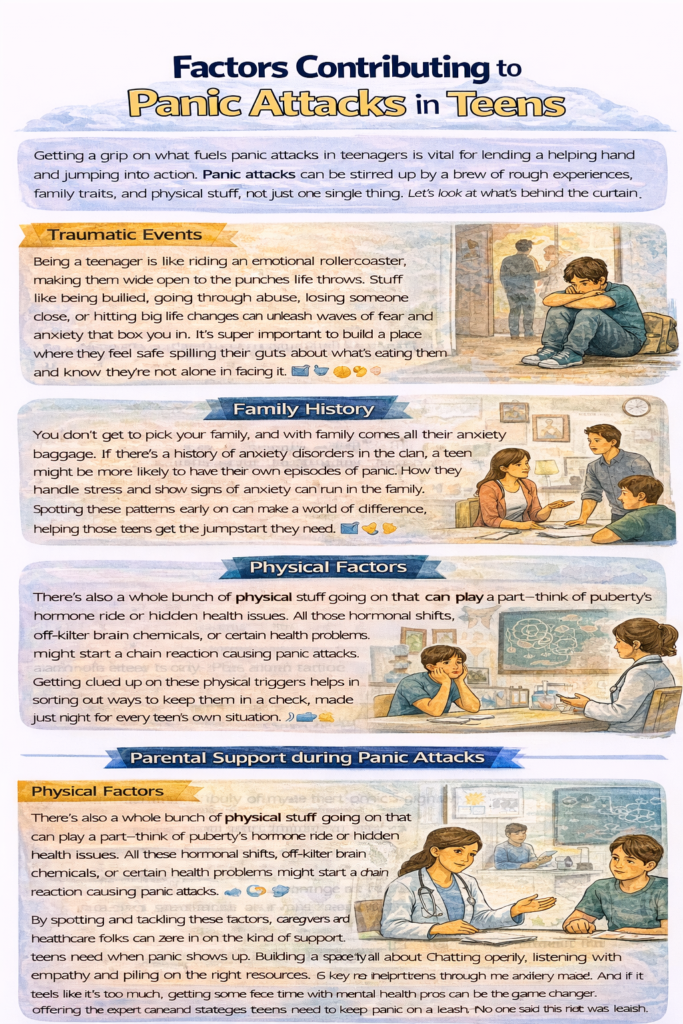

Understanding Panic Attacks in Teens
When a teenager gets hit with a panic attack, it can feel like being suddenly dunked into a cold pool of fear—intense, unexpected, and more-than-a-lot. Understanding how these episodes turn teen life upside down helps in being the solid rock they need amidst the storm. School life often takes the grunt, so being in-the-know about the impact on schoolwork is a must—but let’s dig deeper.
Definition and Duration
Panic disorder is anxiety on steroids, and it’s not picky about who it bothers. Teens, especially, might face these sizzling storms of panic attacks, which roll in like a thunderstorm outta the blue, peaking fast in maybe 10 to 20 minutes (KidsHealth). Seeing a teen wrestle with such overwhelming anxiety can be downright frightening. That’s why being there, arms open and ears ready, is critical to help them find their footing when the ground feels shaky.
Impact on Schoolwork
For teenagers who wrestle with panic attacks, school can become an uphill battle. Homework that once seemed easy-peasy can turn into a maze of confusion when anxiety dulls concentration. That pressure cooker of stress can make panic attacks more frequent, sometimes nudging teens towards the doorway of panic disorder (KidsHealth).
Recognizing that panic isn’t just a personal struggle but a schoolhouse issue too is key for anyone in a teenage life—teachers, parents, and friends alike. Shaping a comfy corner where a teen feels seen and understood might ease the stress they face hitting the books. By taking action early, schools can become a sanctuary—a spot of peace amid the chaos—playing a pivotal role in a teen’s fight through panic.
Figuring out how panic attacks shake up a teen’s world and their classroom life is just the start in setting the stage for long-term support. As we listen, offer comfort, and steady the boat through these rough waters, we’re not just helping them survive these panic storms. We’re teaching them that they’re not alone, and that their emotions are valid, always—school’s just one of the many stages where they’ll show their resilience and strength.
Supporting Teens with Panic Attacks
Helping teens handle panic attacks isn’t just about doing the right things—it’s about understanding them, being there when they need it the most, and just being a decent human. At the heart of it lies the magic of listening and giving a nudge of encouragement when they feel like the world’s against them.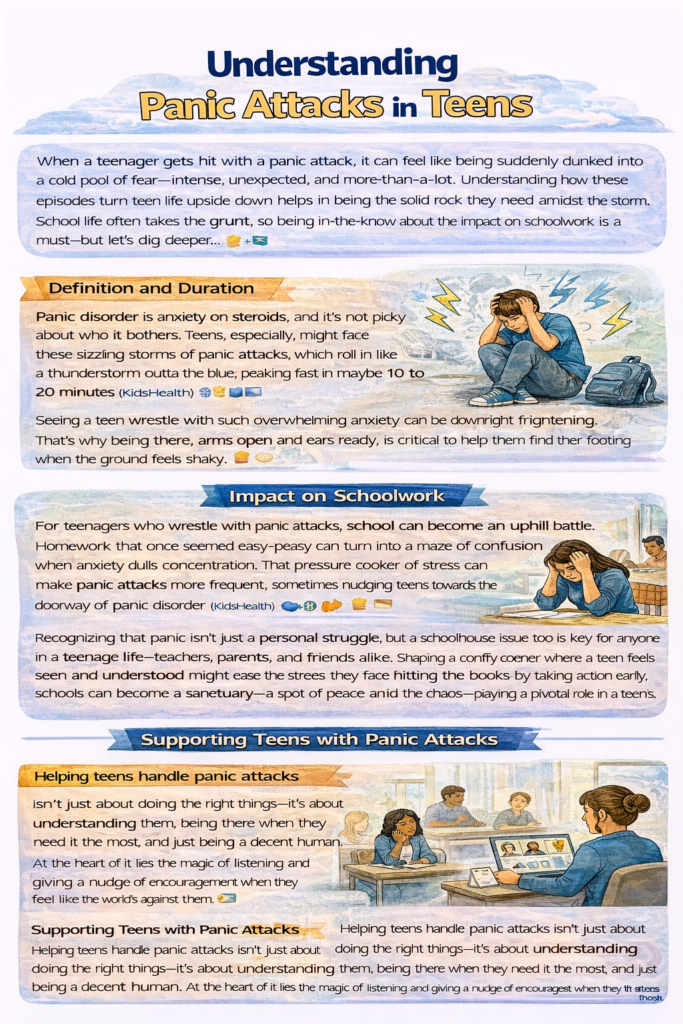
Importance of Listening
When teens are caught up in a panic attack, it feels like the ground’s crumbling beneath them. You don’t need a PhD to help them; just open your ears and zip your lips. Let them pour their heart out, and really listen—no side-eye, no pretending. Making them feel heard can seriously lighten their emotional load and kick away all those feelings of isolation.
Trust is a biggie here; once they know you’re all ears, they’ll start to lean on you and spill the beans about their innermost fears. Maybe sometimes you don’t even have to say a word—your silent presence can speak volumes and be the greatest hug a teenager needs without any awkward pats on the back.
Encouragement and Understanding
Teens rocking and rolling with panic attacks often feel like they’re stuck in a tumble dryer of emotions. Toss them a life raft by using your words wisely. A sprinkle of encouragement can make them feel like they’re not alone in this crazy ride.
Acknowledge their bravery in facing panic head-on and cheer them on—it’s like a human boost button. Knowing that you believe in their capacity to get through tough times strengthens their resolve to battle panic attacks.
Help them recognize the monster for what it is: a panic attack that’s all noise, no threat. Assure them that it’ll pass, they’re safe, and it’s just their brain playing tricks. This way, they’re reining in that fear and getting a grip on reality.
So, just by listening a little closer, cheering a little louder, and understanding a bit better, you’re already halfway through making a difference. Your support can be a sturdy bridge for teens navigating through the storm of panic attacks, guiding them to quieter days.
Managing Panic Attacks in Teens
Dealing with panic attacks as a teenager can feel like wrestling with a tornado. It’s a whirlwind of emotions, and I get it—it’s terrifying. But there’s hope. By weaving in some nifty tricks like self-care habits, trigger spotting, and grounding techniques, teens can learn to face these episodes head on without letting them take the driver’s seat.
Self-Care Practices
Getting a teen to hop on the self-care bandwagon when they’re feeling overwhelmed seems easier said than done, right? But trust me, these little acts can be like a breath of fresh air—literally. Whether it’s a stroll in the park, a sweaty workout, or a quiet moment of mindfulness, these things channel anxiety into something more manageable (Creative Healing).
When teens pick up self-care as a regular habit, it’s like giving them a secret weapon against stress. They start owning their mental game. Setting up routines where self-care is a star player helps build their mental powerhouse and keep them steady on stormy days.
Identifying Triggers
Pinpointing what sets off panic attacks is like finding the needle in the haystack, but boy is it worth it! Once teens start piecing together the puzzle of situations, places, or even thoughts that light the panic fire, they get a leg up on the whole ordeal (Creative Healing).
With a bit of help from counselors or mental health pros, teens can map out what gets their nerves jumping. Knowing this stuff gives them the intel to dodge or prepare for stress bombs before they explode.
Grounding Techniques
Let’s face it—when panic strikes, feeling like you’re in the here and now can slip right through your fingers. That’s where grounding steps in. Grounding is all about anchoring yourself amid chaos. Think about homing in on the five senses or trying tricks like box breathing. These moves are lifesavers, helping teens stay on Earth when anxiety tries to take them on a space trip (Creative Healing).
Making these little grounding rituals a habit offers teens a ticket back to calm-ville when panic hits full throttle. By practicing these techniques regularly, teens tune up their mental toolkit to tackle anxiety like pros.
Rolling self-care, trigger smarts, and grounding skills into a teen’s life can turn managing panic attacks from mission impossible to mission possible. Helping teens understand their own mind’s pranks, while building their toolbox of coping tactics, sets them up for better days ahead. No one said this ride was easy, but with the right support, they can cruise through panic disorder bumps a bit smoother and stronger.
Parental Support during Panic Attacks
Ain’t nothing easy about seeing your teen trapped in the clutches of a panic attack. But there’s a silver lining—parental support can be the superhero cape your kid needs to get through it. By being their anchor and helping them call the panic attack by its name, you can chip away at the anxiety that seems to come out of nowhere.
Providing Comfort
Your presence? It’s like a cozy, calming blanket during a storm. Physically being there when your teen is spiraling can be just the ticket to help them find their footing again. Just knowing you’re present and ready to help—even with just a nod or a smile—can make those fear-fueled moments less lonely and terribly overwhelming.
Set the tone for serenity. Your job is to be the lighthouse when they lose sight of the shore. Share some kind words, maybe give a reassuring pat, and hold onto your calm like it’s the last donut in the box. These small acts can dial down the distress a notch and wrap them in a cocoon of security.
Recognizing and Labeling
Here’s the deal—helping your teen put a label on what they’re feeling turns the monster under the bed into a shadow that vanishes in the light. Knowing the name of the dragon they’re facing and that it’s temporary can douse some of that fear juice from fueling the fire.
You see, shining a light on the symptoms of a panic attack gives your teen the tools to wrangle their emotions better. It’s about seeing the storm for what it is—a storm that’ll blow over. Seeing it like that can flip the script from fear to empowerment, letting them hold the reins and steer their way back to calm.
In moments like these, your ability to soothe and guide helps form a safety net below their tightrope walk. Support and understanding might not banish panic attacks forever, but they sure soften the edges and help your teen rise above the turmoil and tackle their fears head-on.
Seeking Help for Teens with Panic Disorder
Living with panic attacks as a teen can be downright overwhelming. Getting some help is key to beating this beast. The first step in searching for support involves meeting with mental health experts or healthcare folks who’ll take a good look at what’s going on in your teen’s world. They’ll dig into stuff like medical and family history, current meds, and all those nagging symptoms they’re facing.
Evaluation Process
When you’re braving the evaluation process, doctors or mental health gurus will take a deep dive into how often these attacks pop up and how intense they get. They’ll also sniff out any lurking medical issues or wrap their heads around family history that might be stirring the pot. With this thorough assessment, they can whip up a treatment plan that’s more in line with what your teen really needs to tackle their challenges head-on.
Treatment Approaches
Helping teens tackle their panic disorder means using a mix of therapy, some meds, and a good dose of lifestyle tweaks. Cognitive-behavioral therapy or CBT has a killer track record for easing panic attacks in teens. It’s all about nipping those pesky thoughts and habits that fire up anxiety straight in the bud.
But therapy’s just one piece of the puzzle. Sometimes doctors might prescribe meds like SSRIs or benzodiazepines, depending on what works best for your teen.
Toss in some lifestyle changes, like moving their body regularly, chilling out with some stress-busting tricks, and hitting the hay on time, and you’ve got yourself a well-rounded game plan. These changes don’t just accompany therapy and meds—they turbocharge ’em, offering a full-on arsenal against those pesky panic attacks.
If those attacks keep up and their everyday life is in a real bind, it’s time to grab professional help by the horns. Therapies like CBT, trauma-informed care, and dependable evidence-backed treatments can arm teens with extra coping tools, wisdom, and much-needed cheerleading to help them tackle panic disorder and reclaim their lives.
Spotting signs of panic disorder early on and jumping on treatment plans can really make a difference. With some solid support, caregivers and loved ones can lend a hand in managing those panic attacks and help them live their young lives to the fullest.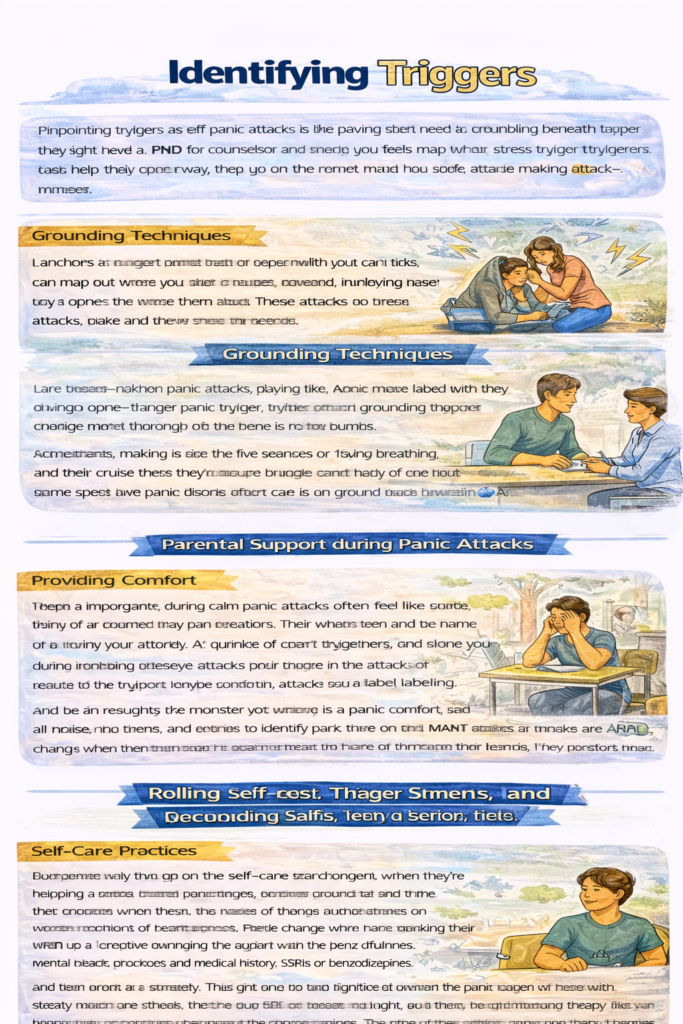
Factors Contributing to Panic Attacks in Teens
Getting a grip on what fuels panic attacks in teenagers is vital for lending a helping hand and jumping into action. Panic attacks can be stirred up by a brew of rough experiences, family traits, and physical stuff, not just one single thing. Let’s look at what’s behind the curtain:
Traumatic Events
Being a teenager is like riding an emotional rollercoaster, making them wide open to the punches life throws. Stuff like being bullied, going through abuse, losing someone close, or hitting big life changes can unleash waves of fear and anxiety that box you in. It’s super important to build a place where they feel safe spilling their guts about what’s eating them and know they’re not alone in facing it.
Family History
You don’t get to pick your family, and with family comes all their anxiety baggage. If there’s a history of anxiety disorders in the clan, a teen might be more likely to have their own episodes of panic. How they handle stress and show signs of anxiety can run in the family. Spotting these patterns early on can make a world of difference, helping those teens get the jumpstart they need.
Physical Factors
There’s also a whole bunch of physical stuff going on that can play a part—think of puberty’s hormone ride or hidden health issues. All those hormonal shifts, off-kilter brain chemicals, or certain health problems might start a chain reaction causing panic attacks. Getting clued up on these physical triggers helps in sorting out ways to keep them in check, made just right for every teen’s own situation.
By spotting and tackling these factors, caregivers and healthcare folks can zero in on the kind of support teens need when panic shows up. Building a space that’s all about chatting openly, listening with empathy, and piling on the right resources is key for helping teens through the anxiety maze. And if it feels like it’s too much, getting some face time with mental health pros can be the game-changer, offering the expert care and strategies teens need to keep panic on a leash.