
Cultural Variations in Anxiety
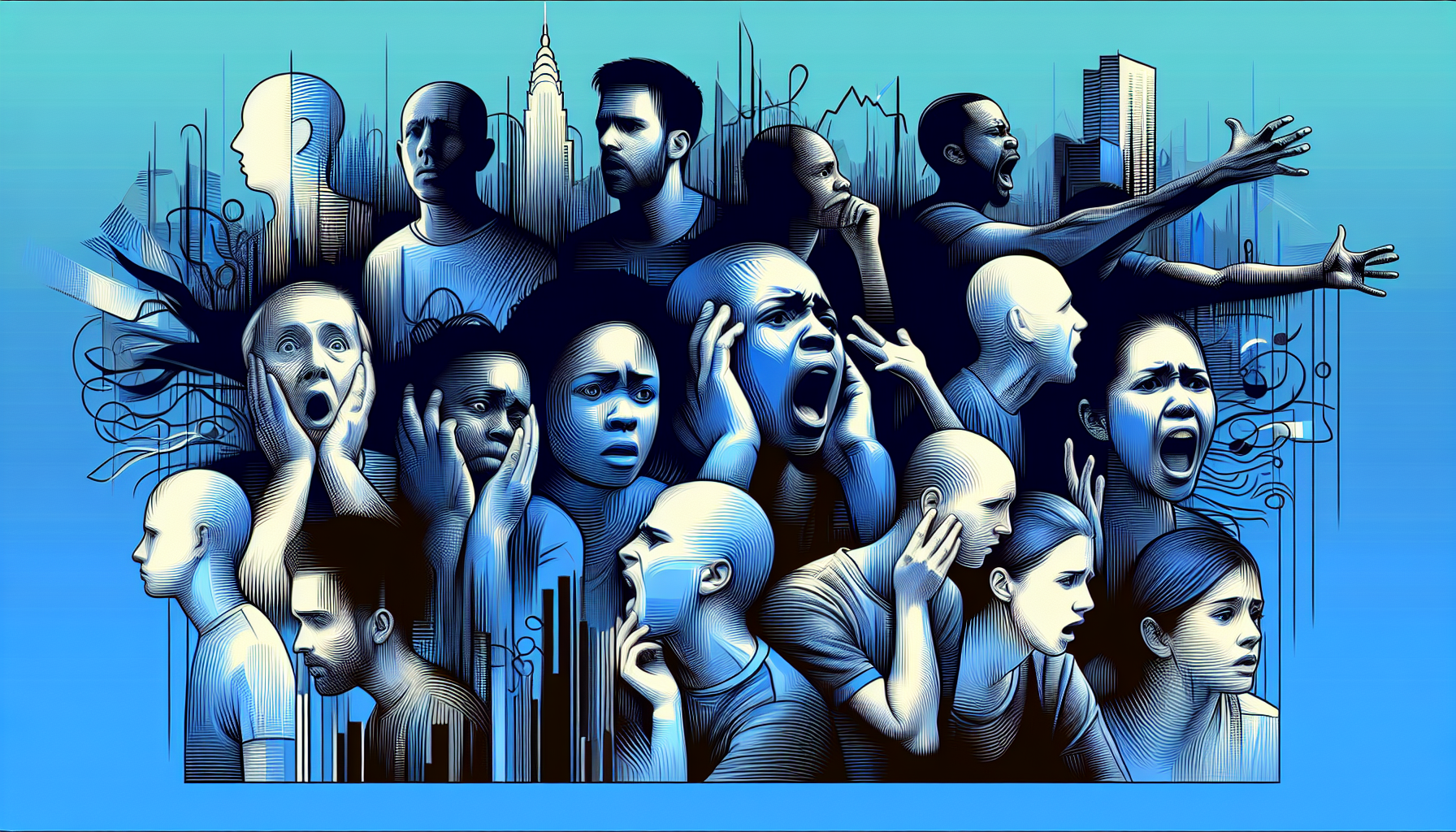
When taking a good look at how different cultures see and react to anxiety, it’s clear that folks everywhere handle it pretty differently. The way people show and manage their nervousness and sadness can change a lot depending on the cultural beliefs and daily habits they’re accustomed to. Every culture’s got its own twist on anxiety, and understanding these differences can affect not just how we spot these issues, but how we treat them too.
Expressions of Anxiety Across Cultures
As we peek into various cultures, we find all sorts of ways that anxiety shows its face. Take Latino cultures, for instance—they might talk about their “nervios” when they’re feeling anxious or stressed out. Other folks might show anxiety through physical symptoms, or even through their religious or spiritual practices. These differences just go to show why it’s so vital to keep culture in mind when trying to understand and deal with anxiety (ADAA).
Influence of Health Literacy
How well people grasp health topics plays a big role in how they understand and handle anxiety. Differences in how much folks know about health can make talking with doctors trickier and can influence how they decide to seek treatment. If someone’s not too sharp on health stuff, they might struggle to get the right help for their anxiety. That’s why it’s crucial to consider both cultural backgrounds and understanding levels when trying to support someone with anxiety.
Cultural differences don’t just change how people show anxiety—they also shake up how it’s treated. By acknowledging and respecting these diverse ways of seeing and feeling anxiety, healthcare folks can give more thoughtful and culturally aware help to folks from all sorts of backgrounds.
Racial and Ethnic Factors
When we look at panic disorders, it makes sense to think about racial and ethnic dynamics as they bring unique twists to anxiety experiences, often wrapping them in layers of racial discrimination felt by these groups.
Anxiety Rates Among Ethnic Groups
Folks from different racial and ethnic backgrounds dance to their own tune when it comes to anxiety disorders, thanks to their cultural mindsets and ways of viewing these conditions. Studies give us a look into this tapestry. For instance, many Asians might say they feel dizzy, unsteady, like they’re choking, or filled with overwhelming fear, while African American folks tend to indicate lesser jitters than Caucasians (NCBI).
Culture and social settings take the wheel in driving anxiety disorder rates among various groups. In the melting pot of the U.S., there’s clear evidence showing how people from different races react differently to anxiety symptoms. Asian Americans, for example, often tick off fewer anxiety disorder symptoms than their counterparts, while White Americans are seemingly more tuned into those symptoms. On another note, African Americans might find themselves fitting the bill for PTSD diagnoses more often than other ethnicities (NCBI).
Perception of Racial Discrimination
Many minority ethnic folks get hit hard mentally by what they perceive as racial discrimination. Walking through the fires of discrimination and systemic injustice escalates their stress and panic levels, often leading them straight into the arms of mental health disorders, like panic attacks.
For those immigrating from trauma-soaked places like Vietnam, Cambodia, and Laos, dealing with PTSD is an all-too-common story, with as high as 70% meeting the PTSD criteria. Stateside, combat veterans and newcomers from war-torn areas seem to have a pronounced risk for PTSD because of their grim past experiences (NCBI Bookshelf).
Grasp the intertwining of race and ethnicity with anxiety disorders, and you’ll find yourself able to give more personalized help to people in various groups. Tuning in to these cultural subtleties empowers healthcare pros and caregivers to smoothly tackle panic disorders in multiple communities and push for equal access to mental health support.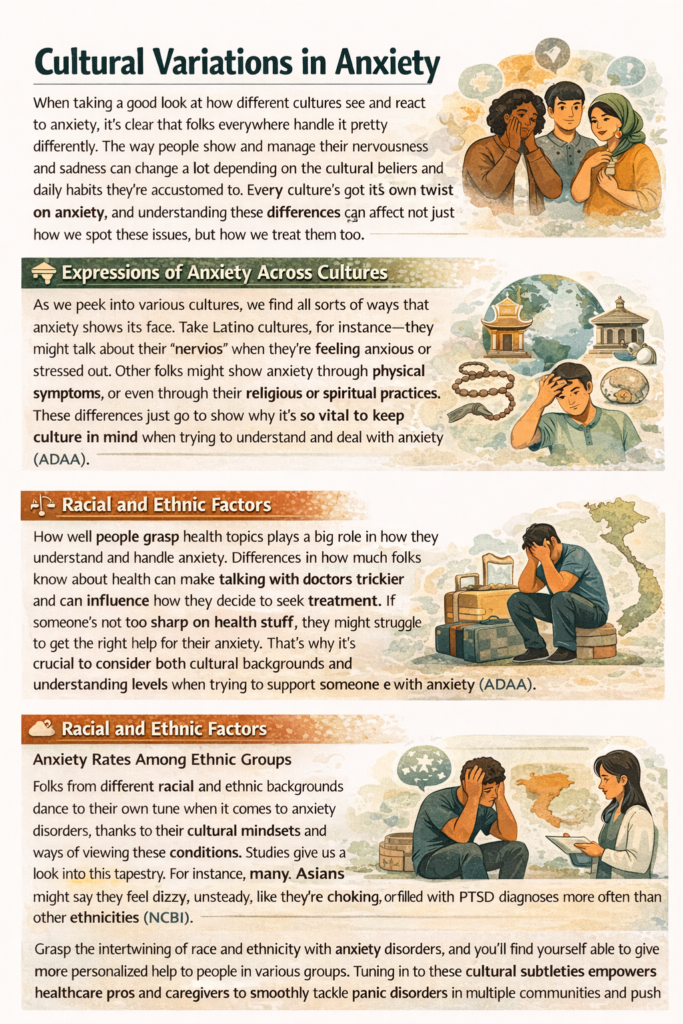
Unique Cultural Expressions
Digging into how panic disorders pop up in different cultures gives us a peek into the colorful ways folks around the world feel anxiety. Two stand-out cultural flavors of anxiety include Cambodian Anxiety Expressions and Taijin Kyofusho in Japanese and Korean cultures.
Cambodian Anxiety Expressions
In Cambodia, anxiety often shows up as “wind attacks” or “khyâl attacks” (here’s where I got it from). Imagine this: you’re just standing up, maybe a bit tired or stressed, and bam! You feel like a hurricane’s hit your body. They call it a disturbance in the flow of “wind” and blood.
Folks in Cambodia figure the symptoms are tied to fears about this “wind” which, if blocked, can cause all sorts of pandemonium like a sore neck, tummy problems, or blurred eyesight (here’s another read). This whole concept plays a part in the way anxiety is expressed, with people intensely fearing they’re on death’s doorstep or gravely ill.
Taijin Kyofusho in Japanese & Korean Cultures
Over in Japan and Korea, you’ve got Taijin Kyofusho (TKS) stirring the pot, which centers around fears of ruffling someone else’s feathers (got it from here). Maybe it’s because you blush, you’re worried your expression’s off, or you think you’re giving off an unwanted whiff!
This anxiety is all about not messing up someone else’s vibe, spotlighting how deep cultural behavior gets tangled up with how people feel and express anxiety (check it here). It can even be sliced into different types depending on what’s giving the person grief, showcasing the tight dance between what’s considered proper behavior and anxiety.
Appreciating these unique spins on anxiety is super important for providing care that really clicks with people’s backgrounds. When mental health pros get where someone’s coming from culturally, they’re better able to offer help that respects the person’s values and tackles those anxiety waves just right.
Impact of Stigma on Treatment
Thinking back on my struggle with panic disorders, it’s crystal clear how societal stigma plays a harmful role in treatment. This stigma isn’t just a personal burden; it messes with the healthcare system and society too. The chain reaction of this stigma messes with getting timely care and how effective mental health services end up being.
Delayed Treatment and Increased Morbidity
The shadow of stigma looms large, often causing delays in recognizing and treating mental health issues like panic disorders. These delays drag out the suffering and bump up the rates of illness. I’ve come across studies (like those in PubMed Central) that show how stigma acts like a wall, stopping people from reaching out for help when they need it most, which makes things worse over time.
The fear of being judged or discriminated against can stop folks from getting the care they need, making them sicker and lowering their quality of life. It’s super important to understand and tackle stigma head-on if we want to push for early intervention and better help those fighting panic disorders.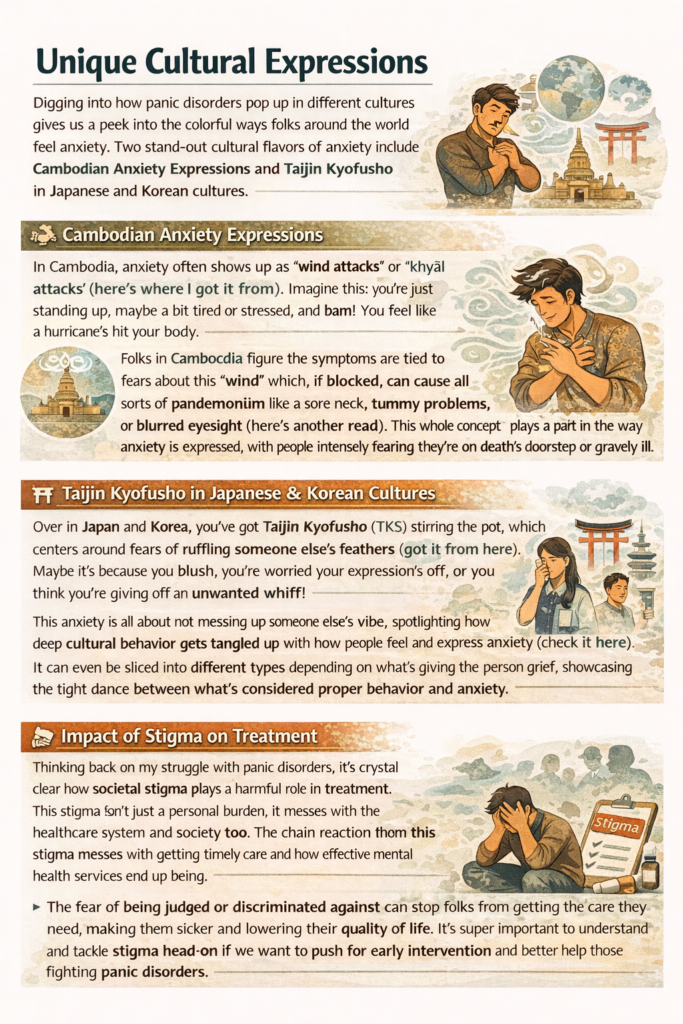
Influence on Mental Health Services
Stigma goes beyond personal struggles; it seeps into mental health services too, messing with how care is given and received. Stigmatizing thoughts make people shy away from seeking help, making it tougher to get the right treatment for panic disorders. Research, like the one in PubMed Central, points out that stigma lowers the chances of sticking to treatment and keeps false ideas about mental health alive, messing with the success of mental health care.
When folks stay away from mental health services because of stigma, it creates a chain reaction that hits how well these systems work overall. Smashing these negative beliefs and cheering on understanding and acceptance in healthcare settings are key to breaking down barriers in treating panic disorders.
Untangling the messy web of stigma surrounding mental health calls for a team effort filled with empathy. By shining a spotlight on how stigma screws with treatment for panic disorders, we can start building a friendlier and more welcoming place for those reaching out for aid and healing.
Gender and Stigma
I’ve been thinking a lot about how panic disorders affect different groups, and I can’t ignore how gender really changes how we view mental health stigma. Let’s dig into how stigma hits differently depending on gender and how culture can muddle it all up even more.
Stigma Hits Men and Women Differently
You know, it’s pretty clear stigma isn’t a one-size-fits-all deal. Women might get more flack in some places, particularly in more traditional communities like those in some Arab cultures. It’s as if society says, “Hey, women, keep it all together, be the caregiver!” That kind of weight just cranks up the stigma about mental health issues for them. Men, too, face their own brand of stigma—imagine being told to “man up” all the time. Older guys, especially, in similar cultural settings, often bury their emotions and don’t seek help because of it.
These gender stigma differences really throw a wrench into things when folks are trying to get help for panic disorders. Who wants to ask for help when they’re afraid of being judged or left out in the cold? Understanding and tackling these gender-related stigmas is crucial so everyone, no matter who they are, can feel okay about seeking support for panic disorders.
Culture’s Role in Mental Health Stigma
Culture paints a complex picture when it comes to mental health stigma. Think of stigma not as a single brushstroke but as a whole canvas shaded by cultural norms, beliefs, and values. The way stigma looks can change drastically from one culture to another. For instance, cultural ideas regarding family, gender roles, and mental illness have a deep impact on how panic disorders are viewed.
In some cultures, stigma can drive people into isolation, fuel discrimination, and keep wrong ideas about mental health alive and kicking. And, sadly, this can cause people to delay getting help for panic disorders or avoid mental health services altogether. To tackle this, we’ve got to make sure mental health care is aware of and sensitive to cultural differences so everyone can feel supported, no matter their background.
By looking at the gender gap in stigma and understanding how cultures shape mental health perceptions, we can start building a more welcoming and understanding environment for those dealing with panic disorders. Celebrating our differences and promoting empathy and understanding around mental health are giant steps toward busting stigma and supporting the well-being of everyone dealing with panic disorders.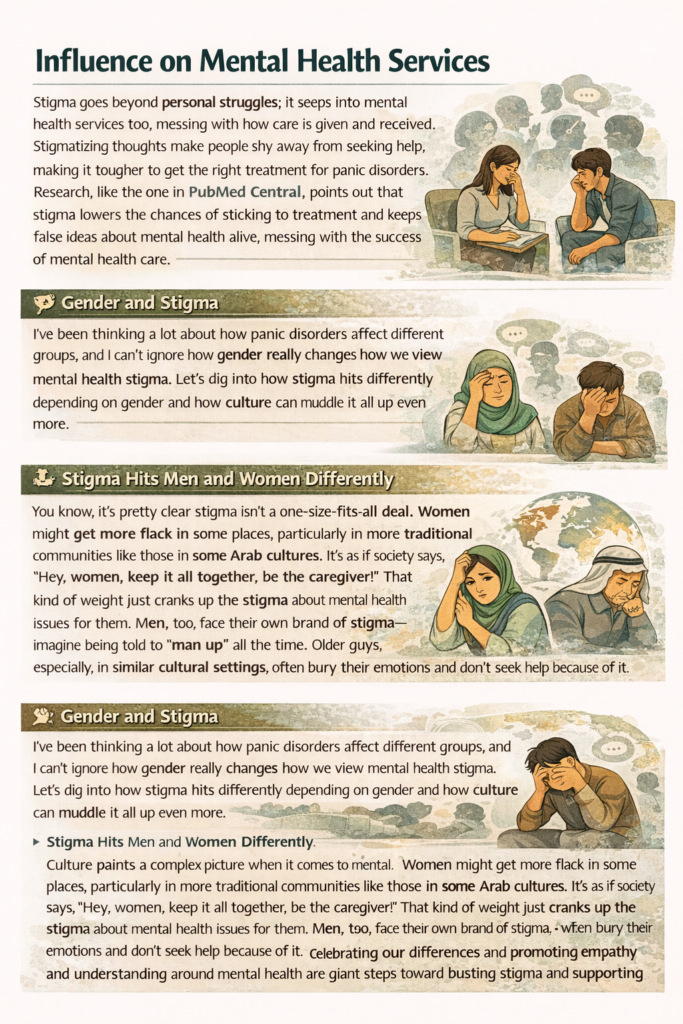
Addressing Mental Health Stigma
Thinking back on my personal dance with panic disorders and the way cultural norms shape our reactions, I’ve realized how crucial it is to tackle mental health stigma head-on. By teaming up with cultural understanding and smart approaches proven by research, we’re a step closer to creating a compassionate society that’s kinder to those living with panic disorders.
Cultural Competence in Stigma Reduction
Getting a grip on the role of cultural savvy can make a huge difference in how we handle stigma tied to mental health. The way different communities see mental illness deeply influences whether folks reach out for help. So, by learning about these cultural quirks and showing genuine respect for individual stories, we can carve out spaces where nobody worries about being judged.
Healthcare workers, policymakers, and community figures—everyone’s got a part to play. Making cultural sensitivity a part of mental health programs means bridging the gap and paving the way for everyone to benefit from proper care. This is all about making sure people from all backgrounds feel welcomed and their experiences acknowledged.
Importance of Evidence-Based Approaches
Leaning on solid, evidence-driven strategies can really kick stigma to the curb. By backing effective interventions with solid data and spreading the right info, we can start busting myths and shifting outdated attitudes that keep folks from seeking necessary help.
These science-backed moves don’t just empower folks—they ripple out to spark broader societal change. When people see tangible results from these practices, it opens up dialogues, shatters treatment barriers, and builds a supportive culture for those wrestling with panic disorders. Sharing these successes invites more acceptance, shedding light on real progress in mental health.
By focusing on these angles to tackle stigma within our cultural tapestries, we unlock a path filled with respect, understanding, and forward movement. Through these efforts in both personal exchanges and wider policy decisions, we nurture a community where people with panic disorders feel seen, heard, and supported.
In the end, it’s about uniting our efforts to raise awareness, strip away stigma, and foster a shared sense of well-being. We can all be part of this change, building a world that celebrates our differences and champions mental health for everyone.