
Understanding Critical Incident Stress
Exploring the realm of critical incident stress, it is essential to comprehend the definition and impact it can have on individuals exposed to traumatic events. Additionally, understanding the significance of early intervention in managing critical incident stress is crucial in promoting resilience and preventing lasting effects.
Definition and Impact
Critical incident stress refers to the immediate and often overwhelming physiological and emotional reactions that individuals may experience after exposure to highly stressful events such as tragedy, death, serious injuries, or threatening situations. These reactions can manifest in physical, emotional, cognitive, or behavioral symptoms (OSHA – Critical Incident Stress Guide). Acknowledging and addressing these symptoms promptly is vital in supporting the mental well-being of individuals impacted by critical incidents.
The impact of critical incident stress can be profound, affecting an individual’s ability to function effectively and cope with the aftermath of trauma. Without appropriate intervention and support, these stress reactions can exacerbate and lead to long-term psychological distress. Thus, recognizing the warning signs and providing timely assistance are critical in mitigating the negative effects of such stressors on mental health.
Significance of Early Intervention
Early intervention plays a pivotal role in managing critical incident stress and promoting recovery. Identifying individuals who may be exhibiting symptoms of stress early on enables prompt access to support services and interventions. Prompt intervention can help prevent the escalation of symptoms and minimize the risk of long-lasting psychological consequences.
In the context of critical incident stress management, early intervention involves monitoring individuals during the emergency response phase to identify early signs of significant stress. This monitoring approach, which includes simple conversation and observation, can assist in the early detection of stress reactions in emergency responders (OSHA – Critical Incident Stress Guide). Implementing strategies such as crisis intervention counseling techniques and trauma-focused cognitive-behavioral therapy early on can help individuals effectively process their experiences and develop coping mechanisms.
By emphasizing the importance of early intervention in addressing critical incident stress reactions, organizations and professionals can create a supportive environment that fosters psychological resilience and enables individuals to navigate the challenges associated with traumatic events more effectively.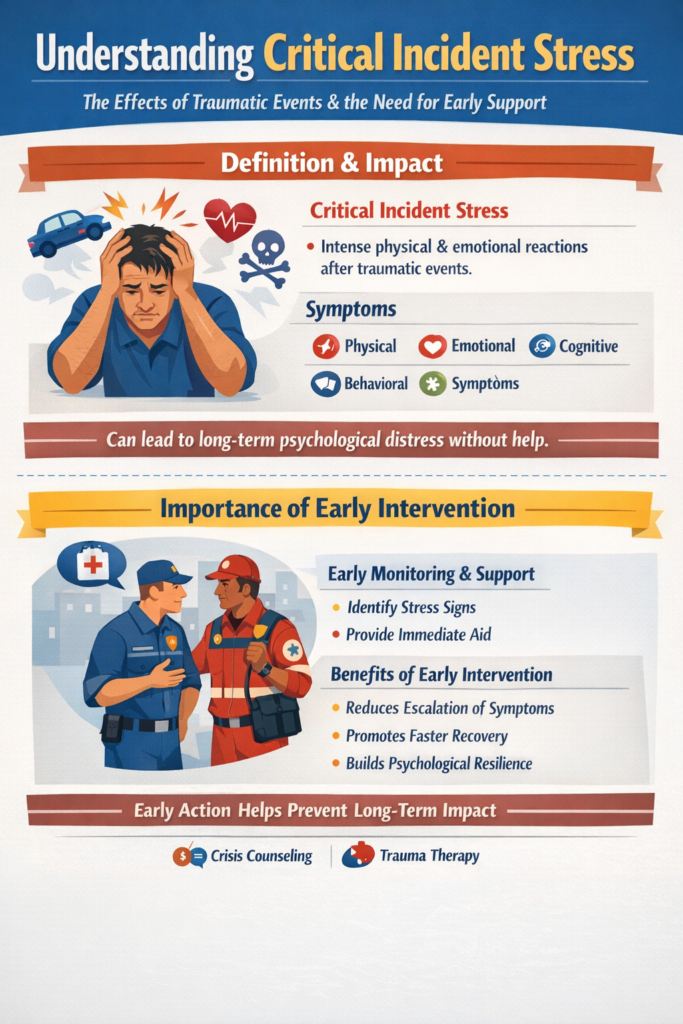
Techniques in Critical Incident Stress Management
Effective critical incident stress management is essential for mitigating the impact of traumatic events on individuals such as first responders, emergency personnel, healthcare workers, and others who are exposed to critical incidents. This section explores three key techniques in critical incident stress management: Crisis Management Briefing (CMB), Critical Incident Stress Debriefing (CISD), and Pre-Incident Education.
Crisis Management Briefing (CMB)
The Crisis Management Briefing (CMB) is a vital and versatile crisis intervention technique that plays a crucial role in the initial response to critical incidents. According to National Interagency Fire Center, the CMB is structured to provide essential information about the event, demonstrate leadership, reduce chaos, enhance credibility, and control rumors.
During a Crisis Management Briefing, affected individuals are briefed on the critical incident, informed about available resources and support services, and encouraged to share their experiences and feelings. The goal of the CMB is to establish a supportive environment, promote communication, and initiate the process of addressing the emotional impact of the incident on those involved.
Critical Incident Stress Debriefing (CISD)
Critical Incident Stress Debriefing (CISD) is a specialized and structured technique designed to help individuals cope with the physical and psychological symptoms associated with trauma exposure. As per the National Interagency Fire Center, CISD follows a seven-part model and is not intended for primary victims or conducted in a one-on-one setting.
CISD sessions are typically conducted in a group format and aim to facilitate emotional processing, normalize reactions, provide education on stress management strategies, and foster peer support among participants. The process helps individuals to express their thoughts and emotions related to the critical incident, identify coping mechanisms, and receive guidance on accessing additional mental health support if needed.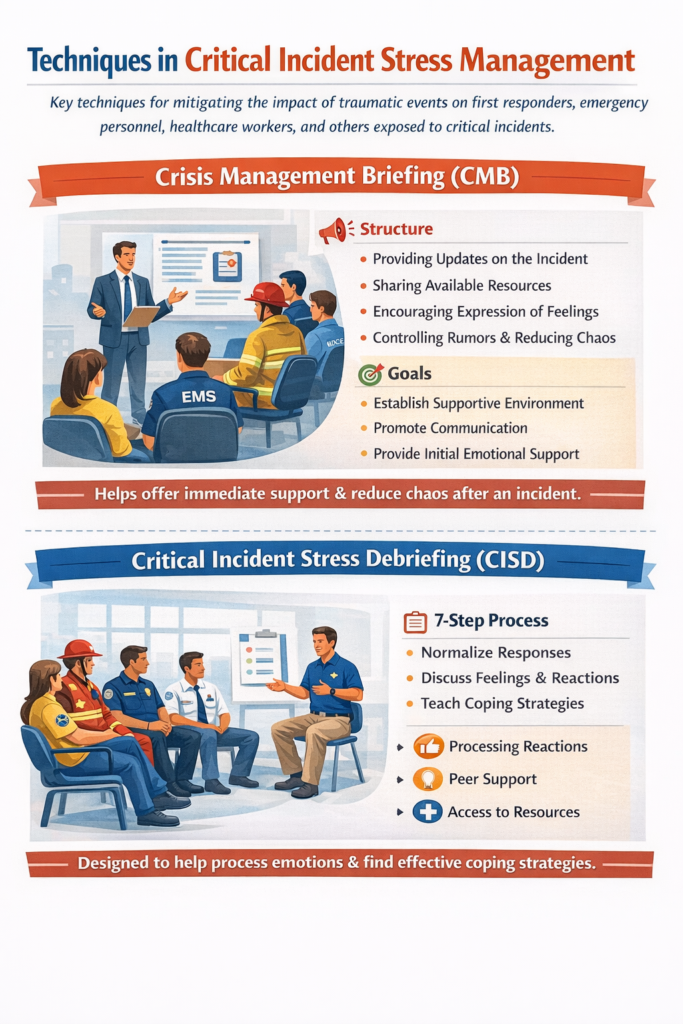
Pre-Incident Education
Pre-incident education is a proactive approach to preparing individuals for potential critical incidents and their associated stressors. According to National Interagency Fire Center, starting early in one’s career and continuing with regular refresher courses is crucial in combating critical incident stress.
Educational programs cover topics such as recognizing the signs of critical incident stress, developing resilience-building activities, and implementing self-care strategies. By equipping individuals with the knowledge and skills to manage stress before an incident occurs, pre-incident education enhances their ability to cope effectively during and after a critical event.
Incorporating Crisis Management Briefing, Critical Incident Stress Debriefing, and Pre-Incident Education into an organization’s critical incident stress management strategy can help promote psychological well-being, resilience, and recovery among individuals exposed to traumatic events. These techniques play a pivotal role in providing timely and effective support to those navigating the challenges of critical incident stress.
Specialized Intervention Approaches
When it comes to managing critical incident stress, specialized intervention approaches play a crucial role in providing support and guidance to individuals who have been exposed to traumatic events. These approaches are tailored to address the unique needs of individuals experiencing high levels of stress and distress. In this section, we will explore three key specialized intervention approaches: Pastoral Crisis Intervention, the Crisis Intervention Specialist Role, and Group Support Structures.
Pastoral Crisis Intervention
Pastoral crisis intervention involves faith-oriented personnel providing acute psychological support during or after a critical incident. These individuals receive specialized training in mental health response to crises. They offer spiritual and emotional guidance to individuals affected by traumatic events, helping them navigate through the emotional aftermath of critical incidents.
Pastoral crisis intervention aims to provide comfort, reassurance, and a sense of hope to those in distress. By integrating spiritual and emotional care, this approach addresses the holistic needs of individuals and promotes healing in times of crisis.
Crisis Intervention Specialist Role
The Crisis Intervention Specialist Role plays a vital part in critical incident stress management, particularly in identifying and addressing the immediate psychological needs of individuals following a traumatic event (OSHA). These specialists are trained to conduct assessments, provide psychological first aid, and offer emotional support to those affected by critical incidents.
Crisis intervention specialists work closely with individuals to help them process and cope with the emotional impact of traumatic events. Their expertise in crisis response enables them to execute interventions that promote resilience and facilitate emotional recovery during challenging times.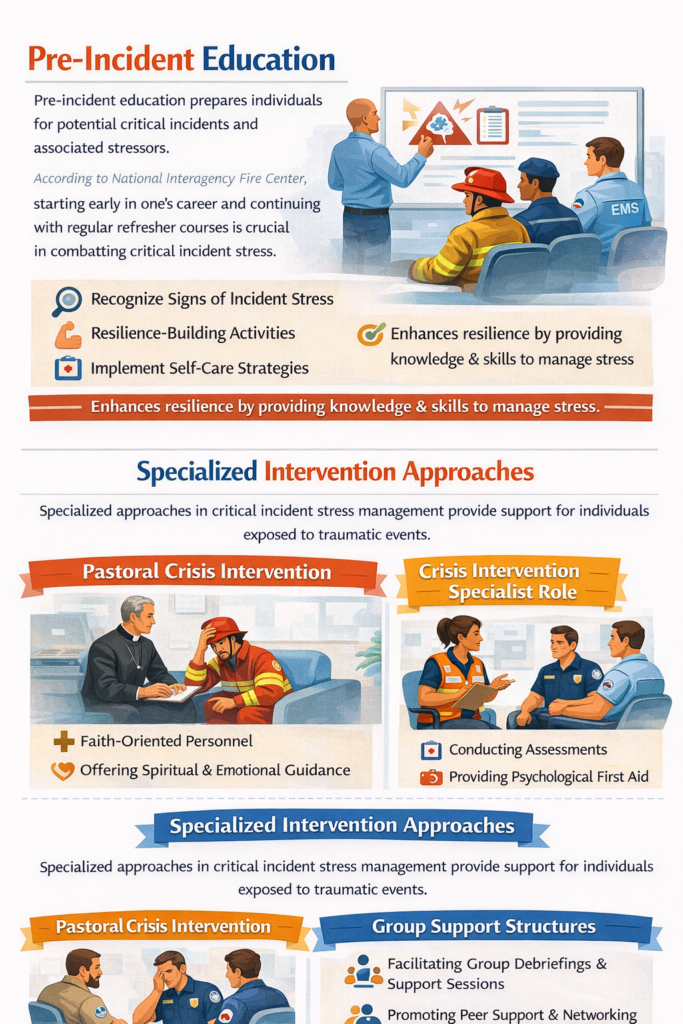
Group Support Structures
Group support structures are essential components of critical incident stress management. These structures involve bringing together individuals who have experienced similar critical incidents to share their experiences, emotions, and coping strategies. Group sessions provide a safe and supportive environment for individuals to express themselves and receive validation from others who have faced similar challenges (OSHA).
By participating in group support sessions, individuals can feel a sense of camaraderie and solidarity with others who understand their experiences. These interactions promote social connection, reduce feelings of isolation, and foster a collective sense of healing and resilience.
Implementing specialized intervention approaches like Pastoral Crisis Intervention, the Crisis Intervention Specialist Role, and Group Support Structures can enhance the effectiveness of critical incident stress management efforts. By providing tailored support and fostering a sense of community, these approaches help individuals navigate the emotional complexities of traumatic events and facilitate their journey towards healing and recovery.
Symptoms and Duration of Critical Incident Stress
In the aftermath of a critical incident, understanding the symptoms of critical incident stress and its duration is crucial for recognizing and managing the impact on individuals. Critical incident stress can manifest in various ways, encompassing physical, emotional, cognitive, and behavioral signs and symptoms.
Manifestation of Stress
As per OSHA, the signs of critical incident stress can present differently among individuals. Some common manifestations include:
- Physical Symptoms: Headaches, fatigue, muscle tension, gastrointestinal issues.
- Emotional Symptoms: Anxiety, fear, irritability, sadness.
- Cognitive Symptoms: Memory problems, difficulty concentrating, intrusive thoughts.
- Behavioral Symptoms: Changes in appetite, sleep disturbances, social withdrawal.
Recognizing these varied symptoms is essential for supervisors, peers, and individuals themselves to provide timely support and intervention during the critical incident stress period.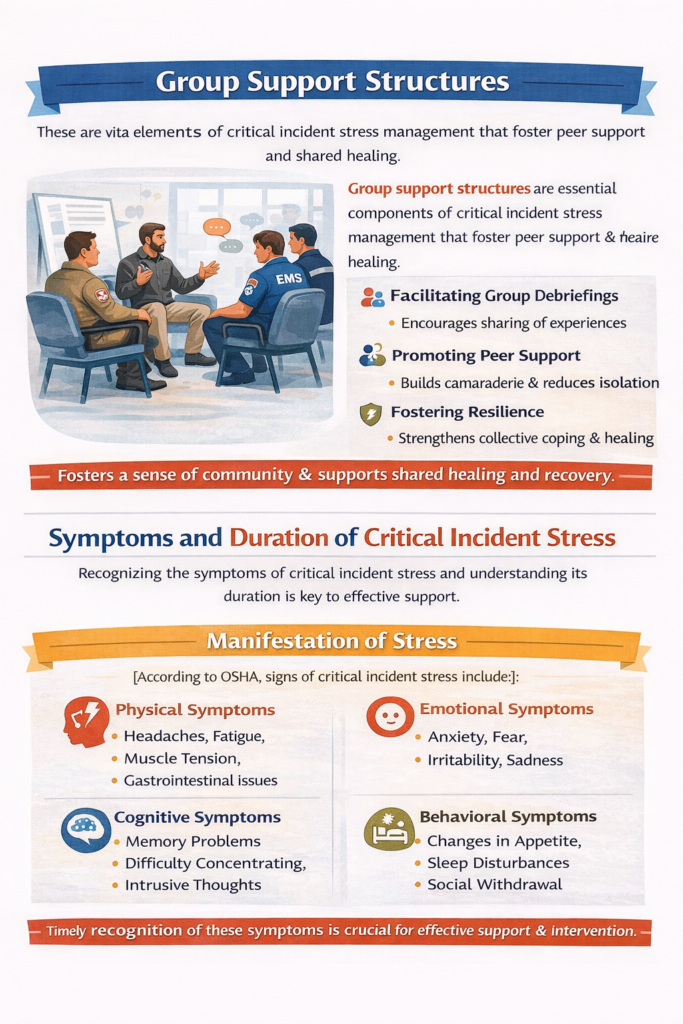
Duration Comparison with PTSD
Unlike Post-Traumatic Stress Disorder (PTSD), which typically extends beyond four weeks after a traumatic event, critical incident stress reactions typically last for a briefer duration, usually between two days and four weeks post-incident (OSHA – Critical Incident Stress Guide). This acute stress response to critical incidents is a natural reaction to extraordinary events and can serve as a self-protective mechanism in the short term.
Understanding the duration of critical incident stress and its differentiation from PTSD is vital for providing appropriate support and interventions tailored to the specific needs of individuals experiencing these stress reactions. It emphasizes the need for prompt intervention, trauma-focused cognitive-behavioral therapy, and stress management for first responders to mitigate the impact and promote resilience among individuals affected by critical incidents.
Coping Strategies for Critical Incident Stress
In instances of experiencing critical incident stress, it is crucial to have effective coping strategies in place to navigate through the aftermath of the traumatic event. These strategies are essential for First Responders and Emergency Personnel and other individuals exposed to critical incidents. Here are some ways to cope with critical incident stress:
Seeking Treatment and Support
One of the first steps in managing critical incident stress is to seek professional treatment and support. It’s important to acknowledge the impact of the traumatic event and not hesitate to reach out for help. By seeking treatment from a mental health professional, individuals can receive the necessary guidance and resources to cope effectively with the stress and its related symptoms.
Support from friends, family, and colleagues also plays a significant role in the recovery process. Talking to others about the experience and seeking understanding and assistance can help individuals feel less isolated and more supported during challenging times. Choosing support people carefully can provide concrete help and emotional comfort in coping with critical incident stress reaction symptoms.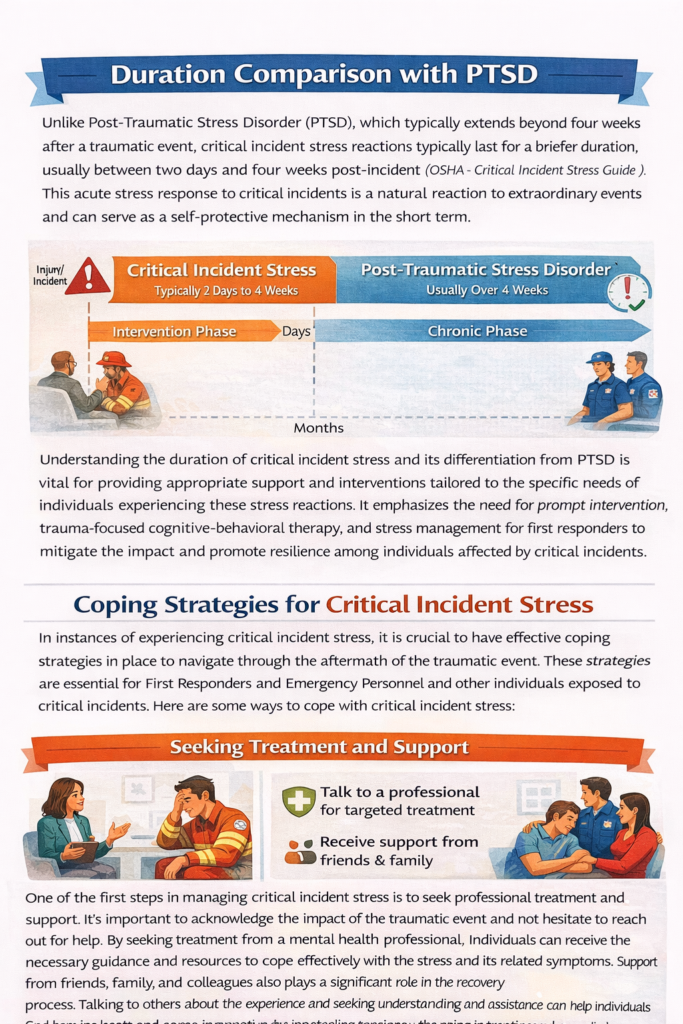
Practicing Relaxation Techniques
Incorporating relaxation techniques into daily routines can be beneficial for managing critical incident stress. Techniques such as deep breathing exercises, mindfulness meditation, and progressive muscle relaxation can help alleviate feelings of anxiety and tension. These practices promote a sense of calmness and facilitate emotional regulation in the face of distressing symptoms.
Engaging in relaxation methods not only offers immediate relief from stress but also contributes to long-term coping mechanisms. By practicing these techniques regularly, individuals can build resilience and enhance their ability to cope with the lingering effects of critical incidents.
Engaging in Positive Activities
Participating in positive activities that bring joy and fulfillment can be a powerful coping strategy for critical incident stress. Engaging in hobbies, spending time with loved ones, or pursuing activities that promote relaxation and enjoyment can help individuals maintain a sense of normalcy and well-being amidst challenging circumstances.
Positive activities serve as a form of self-care and self-compassion, allowing individuals to shift their focus away from distressing thoughts and emotions. By incorporating moments of positivity and pleasure into their daily routine, individuals can nurture their mental and emotional well-being, fostering resilience in the face of adversity.
By implementing these coping strategies, individuals can navigate through the complexities of critical incident stress and work towards healing and recovery. Seeking treatment, practicing relaxation techniques, and engaging in positive activities are integral components of a comprehensive approach to managing the aftermath of traumatic events. Remember, self-care and professional support are crucial in promoting resilience and well-being in the face of adversity.
Evaluation and Improvement Strategies
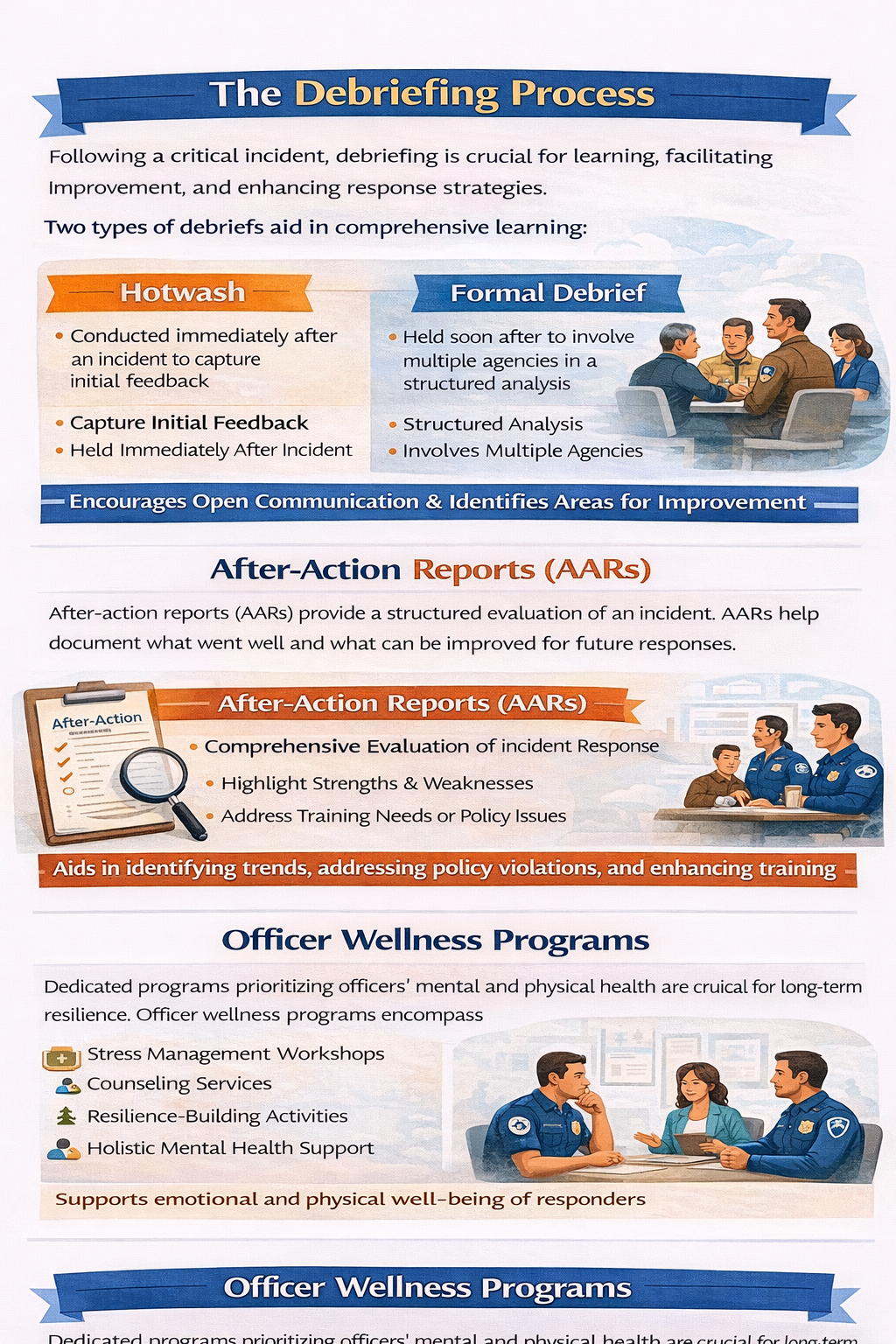
In the realm of critical incident stress management, evaluation and continuous improvement play vital roles in ensuring the well-being and effectiveness of responders. Let’s delve into the debriefing process, after-action reports (AARs), and officer wellness programs as crucial components of this evaluation and improvement framework.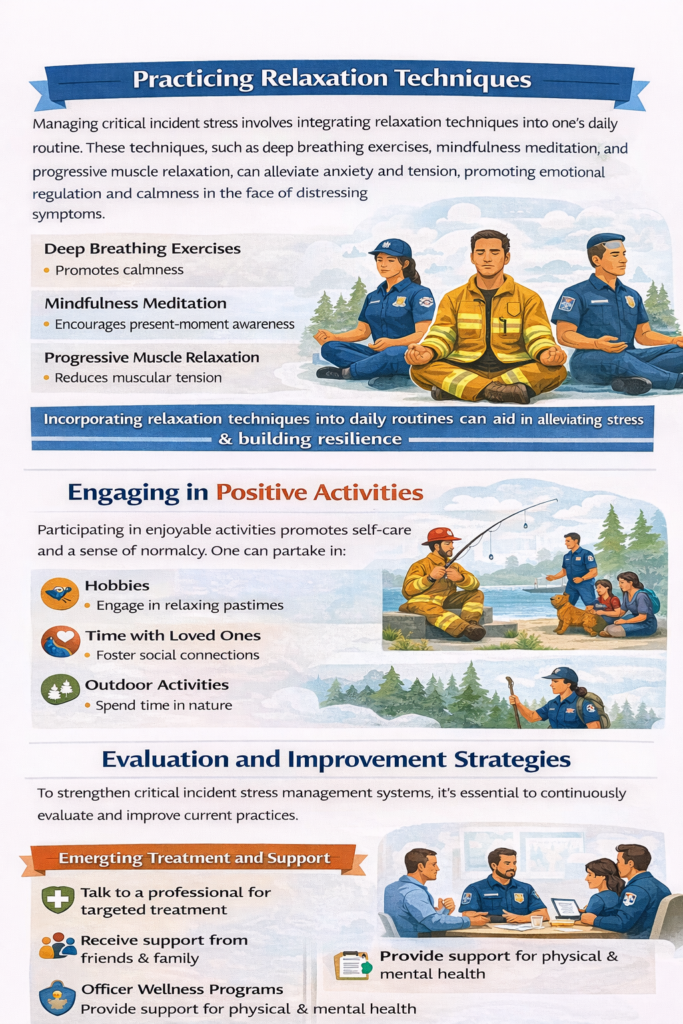
Debriefing Process
The debriefing process is a fundamental step in understanding and learning from critical incidents. Following an event, two types of debriefs are recommended for comprehensive insight: a “hotwash,” conducted immediately after the incident to capture initial feedback, and a formal debrief shortly after involving various agencies and personnel for a structured analysis (Police Forum).
It is essential that debriefs foster open and honest communication, encouraging participants to share their experiences, admit mistakes, and provide constructive criticism. Supervisors should create a safe space where individuals feel comfortable expressing their thoughts and suggestions. This collaborative environment allows for the identification of strengths and improvement areas to enhance future response strategies.
After-Action Reports (AARs)
Following debriefs, compiling After-Action Reports (AARs) is a valuable practice in critical incident evaluation. AARs serve as a comprehensive review of the incident response, highlighting what transpired effectively and areas that may require improvement (Police Forum). These reports are shared across the agency to identify trends, address policy violations, and pinpoint training deficiencies.
Standardized AAR forms and established policies on AAR generation are instrumental in streamlining the process and promoting consistency. By focusing on training, communication, policy adherence, and procedural enhancements, agencies can implement targeted adjustments based on the insights gleaned from AARs. This structured approach aids in bolstering future responses and refining operational protocols.
Officer Wellness Programs
In tandem with operational evaluations, prioritizing officer wellness through dedicated programs is paramount for sustaining mental and emotional resilience. Officer wellness programs encompass a range of initiatives aimed at supporting the psychological and physical well-being of responders (Police Forum). These programs may include stress management workshops, access to counseling services, resilience-building activities, and trauma-informed care resources.
By fostering a culture of well-being and providing resources to address the unique challenges faced by first responders, such programs contribute to a supportive work environment that promotes long-term mental health and professional effectiveness. Initiatives focused on officer wellness underscore the commitment to the holistic care of responders and reinforce the importance of mental health maintenance in high-stress professions.
Through the integration of robust debriefing processes, structured AAR development, and comprehensive wellness programs, organizations can enhance critical incident response capabilities, nurture resiliency among responders, and cultivate a culture of continuous improvement and well-being within high-stress environments.