
Understanding Critical Incident Stress
When it comes to dealing with critical incident stress, getting a grip on what these events mean for the mental and physical health of first responders is super important.
Overview of Critical Incidents
Think of critical incidents as those really tough situations first responders deal with on the job. We’re talking about anything from seeing awful accidents and facing life-threatening moments to dealing with really serious injuries. How someone handles the stress these events cause can make a big difference in how they bounce back. It’s important to know the difference between critical incident stress, which sticks around after such events, and PTSD, which is a longer-lasting reaction after more than four weeks.
Impact on First Responders
Folks like police officers, firefighters, paramedics, and rescue teams are knee-deep in situations that would freak most people out. This can mess with their heads, bodies, and behavior. Being able to spot when someone’s stressed to the max is key for supervisors who need to help them out.
Critical Incident Stress Management (CISM) is like the toolbox for handling these stressors. It gives first responders the knowhow to deal with the aftershocks of their stressful encounters. Specialists that know the drill run the show to make sure they’re cared for in the right way.
Seeing the bigger picture of how these stressful events mess with first responders shows why critical incident stress debriefing guidelines matter so much. It’s all about helping them bounce back and handle the stress with resilience.
Critical Incident Stress Debriefing Process
Dealing with the aftermath of critical incidents is no picnic for folks in high-pressure jobs. Getting a handle on the seven debriefing steps and knowing their purpose can make a real difference in helping folks bounce back from tough times.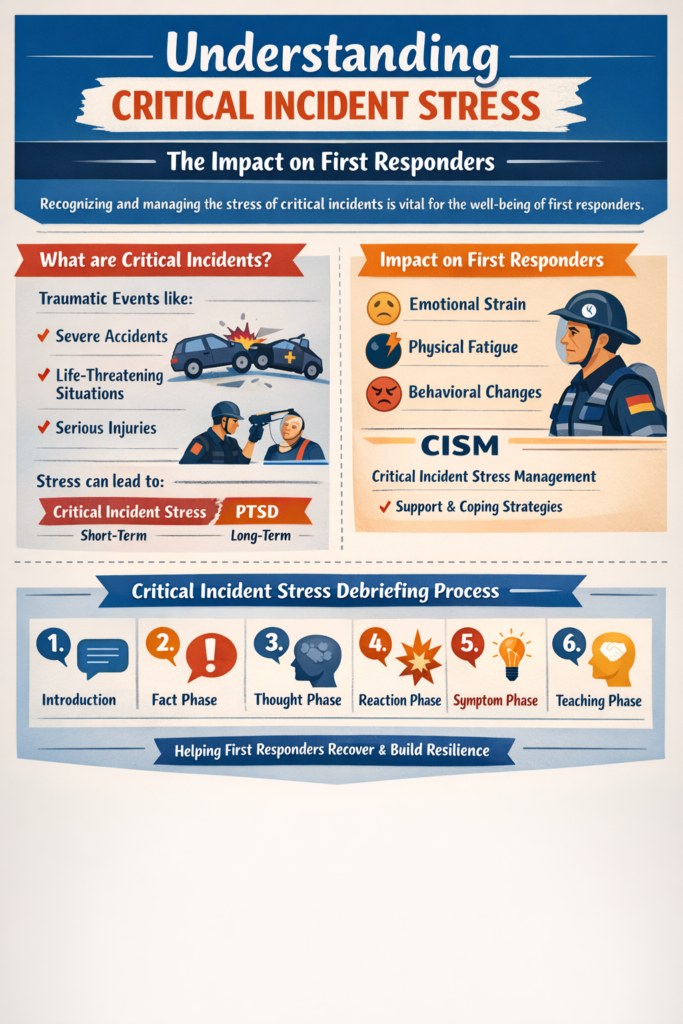
Seven Steps of Debriefing
Way back in 1983, Dr. J. T. Mitchell laid down the law with a study called “When Disaster Strikes,” outlining seven steps to handle stress after things go sideways. These steps help folks deal with emotional fallout and make sense of what went down:
- Figuring Out the Impact: Pinpointing how the incident’s messin’ with folks’ heads and hearts.
- Spotting Safety Worries: Sorting out any urgent safety issues that pop up after the dust settles.
- Letting Off Steam: Giving folks a spot to voice their feelings and reactions about what happened.
- Guessing What’s Next: Getting ready for any hiccups that might crop up down the road.
- Recapping the Show: Chewing over how the incident hit home and finding ways to deal with stress.
- Wrapping Things Up: Closing the debriefing chat, helping folks wrap up their emotional ride.
- Back to the Grind Support: Helping folks ease back into normal life or work post-incident (BetterHelp).
Purpose and Benefits
The goal of Critical Incident Stress Debriefing (CISD) is to help folks mentally move on and dodge lingering stress from a critical incident. By holding a structured group talk 1 to 10 days after the drama, CISD looks to see if folks need more help, get some closure, and process what just hit ’em (ICISF).
Here’s why it’s a good deal:
- Acting Quick: CISD jumps in soon after the incident to help sidestep long-lasting mental woes.
- Moral Support: It gives folks a non-judgy place to spill about their experience and feelings.
- Getting a Handle on Reactions: It helps folks connect the dots when it comes to common trauma vibes, which boosts self-awareness and coping tactics.
- Building Community: Encourages bonding among folks who’ve been in the same boat, creating a sense of togetherness.
- Pointing to Other Help: Opens doors to further counseling or mental health support for those needing it (OSHA).
Sticking with these seven debriefing steps and knowing their value helps organizations and first responders rise to the challenge after critical incidents and build a stronger, more resilient crew.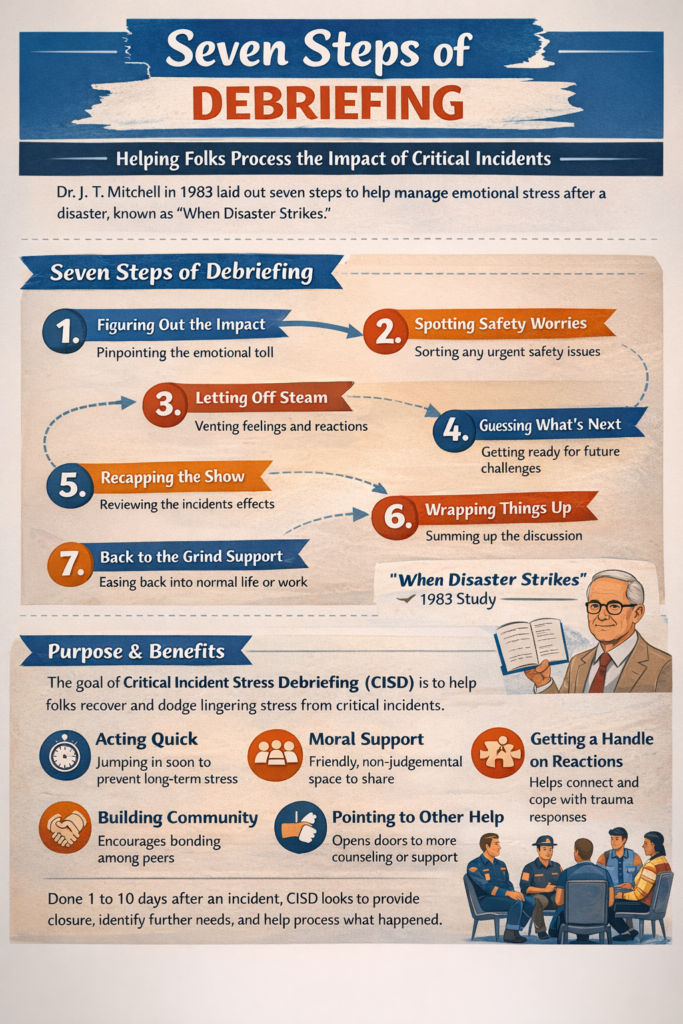
Effectiveness of Critical Incident Stress Management
When we’re talking about dealing with stress from major incidents, it’s important to look at what the studies and findings say. This helps us figure out just how well these stress-busting strategies work for first responders and people caught in the thick of it after a big, scary event. Clearing up any confusion or myths about these strategies is also a big deal because it makes sure we’re using methods that really work.
Research Studies and Findings
The research gives a good nod to Critical Incident Stress Management (CISM). Folks at the International Critical Incident Stress Foundation have pointed out some good stuff. Studies show CISM programs do more good than harm—like cutting down on drinking problems and making life better overall. Different research methods like interviews, controlled tests, and big-picture analyses have backed up just how much these CISM programs help folks who’ve experienced traumatic happenings feel more sturdy and supported.
Controversies and Misconceptions
Even with the thumbs-up CISM gets, some discussions and mix-ups still float around in the stress management circle. Sometimes people look at a part of CISM called psychological debriefing, and opinions clash. Take, for instance, a big review back in 2002 by Cochrane, they basically said the jury’s still out on whether this debriefing really stops or lessens PTSD symptoms after someone’s gone through a work trauma.
Being in the know about the latest research is key for anyone dealing with critical incident stress management. By staying sharp on the freshest studies and understanding what they say, companies and individuals can make smarter calls on how to help people who’ve been through the wringer.
Implementing Critical Incident Stress Support
Handling the stress that comes with critical incidents is vital for the well-being of first responders and personnel who face traumatic situations. Here’s a look at why training programs and post-incident support are important in helping them cope and recover.
Training Programs and Guidelines
Folks working in high-stress jobs get a big lift from thorough training programs. During a 5-day course on stress management, they pick up skills to better handle their own stress and support their buddies when things hit the fan. Boosts in confidence have been noticed among those participating, especially when it comes to leading team talks after incidents, according to the Department of Health and Social Care.
Organizations need to have these programs locked and loaded because they don’t just stop with individual growth; they also get everyone ready to back each other up. When organizations mix in-person with online learning and sprinkle in some role-play activities, the whole training process can be much more impactful.
Post-Incident Support Pathways
Workplaces that prioritize their crew’s health know the drill with post-incident support. These support pathways are more than just structured plans—they’re lifelines for folks who’ve been in or around traumatic episodes. With the right training on peer support and debriefing, employees are geared up to deal with what comes after a critical situation.
The guidelines focus on getting help to the people who need it fast, with special care tailored to their experiences. Companies showing they’ve got their employees’ backs through this demonstrate they’re in it for mental health and resilience, acknowledging that proper support after these incidents is a big part of healing over time.
By blending these training programs and post-incident support into their daily operations, organizations form a culture that’s all about care and empathy. This proactive approach is crucial in ensuring first responders and critical personnel stay healthy and safe, fostering a work environment where people not only feel backed but also valued and heard as they navigate their recovery.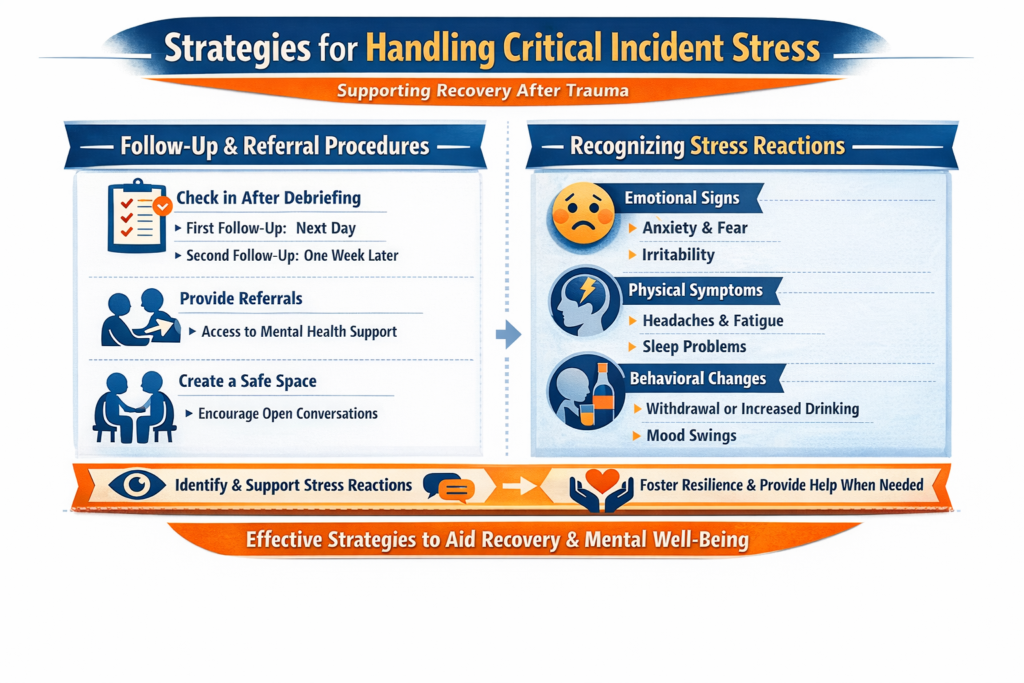
Strategies for Handling Critical Incident Stress
In the hustle of dealing with critical incident stress, it’s super important to have rock-solid strategies to tackle stress reactions. This way, we can offer the right support to folks who’ve been through tough times. Two big plays in this game are follow-up and referral methods and spotting stress reactions.
Follow-Up and Referral Procedures
Once the critical incident stress debriefing wraps up, checking in and making referrals become key to looking after those who’ve faced traumatic experiences. This is a big deal in Critical Incident Stress Management (CISM), where the name of the game is to follow up with folks to see if any new symptoms have popped up—or if old ones have gotten worse.
OSHA recommends doing your first follow-up the day after the debrief, and then another check a week later. Keeping the support coming lets organizations nip any problems in the bud and step in with help when needed.
It’s critical to foster an environment where people feel comfortable opening up about their struggles and reaching out if they need a hand. Making sure there’s a clear path to mental health pros or counselors to cater to their needs is a smart move.
Recognizing Stress Reactions
Spotting stress reactions is another big hitter in managing critical incident stress effectively. Knowing the signs of stress in and out helps responders jump in early and lend a hand to ease the impact of trauma.
During the chaos of an emergency, a bit of chat and keeping an eye out can work wonders in catching initial stress signals. Some stress signs include:
- Feelings like anxiety, fear, or crankiness
- Physical stuff like headaches, feeling worn out, or trouble sleeping
- Behavioral shifts like pulling away from others, drinking more, or sudden mood swings
Grasping these signs and understanding the mental toll of critical incidents is crucial for boosting resilience and aiding recovery. Creating a no-judgment zone where people feel safe opening up is a must, helping them work through what they’ve faced.
By keeping solid follow-up and referral actions in place and keeping our eyes peeled for stress reactions, organizations can steer the ship through critical incident stress and stand by those dealing with trauma’s aftermath. These smart strategies help in bolstering mental well-being and resilience among responders, making sure they get the care they need to handle the tough parts of their job.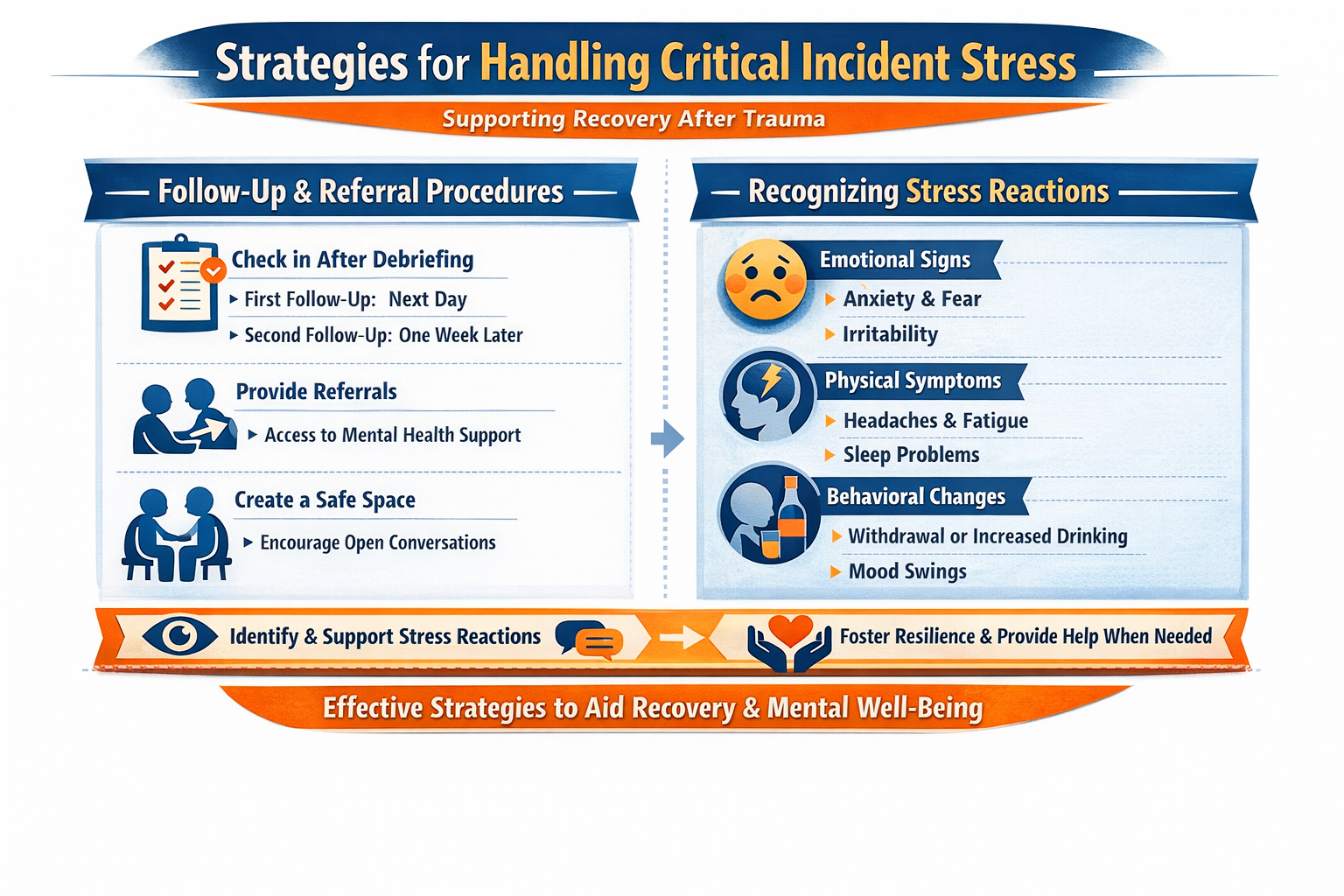
New Ways to Handle Stress Debriefing
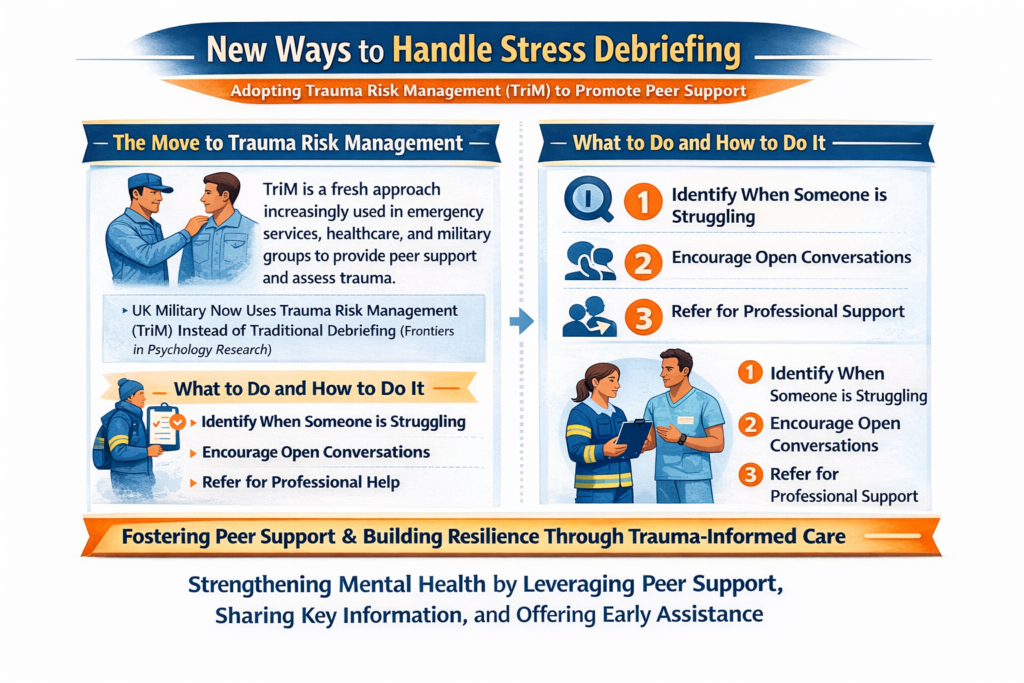
Stress management techniques change over time, and now there’s a growing trend to adopt Trauma Risk Management (TRiM) instead of the old-school psychological debriefing methods. TRiM is catching on in places like emergency services, healthcare, and military groups. This method is all about peer support, aiming to help folks who’ve been through tough times.
The Move to Trauma Risk Management
The UK military is jumping on the Trauma Risk Management (TRiM) train, as seen in research by Frontiers in Psychology. They’re switching from the usual psychological debriefing gigs. TRiM’s core focus is on building a support network among peers. It gives people the know-how they need, checks how they’re handling trauma, and points them to the right help. This way, folks can better tackle stress and maintain their mental health after life’s curveballs.
What to Do and How to Do It
For those thinking about adding TRiM and similar peer support tactics, it’s crucial to lay down some solid ground rules. These should spell out what everyone involved in TRiM should do, including how to spot when someone’s not coping well, how to encourage open chats, and when to refer people for more help.
By jumping on the TRiM bandwagon and pushing for peer support and resilience, any group can lessen the psychological toll of tough incidents on their folks. When crisis response leans on trauma-informed care, it gives a boost to mental health and sturdiness for those dealing with traumatic events.
The shift towards Trauma Risk Management marks a fresh direction in how we handle stress debriefing. It’s all about leaning on your peers, spreading vital information, and stepping in early to help those hit hardest by critical incidents. By promoting mental toughness and a support network based on peers, groups and pros alike can foster mental well-being and effective ways to handle the bumps in life’s road.