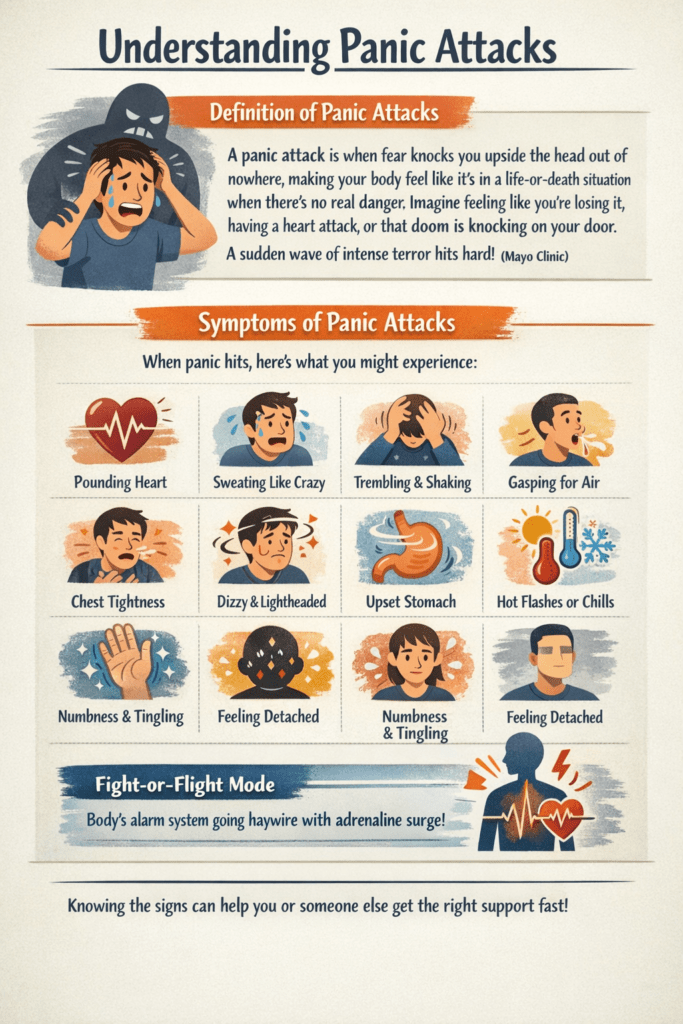
A panic attack is basically when fear knocks you upside the head out of nowhere, making your body scream like it’s in a life-or-death situation when nothing’s actually wrong. Imagine feeling like you’re losing it, having a heart attack, or that doom itself is knocking on your door. That’s a panic attack for ya. This sudden wave of terror is marked by sky-high anxiety levels, making you feel all sorts of frazzled (Mayo Clinic).
Picture this: you’re minding your business when BAM, your body hits panic mode in mere minutes. You might feel like you’ve run a marathon once it’s over—no wonder folks feel wiped out. Here’s a list of the usual suspects when it comes to symptoms:
Rapid heartbeats pounding like a drum
Sweat so intense you’d think you ran through rain
Shakes like you just had too much caffeine
Gasping for air like you’re a fish outta water
Feeling like you can’t swallow or catch your breath
Chest clamp squeezing tight
Stomach doing somersaults
Dizzy spells making the room spin
Hot flashes or chills that confuse clothing choices
Numbness or those annoying pins and needles
Feeling like you’re spaced out or not really you
All these sensations come from the body hitting the ‘fight-or-flight’ alarm button, dumping adrenaline like it’s free. It’s a bit like your body flipping out even though it’s a false alarm (Better Health VIC).
Knowing what panic attacks look and feel like helps if you or someone else starts freaking out. Spotting these clues can lead to quicker help and smarter ways to manage the chaos.
Causes of Panic Attacks
Getting a grip on what sets off panic attacks and the deeper reasons behind these fear-filled moments is key to keeping them at bay. Panic attacks hit about 6 million folks in the U.S. – they come out of nowhere and smack you with fear, topping out in a matter of minutes. So, let’s break down what sets off these panic attacks and what lurks beneath the surface.
Triggers for Panic Attacks
You never know what might set off a panic attack. It could be places, things, or situations that send your stress levels soaring. Figuring out these triggers can help you steer clear of panic episodes. Here are some you should watch out for:
Places: Packed or tight spaces can set folks off, especially if they’re prone to panic. Ducking these places might seem like a fix, but it can actually make your nerves worse in the long run.
Mind Triggers: Major stress, past trauma, or heavy emotional moments can yank the panic cord. Your fight-or-flight response might kick in as a reaction to these mind-bending stressors.
Body Triggers: Things like hormonal swings, messed-up sleep, or substance issues (yep, booze and caffeine too) can shove your body’s response into overdrive, triggering panic.
Once you know what sets you off, you can take steps to control and reduce the chances of another panic storm.
Underlying Factors
While those triggers might pull the pin, there’s more to why panic attacks settle in. Let’s look under the hood:
In Your Genes: Turns out, panic might be partly hereditary. If anxiety disorders run in your family, you’re at a higher risk of experiencing panic attacks yourself.
Body Chemistry: Things like off-balance hormones or brain chemicals can trigger panic attacks. Tuning into these biological issues is important for getting a handle on things.
Past Trauma: If you’ve been through trauma or tough times, certain triggers can drag those memories back, kicking off a panic attack.
Your Mental Health: Issues like anxiety and depression can act like kindling for panic attacks. They share symptoms and triggers, making them intertwined.
By laying everything on the table, from what sets off your panic attacks to what fuels them, you can take steps towards living without fear. Professional help and self-care tools are your best friends on this journey to better manage panic.
Coping Strategies During Panic Attacks
Panic attacks can feel like the world is collapsing around you—but there’s hope. Here are three nifty tricks to help you keep your cool: some fancy breathwork, grounding techniques that’ll tether you back to Earth, and the sweet aromas of essential oils.
Breathing Techniques
Breathing’s magic, folks. Deep breaths can help you handle the wild ride of anxiety and panic attacks. Try breathing in slowly, counting to four, and then letting it out. Really focus on each breath—it does wonders to chill your body’s stress vibe. There’s another trick called the 4-7-8 method. Breathe in for four counts, hold it for seven, then let it out over eight. It’s like telling your brain, “Hey, relax, I’ve got this!”
Grounding Techniques
When panic hits, finding a chill space away from chaos can work wonders. A quiet spot helps you settle your mind. Turning attention to an object—that rock you’ve got in your pocket, maybe, or even a tiny toy—helps you snap back to reality. Keeping your brain busy with something you can touch helps dial down the freak-out, drawing you back to the here and now.
Use of Essential Oils
Here’s where scent becomes your buddy. Essential oils are the champions of relaxing vibes. Lavender, for instance, is the superstar of chill—sniffing it can lower your blood pressure and tame anxiety like a pro. Not a fan of lavender? No biggie. There’s always bergamot, chamomile, or even lemon to the rescue. Just make sure to mix them right to avoid skin trouble, and as you experiment with the scents, you might find one that zens you out perfectly.
Working these strategies into your daily life can arm you against panic attacks like you’re ready for battle, but with a dose of zen. Breathing exercises, grounding methods, and a splash of essential oils can stack the odds in your favor, helping you manage those pesky panic moments and giving you back a sense of control and calm.
Long-Term Management of Panic Attacks
The long haul isn’t all about surviving panic attacks—it’s about building a castle of calm in your world. Let’s break out some trusty armor: meditation and mindfulness, a dash of exercise, and a side of professional help. Together, they’ve got a thing about beating anxiety into retreat.
Meditation and Mindfulness
Remember when you were a kid, and your mom told you to count to ten when you were mad? Well, meditation’s just the grown-up version of that. Studies from 2018 spill the beans: a slice of calm pie each day can keep the jitters away. Whether you’re a stressed-out student or buried in adulting, a quick trip to Zen-land can deflate the balloon of anxiety.
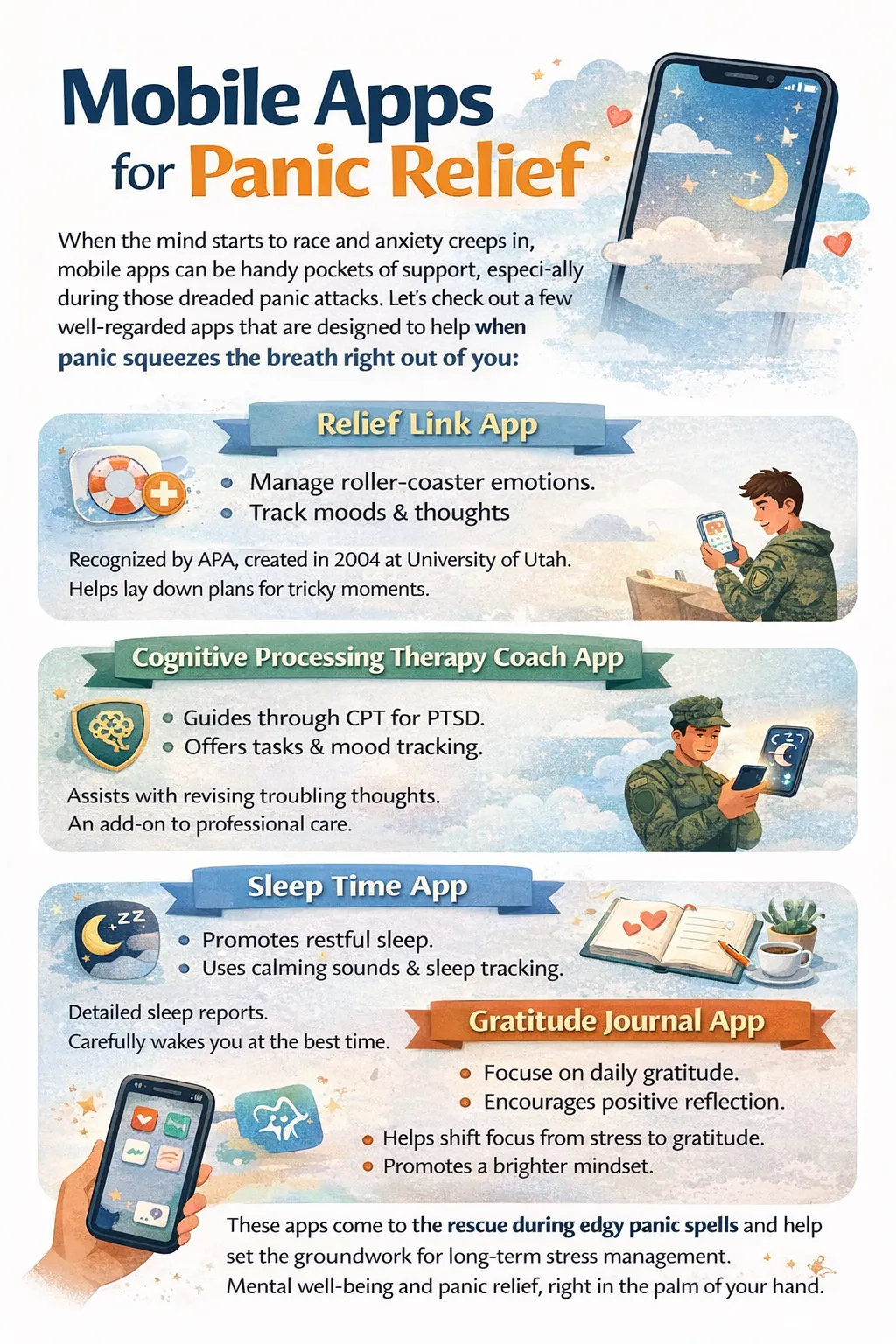
Meditation is about living in the here and now, less “I forgot to send that email” and more “Wow, these birds sound nice.” Meditation apps are out there, teaming with guided sessions like your very own calm GPS. When the brain’s stuck in a panic loop, these can help brake the mental hamster wheel.
Kicking off with a guided meditation could be like having a trusty guide leading you out of the stress jungle. For more on mind-wrangling techniques, our piece on guided meditations for panic relief is the map to check out.
Exercise and Physical Activity
Time to get our bodies moving; turns out those endorphins can kick anxiety aside. Exercise isn’t just about flexing those muscles; it’s about handing your mind a spa pass. We’re talking jogging and yoga, or if you’re crazy enough, that killer Zumba class. Each workout’s like scoring happy points and chasing away those gloomy gusts.
Pick the movement that lifts your spirits, be it a casual stroll, tango twirls, or deadlifts at the gym. A fit body equals a happy mind, boosting your mood and showing panic the door. Plus, quality shut-eye and some self-esteem come free with every workout, sweetening the deal even more.
Beyond DIY anxiety busting, there’s no harm in calling in the pros. We’re talking life hacks like Cognitive Behavioral Therapy (CBT) and exposure therapy that teach panic a lesson or two.
CBT is like putting your anxious thoughts in the naughty corner, where they learn not to mess with you again. Exposure therapy is the daredevil of the bunch, face your fears, and come back with badges of bravery. Staying consistent with therapy can help you flip the switch on panic responses.
Curious about how CBT could rewrite your panic script? Our dive into the role of CBT in treating panic disorders ought to tickle your curiosity fancy. Hop in to see professional options ready to unsnarl and transform your relationship with anxiety.
By embracing meditation, breaking a sweat, and reaching for therapeutic help, you’re building a fortress against panic attacks crafted from steel and a bit of self-love. These strategies play like old friends working in sync, offering peace of mind and resilience against the fight-or-flight frenzy that panic attacks deliver. You’ll be mastering the art of calm and collection before you know it.
Seeking Help for Panic Attacks
Oh boy, isn’t it a rollercoaster when panic attacks hit? They can sneak up on you with all the charm of a heart attack, leaving you feeling like the rug’s been pulled out from under your feet. Trust me, getting medical help ASAP is the name of the game. Going it alone can feel tougher than trying to solve a jigsaw puzzle in the dark, and it’s crucial to sort out what’s a panic attack and what’s a serious health problem.
Importance of Seeking Medical Help
Here’s the deal: our bodies are wired for fight-or-flight. That means panic attacks might just be your body’s way of yelling, “Danger ahead!” You may feel like your body has run off without you, leaving your thoughts racing like they’re in the Indy 500. Experts at Mayo Clinic will tell you that muddling through these episodes solo isn’t the best idea—it’s like trying to juggle with your hands tied. Panic attack symptoms can echo serious health conditions, so ringing up a doc is definitely the way to go.
When panic hits, it can be tough to untangle whether you’re just freaking out or if you’re looking at a serious condition like a heart attack. Getting medical help pronto does more than just give you peace of mind; it clears up the what’s-what and shows you how to handle panic attack episodes like a pro.
Emergency Response for Panic Attacks
When it’s time for the big red emergency button, knowing the ropes of panic attack response is key. If you or someone close is dealing with the scariest kind of symptoms or if you’re in the “I’m not sure what’s going on” zone, don’t play it cool. Jump on the horn and get some professional insight and care right away.
In those panic attack emergencies, just dial triple zero (000) for an ambulance, no questions asked (Better Health VIC). The pros will take it from there, offering up the care and support that make all the difference and ensure everything’s under control for the one caught in the storm.
Remember, calling in the experts isn’t waving a white flag—it’s taking control. You get the scoop on what sets off your panic attacks, tailor-made treatment tips, and maybe even the golden ticket to mastering panic disorder over time. By keeping your well-being front and center and snagging the help you need, you can meet panic attacks head-on with a newfound confidence and grit.
Prevention of Panic Attacks
Stopping panic attacks before they start? It’s totally doable with a mix of personal tricks and expert advice. Let’s see how.
Self-Help Strategies
Anyone who’s experienced panic attacks knows how scary they can be. But fear not! There are some handy self-care methods that can help you cope and keep these episodes at bay:
Deep Breathing: Give slow, deep breaths a go. Really focus on each inhale and exhale. It’s like hitting the mute button on anxiety and finding your zen (Medical News Today).
Mindful Breathing: Ever tried mindful breathing? It’s all about those calming belly breaths and long exhalations. Turn panic mode off and chill mode on (Verywell Mind).
Positive Affirmations: Throw some good vibes into the mix. Positive mantras can stop those nasty thought spirals and bring in a dose of calm (Verywell Mind).
Professional Guidance for Prevention
Sometimes, a little expert support can go a long way. Here’s how pros can step in to help you fend off panic attacks for good:
Medication Management: For some, the answer might be in a prescription. Whether it’s benzodiazepines, beta-blockers, or SSRIs, doctors can find the right meds to keep panic in check (Medical News Today).
Therapeutic Interventions: Dive into some therapy, like Cognitive Behavioral Therapy (CBT) or Exposure Therapy. They’re great for tackling what sets your panic off and arming you with the tools to manage future episodes.
Lifestyle Modifications: Ever thought about a lifestyle tweak? Experts can suggest ways to bust stress, work up a sweat, or revamp your diet to limit panic’s hold on you.
Pairing personal techniques with professional help can build a solid plan to stamp out panic attacks and boost your well-being. Whether you’re practicing breathing tricks, thinking good thoughts, or turning to medicine, the goal is to manage panic head-on and live life to the fullest.