

 Understanding Panic Attacks
Panic attacks hit like a bolt from the blue and can really knock you for a loop. They’re those terrifying moments of fear or discomfort that seem to come out of nowhere. Knowing what you’re dealing with is half the battle, so let’s get a handle on what a panic attack looks and feels like, and why they happen.
Definition and Symptoms
A panic attack is like an unwanted surprise party for your nerves. It jumps in with intense fear or discomfort that takes over in minutes. When this happens, you might go through a grab-bag of symptoms like:
- Heart going thump-thump at warp speed
- Sweat pouring off or hitting chills out of the blue
- Shakes that won’t quit or shivers you can’t explain
- It’s tough to catch your breath or feels like you swallowed a golf ball
- Your chest is doing its own thing with pain or tightness
- Barely keeping your lunch down with belly woes
- The room doing its dizzy dance
- Feeling like you’re losing it or going nuts
- Sudden fear that you’ve seen the end of days
Pinpointing these signs is a big deal because it means you can tackle panic attacks head-on. The sooner you spot them, the sooner you can grab the helping hand you might need.
Prevalence and Impact
Panic attacks aren’t picky – they don’t care about your age or where you’re from, they just show up. Stress, trauma, or certain triggers can invite them right in. And boy, can they mess with your daily hustle, your social shenanigans, and your peace of mind.
In the U.S., around 2.7% of adults have a panic attack that joins the party each year, although the real crowd might be bigger since many folks keep it quiet or don’t get checked out.
These shockwaves go deep, messing with your mental, emotional, and physical vibes. They might crank up your anxiety, make you dodge certain situations, or leave you feeling like you’ve got no control. Taking them on with therapy, lifestyle tweaks, or even some supplements can really help get things back on track and make life less of a rollercoaster.
Getting the 411 on panic attacks—the symptoms, how common they are, and what they do to you—means you can roll up your sleeves, face them full-on, and tap into whatever support you need for a better grip on your mental mojo.
Factors Contributing to Panic Attacks
Panic attacks sneak up and hit you like a freight train, catching you when you’re least expecting it. Let’s chat about what might be behind these sneaky stress surprises so you can kick them to the curb.
Biological Influences
You may have ever wondered why some folks deal with panic while others cruise through life? Well, part of that might be thanks to what you’ve inherited—thanks a lot, DNA! Turns out, your genes might have a big hand in your odds of experiencing anxiety or panic (More on genetics and panic). Then there’s hormones. You know, those chemical messengers that can make you feel like a superhero or like you’re living a daytime soap opera? Fluctuations like during periods or menopause might push you over the edge into panic city (Hormones and panic attacks).
And let’s not forget our favorite villains: caffeine and alcohol. Sure, your morning coffee wakes you up, but too much can make your heart race like you’re running a marathon all while you’re still in pajamas. Alcohol isn’t any better, playing Pac-Man with the balance in your brain, leaving behind a stress monster munching on your peace of mind.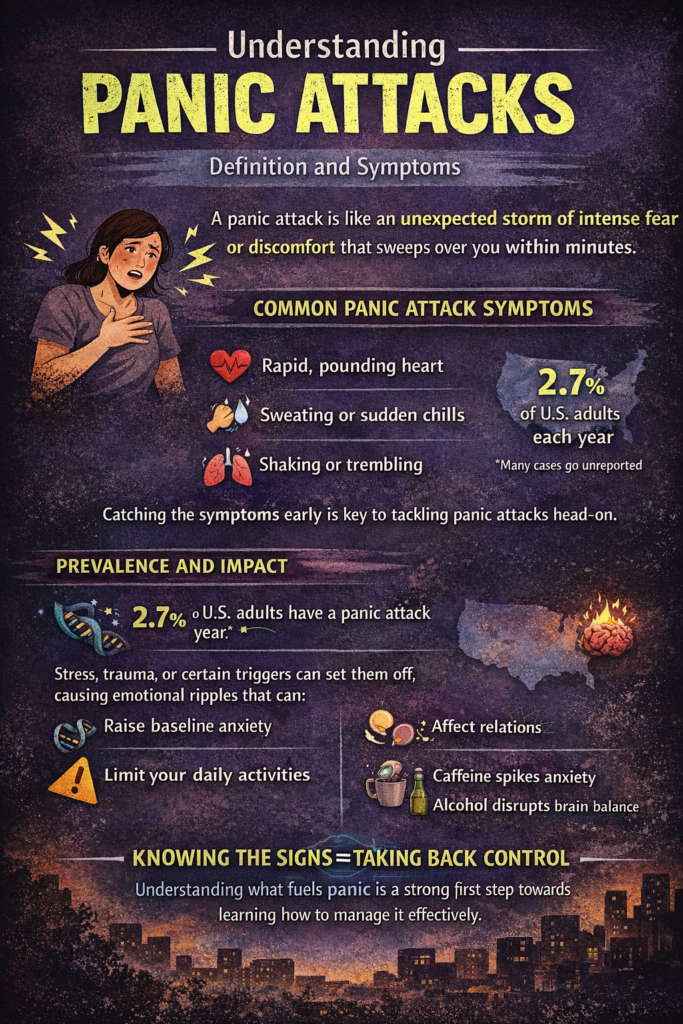
Psychological Triggers
As if biological factors weren’t enough, our brains like to throw in psychological curveballs too. Life stress is a giant trigger, whether it’s about juggling work, love, or money problems. These pressures can spiral from merely annoying to seriously sweat-inducing.
Then there’s trauma—a heavyweight contributor. Past experiences like physical or emotional trauma can linger like a bad sequel, creeping back unexpectedly to haunt you with panic attacks (Trauma and panic).
Putting these pieces together, understanding both the body and mind gives you the upper hand. Whether it’s making some lifestyle changes, chatting it out in therapy, or popping the right supplements, you’ve got tools to tackle those panic pests. If panic attacks are your uninvited guests, it might be time to reach out to a pro who’s trained to help you send them packing. They’re out there, ready to team up and design a plan that gets you back in control.
Best Supplements for Panic Prevention
If you’re looking for some peace of mind, especially when stress buzzes around like an annoying fly, supplements might just be your new best pals. Let me spill the beans on three that top the list for keeping panic at bay: ashwagandha, L-Theanine, and magnesium.
Ashwagandha Supplement
Ever heard of ashwagandha? It’s an ancient herb with the magical knack of helping your body chill out. Think of it like a calming whisper in a storm. It swoops in to help your body handle stress and anxiety like a pro. Plus, there’s some chatter about ashwagandha boosting your sleep quality, which we all know is VIP when it comes to battling stress (Everyday Health).
Make ashwagandha a daily buddy, and you’ll start noticing a zen-like vibe creeping into your life. It’s nature’s way of giving your anxious mind a gentle hug. Those panic attacks? Pfft, they might just start waving goodbye.
L-Theanine Supplement
Here’s another superstar in the calmness arena: L-Theanine. Found in green tea, this amino acid can turn the volume down on stress and crank up your focus and memory. So, if you’re juggling life and stress throws you a curveball, L-Theanine is the friend you want around.
Pop an L-Theanine supplement, and it might feel like slipping into a mental chill zone, where calm reigns supreme and your brain sharpens up, ready to tackle whatever life hurls your way.
Magnesium Supplement
Magnesium is the unsung hero your body needs when stress starts taking too much space in your brain. It has this great rep for helping dial down anxiety, although more research wouldn’t hurt to give it a full thumbs-up as a stress-buster.
Add a sprinkle of magnesium to your daily life, and it could arm your stress-response system, leaving you feeling like you’re lounging in a hammock on a sunny day—mentally, at least. As stress can zap magnesium from your body, topping up might just keep your emotional balance in check.
Before you start grabbing these supplements from the shelf, have a chat with your healthcare buddy to sort out what and how much is best for you. Mix these up with some lifestyle tweaks and relaxation hacks, and you’ve got yourself a wholesome playbook for kicking panic to the curb.
Supplement Safety and Considerations
So, you’re thinking about trying supplements for stress busting and panic calming, but let’s chat about what you need to keep in mind to keep things safe and sound.
Potential Side Effects
Supplements are like anything else in life—more ain’t always better. Overdoing it on your stress relief pills or mixing them with other meds can lead to nasty surprises. The folks at the American Cancer Society remind us that playing doctor by swapping out prescribed meds for supplements can make side effects even more likely.
Stick to the recommended doses and check in with your healthcare provider before shaking up your routine with new supplements. Listen to your body too; if something feels off after taking your stress heroes, it’s time for a chat with the doc. You don’t want your panic fix to turn into a panic trigger.
FDA Regulation and Oversight
Dietary supplements walk a weird line because unlike the meds at the pharmacy, they fly solo without needing an FDA hall pass before hitting the shelves. This hands-off approach means wading through claims from the brands and hoping they play by the rules. The FDA gets involved only if folks start having issues after the fact, and let’s be clear, they don’t give their thumbs-up for supplements to treat or cure anything.
Pick supplements with care, aiming for those from brands known for playing fair. The label ‘good manufacturing practices’ is your friend here. And if you end up having a not-so-happy experience with a supplement, don’t keep it to yourself. Let your healthcare provider and the FDA know.
The goal isn’t just to pop a pill and hope for the best. By staying savvy about side effects and the FDA scene, you’re setting yourself up for a safer stress-busting ride. Do your homework, listen to the pros, and keep it moderate— that’s your recipe for using supplements wisely in your quest for chill vibes and calm days.
Supplements and Health Risks
Thinking about popping a few pills to mellow out or dodge those panicky moments? Hang on a sec – it pays to know what’s up with these supplements, especially when you’re chugging them in big doses or mixing them with your meds.
Adverse Effects of High Doses
Going overboard with supplements like those marketed for chilling you out can come back to bite you. Overdoing it might leave you feeling worse, not better. Imagine this: instead of calm, you’re dealing with nausea, headaches, or even something as serious as organ damage. It’s a classic case of “less is more.” Stick to the recommended dosages, and don’t play hero by taking double scoops. Better yet, have a chat with your doc before making any big changes to your supplement habits.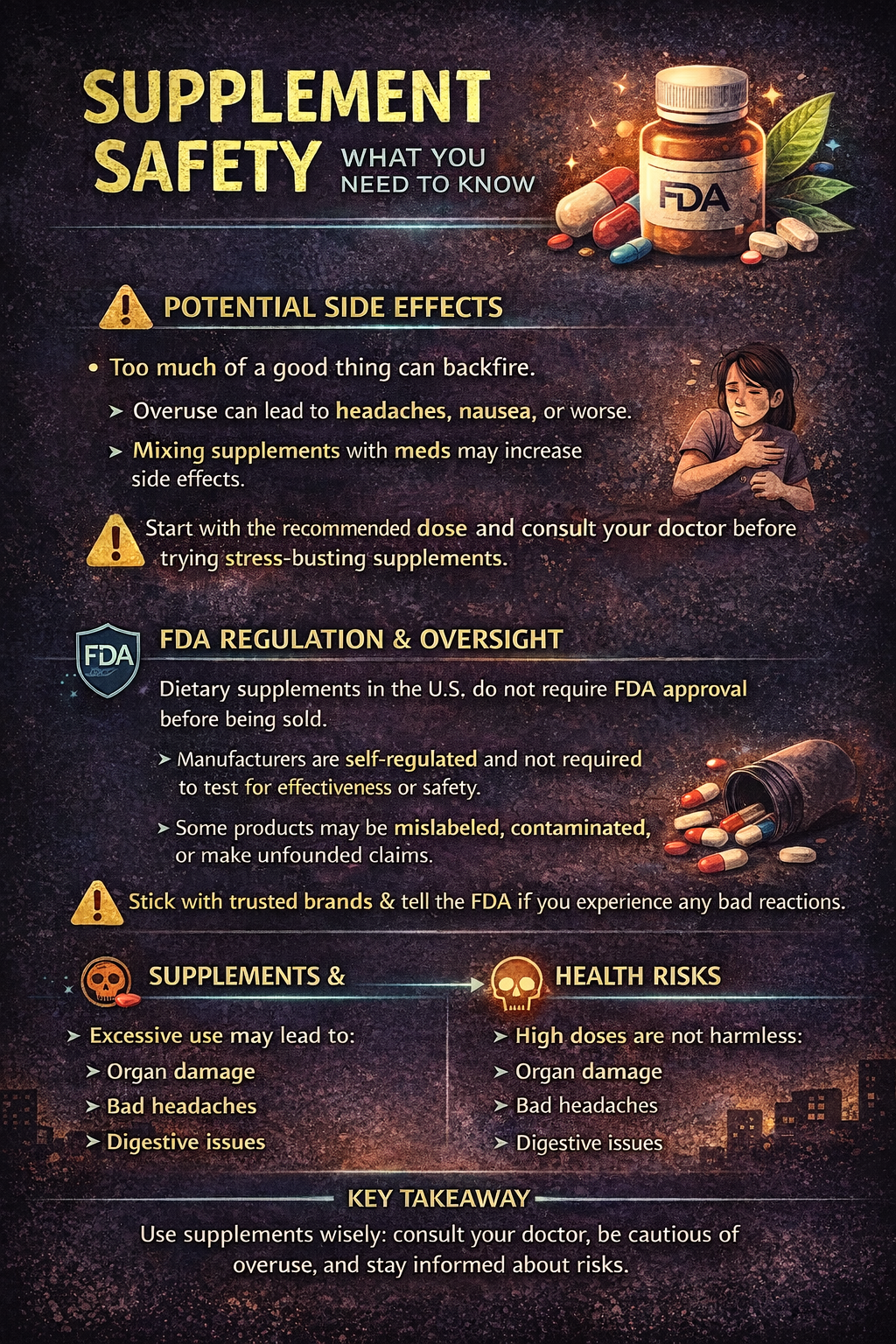
Interactions with Medications
Ever mixed up the wrong ingredients in the kitchen? Supplements can do the same with your medications. Rather than having a party in your body, some supplements tag team with your meds to mess things up. They might make your prescription drugs less effective or turbocharge them in not-so-great ways.
If you’re stacking these with medicine for serious stuff like heart issues or diabetes, it’s time for a reality check. You don’t want your well-intentioned supplement routine to sabotage your health goals. So give your healthcare provider the full scoop about any supplement you’re on and potential slip-ups when combining them with your medication.
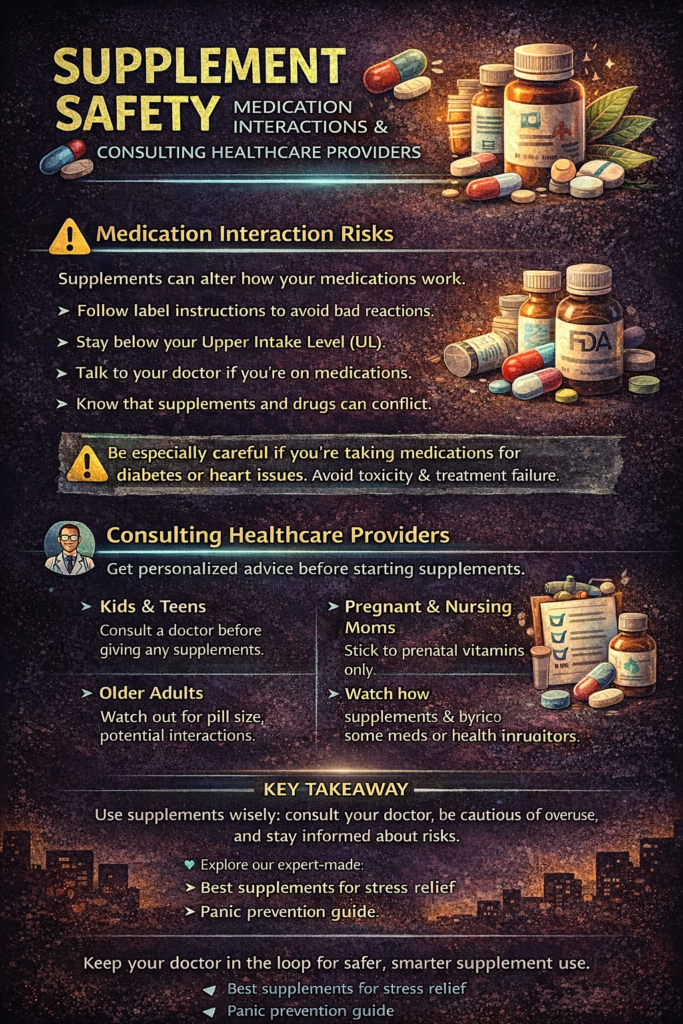
To keep from sliding down a slippery slope while using supplements, here are some no-brainers:
- Follow the directions on the supplement bottle like it’s a GPS on a road trip.
- Don’t breach the Tolerable Upper Intake Level (UL) for any nutrient – toxicity isn’t in any health plan you want.
- Got a condition or on meds? Give your doc a shout before jumping on the supplement train.
- Watch how supplements might play off each other or with your meds – some like to act up more than others.
Stay clued-up about what’s safe and what’s sketchy with supplements to keep health horror stories at bay as you explore stress relief options. Having your doctor in the loop means you can tailor your supplement choices to fit your wellness goals while steering clear of potential pitfalls.
Consulting Healthcare Providers
So, you’re thinking of adding a bit of extra help—supplements—to tackle stress and keep those panic attacks at bay? Hold up! Before you start popping pills, it’s wise to check in with your healthcare crew. This is where you get the lowdown on what you should know to keep things all good and safe.
Precautions for Specific Groups
Not everyone’s the same, and that’s especially true when it comes to handling stress and panic helpers. Here’s a quick rundown of who should be extra careful:
- Kids and Teenagers: Before handing any pills to your kids, chat with their doc. The young ones have different needs, and you wouldn’t want to go overboard.
- Moms-to-be and New Moms: If you’re pregnant or nursing, think twice. Some supplements don’t play nice with developing babies, so better stick with the tried-and-true prenatal vitamins.
- Older Adults: Swallowing big pills? Not fun when you’re a senior. Plus, there’s a chance some of these supplements might not agree with you. Keep your regular check-ins with healthcare professionals to dodge any mishaps (Harvard Health Publishing).
Importance of Professional Guidance
Getting a thumbs-up from the pros ain’t just formality—it’s smart, especially when it involves your health:
- Mix-ups and Mess-ups: You want to avoid any mix-ups where your supplements and meds throw a party without your permission. Drugs don’t always get along, so your doc can steer you clear of any bad combos.
- What’s the Right Amount?: No one size fits all here. Docs help figure out what’s right for you, so you don’t blow past safe levels and end up feeling worse (WebMD).
- Health Matters: Got other conditions to worry about? Your doctor will let you know if a new supplement will play nice with your current meds or health situation.
Bottom line, spinning the supplements wheel for stress and panic? Make sure to get a professional’s advice first. This can make sure you’re on the right track with fewer bumps along the way. And if you’re hungry for more tips and info, our expert-loaded articles on best supplements for stress relief and panic prevention are a good read!