
Understanding Co-Occurring Conditions
Let’s chat about the tangled web between attention-deficit/hyperactivity disorder (ADHD) and anxiety disorders. It’s a big deal because these conditions often hang out together in the same club, making life a bit more of a rollercoaster for a lot of folks. Get this: Up to half the crew with ADHD also wrestle with anxiety (NCBI). So, it’s pretty key to figure out how these two interact if we want to offer the right kind of help and support.
ADHD and Anxiety Disorders
The bond between ADHD and anxiety is kinda like trying to untangle a pair of earbuds—you know it’s all connected, but exactly how is a mystery. About a quarter to nearly half of the kiddos with ADHD are also juggling anxiety (NCBI). When both conditions come to the party, it can crank up the volume on challenges in daily life.
You might see folks with both conditions dealing with restlessness, focusing problems, and extra stress. Having them together can mess with emotions and thinking, making it tougher to keep things together.
Impact on Different Age Groups
When it comes to how anxiety and ADHD vibe across different ages, studies are a bit of a mixed bag. Some say that anxiety in kids doesn’t always mean they’ll have ADHD later, while others think ADHD might help anxiety swing into action (PubMed Central). This jigsaw puzzle means we need to figure out the best kind of help for folks as they grow and change.
By understanding how these conditions show up in folks of different ages, we can hook up the right kind of support. Whether it’s pinpointing what kids, teens, or grown-ups need, the aim is to boost their well-being and life quality.
Need some tips and tricks on helping folks at different ages with ADHD and anxiety? Check out our pieces on panic attacks in teens: how to help, panic disorders among college students, and panic attack warning signs in elderly parents. Understanding and tailored help are the real MVPs when it comes to dealing with these challenges through life’s different phases.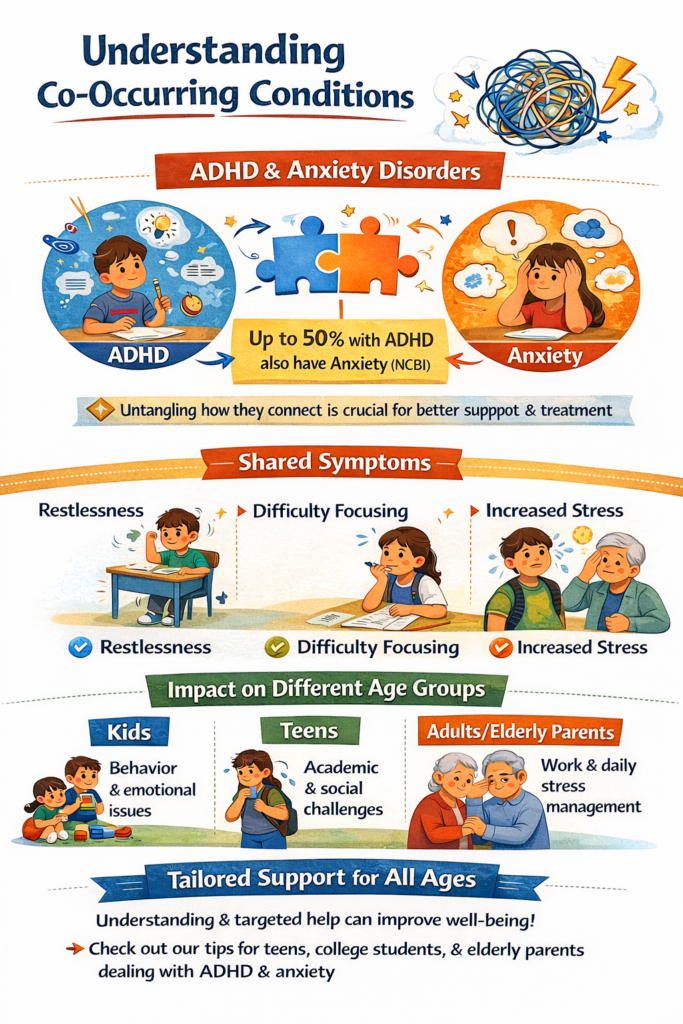
Factors Contributing to Anxiety in ADHD
Taking a real close look at ADHD and anxiety, it’s clear there are a bunch of reasons people with ADHD often face higher chances of anxiety disorders. Genetics, environment, and even the drugs prescribed play big roles here, sometimes making things tough on our minds.
Genetic Factors
Turns out, just like you might inherit your mama’s curly hair or dad’s knack for storytelling, you can also inherit a mix of ADHD and anxiety vibes. According to some brainy folks at Healthline, there might be a code in our genes that makes us more likely to freak out a little quicker than others. Knowing this could be like finding a map to a treasure we didn’t know we could get—treatment that actually targets our genes.
Environmental Factors
Think about stuff like being born too early or growing up around yucky chemicals. As if ADHD wasn’t enough, now we gotta toss this junk into our anxiety cocktails. Medical News Today dishes out the dirt on how these nasty environmental factors, especially when paired with our genetic cards, can dial up the anxiety levels. Getting to the bottom of how these puzzle pieces fit together is key to understanding why some of us pick up anxiety along the ADHD journey.
Role of Medications
It’s like a game of dominoes; meds that help with ADHD can sometimes tip over and set off anxiety. So, it’s a balancing act—do the meds help without making us jittery messes? Docs definitely need to be the careful jugglers here, mixing and matching meds to keep those anxiety sparks under control.
If we really get under the hood of how genes, environment, and meds crank up the anxiety meter in folks with ADHD, we might just build better strategies to tackle both ADHD and anxiety at once. Treating anxiety and ADHD isn’t just about managing symptoms; it’s about crafting a personal survival guide that opens doors to a life less tangled up in worry and much more kind to oneself.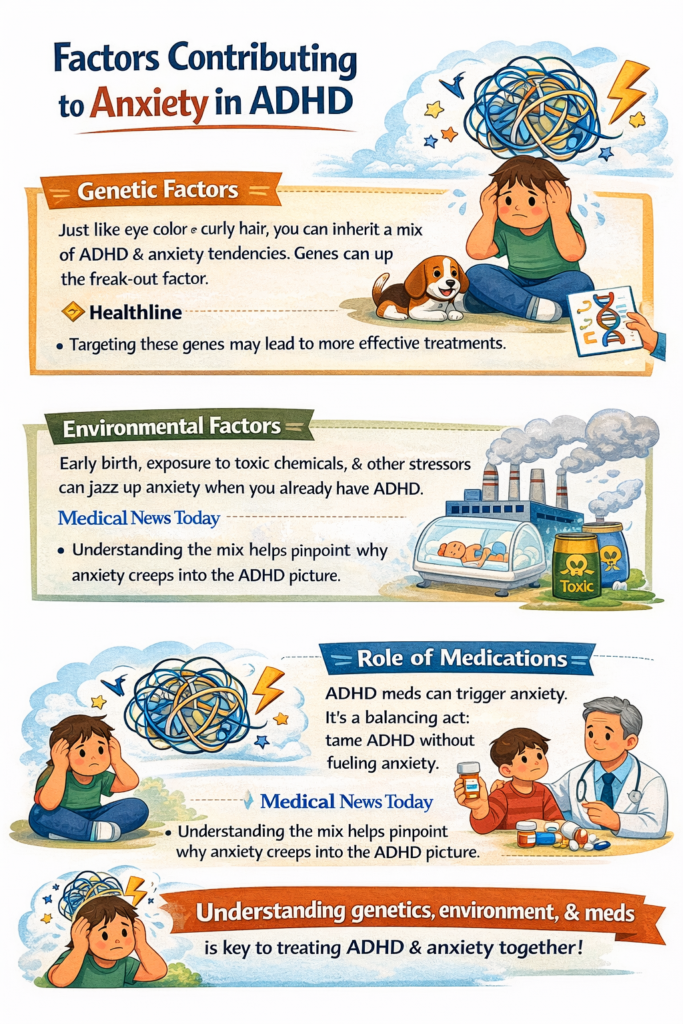
Managing Anxiety in ADHD
Living with ADHD is like living in a world always on fast forward, where anxiety sometimes sneaks into the picture, throwing in plot twists you didn’t ask for. Coping with anxiety can feel like a wild ride, but with the right tricks up your sleeve, you can strike that sweet spot between calm and chaos.
Treatment Challenges
Let’s talk meds. Treating ADHD itself is one thing, but add anxiety to the mix, and things can get a bit tangled. The usual go-to’s for ADHD, like stimulants, might not be anxiety’s best friend. They can accidentally ramp up those stressy vibes. So yeah, it’s good to explore other routes. Think of cognitive behavioral therapy or those chill non-stimulant meds that can offer a hand in taming both ADHD and anxiety at once. Sometimes, it’s all about finding the right combo that clicks for you.
Lifestyle Factors
Switching up everyday habits can do wonders for those anxious feels. Ever noticed how a good run or workout can make you feel like you’ve got superpowers? That’s those feel-good chemicals in your brain partying hard, chasing away stress. Sleep’s your buddy too — get into a rhythm with it, same bedtime, same wake-up, no surprises! Plus, munching on balanced meals can help keep that anxiety at bay. Sometimes, small tweaks lead to big waves of calm (Medical News Today).
Therapeutic Interventions
Beyond meds and lifestyle switch-ups, therapy’s got your back. Cognitive behavioral therapy, for instance, is like your brain coach, helping you spot anxiety’s moves before it hits you hard. It’s about knowing your triggers, boosting your emotional toolkit, and playing defense in life’s game plan. It’s like training your mind to face anxiety head-on, with moves tailored just for you.
Tackling ADHD with a side of anxiety might sound like a tall order, but mixing a bit of therapy, lifestyle changes, and personalized treatment can be your magic formula. Don’t play it solo. Rally up with the pros for guidance and a strategy built just for how your brain does its thing.
Relationship Between ADHD and Anxiety
Checking out how ADHD and anxiety are tied together shows some eye-opening links, especially in how our brains work and act.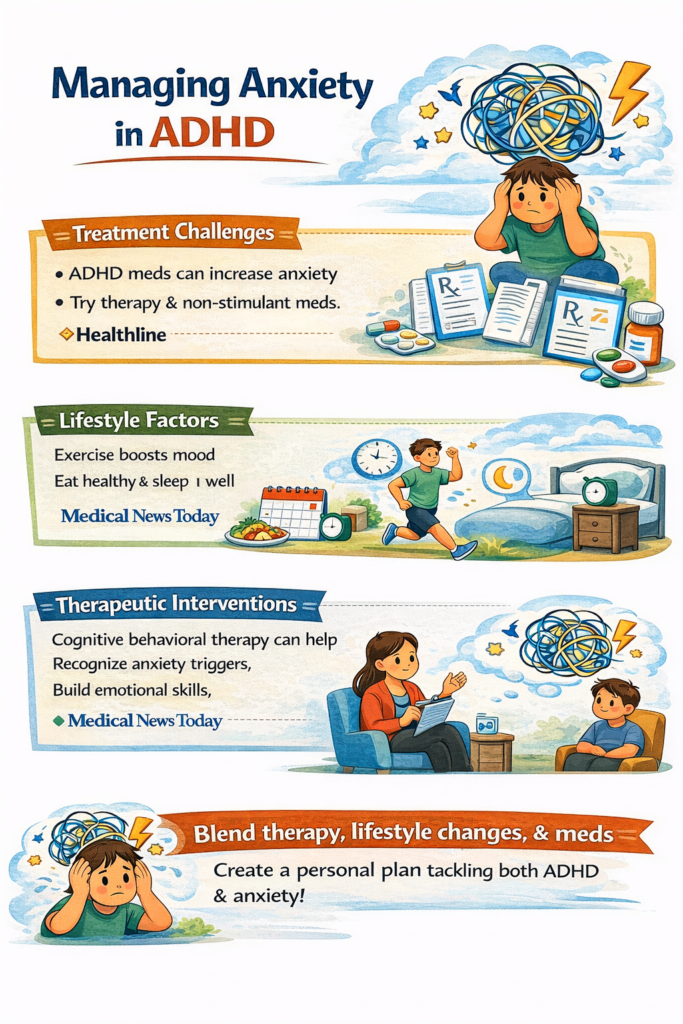
Cognitive Functioning
When anxiety pops into the mix, it really shakes up how ADHD affects certain parts of the brain. Research, like those brain scans, tells us that people dealing with both ADHD and anxiety might struggle more with tasks that need good visuospatial working memory—they might not get it right as often. It’s like the cerebellum, which helps filter and manage information, is having a bit of a hard time keeping up (PubMed Central).
Impact on Neural Activity
The severity of ADHD teams up with anxiety levels, causing changes in brain activity, especially in spots like the cerebellum, basal ganglia, and thalamus. This combo means there’s a dip in how well info gets processed, and it’s like trying to deal with brain traffic jams for task-focused details. More anxiety can make the brain work even harder during tasks, showing just how deeply ADHD and anxiety are intertwined (PubMed Central).
Grasping how ADHD and anxiety team up is super important for giving folks the right help. If those caring for someone with both conditions understand the brain’s quirks and challenges, they can step up with better plans to help out. Curious about what goes on when kids have panic attacks? Take a look at our article on how panic attacks show up in kids.
Early Development and Comorbidity
Taking a deep dive into the early years of folks with ADHD, there’s a pretty solid link between what happens in childhood and the presence of other health issues. Two biggies in the whole mix are childhood trauma and the stress a mom goes through when she’s pregnant.
Childhood Trauma and ADHD
Growing up with some tough experiences can shape ADHD symptoms in a big way—making them more intense and stick around longer. I’ve stumbled upon a fascinating study in Biomedicines showing that up to half of the kiddos who’ve faced trauma end up showing signs of ADHD. Such early-life bumps can mess with behavior and emotions, mixing into the ADHD picture.
Getting a handle on how childhood trauma and ADHD connect is crucial; it emphasizes the need to jump in early to help people dealing with both issues. Spotting this trauma and tackling it directly can pave the way for better ways to manage ADHD for those who have a rough background.
Maternal Stress and ADHD
Having a stressed-out mom during pregnancy is another piece of the ADHD puzzle for kids. According to research in Biomedicines, a stressed pregnancy can bump up the chances of a child developing ADHD. The womb does some heavy lifting in brain development, but stress from mom can tangle this growth, leading to issues down the line.
Knowing just how important it is to care for an expectant mom’s mental health matters a ton. Giving moms-to-be strategies and support to handle stress not only does them a world of good but could also lower the ADHD risk for the baby. Early stress management might just be the ticket to helping the kiddo’s brain grow stronger.
By checking out how childhood trauma and maternal stress intersect with ADHD, we get a better picture of mental health. We can use this to craft tailored ways to help and support those grappling with ADHD and its tag-along conditions.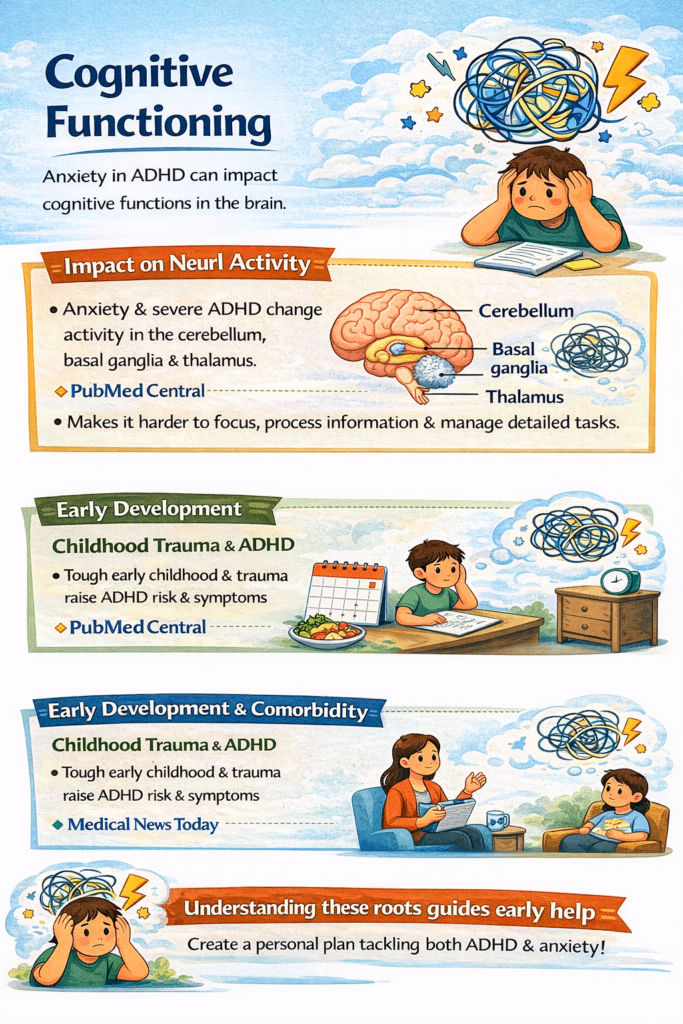
Parenting and Symptom Development
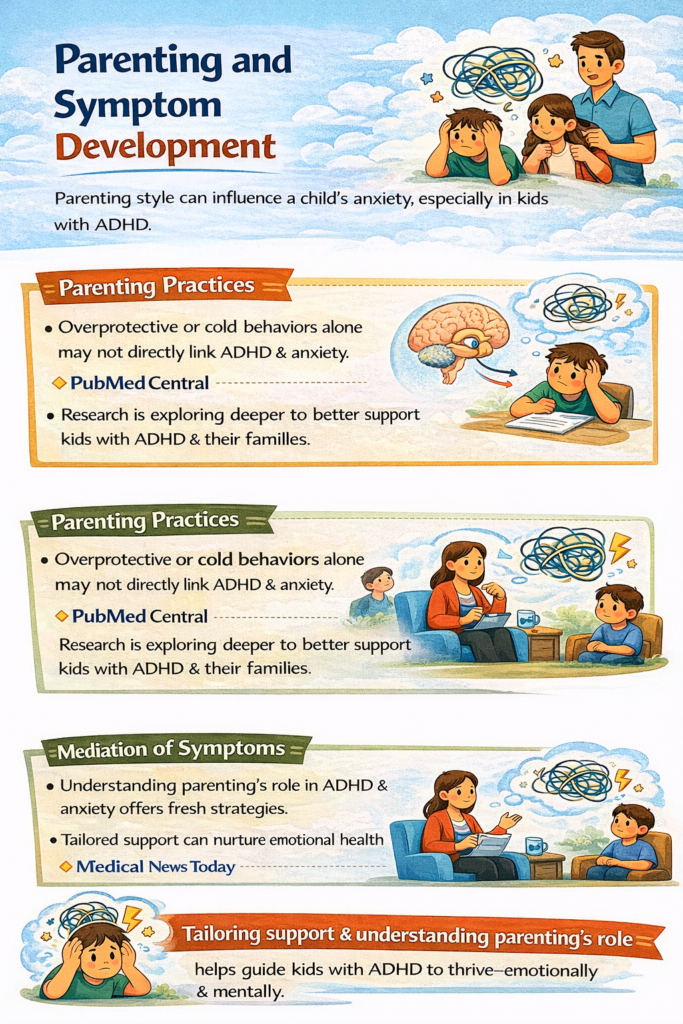
Ever notice how parents can shape a kid’s world, especially when you’re talking about folks with ADHD who might be prone to panic attacks? It’s like the parenting style is the secret ingredient in a recipe for your child’s emotional health. Research, that brainy fellow, points to how the way caregivers handle things can influence children with ADHD and how much anxiety they feel.
Parenting Practices
While it’s widely accepted that a parent’s way of dealing with things can steer a child’s emotional course, some experts hint that certain behaviors—like getting too worked up or coming off chilly—don’t actually make that direct link between ADHD and jittery feelings in kids (NCBI article is pretty decent). So, maybe we’re missing bits and pieces of a bigger picture, other sneaky factors that mess around with kids’ anxiety levels.
Now, that study’s helpful and all, but it’s only scratching the surface. We gotta dig deeper to catch those sneaky parenting quirks that could calm down the storm for kids dealing with ADHD. Families and the folks who work with them should be on the lookout for fresh ways of getting around these old-school methods to really help these young ones dealing with both the zing and the sting of ADHD and panic attacks.
Mediation of Symptoms
Figuring out how these feelings pop up and whether parenting habits are the secret sauce in this mix is still a bit of a head-scratcher. But really diving into how ADHD, anxiety, and the way parents interact come together can open new doors to helping those with ADHD lead a smoother life.
The more we poke around, the more it’s clear that there’s no one-size-fits-all answer. So, putting all hands on deck and trying out different tricks might just be what the doctor ordered to keep spirits high and those anxiety levels in check for kids tackling ADHD. With a little heart and some nifty support approaches, caregiving can really blossom into something special for kids facing these bumps in the road.