
 Caregiver Support Resources
Taking care of someone who suffers from panic attacks can be tough, and as a caregiver, you want all the help you can get. That’s why I’ve put together some go-to online resources for folks like us who are in the trenches, offering tips, tools, and a bit of relief when things get stressful. It’s all about how these resources can make our caregiving gig a little smoother and more effective.
Transforming Caregiver Education
Let’s chat about CareAcademy, a cool spot online where you can dive into more than 400 classes that speak your language—whether it’s English, Spanish, Hindi, Korean, Russian, or Vietnamese. This place is a game-changer for us caregivers, giving us the knowledge boost we need to tackle panic attacks. With all this info, we can become caregiving rockstars, help improve our loved ones’ experiences, and make home a more comfortable place.
Comprehensive Caregiver Resources
The Caregiver Action Network, or CAN for short, is like the Swiss Army knife of support for family folks dealing with all kinds of health stuff—cancer, schizophrenia, or yes, even panic attacks. They’ve got everything from practical advice, legal and financial help, to video guides and volunteer connections. It’s a lifeline when you feel like you’re on this journey alone and need a helping hand.
Being a caregiver to someone with panic attacks can sometimes feel like a never-ending rollercoaster, but it’s important to remember that you’re not alone on this ride. By diving into these rich resources, not only do we help ourselves, but we also make life a bit easier for those we care for. And let’s face it, when they feel better, we feel better too.
Mental Health Support for Caregivers
Hey there, fellow caregivers! I get it—taking care of someone dealing with panic attacks can feel like a wild rollercoaster. But remember, before you strap in for another ride, let’s make sure you’re not running on fumes. Your own mental health deserves a big ol’ spotlight too. You’ve got to manage that caregiver stress, tackle personal bumps, and know there’s crisis backup when you need it. Balancing it all can feel like juggling flaming torches while riding a bike—an act nobody expects to pull off flawlessly every time.
Managing Caregiver Stress
First, let’s talk stress. Caring for someone can be a monster of a job, both emotionally and physically. It’s like having a second shadow that follows you, casting long and sometimes overwhelming gloom. Spotting the signs of this shadow is step one. Are you feeling more on edge than a cat in a room full of rocking chairs? That’s a cue from your mind and body that it’s time for a pit stop.
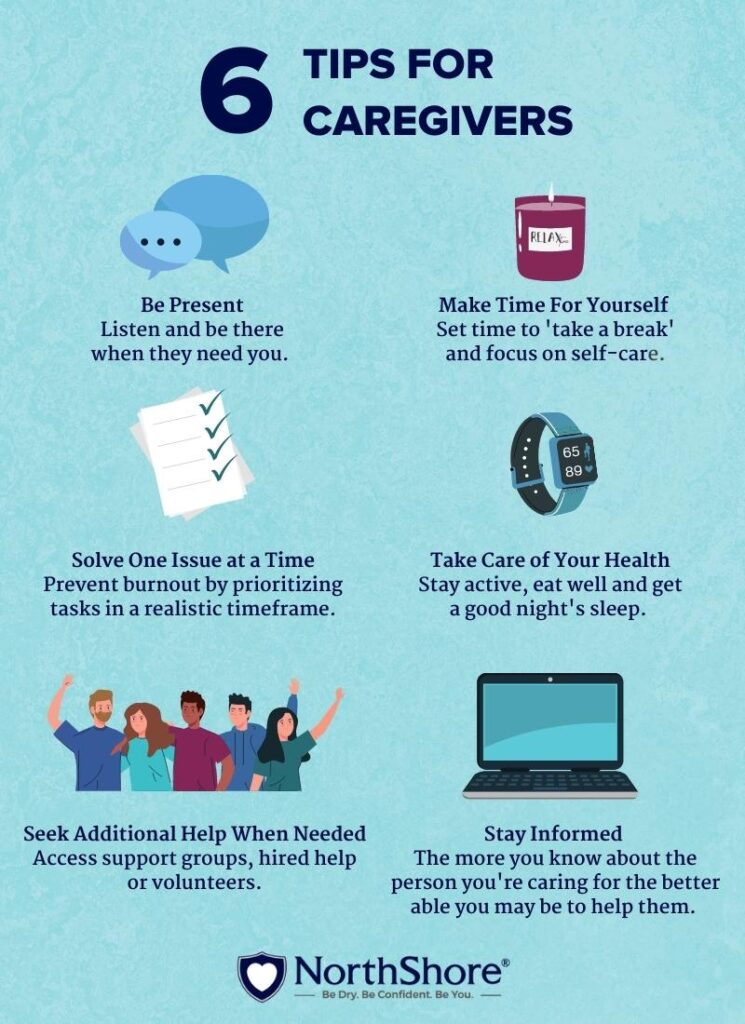
You gotta sneak in breaks, even tiny ones. Treat yourself to a moment of stillness, a silly dance break, or whatever floats your boat. Getting in touch with other caregivers can be like a good ol’ cup of hot cocoa for the soul—soothing and necessary. And hey, if you’re feeling stuck, folks like Mental Health America have your back with resources for people just like us (Mental Health America).
Coping with Personal Challenges
Life doesn’t pause when you’re a caregiver, right? There’s a dance of juggling work, social life, and caregiving that can feel a bit like you’re doing the cha-cha all by yourself at a crowded party. And sometimes, it can get messy.
Facing personal challenges head-on is like fixing a leaky roof—you can’t just throw a bucket under it and hope for the best. Finding your squad—be it friends, support groups, or fellow caregivers—makes a world of difference. They’ve been where you are, and just like seasoned tour guides, they can show you the best trails. Mental Health America offers nuggets of wisdom that act as a flashlight in those darker moments of caregiving (Mental Health America).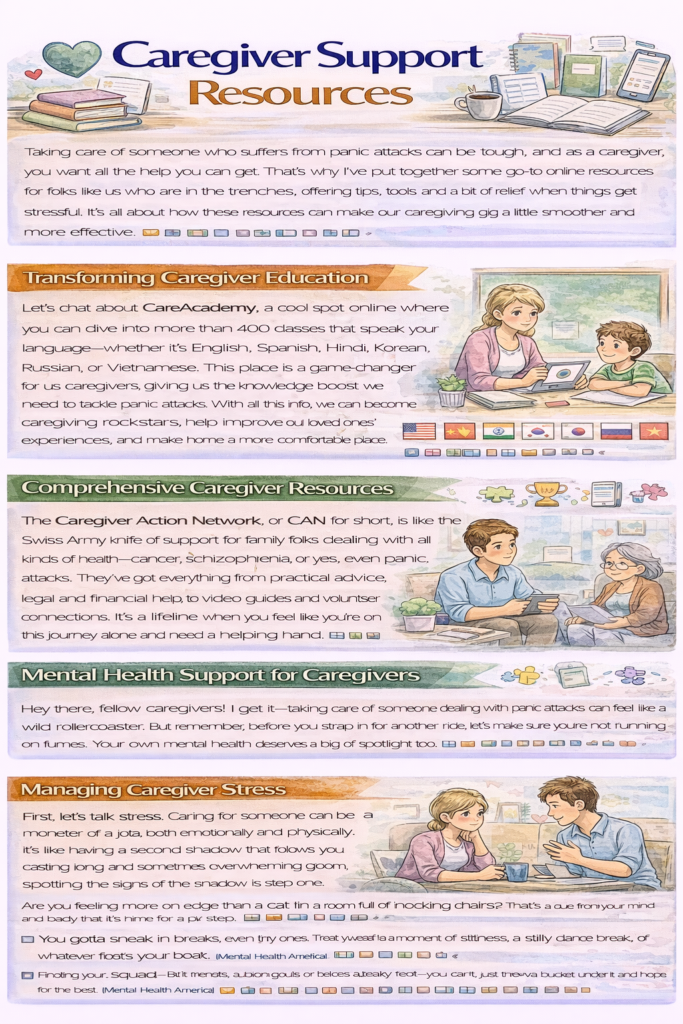
Crisis Support for Caregivers
Let’s face it, crises don’t call ahead—they just show up like unannounced guests. When the heat is on, knowing your escape routes and backup team is crucial. It’s like having a safety net in place for when you need to walk that tightrope during a storm.
Organizations like Mental Health America? Think of them as the 911 for caregivers in a jam; they point you to the right people when you need a hand to hold (Mental Health America).
Take a moment and breathe. Keeping yourself sane and steady matters just as much as tending to those you care for. Your well-being isn’t a luxury, it’s a necessity. Tapping into these mental health resources is like finding a comfy, magic carpet; it’ll help you glide through the caregiving journey with more ease. YOU are just as vital as the care you give—never lose sight of that.
Online Support Communities
Jumping into online support communities is like finding your tribe when you’re a caregiver for someone having panic attacks. These are your go-to places for connecting with others in the same boat and discovering mental health help that fits like your favorite comfy shoes.
Peer-to-Peer Connections
Picture this: a virtual meeting where you can swap stories and get advice from folks who truly get it. The Anxiety and Depression Support Community by ADAA is a biggie, gathering over 90,000 subscribers all around the globe. It’s like a giant group hug for anyone wrestling with anxiety and depression thing (ADAA). By diving into each other’s stories and sharing feels, caregivers can breathe easy, knowing they’re not solo on this ride.
| Online Support Community | Number of Subscribers | Global Reach |
|---|---|---|
| ADAA Anxiety and Depression Support Community | 90,000 | Worldwide |
Accessible Mental Health Support
With everything going digital, getting mental health help online is now as easy as pie. ADAA’s online meetups are high-fiving everyone worldwide by providing a handhold for folks dealing with anxiety and depression. Healthline.com even gives ADAA a gold star, naming it one of the top helpers out there for mental health (ADAA).
NAMI (National Alliance on Mental Illness) steps up too, with groups that are like lifesavers for caregivers of those with mental health issues. NAMI Connection groups are for anyone dealing with mental stuff, and the Family Support Groups are for family, friends, and partners. Lots of these groups are online, making it easy for caregivers to pop in, unload, and snag some heartfelt support (NAMI).
Getting involved with these online communities is like wrapping yourself in a warm security blanket. For caregivers, it’s about finding that comfort zone, getting helpful hints, and locking arms with folks who truly understand the hurdles and boosts of care life. These group vibes build a tight-knit web, feeding caregivers the strength to give their best while remembering they gotta look after number one, too.
Caregiver Support Groups
Being a caregiver for someone you care about who struggles with panic attacks is tough—I know that firsthand. You really need folks who get it, and that’s where caregiver support groups come in. They bring together people from all walks of life facing similar battles, providing an outlet for sharing stories, advice, and even a much-needed laugh or two.
Connecting Caregivers Nationwide
You’ve got places like the Caregiver Action Network that really step up the game. They’ve got resources that hook you up with organizations and agencies all across the map. By being part of these groups, you can shoot the breeze with others in the same boat, trade stories, and uncover all sorts of info that might just make this wild ride a little easier.
Emotional Support and Advice Sharing
Now, groups run by folks like NAMI and Mental Health America focus on emotional backup and sound advice, which is like gold when you’re knee-deep in caregiving stress. Here, you can spill your thoughts, swap tips, and feel the warmth that comes with knowing you’re not solo in this gig.
Jumping into these support circles opens doors to fresh insights and coping hacks you wouldn’t stumble upon solo. They’re like friendly neighbors that remind you you’re part of a community that’s got your back while you’re holding up your loved ones through their panic storms. Their camaraderie lightens the load, helping you face the day with a little extra strength.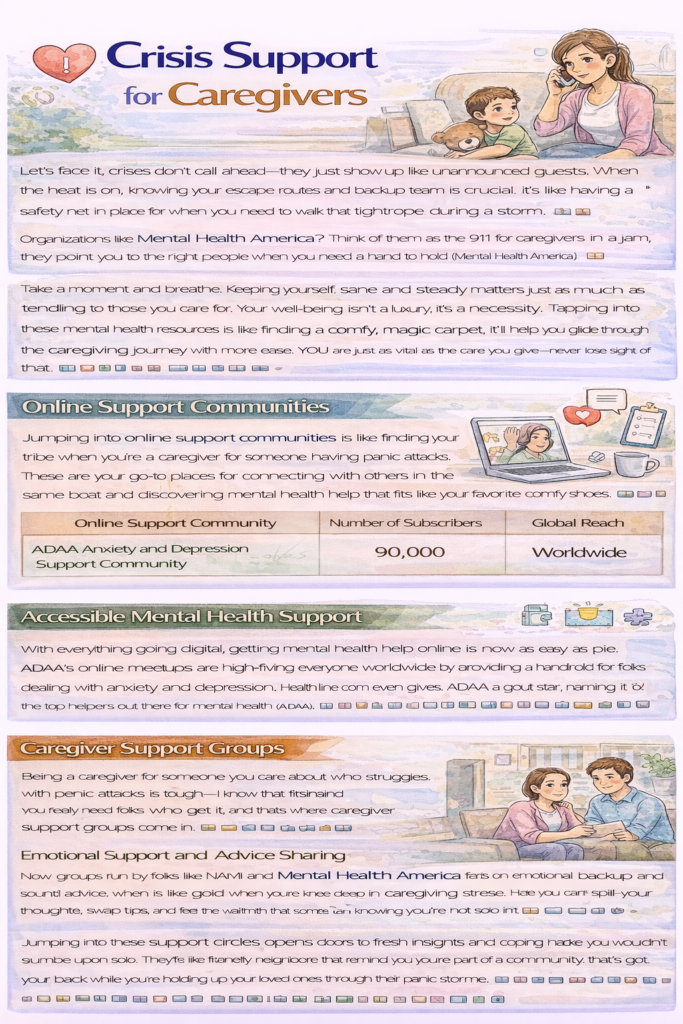
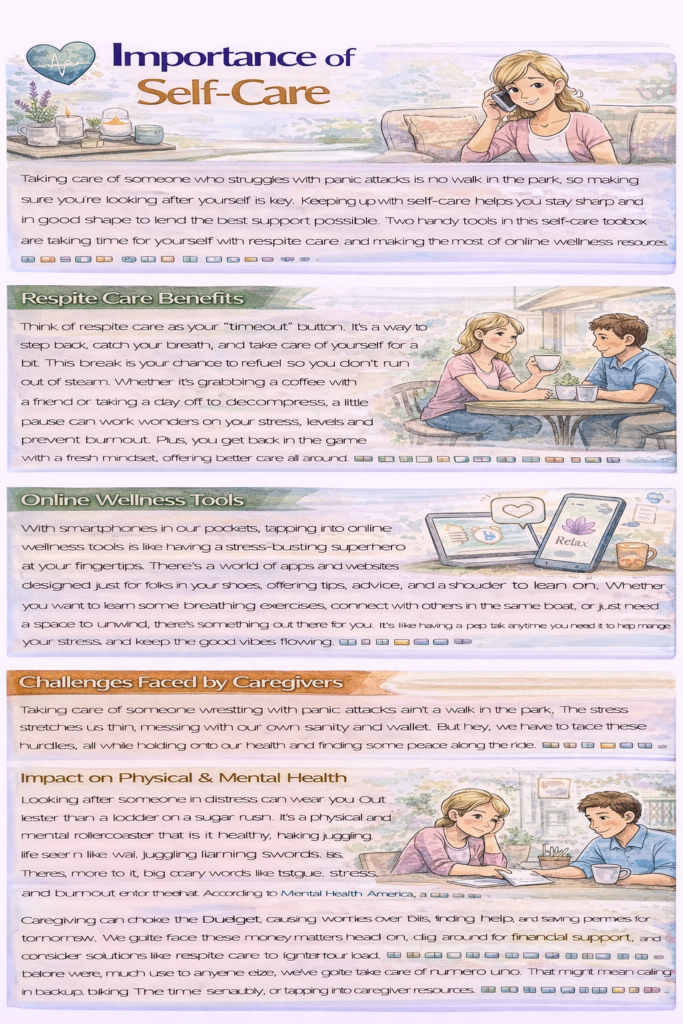
Importance of Self-Care
Taking care of someone who struggles with panic attacks is no walk in the park, so making sure you’re looking after yourself is key. Keeping up with self-care helps you stay sharp and in good shape to lend the best support possible. Two handy tools in this self-care toolbox are taking time for yourself with respite care and making the most of online wellness resources.
Respite Care Benefits
Think of respite care as your “timeout” button. It’s a way to step back, catch your breath, and take care of yourself for a bit. This break is your chance to refuel so you don’t run out of steam. Whether it’s grabbing a coffee with a friend or taking a day off to decompress, a little pause can work wonders on your stress levels and prevent burnout. Plus, you get back in the game with a fresh mindset, offering better care all around.
Online Wellness Tools
With smartphones in our pockets, tapping into online wellness tools is like having a stress-busting superhero at your fingertips. There’s a world of apps and websites designed just for folks in your shoes, offering tips, advice, and a shoulder to lean on. Whether you want to learn some breathing exercises, connect with others in the same boat, or just need a space to unwind, there’s something out there for you. It’s like having a pep talk anytime you need it to help manage your stress and keep the good vibes flowing.
Taking the time to prioritize things like respite care and diving into helpful online resources doesn’t just make life more bearable; it helps you keep your cool and be the rock your loved one needs. Don’t shy away from looking after yourself first—doing so holds the secret to being there for others, too.
Challenges Faced by Caregivers
Taking care of someone wrestling with panic attacks ain’t a walk in the park. The stress stretches us thin, messing with our own sanity and wallet. But hey, we have to face these hurdles, all while holding onto our health and finding some peace along the ride.
Impact on Physical & Mental Health
Looking after someone in distress can wear you out faster than a toddler on a sugar rush. It’s a physical and mental rollercoaster that isn’t healthy, making juggling life seem like, well, juggling flaming swords. There’s more to it: big scary words like fatigue, stress, and burnout enter the chat. According to Mental Health America, balancing caregiving and self-care is like trying to keep an avocado at its perfect ripeness—it’s nearly impossible. Ignoring stress signs—like seeing everything as a problem, not sleeping well, biting nails more than usual—could lead to bigger health scares, like heart issues or diabetes (Mayo Clinic).
Before we’re much use to anyone else, we’ve gotta take care of numero uno. That might mean calling in backup, taking ‘me time’ seriously, or tapping into caregiver resources. By admitting how caregiving muscles into our health, we can better work through the headaches that come with caring and hang onto our overall merriness.
Financial Strain of Caregiving
Money woes make a stressful gig even harder. When caring for someone with panic problems, many folks find themselves shelling out tons of cash. According to A Place for Mom, the average family parts with a whopping $7,242 annually. That’s a chunk of change, especially when you’re already balancing lots of bills, elderly care, and those late-night snack cravings.
Caregiving can choke the budget, causing worries over bills, finding help, and saving pennies for tomorrow. We gotta face these money matters head-on, dig around for financial support, and consider solutions like respite care to lighten our load. Tackling these money troubles helps us to focus on the heart of the matter: giving our loved ones the best care possible while keeping our cash flow steady.