
Understanding Critical Incident Stress Management
When we’re dealing with the mental upheaval folks face after intense events, knowing a bit about critical incident stress management can be a game-changer. This is all about giving a timely helping hand to lessen the mental whammy of those tough moments.
Why Critical Incident Stress Management Matters
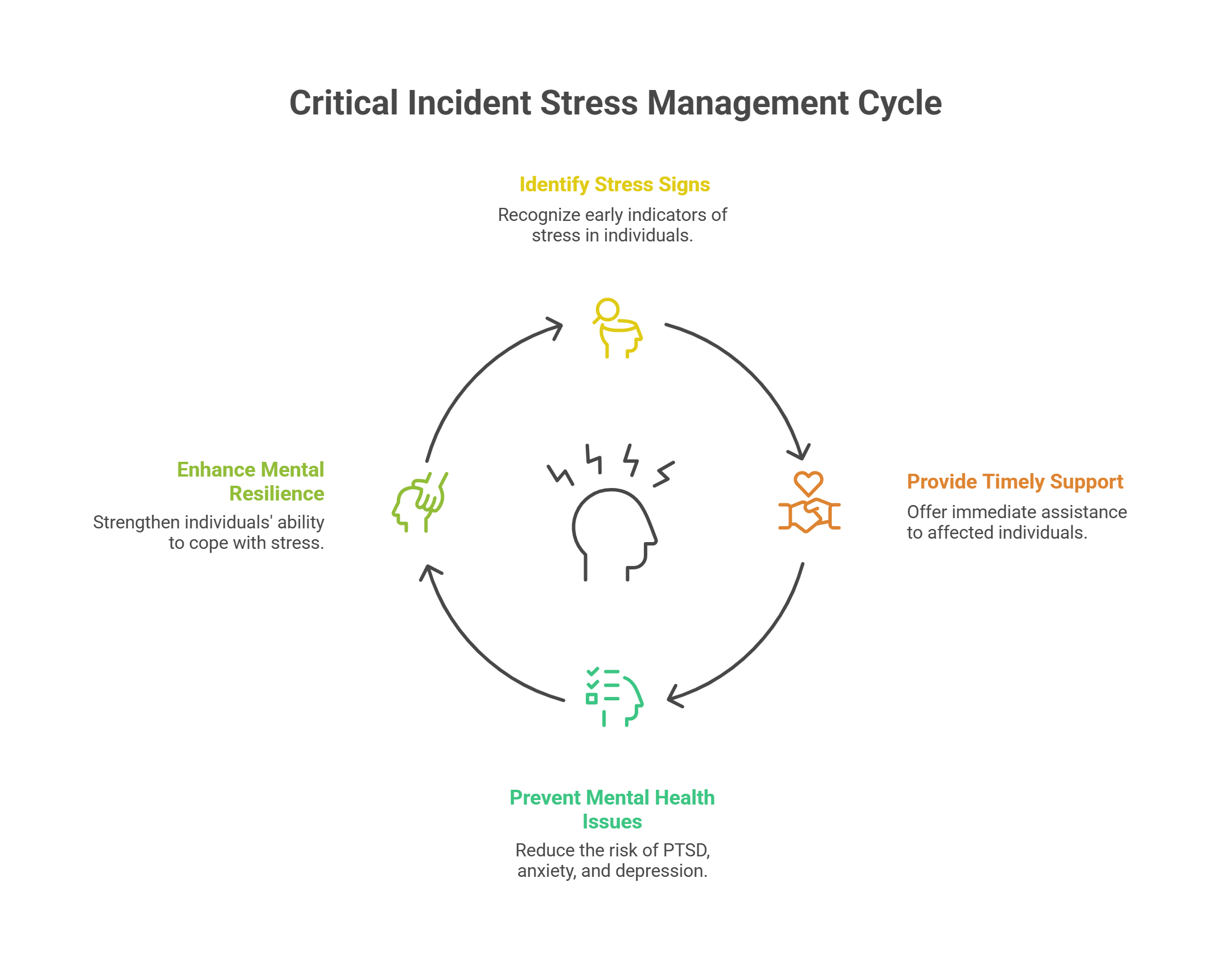
This approach really makes a difference for those who’ve been through or seen something traumatic. It’s vital for spotting, handling, and hopefully dodging the stress that tags along after such incidents. We’re talking about stacking the deck against PTSD, anxiety, and depression by lining up the right support and resources.
Now, getting the hang of critical incident stress management training courses? It’s like picking up a first-aid kit for the mind. Folks learn to catch the signs of stress and step in with the right game plan. It’s not just about handling the aftermath for first responders, healthcare workers, and folks wrapped up in critical events — it’s about sewing some strengths and stamina into our mental fabric.
Who Should Tune In
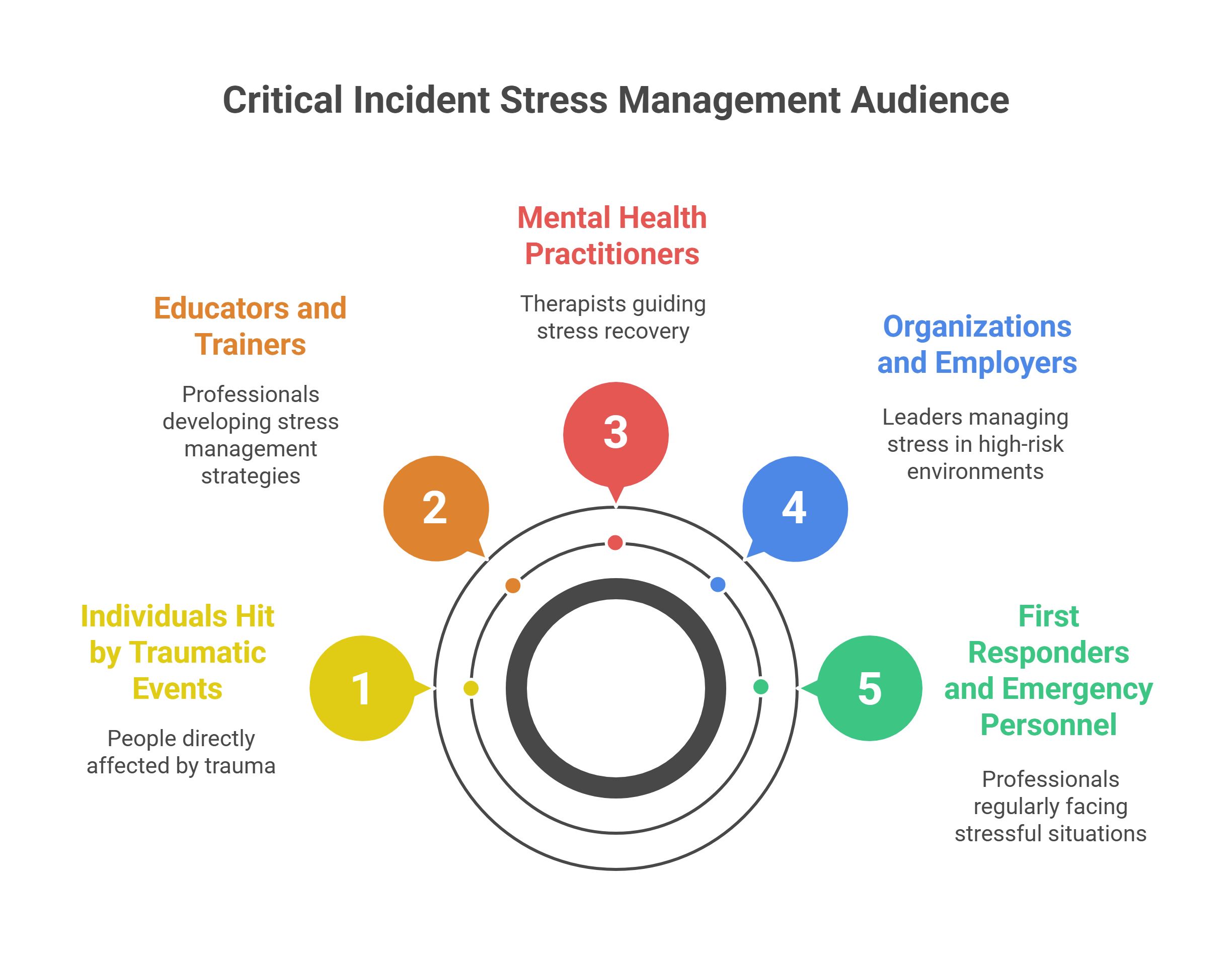
The crowd for critical incident stress management isn’t just a niche group; it’s for anyone who might brush up against trauma on the job or in personal life. Here’s a look at the lineup:
- First Responders and Emergency Personnel: Think of police officers, firefighters, paramedics, and search-and-rescue teams who face chaotic and stressful scenes regularly.
- Healthcare Workers: Nurses, doctors, and mental health professionals who are in the thick of caring for those caught up in these gnarly experiences.
- Organizations and Employers: Leaders and HR pros in high-anxiety fields like emergency services, hospitals, or any place where work hazards loom.
- Mental Health Practitioners: Therapists and counselors looking to guide folks wrestling with critical incident stress or keen to roll out their own CISM plans.
- Individuals Hit by Traumatic Events: Anyone who’s been in the middle of the storm and could use some mental relief.
- Educators and Trainers: Geared towards pros crafting and sharing materials on stress management for first responders and trauma-focused crisis strategies.
Tuning critical incident stress management to fit this varied group can really help tackle the emotional fallout from those tough situations and build a bit of grit when the chips are down.
Training Strategies for First Responders
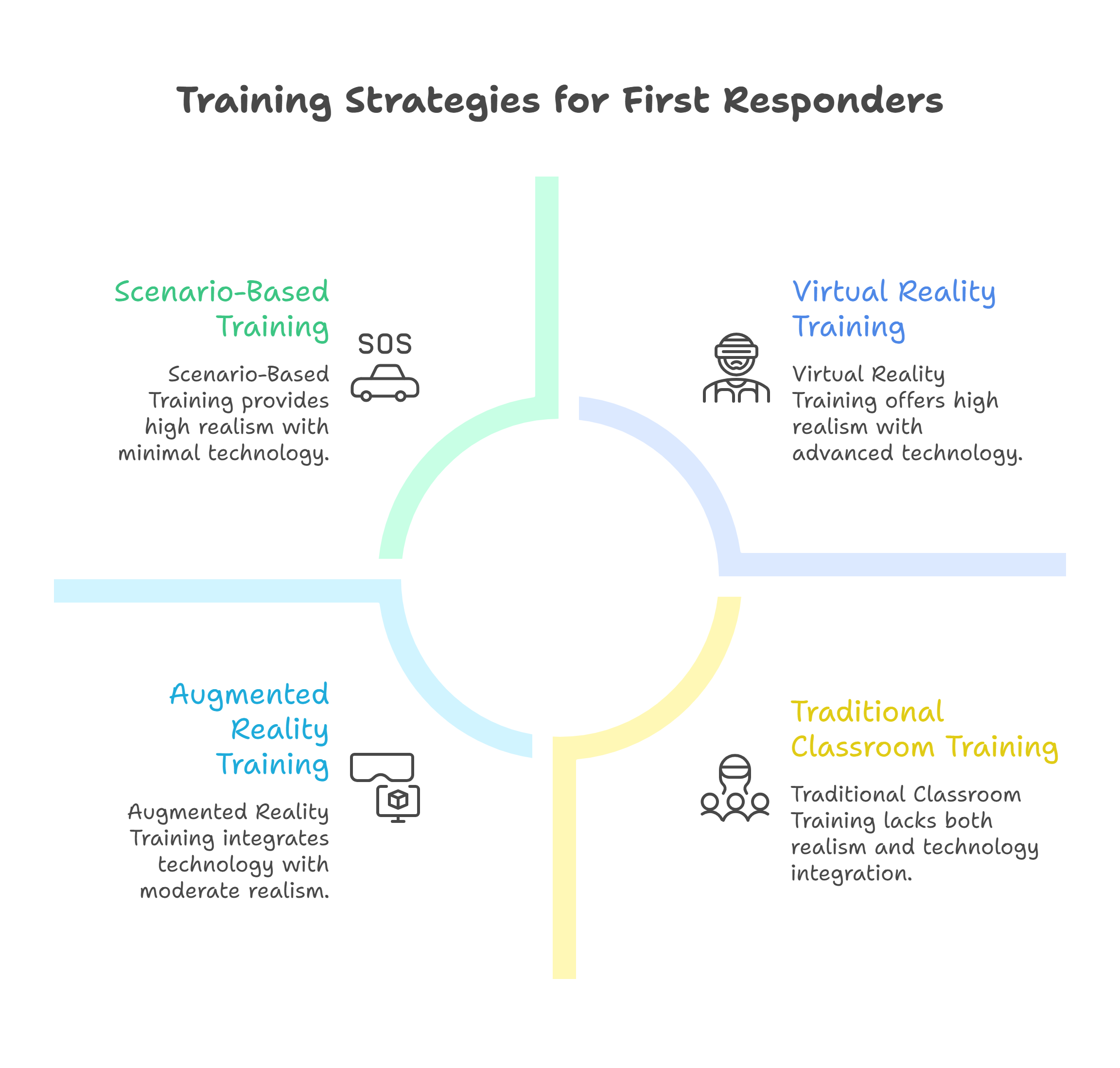
Getting first responders ready for action isn’t child’s play. It’s all about using the right training tricks to build their mental muscle and sharpen them for when the heat’s on. Whether it’s through clever role-playing, embracing cool new tech, or crunching numbers, every method counts.
Scenario-Based Training Methods
Imagine having a dry run before facing the storm—scenario-based training lets you do just that. It’s like a rehearsal where responders step into simulated crises to flex their problem-solving muscles. Here, they gotta think fast, talk clear, and work as a team, all while the pressure cooker’s on. These run-throughs beef up their street smarts and teamwork so, when real chaos strikes, they’re firing on all cylinders.
Virtual Reality and Augmented Reality Training
This isn’t your classic cops and robbers; VR and AR are shaking things up. Think of it like flipping on a switch to another place. Training here gets responders to dive into virtual or semi-real worlds, facing down challenges without sweating the risks. The National Institute for Occupational Safety and Health has even got a whole lab for this kind of training—it’s like the holodeck for first responders. Wear those goofy goggles and, boom, you’re in the thick of things without the danger tag. All hands on deck, but safely.
Data Analysis in Emergency Response
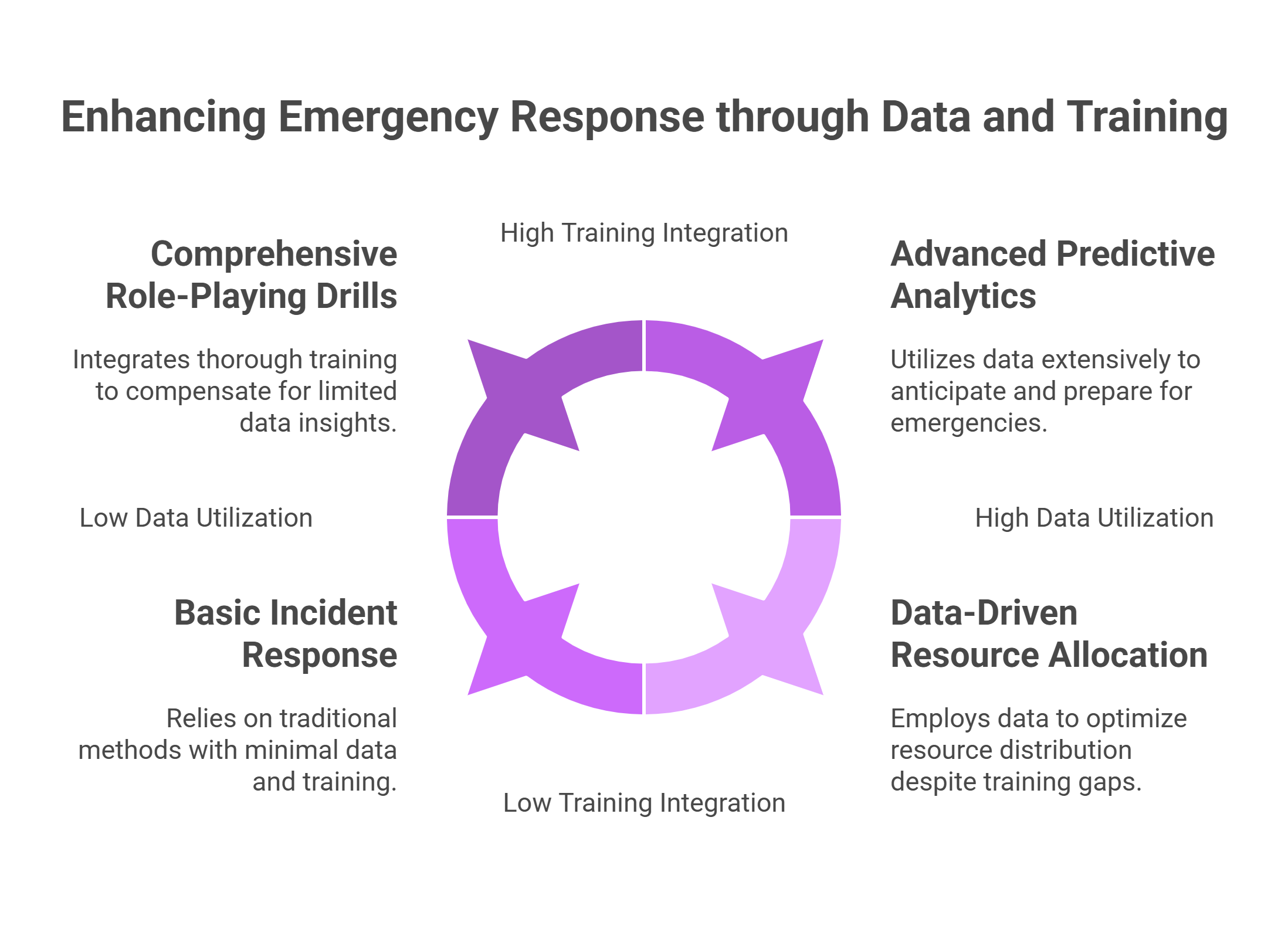
Crunching numbers ain’t just for nerds; in emergency response, it’s a game-changer. Data’s the real crystal ball here, revealing patterns and predicting mishaps. Take weather patterns for wildfires or historical data predicting when things might get a bit rowdy—it’s all about staying three steps ahead. When responders are clued up on data, they divvy up their gear smarter, think quicker, and keep their cool. They’re not just reacting; they’re anticipating, tweaking their playbook, and staying sharp against any curveball.
Blending these tools into first responder training means you’ve got teams that can handle the heat without breaking a sweat. From role-playing drills to rocking out with virtual gadgets and reading into data, they’re all set to step up when the going gets tough. The world might throw anything at them, but these strategies keep them a cut above, always ready, always on point.
Best Practices for Incident Response Teams
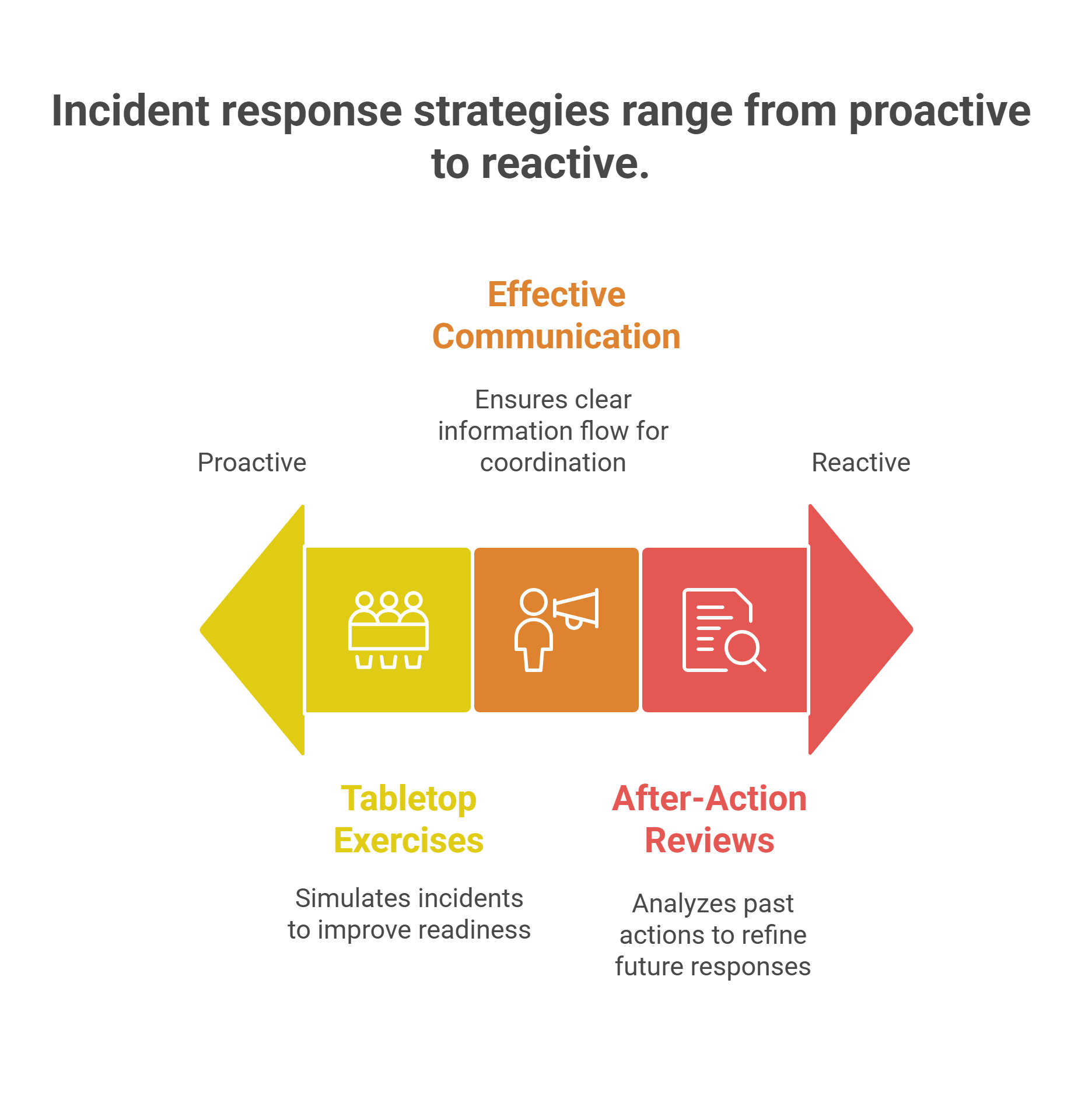
Incident response teams aren’t just about putting out fires—they’re about gearing up and staying ready for whatever chaos might cross their path. By mixing in realistic practice sessions, critique sessions, and chat strategies, teams can up their game and stay cool under pressure.
Tabletop Exercises
Tabletop exercises, basically think of them as fire drills, prepare teams for the real deal but without the flames. Whether you’re new to the team or a seasoned vet, these pretend scenarios help everyone keep their wits and stay sharp. The folks over at RedLegg say it’s a good idea to run through these every few months to keep your cybersecurity defenses tight and teaching moments fresh.
While going through these ‘what-if’ situations, teams get a good sense of where they stand. They can spot any hiccups in their plans and tune them up, all in a friendly, no-risk setting. It’s the teamwork equivalent of checking a map before a road trip—making sure you’re all set, even if the route changes or the driver is new (RedLegg).
After-Action Reviews
Once the dust settles, it’s time for after-action reviews (AARs)—think of it as the post-game show, where you figure out what went down and how to do better next time. Critical Tech Solutions says breaking down every move in the playbook post-incident is key to getting things right in the future.
These reviews help the team learn from past actions—what rocked, what flopped, and what to try next time. Getting everyone’s thoughts documented is like gold; it’s the stepping-stone for shaping better response plans, tighter teamwork, and smoother operations during future challenges.
Effective Communication Strategies
When things get crazy, clear communication is what keeps everything from unraveling. Getting the right info to the right people quickly is vital for keeping the response ship sailing smoothly. Setting up clear lines of communication and knowing who’s in charge of them ensures nothing gets lost in translation.
A team that talks well works well—that’s where trust and smart decisions come from. And don’t just keep it internal; making sure external partners—from fellow responders to law enforcement—are in the loop is just as crucial for handling incidents effectively. Plus, as Elevity suggests, keeping everyone updated with the latest security info helps keep threats at bay and the team on alert.
Rolling out regular drills, feedback sessions, and solid communication plans allows response teams to build a sturdy defense, ready to handle any surprise with a calm, informed approach.
Building a Critical Incident Response Team (CIRT)
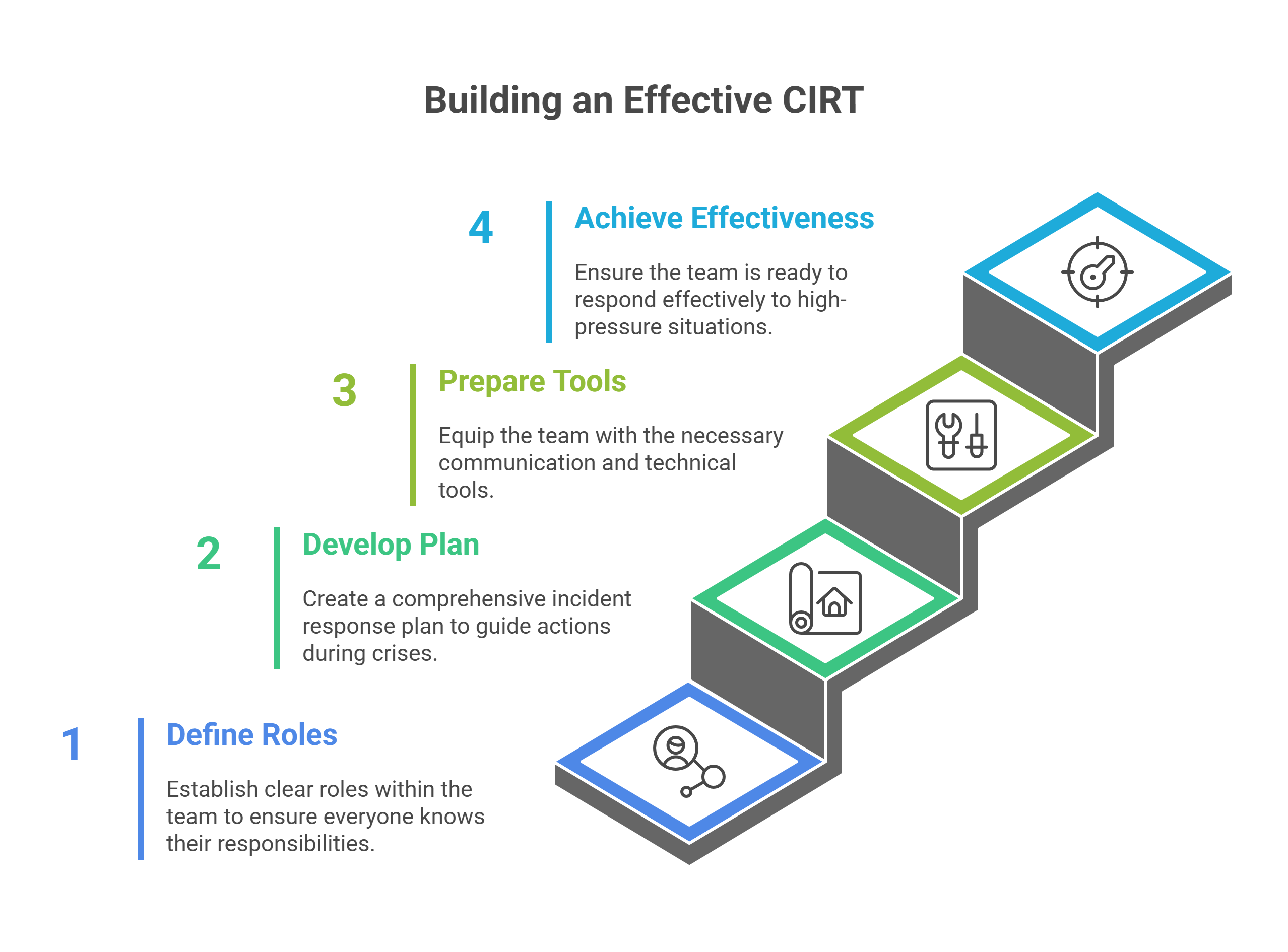
Building a successful Critical Incident Response Team (CIRT) is like assembling a puzzle—every piece plays a crucial role. Let’s look at how defining roles, strategizing plans, and harnessing tools for communication lead to maximum effectiveness during high-pressure situations.
Defining Team Structure and Roles
Picture this: a team where everyone knows exactly what they need to do—like a finely-tuned orchestra. That’s what we’re aiming for with our CIRT. Every member should have roles that match their knack for handling crises. Think of an Incident Commander as the maestro, leading the charge, while the Communications Officer ensures everyone hears the right notes. Then, there’s the Technical Specialist, akin to the conductor who keeps the pace. Together, these players maintain the beat and ensure a smooth response even in chaos.
Incident Response Plan Development
For every surprising curveball life might throw, a sound incident response plan is your playbook. This is your trusty map guiding you through cybersecurity threats or surprise visits from Mother Nature. Lean on the wisdom from folks at NIST; their guidelines offer a sturdy scaffold for your response plan. Your strategy boils down to these acts: Preparation, Detection and Reporting, Response, and Recovery. It’s like a superhero manual—it ensures you’re ready to swoop in and save the day, whatever the crisis may be. ShadowHQ
Tools for Communication and Collaboration
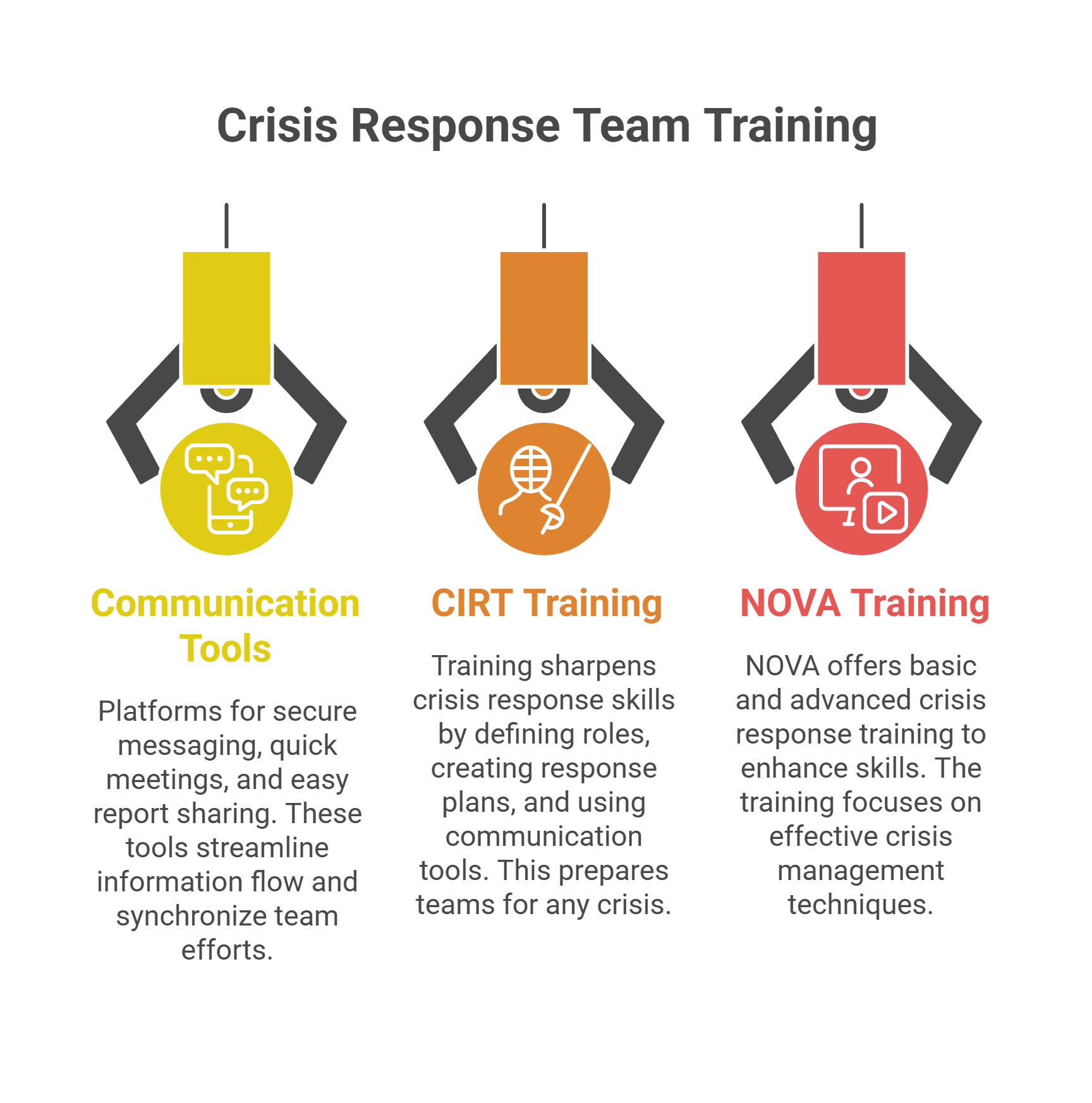
In a world where instant communication can be your best ally, the right tools can turbocharge your response. Think of platforms where messages fly securely, meetings happen in a flash, and reports get shared with a snap. They make passing crucial info as smooth as butter, synchronize efforts, and adapt strategies as situations unfold. It’s a game-changer, helping CIRTs stay on their toes and respond like pros.
Training a CIRT is like sharpening a sword: define roles well, craft a sturdy response plan, and wield those cutting-edge communication tools. With these, CIRTs transform into a finely-tuned team ready to tackle any crisis and ensure the safety bubble around people and places stays intact.
NOVA Community Crisis Response Team Training
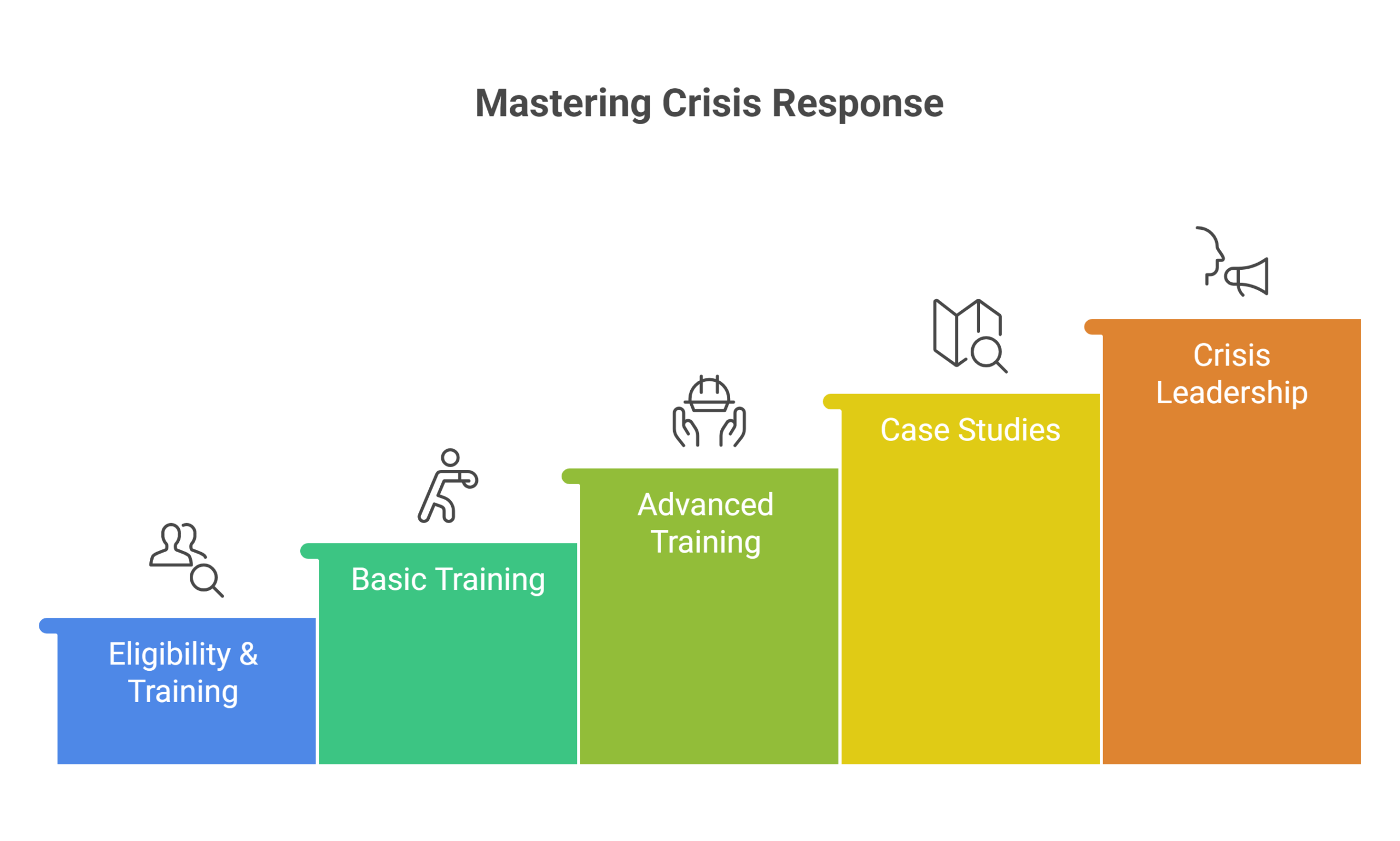
If you’re looking to sharpen your crisis response skills, NOVA’s got your back with two levels of training that can help you step up to the plate during critical incidents. Our training is all about giving folks what they need to handle crises effectively. We’ve got Basic and Advanced Level Training, each focusing on different angles of crisis management.
Basic Level Training
For anyone wanting to get their feet wet in the crisis intervention pool, the Basic Level Community Crisis Response Team (CRT) Training provides an excellent starting point. Over the course of 24 hours, participants will be introduced to the nuts and bolts of crisis intervention.
You’ll learn the ropes of the crisis intervention model, which is like a blueprint for handling emergencies. This is all about getting a feel for the essential ideas and techniques you’ll need to respond to incidents in the community. Think of it as building a sturdy foundation that’ll support you as you put these skills into action when faced with real-world situations.
Advanced Level Training
Once you’ve nailed the basics, it’s time to step up your game with the Advanced Level Community Crisis Response Team Training. This is where things get serious. It’s all about moving beyond the groundwork laid in the basic course to tackle more complicated crisis situations.
In the Advanced training, we dig deeper, adding layers to your crisis response toolkit. You’ll walk away with enhanced skills and a detailed understanding of the latest strategies for dealing with intense scenarios. By the end of it, you’ll be armed with the know-how to guide troubled situations with confidence and skill, lending a steady hand to those caught in the storm of crisis.

Eligibility and Training Costs
NOVA welcomes individuals and organizations who aim to beef up their crisis response abilities. Our programs are designed for groups of at least 25 participants, ensuring a rich, collaborative learning experience for everyone involved.
Heads up: While our standard pricing covers the essentials, specialized documents and extra materials might come with a bit of a price tag. But investing in top-tier training means you’re getting instruction that’s aligned with the latest standards in crisis response.
With both Basic and Advanced Level options, NOVA’s Community Crisis Response Team Training arms you with the skills, smarts, and practice needed to make a real impact when crises hit. Our structured courses and training have you set and ready to support those in need, making a difference when it counts.
Case Studies in Crisis Leadership
Let’s embark on a journey through some intriguing tales from the heart of calamity. By digging into these crisis events case studies, we’ll uncover unique ways leaders have tackled chaos head-on. These stories offer a ringside view into both hurdles and heroics experienced by public safety officials, politicians, and communities when crises hit hard, sharpening our understanding of crisis management and its ripple effects.
Crisis Events Case Studies
- “Ready in Advance: The City of Tuscaloosa’s Response to the 4/27/11 Tornado”: Picture this—a tornado tearing through Tuscaloosa, and Mayor Walter Maddox, fresh out of FEMA training, rallying his troops. This story is all about having your ducks in a row before disaster strikes. It’s a tale of how prepping and practice turned into action when nature showed its fury back in 2011.
- “The Deepwater Horizon Oil Spill: The Politics of Crisis Response”: This saga takes us under the sea and onto the political stage of 2010. Top brass from Homeland Security, federal buddies, state leaders, and the private sector were roped into a scramble to tackle an oil spill of epic proportions. It’s about dealing with the beast of large-scale environmental mayhem and all the tangled webs that come with it.
- “A Cascade of Emergencies: Responding to Superstorm Sandy in New York City”: Back in the day, Superstorm Sandy gave New York City more than a handful. Fires flared, waters flooded, and the grid went dark. This tale showcases the marathon of teamwork and quick thinking needed to tackle emergencies that snowball into one big mess.
Learning from Real-World Incidents
Peering into past events is like peeking at a roadmap for future crises. By dissecting what went down and how folks handled it, teams ready to deal with emergencies can spot the gems of great practice, find potholes in their prep work, and see where to fine-tune. This is prime material for beefing up training, cooking up realistic plans, and making nimble decisions when the going gets tough.
Harvard Kennedy School Case Studies
The Harvard Kennedy folks have a treasure trove of stories that dive deep into crisis antics and the choices leaders make when under the gun. They’re not just tales but tools—for digging into how commanding, teaming up, and bantering together can turn the tides of adversity. These tales spark chats about the weighty roles of leadership, the fine art of collaboration, and keeping lines open when everything else is shutting down.
- “Surviving the Surge: New York City Hospitals Respond to Superstorm Sandy”: Think about it—hospitals in Manhattan wrestling with waves and winds in 2012’s Sandy mess. The story covers tough calls made by healthcare honchos, from patient care in the storm’s peak to deciding whether to hunker down or haul out in the eye of natural doom.
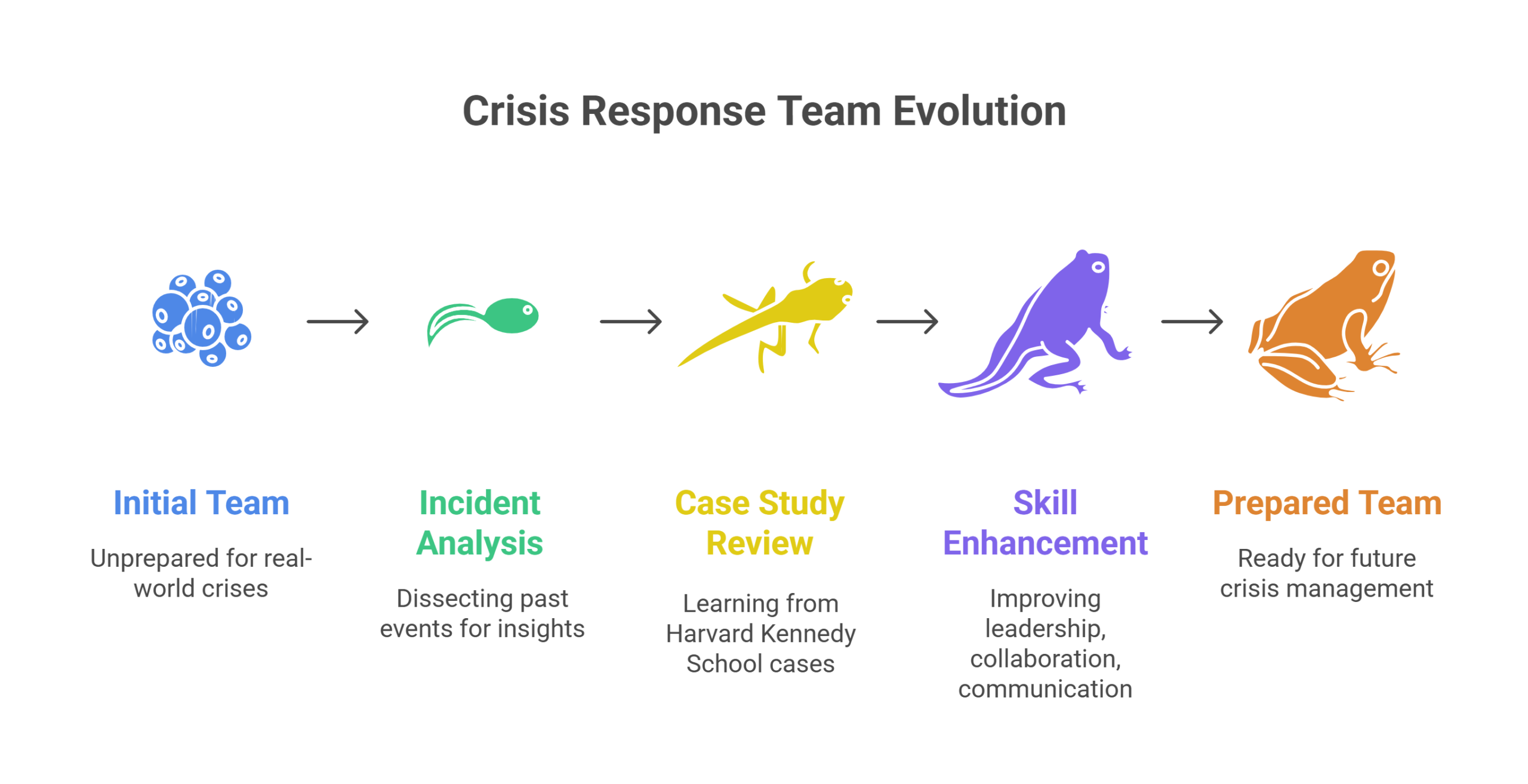
Getting cozy with these case studies and absorbing the real-deal lessons from various incidents, crisis response teams can pump up their leadership brawn, get decisions locked and loaded, and gear up for whatever tomorrow decides to throw their way in the wild world of crisis management.