
Understanding Critical Incident Stress
When it comes to dealing with heavy stuff like critical incident stress, it’s crucial to know the signs so emergency folks—like firefighters, paramedics, and cops—can keep it together when things get rough. These brave souls often find themselves knee-deep in chaos, and it can leave a mark on their mind and body. So let’s chat about what to watch out for when handling it, how it affects these heroes, and the warning bells to keep an ear out for.
Signs of Critical Incident Stress
Stress from critical incidents can sneak up on folks in all sorts of ways—messing with their head, heart, and gut. You might see it right after something goes down or a little while later, but either way, it can throw a wrench in the works for those handling the situation.
Physically, the burden can be rough. Think about chest pains, catching your breath, nausea, dizzy spells, headaches, and backaches playing out after facing intense scenarios. All this can scream for immediate healthcare to catch something serious before it spirals.
Now, on the thinking side of things, memory might fog up, decisions become slippery, and staying sharp gets iffy, screwing up focus when it’s needed most during crisis situations (CDC).
Then there’s the emotions—anxiety, guilt, feeling down, maybe even a bit numb or snappy. Those swings in mood or feeling stuck might mean it’s time to talk to someone if it starts tripping up daily life (CDC).
Impact on Emergency Workers
We can’t underestimate how hard-hitting this stress can be on those we depend on to keep things under control. It’s not just a temporary glitch but can also leave a lasting toll on their mental health. Prioritizing these concerns is vital to keep them strong and sharp on the job.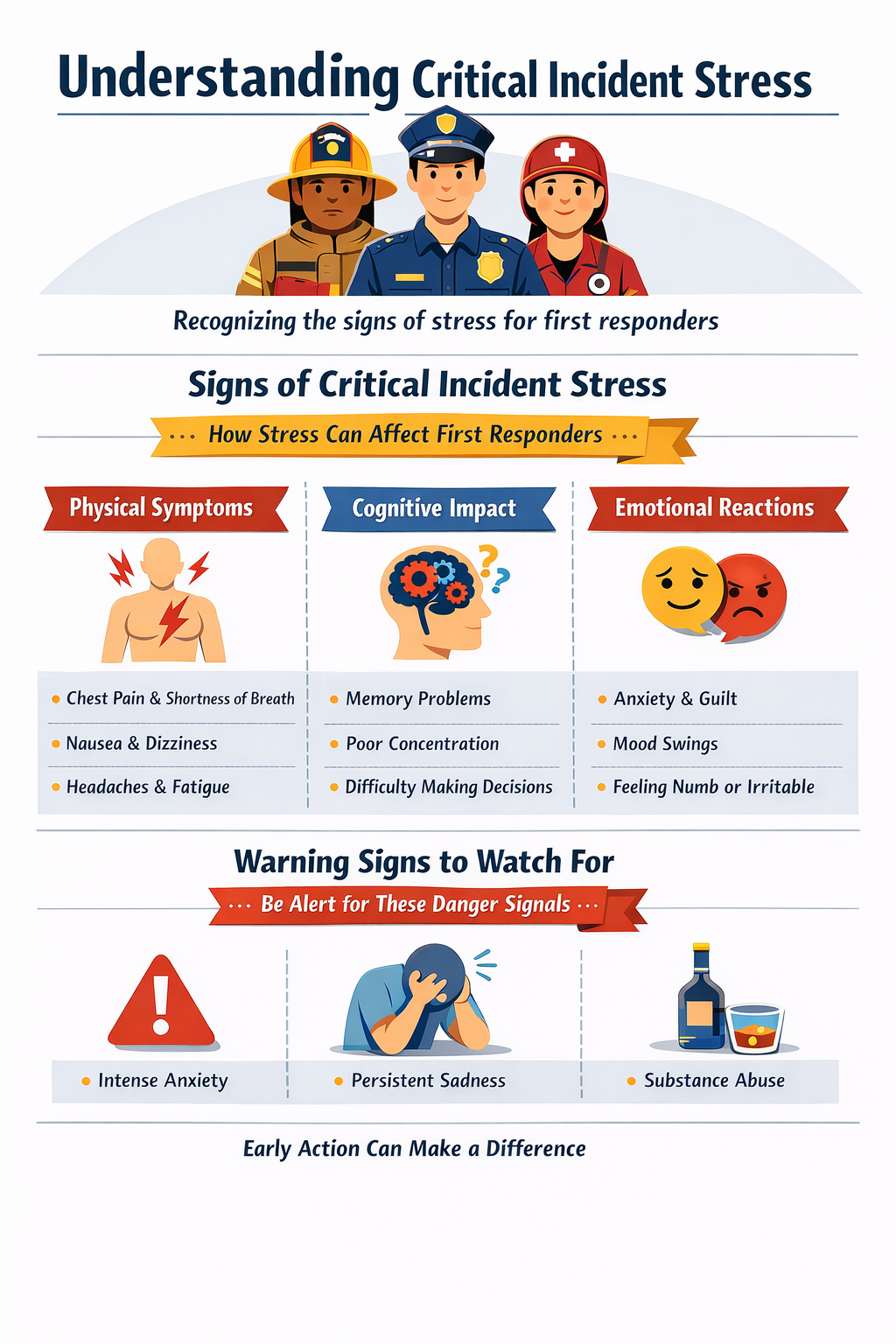
Symptoms to Watch For
Spotting the patterns of critical incident stress is a big deal in supporting our emergency workforce. If you’re a boss or a teammate, keep an eye out for any changes—whether it’s in focus or temperament. Jumping on these signs early on means you can step in and offer real help (OSHA).
By staying clued in on what the problem looks like, what it does, and when it appears, teams can better protect their people’s health and spirits. Smart critical incident stress management can soften the blow of tough incidents and build a stronger, more supportive environment for everyone involved.
Prevention Methods for Critical Incident Stress
Taking care of folks on the front lines – I’m talking about emergency workers and healthcare pros – is crucial. These brave souls see some heavy-duty stuff, and managing that stress is a big deal. Let’s break down how to keep that stress monster at bay, focusing on what’s happening on the job, looking after our bodies, and keeping tabs on mental health.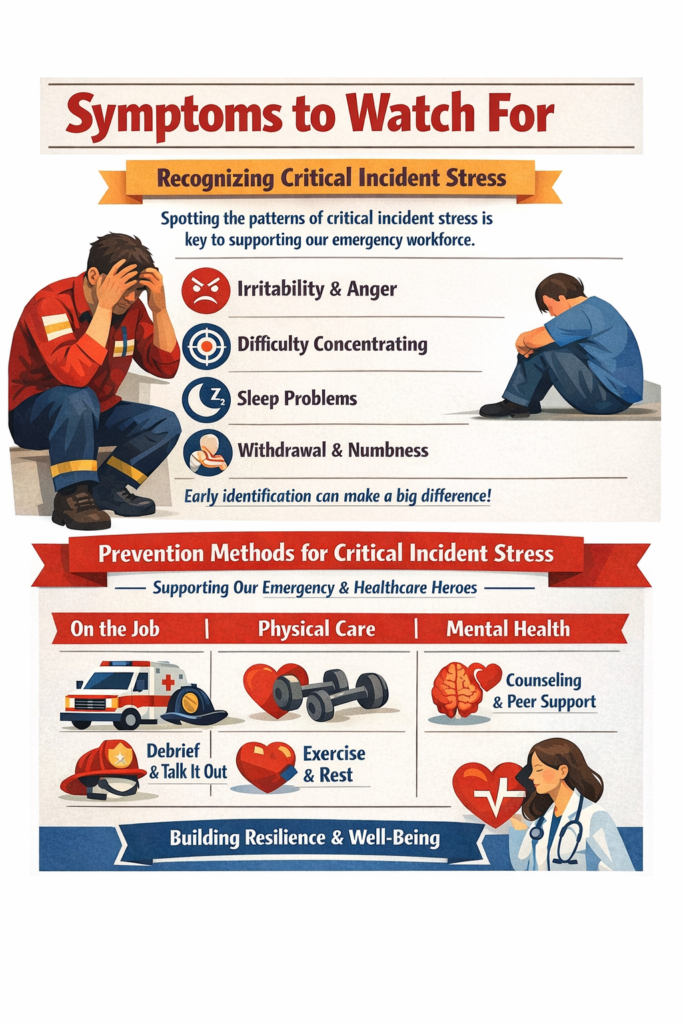
Control Measures at the Scene
Front and center, you gotta keep things under control during emergencies. No one can work their best if they’re always in the thick of chaos. So, it’s smart to manage how fast things are happening, make sure everyone gets fed and has a chance to rest, and keep an eye out for anyone who might be overwhelmed – all that goes a long way in staying sharp (CDC).
Being in the middle of a crisis can scramble your brain – that’s just the way it is. People may struggle with remembering details, feeling lost, or get easily distracted. Setting up ways to keep clear-headed and make sound decisions, even when it’s super stressful, can make all the difference.
Supporting Physical Well-being
You can’t forget about the bodies that are doing all this hard work. Making sure emergency crews have plenty of good food, water, and those all-important naps is key. This keeps them going strong and helps fight off that nasty fatigue when they’re caught up in long episodes of chaos. Staying fit physically is a must for keeping a clear mind and looking out for everyone on deck (CDC).
When a team looks out for everyone’s physical health, they’re building some serious resilience. Regular check-ins to catch early signs of burnout can make sure everyone stays in the game, especially when it’s mighty tough out there.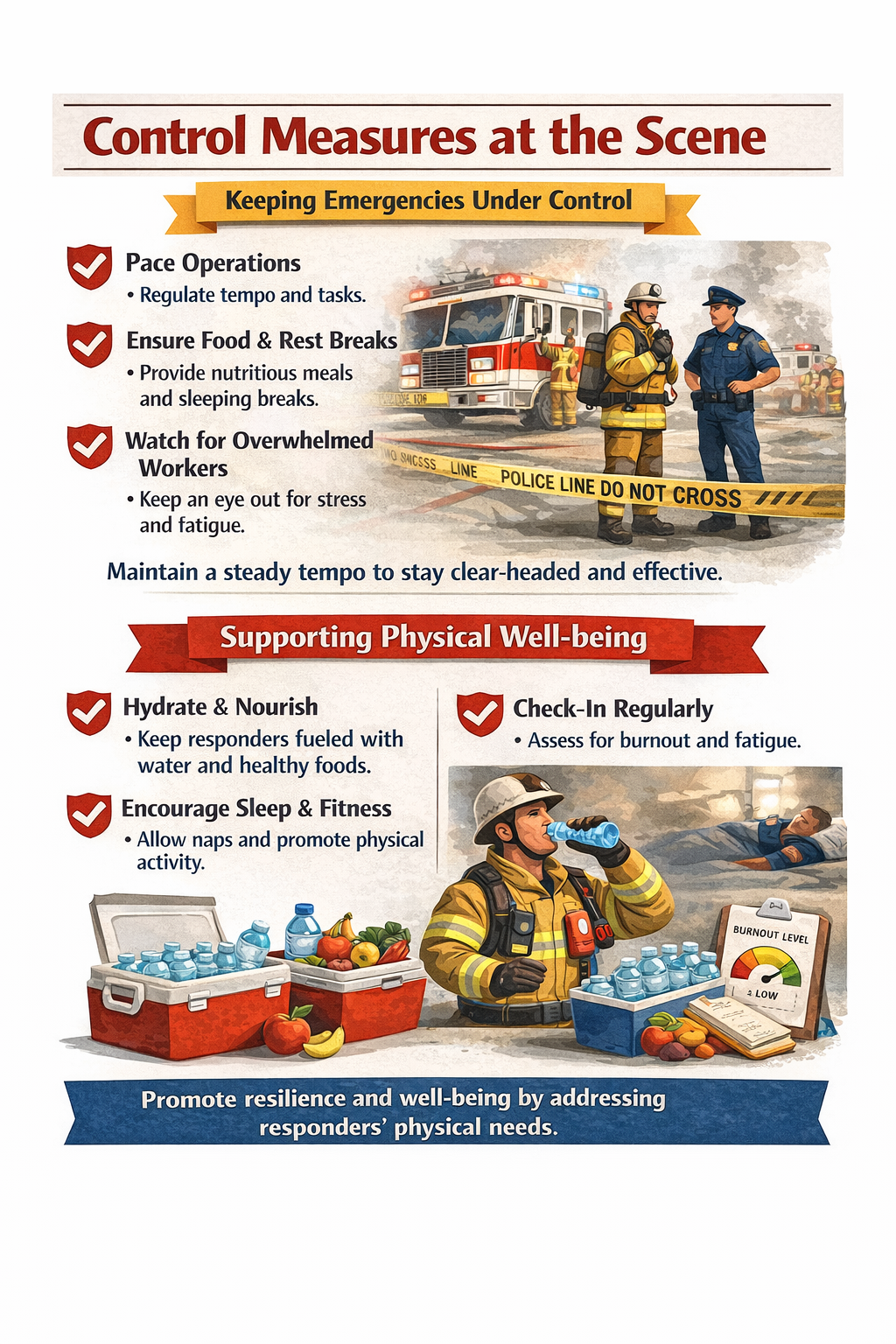
Importance of Mental Health Monitoring
After the dust settles, keeping a watchful eye on mental health is a must. Emergency workers who’ve been through the wringer need ongoing support to fend off stress that lingers. Critical Incident Stress Management (CISM) is the go-to here, ensuring that people get the necessary care, not just when the crisis hits, but even after the adrenaline fades (National Interagency Fire Center).
Calling in the experts and keeping those lines of communication open can help spot problems early. By shining a light on mental well-being, organizations can make sure their folks feel supported and grow stronger against stress in the long haul.
Training and Education on CISM
So, if you’re in a high-pressure job like being a first responder or working in emergency personnel, you know that dealing with stress is part of the daily grind. But to really keep it together when things hit the fan, getting up to speed on Critical Incident Stress Management (CISM) can be a game-changer. That’s where the International Critical Incident Stress Foundation (ICISF) comes into play with its top-notch courses focused on handling crisis situations and grasping disaster psychology.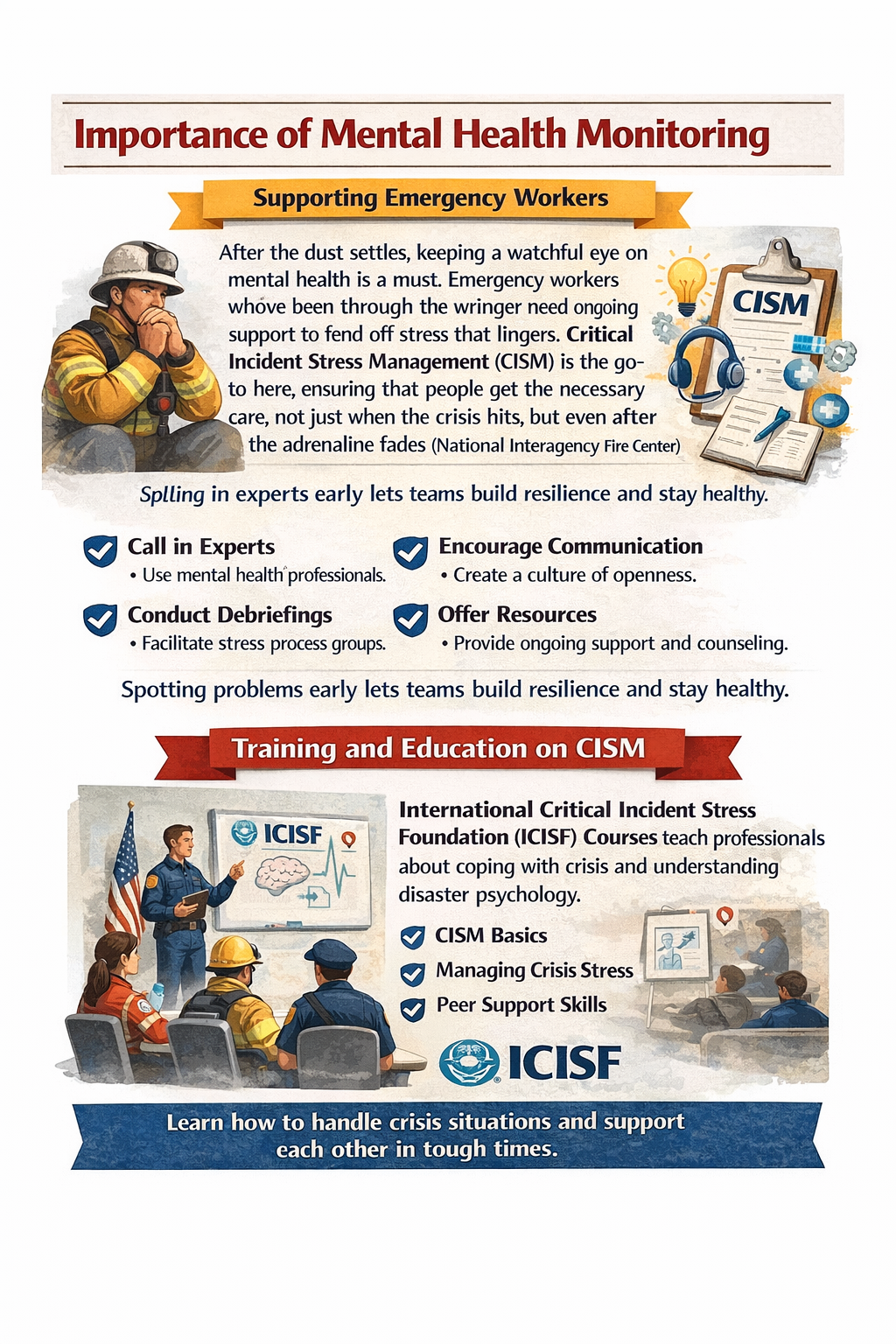
ICISF Training Courses
ICISF isn’t just tossing information at you; they’re providing real-deal courses to give you the know-how for tackling stress head-on. Courses like “Assisting Individuals in Crisis” and “Group Crisis Intervention” dig into CISM techniques, showing you the ropes on how and when to roll them out in a crunch. Plus, they don’t just leave you hanging—participants get to dive into group activities, adding some hands-on learning to beef up those intervention chops.
Whether you’re flying solo or part of an organization, there’s something for everybody. ICISF offers training that’s as flexible as a yoga master, with virtual sessions, online options, and even onsite gigs. And if you’re part of a group, check out their Speakers Bureau Program for some wallet-friendly group training that doesn’t skimp on quality.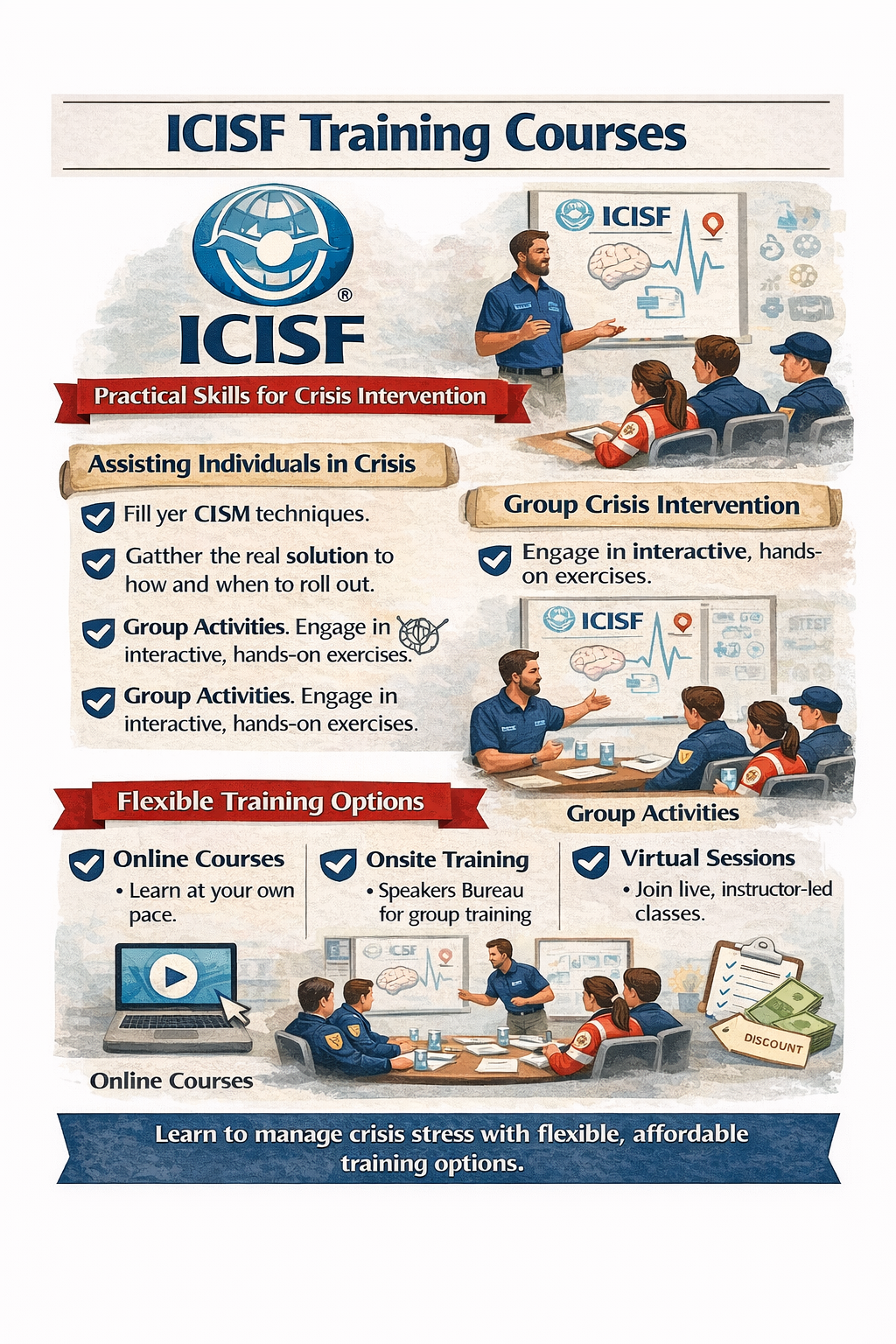
Benefits of Crisis Intervention Courses
Signing up for these courses? You’re setting yourself up for a bunch of perks, especially if you’re slogging it out in a high-stress zone. These courses help you spot the signs of stress and put you in a good position to manage them like a pro. Armed with crisis intervention smarts, you’re the right person to have around when things get hairy.
But wait, there’s more! You’re not just learning what to do, you’re sharpening those all-important communication and people skills. That means when push comes to shove, you’re stepping up with understanding and professionalism, creating a safe space for those who need it most.
Becoming an Approved Instructor
ICISF has a huge network of instructors out there, ready to train folks like you, and maybe you’re thinking about joining that crew. If you’re interested in leading the charge as an Approved Instructor, the ICISF’s Instructor Candidate Programs could be your next move. These programs run you through comprehensive training, covering all the essentials, like course locations, the nitty-gritty details, and common queries, all available virtually for your convenience.
Becoming an Approved Instructor isn’t just about gaining a title. It’s an opportunity to pass on those skills, helping others get a handle on critical incident stress. As an instructor, you’re not just teaching; you’re building up a rock-solid team of crisis intervention pros, ready to take on whatever comes their way with calm and care.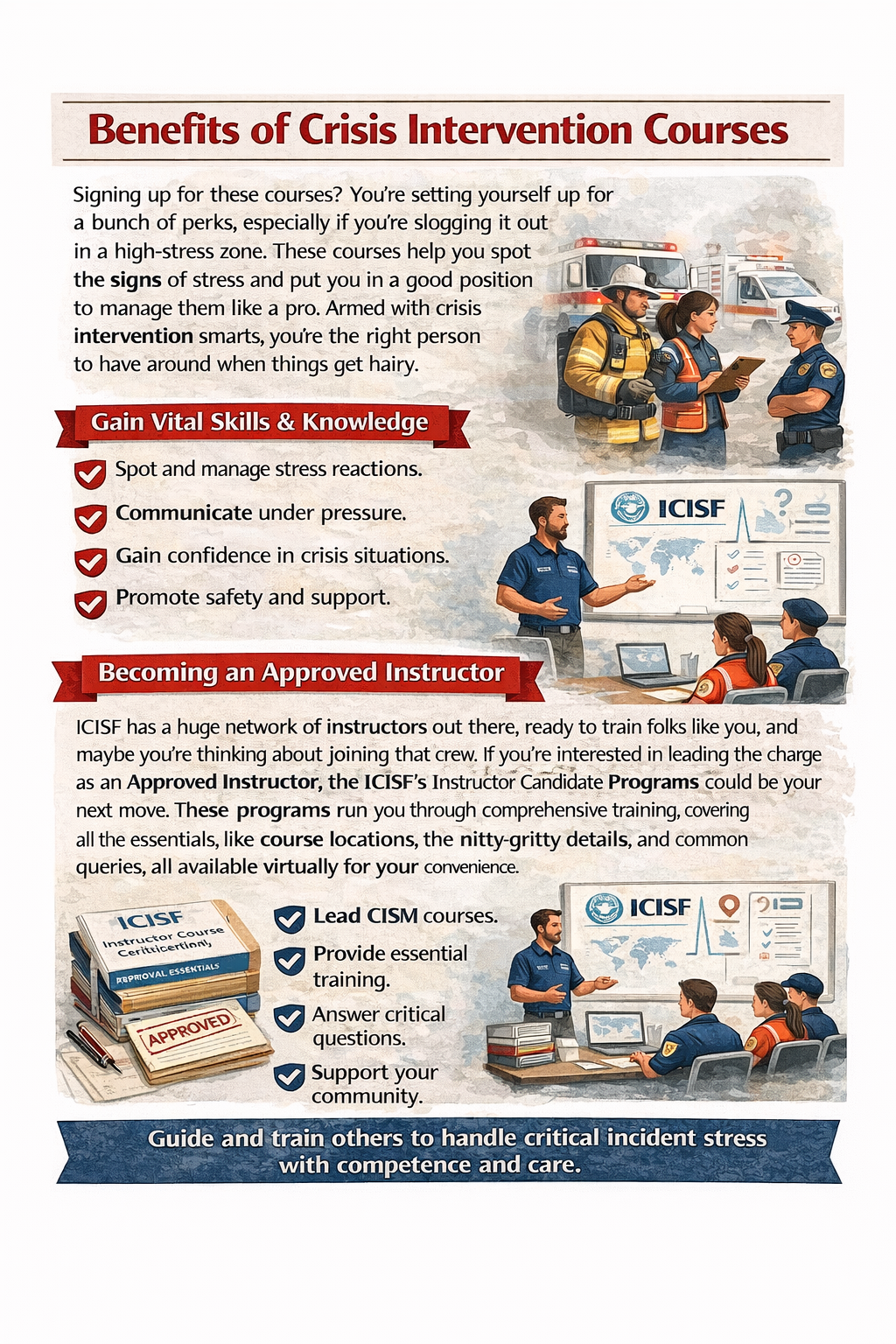
Implementing Critical Incident Stress Management
So, let’s chat about my journey with this thing called critical incident stress management—it’s all about keeping our awesome emergency crew emotionally fit during and after those high-stakes moments.
Critical Incident Stress Debriefing
Smack dab in the middle of this process is Critical Incident Stress Debriefing (CISD). Imagine it as this group heart-to-heart, led by a facilitator, right after something goes down. It’s got a roadmap with seven steps: Introduction, Fact Phase, Thought Phase, Reaction Phase, Symptom Phase, Teaching Phase, and Re-entry Phase. Easy, right? This isn’t just chit-chat though—it’s here to give psychological support and, if need be, maps out paths to counseling and other help.
Early Intervention Strategies
Jumping in early with stress management can really make a difference. It tries to nip stress reactions in the bud to avoid them blowing up into something bigger. I’ve seen the research—particularly from emergency squads—with results showing lower depression, less anger, and fewer stress symptoms for people who go through CISD after events, compared to those who don’t.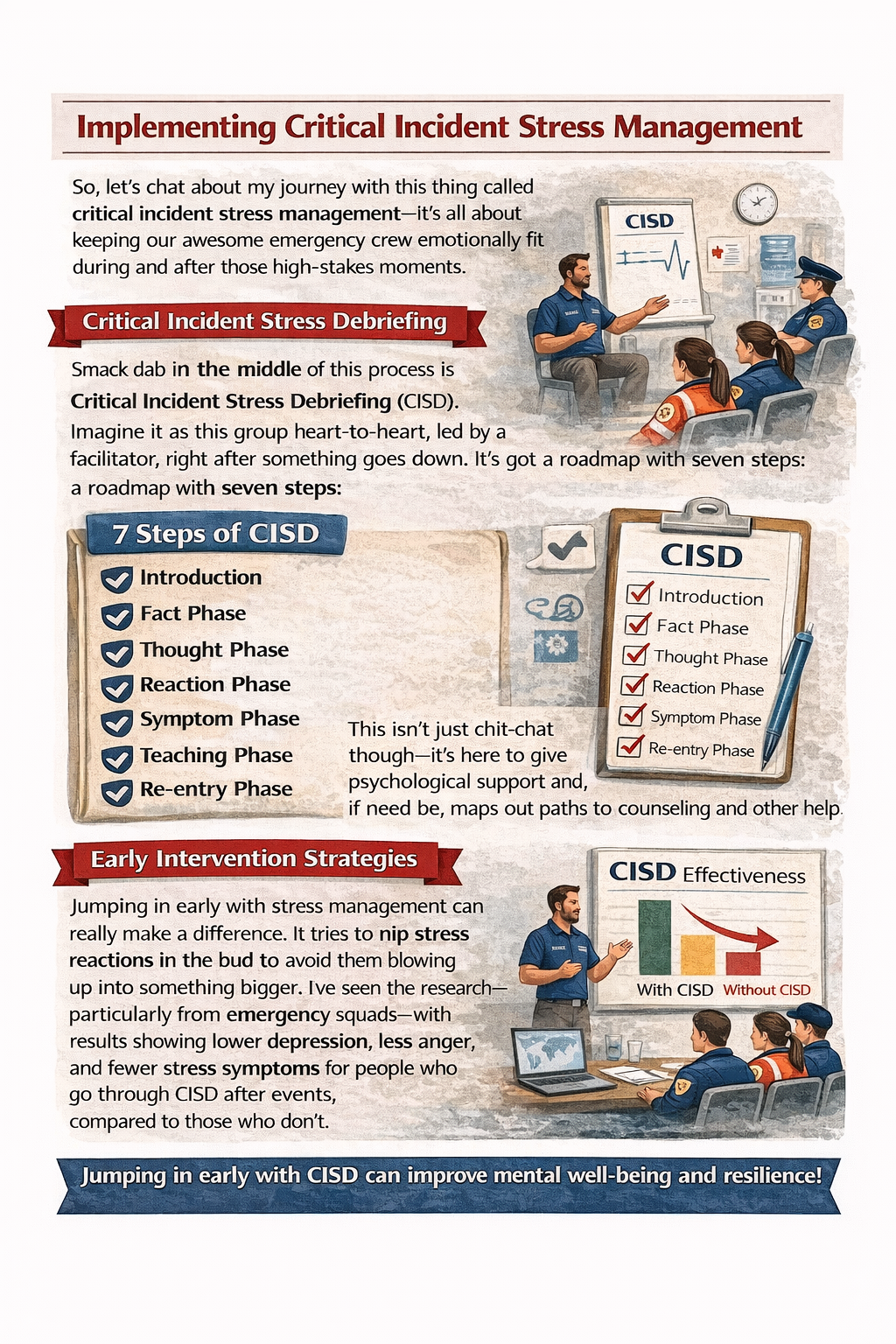
Role of Crisis Intervention Specialists
Enter the crisis intervention specialists—the unsung heroes. Those folks are trained to be a rock when the waves of stress hit hard. Post-natural disaster, after an accident, or any crisis, they roll up their sleeves and get to work providing psychological first aid, lending that crucial emotional support and pointing folks toward more help if needed. With their guidance, they’re really making a giant difference in recovery for those impacted by tough situations.
Organizations that dive into this stress management stuff headfirst can do wonders for their teams. By bringing techniques like CISD, getting an early jump on the stress reactions, and utilizing crisis intervention specialists, they are setting up their staff for healthier outcomes during rough times. Let’s be honest—making sure first responders and emergency folks are good to go mentally is key when life gets a little wild and crazy.
Organizational Strategies for Stress Prevention
When it comes to handling critical incident stress management, organizations can make a big difference in keeping their employees, especially first responders, healthcare workers, and mental health professionals, in good shape. It’s all about being ready, especially if you’re someone who’s smack dab in the middle of frequently stress-fueled jobs. Follow along, and we’ll explore three main strategies your organization can use to help keep stress at bay.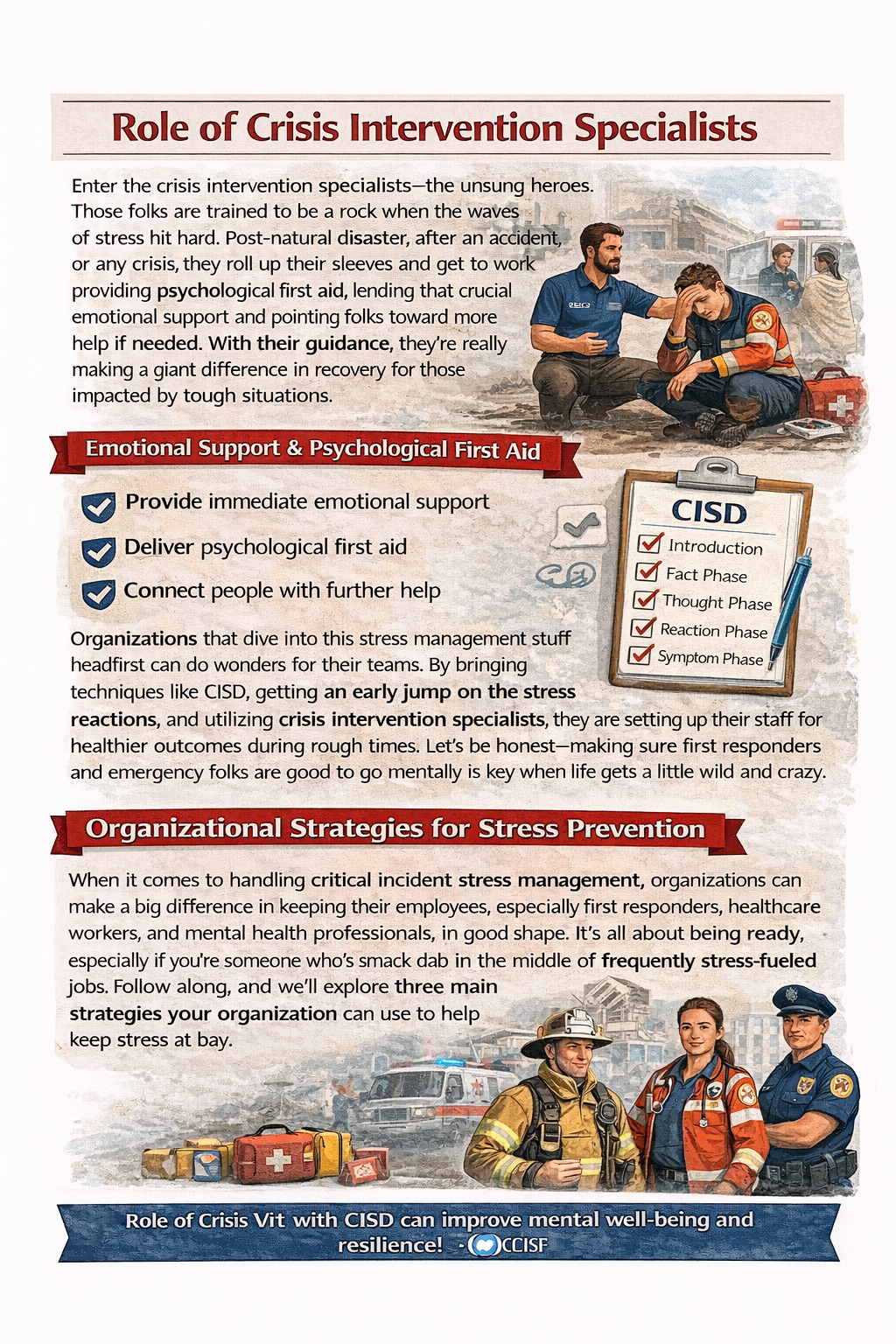
Setting Up Clear Policies
First off, you gotta have your policies straight. Having clear guidelines helps everyone know their part when things get intense. These guidelines make sure everyone knows what’s what when a crisis happens. With set protocols, from reporting an incident to dealing with it afterwards, organizations provide a reliable roadmap that everybody can follow, especially when you’re in a pinch.
These policies need to check off standards and legal requirements. Whether it’s jotting down incidents, cracking into how they happened, or figuring what steps come next, well-laid plans help your team tackle stress head-on. Having a go-to plan means that your response is more organized and less chaotic.
Offering Employee Training
Training is your ace in-the-hole for stress prevention. Don’t just throw together a slideshow—offer real, hands-on education for team members and those in management. The training should cover everything from safety smarts to crisis tip-offs. So when the going gets tough, your folks know how to manage.
By gearing training to fit your workplace’s specific routine, it becomes a more powerful tool. The better prepared your Aexpected. Plus, it gives your team a heads-up on how to develop a culture of readiness and resilience.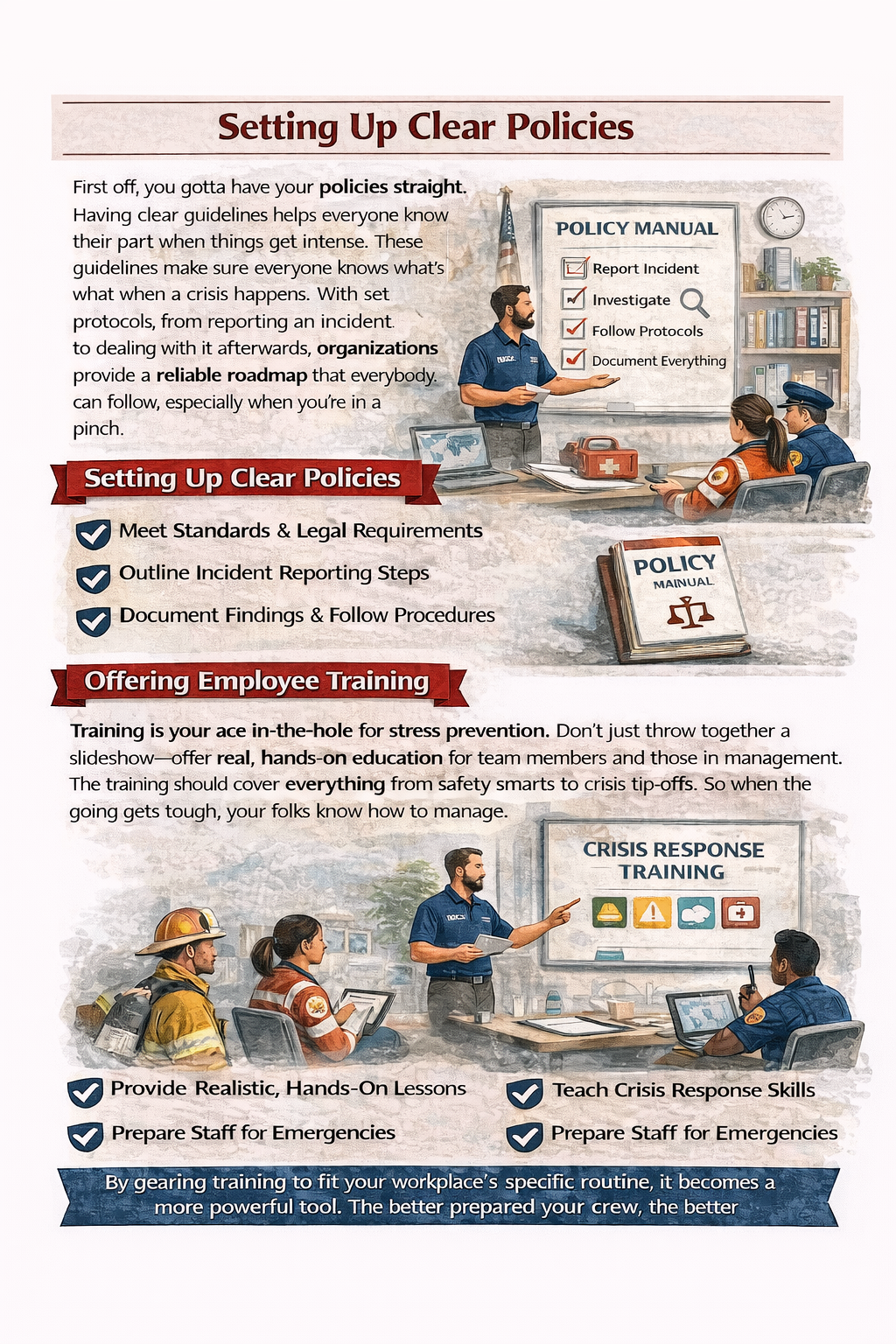
Building a Supportive Culture
Creating a supportive atmosphere is a game-changer. It’s not just about putting up posters or catchy slogans; it’s about truly emphasizing the value of each employee. Building a culture that screams safety, trust, and teamwork gives employees a good vibe and a sense of belonging. Creating open spaces for chatting about mental health ensures nobody bottles things up when stress hits hard.
Acknowledging the good stuff your team does and giving them the room to discuss what they need makes all the difference to morale. With a positive work environment prioritizing mental health, folks feel more grounded and resilient, ready to face whatever comes with calm and grace.
Through these thoughtful and proactive strategies, organizations don’t just talk about stress prevention; they live it. With clear policies, solid training, and a supportive culture, workplaces can become environments where employees feel valued, heard, and prepared to tackle stress without breaking stride.
Debriefing Considerations
When thinking about ways to deal with stress after a tough event, it’s important to look at how well different approaches work and if they might have any downsides. One that often comes up is psychological debriefing, but it’s not always the best choice for people who’ve been through trauma.
Effectiveness of Psychological Debriefing
Recent studies show psychological debriefing might not be the best mental health strategy after a crisis. Instead of helping, it could sometimes make the stress worse or slow down healing for some folks. It’s not a good fit for those dealing with fresh grief, and needs careful handling when used for emotional support.
Looking over eight different studies that followed strict rules, there isn’t much solid proof that debriefing helps ward off post-traumatic stress disorder (PTSD), depression, or anxiety. Actually, some reports say it could trigger PTSD or other trauma-related issues (National Center for PTSD).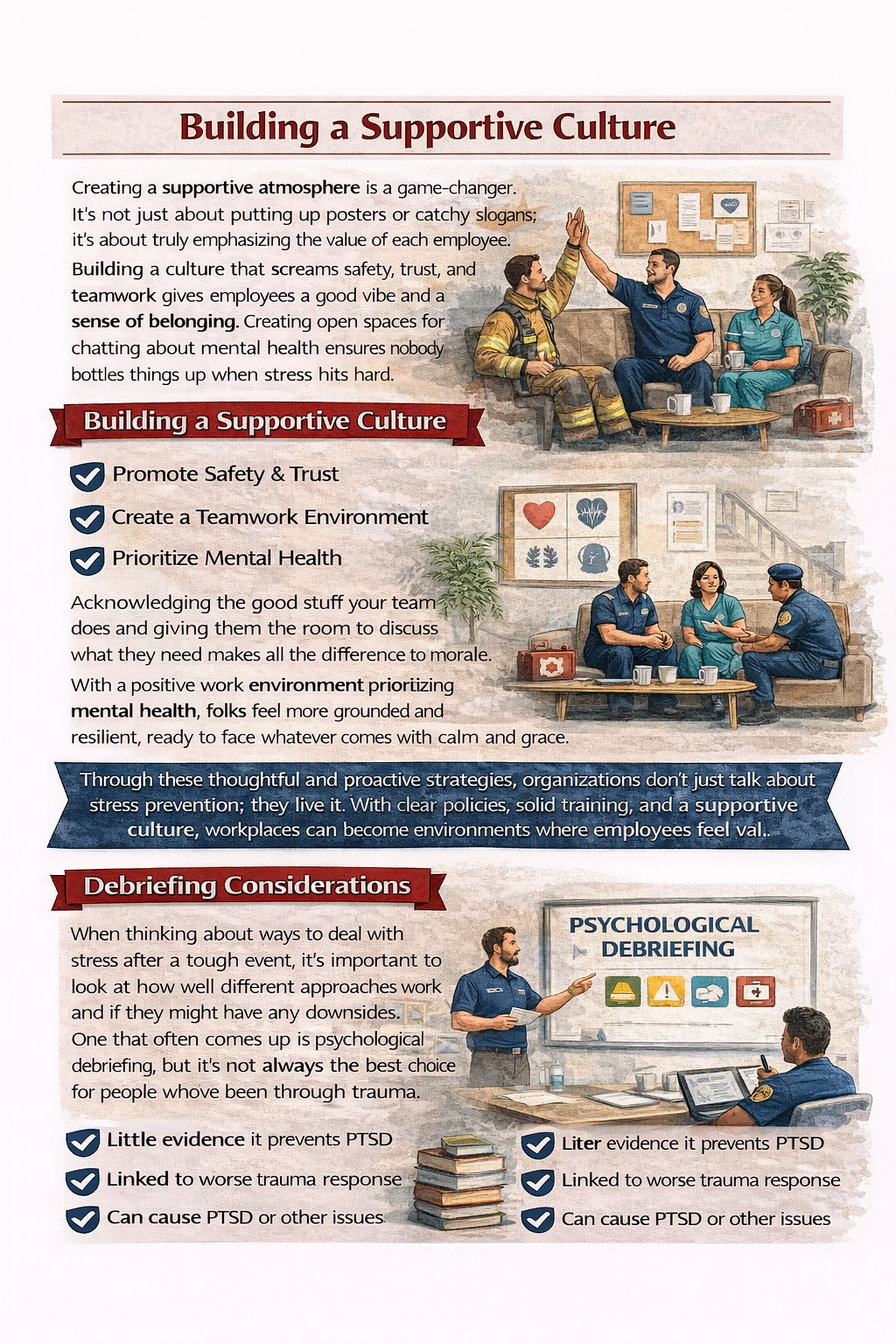
Guidelines for Debriefing
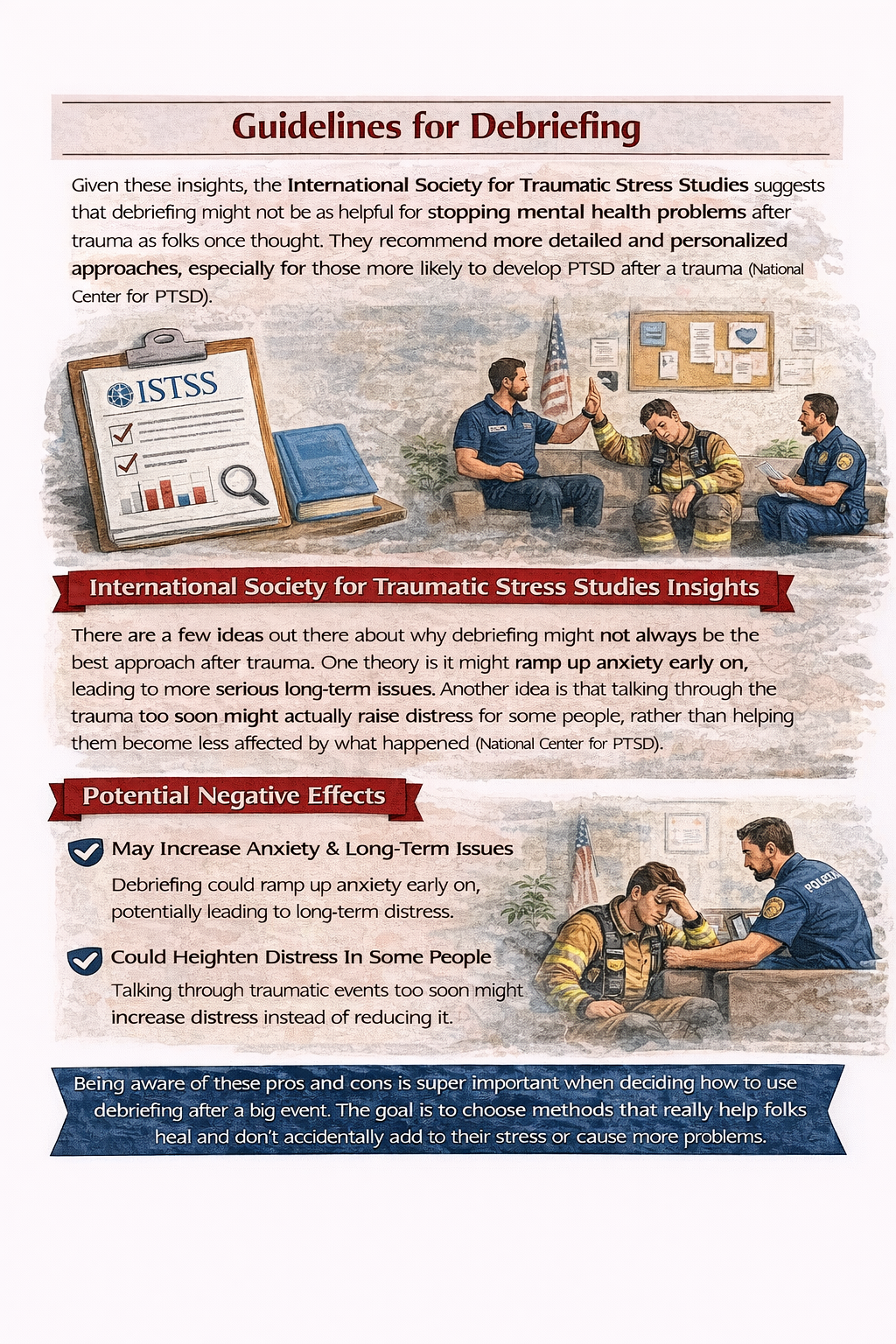
Given these insights, the International Society for Traumatic Stress Studies suggests that debriefing might not be as helpful for stopping mental health problems after trauma as folks once thought. They recommend more detailed and personalized approaches, especially for those more likely to develop PTSD after a trauma (National Center for PTSD).
Potential Negative Effects
There are a few ideas out there about why debriefing might not always be the best approach after trauma. One theory is it might ramp up anxiety early on, leading to more serious long-term issues. Another idea is that talking through the trauma too soon might actually raise distress for some people, rather than helping them become less affected by what happened (National Center for PTSD).
Being aware of these pros and cons is super important when deciding how to use debriefing after a big event. The goal is to choose methods that really help folks heal and don’t accidentally add to their stress or cause more problems.