


How to Manage and Prevent Panic Attacks Naturally
Understanding Panic Attacks
Many people struggle to manage panic attacks naturally without relying on medication.
When trying to wrap my head around what causes panic attacks, I realise it’s about spotting those unmistakable hints that strike unexpectedly. Picture yourself in a moment of calm, suddenly jolted by a wave of sheer terror, as if a storm rolled in out of nowhere. You’re not alone in this bewildering ride; around 6 million Americans know the drill all too well. Whether it sneaks up without caution or springs from something specific, the aftermath often leaves folks anxious about what might come next.
Overview of Panic Attacks
Panic attacks are not just freak-outs; they’re more like an alarm system gone wild, blaring at full blast even when there’s no apparent threat lurking nearby. Some people might experience a brief encounter once or twice in their life, but when the episodes keep creeping up, it might mean you’ve got panic disorder on your hands. This can seriously mess with your groove and call for some good old help from professionals who know how to tackle it head-on.
How to Manage Panic Attacks Naturally
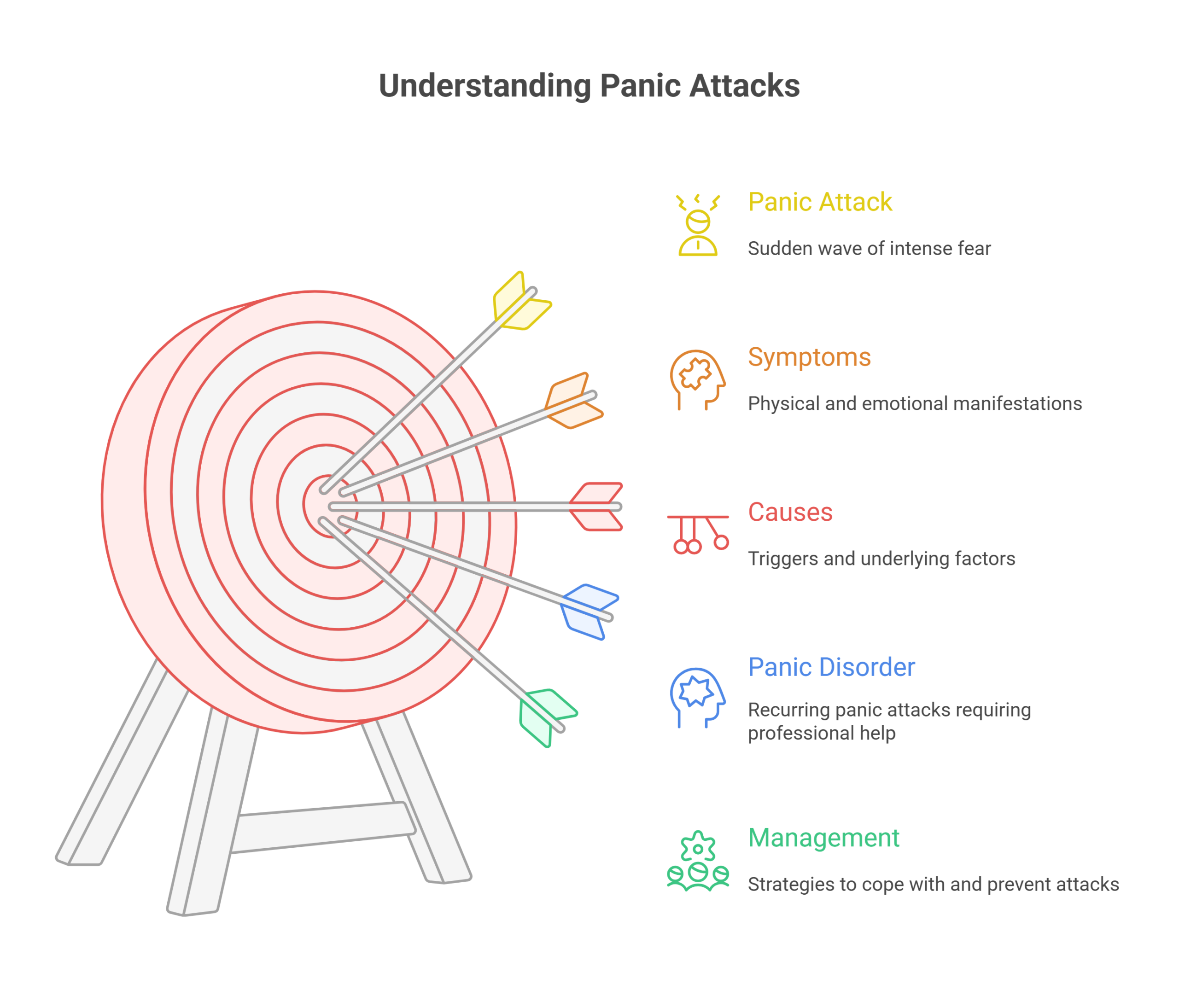
Symptoms of Panic Attacks
During a panic attack, folks might find themselves caught in a whirlwind of freaky physical sensations like:
- Heart racing as if you’ve been sprinting
- Struggling to catch a breath
- Sweating buckets and shaking
- Nightmarish feelings of doom looming large
- Dizziness or that dreaded lightheaded feeling
- Weirdly shivery or suddenly hot and bothered
- Chest tightens up like a clenched fist
It’s not just something you brush off; up to 35% of us have stumbled upon a panic attack at some point, and it’s more than a nagging nuisance—it can seriously trip up your day-to-day. If you let it slide, you might steer clear of places or situations for fear of getting swept up in another panic spree.Learning to manage panic attacks naturally can help reduce fear and regain control.
Interestingly, the numbers show that those labeled female at birth are about twice as likely to wrestle with this disorder compared to those born male. Knowing these insights lets me, and others, get a better grip on what panic attacks are really all about, so we can spot the signs and reach out for the right support when the going gets tough.

Coping Strategies for Panic Attacks
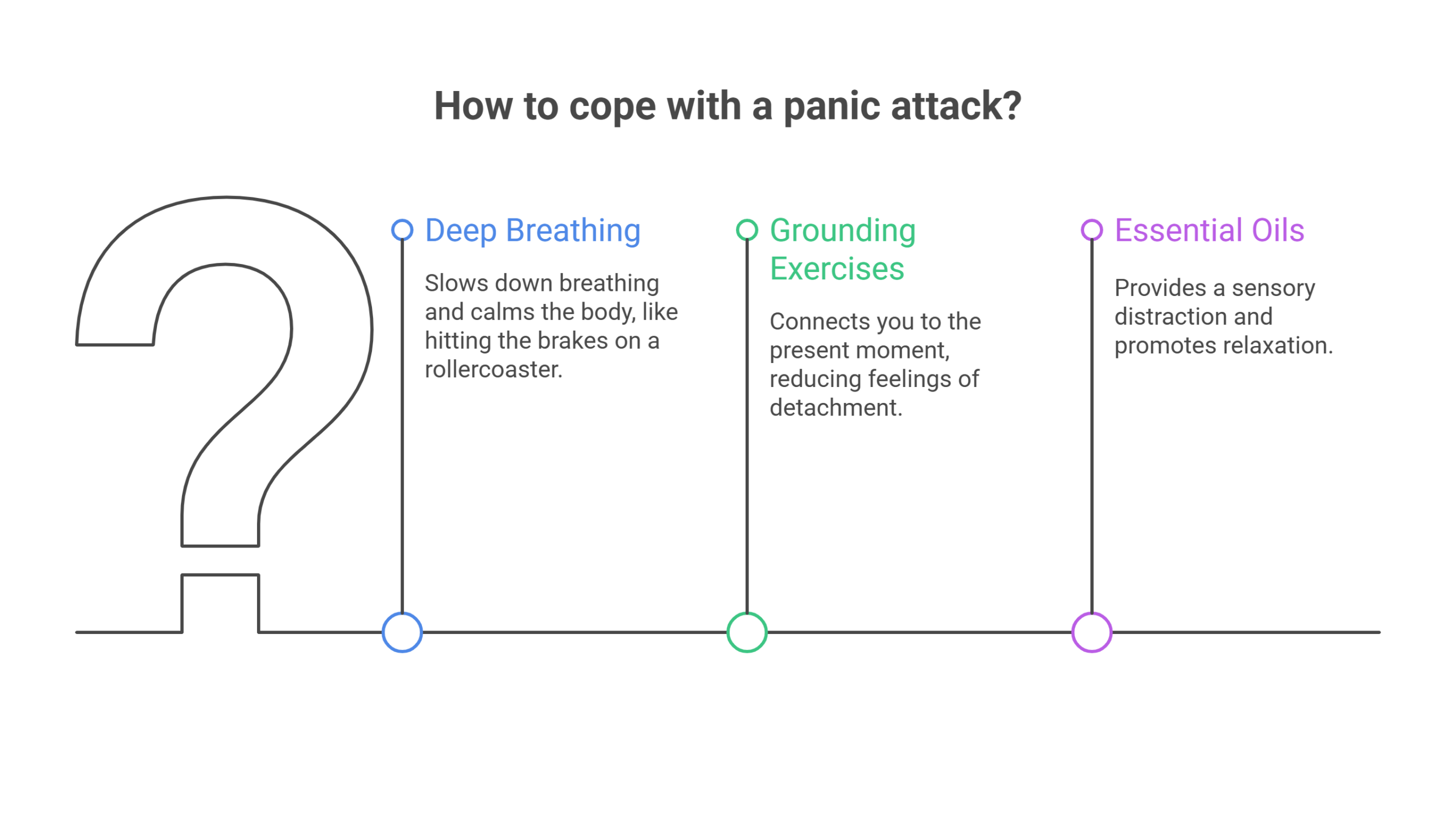
Panic attacks can feel like a rollercoaster ride you never signed up for. But fear not, ’cause there’s some nifty tricks you can tuck into your mental toolbox to help ease those intense symptoms. We’re talking deep breathing, grounding exercises, and the magic of sniffing essential oils. Let’s break it down.
Deep Breathing Techniques
When life’s spinning faster than a merry-go-round, deep breaths are your best friend. That quick breathing and chest-tightening panic attacks bring can make you feel like you’re about to take off like a rocket. Slowing down your breath is like hitting the brakes, calming both mind and body (Medical News Today).
One method to try is the 4-7-8 trick:
- Breathe in gently through your nose and count to 4.
- Hold it in while counting to 7.
- Let it all out through your mouth, counting to 8.
Do this on the reg, and you might just find yourself chillin’ more often, even when anxiety isn’t knocking at your door. Learning to manage panic attacks naturally can help reduce fear and regain control.
Grounding Techniques
Grounding is less about mystical vibes and more about pulling you back to reality when your brain’s running wild. It’s about focusing on the here and now to dial down the freak-out factor (Medical News Today).
Try this 5-4-3-2-1 trick:
- Look around and name 5 things you see.
- Touch 4 things and think about their texture.
- Listen for 3 different sounds.
- Smell 2 things (hopefully something that’s not your gym socks).
- Taste 1 thing, even if it’s just the leftover coffee on your tongue.
This lil’ checklist can snap you back to the present, away from the spiraling thoughts.
Inhaling Essential Oils
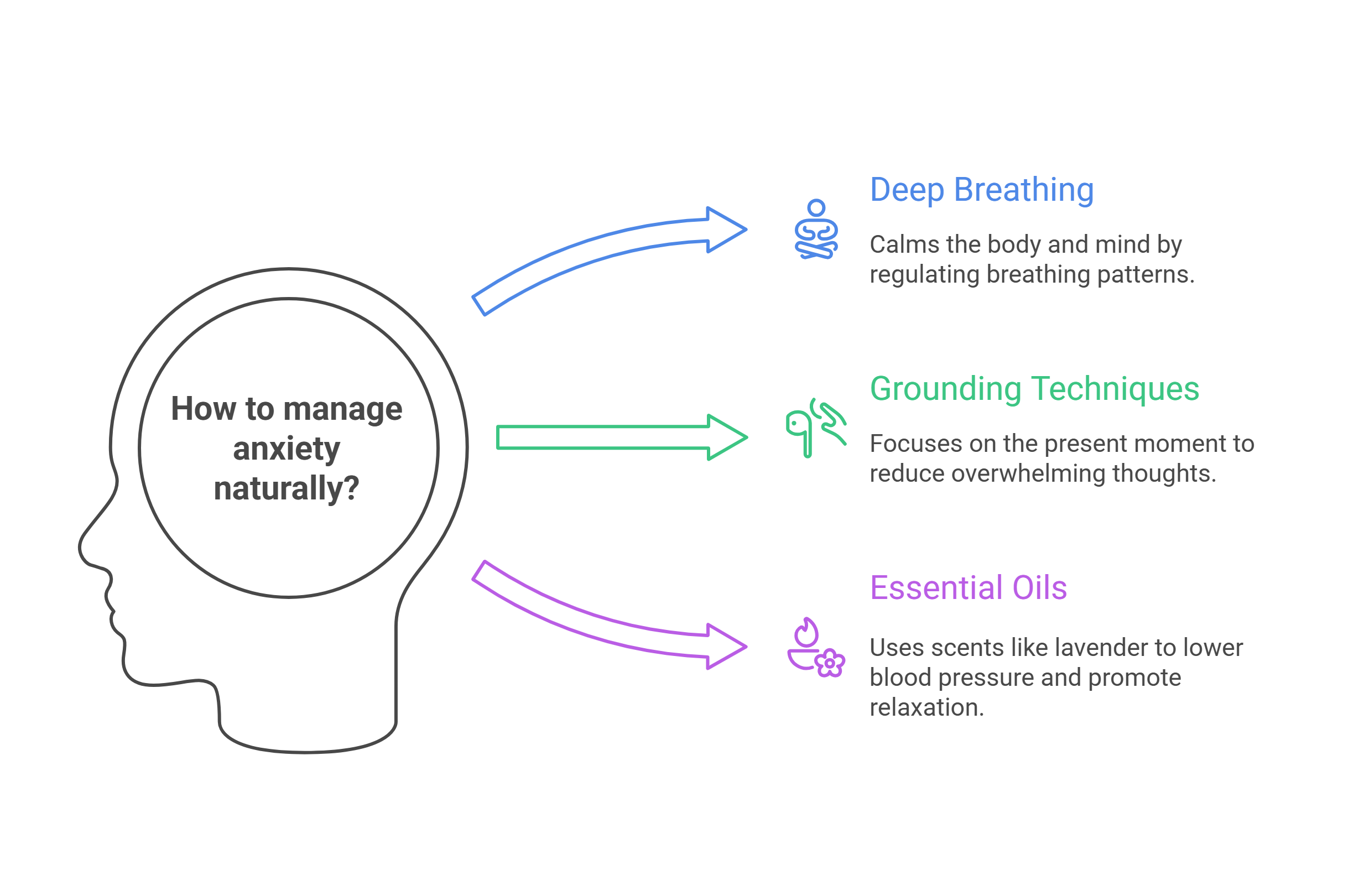
Now, let’s talk sniffables. Lavender oil ain’t just a fancy spa scent; it’s a pocket-sized calm-down button. Research hints it could help lower blood pressure during anxious times, making it a potential anxiety-buster (Medical News Today).
Keep a tiny bottle of lavender oil handy. Sniff it straight from the bottle or sprinkle a bit on a cloth for a whiff whenever tension starts to build up.
So there you have it—deep breaths, grounding exercises, and a whiff of something soothing. With these tactics, you’ll be better prepped next time panic tries to hijack your day. And remember, practicing when you’re chill helps you be pro-ready when anxiety crashes the party.
Lifestyle Management for Panic Attacks
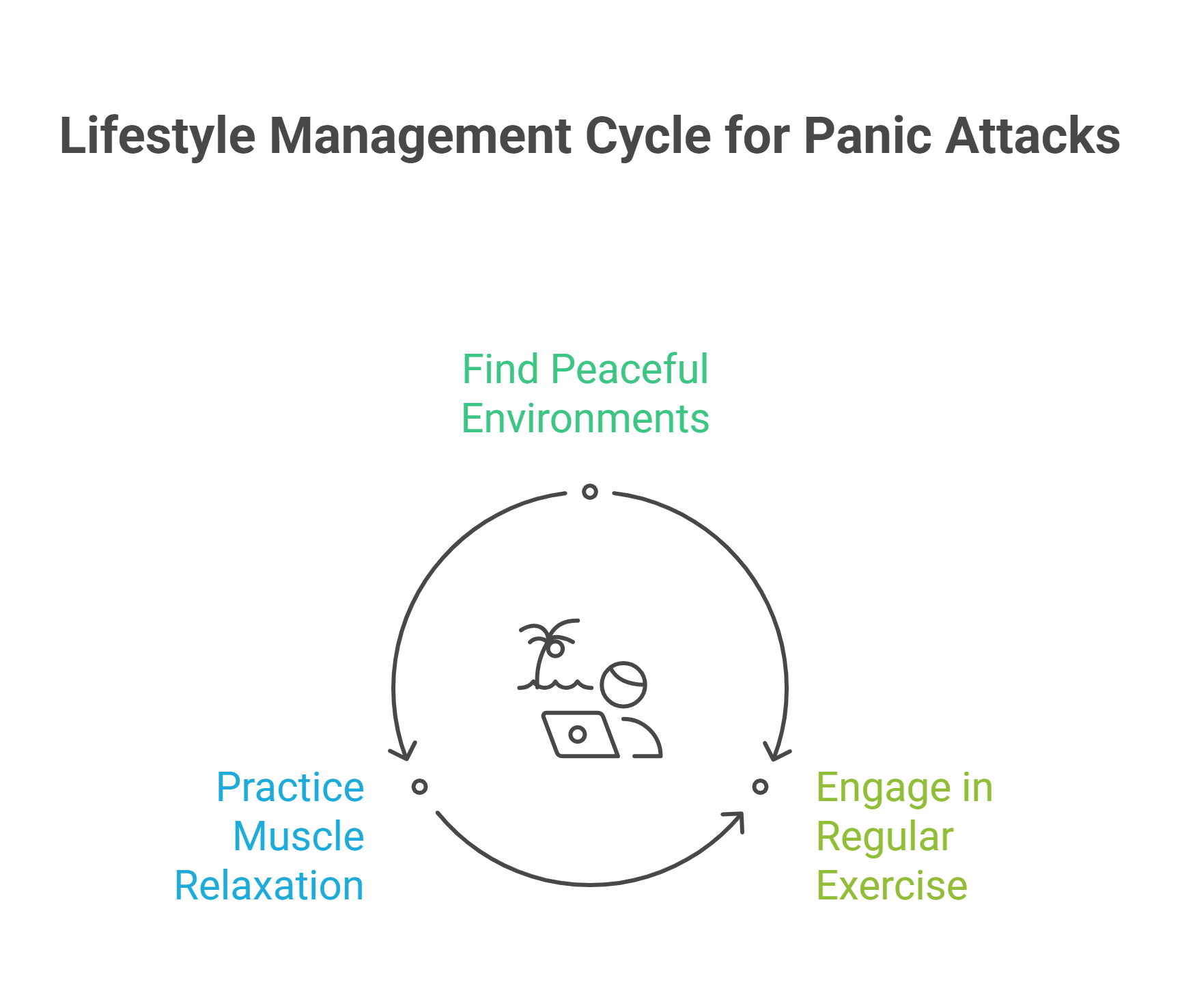
Alright, let’s talk about handling panic attacks without turning to technical jargon or overly complicated advice. Trust me, I’ve been there, and making a few lifestyle changes can really help keep that anxiety monster at bay. It’s like piecing together your very own calming toolkit – think of it as building resources that help you feel a whole lot better.
Finding Peaceful Environments
We all know there’s nothing quite like a quiet place to catch your breath. When panic starts creeping in, finding a chill spot can make a world of difference. The idea is to have a space – at home or outdoors – that feels like your safe haven. As they say on Medical News Today, giving yourself some mental space can help you focus better on your breathing and other calming techniques. So, picture yourself settling into your favorite corner with some soft lighting and calming music – it’s all about creating a spot where panic can’t hold the reins.
Regular Physical Exercise
Exercise, folks, isn’t just good for the body – it’s a solid ally against panic attacks too. Take a walk, go for a jog, or even chase your dog around the yard. According to the good folks at Medical News Today, exercise can help regulate breathing, fill you up with those happy endorphins, and swoosh away anxiety. The beauty of it is, even the lightest routine can make a dent, easing both the frequency and intensity of panic situations. So throw on your sneakers and get moving!
Muscle Relaxation Techniques
When your body’s all tense and unwilling to chill, muscle relaxation techniques can save the day. It’s simple stuff – squeeze, hold, and then relax each muscle group. This was a game-changer for me, letting me knock out the tension and breathe easy when things went south. It’s like telling panic, “Hey, not today.” As they mention on Medical News Today, doing this regularly can temper the physical symptoms of panic episodes. Why not try it right after you exercise for double the benefits?
So there you go – an unfluffed guide to living well with panic attacks. By finding your peaceful nook, breaking a sweat, and practicing muscle relaxation, you’re crafting a personal plan that suits your needs and helps you manage those panic attacks like a champ. Here’s to taking little steps towards big peace!
Seeking Professional Help
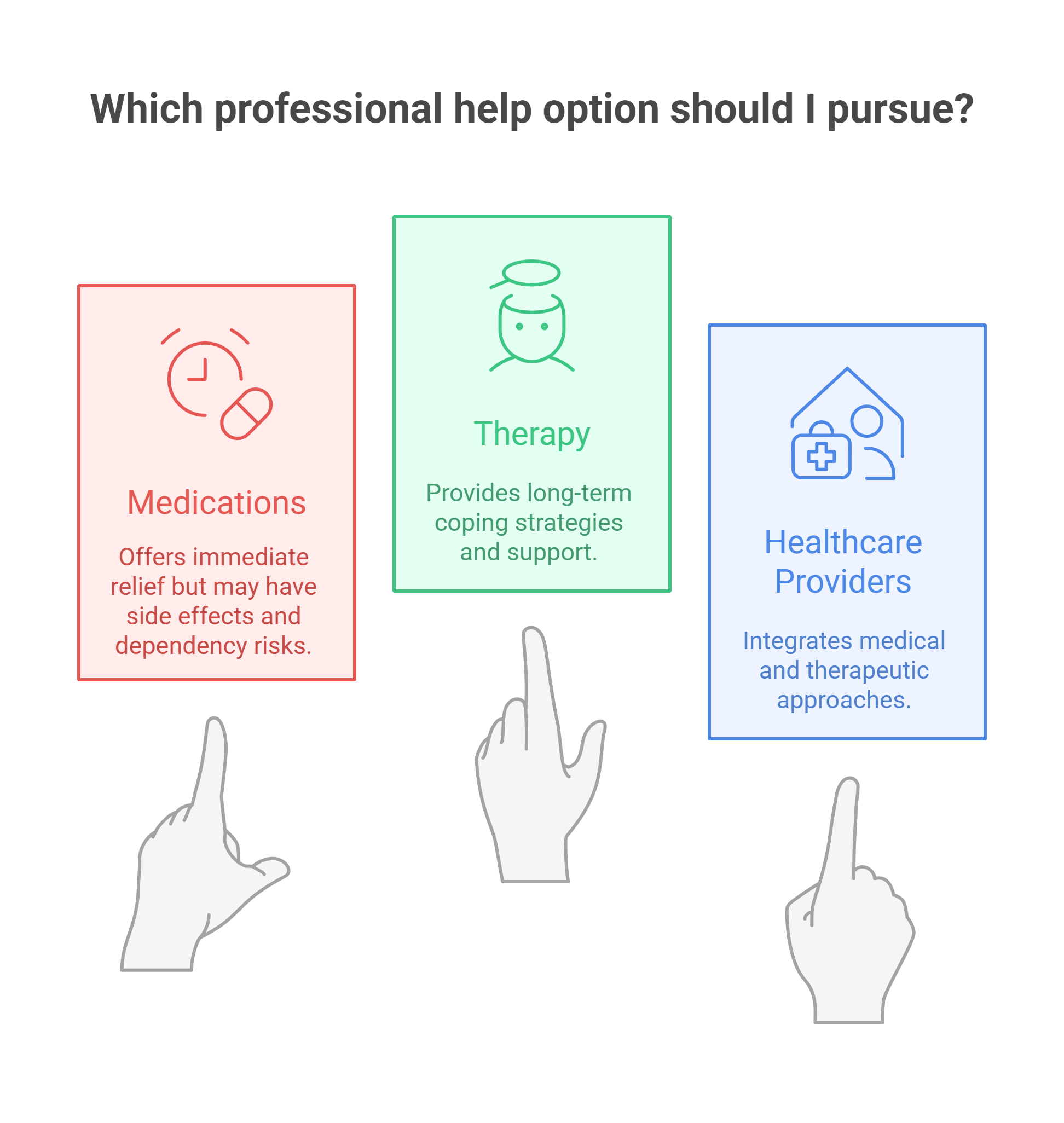
Ever find yourself wrestling with panic attacks? It’s like your body’s running a marathon, but you forgot to lace up your shoes. Getting a helping hand from the pros can make all the difference, offering support and wisdom to wrangle those heebie-jeebies. There’s more than one way to skin a cat when it comes to professional help—think meds, chatting with therapists, or tag-teaming with healthcare providers.
Medications for Panic Attacks
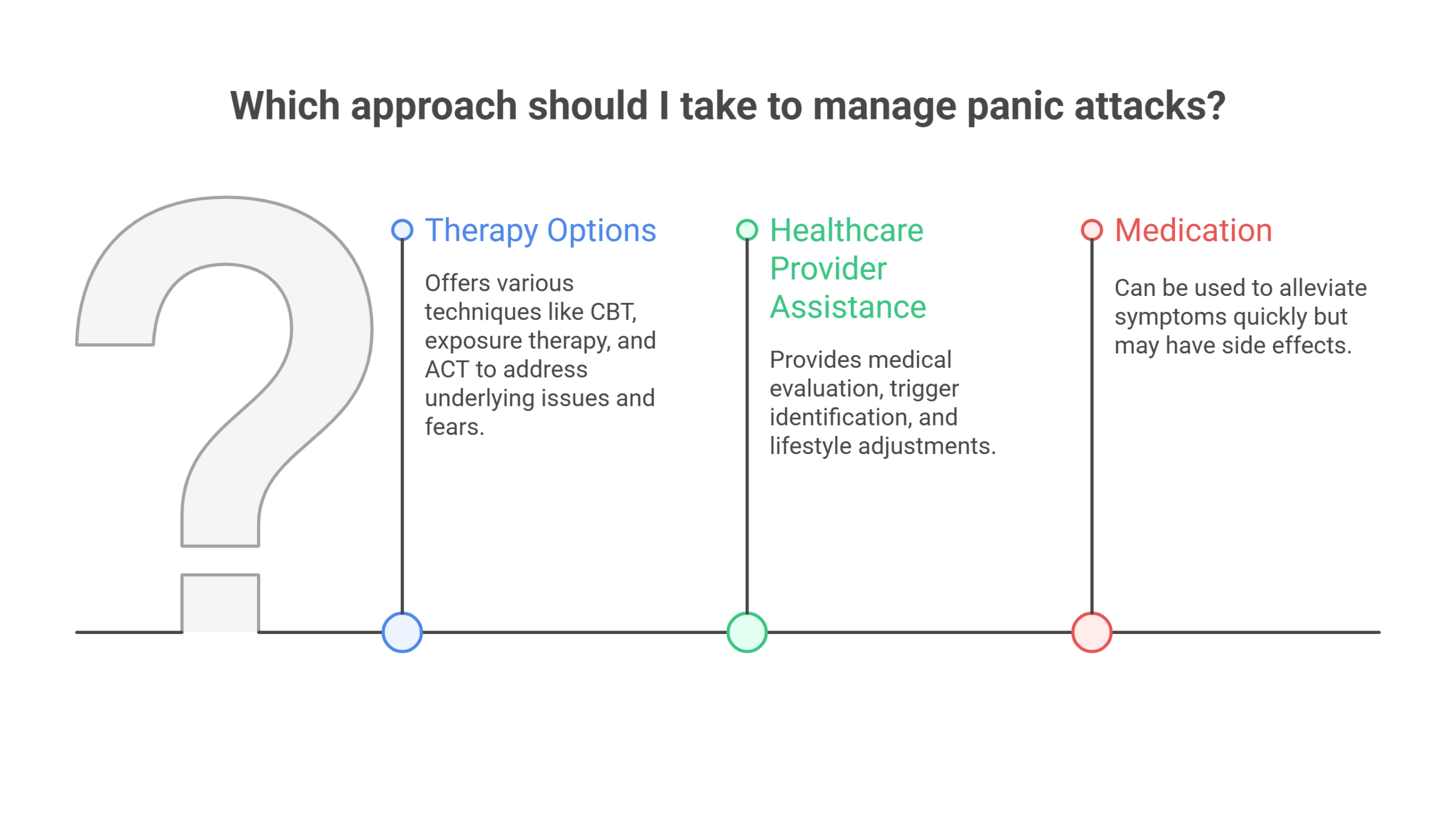
Medicines can be a real knight in shining armor here. They’re a big help for panic attacks and panic disorders. You might have heard of the usual suspects like Valium or Xanax, which fall under benzodiazepines. Then there’s Inderal from the beta-blockers crew. We can’t forget those nifty SSRIs either. Used right, these meds can really take the edge off. Step carefully though, some can be as sticky as glue when it comes to habits and have their fair share of side effects (Medical News Today).
Therapy Options
Therapy—imagine a toolbox full of tricks to handle panic attacks or panic disorders. Whether you’re talking it out, popping pills, or mixing both, getting the right approach depends on what bites you hardest. Cognitive-behavioral therapy (CBT) offers thinking caps for old problems, exposure therapy is a slow dance with your fears, and acceptance and commitment therapy (ACT) is like learning to hug a cactus. They’re all here to keep panic out of your passenger seat (Cleveland Clinic).
Healthcare Provider Assistance
When those panic signals are lighting up your dashboard, reaching out to a healthcare provider is like pulling out the owner’s manual. They’re here not just for the comfort factor but also to ensure those panic feelings aren’t masquerading as something nasty like a heart attack (Mayo Clinic).
Your healthcare buddy can help finger-point those panic triggers. Once spotted, they’ll dish out the tricks to tackle them and throw a lifeline your way to curb those sweaty-palms moments. Little tune-ups like chilling out more, getting active, eating right, and saying “no thanks” to booze and drugs can really clip panic’s wings (Cleveland Clinic).
Getting serious about professional help with meds, therapy, or just some good ol’ healthcare wisdom isn’t just about surviving; it’s about thriving. It’s a top-notch move toward keeping panic attacks at bay and boosting your daily mojo. Teaming up with healthcare experts to craft your own special game plan can set you on a steady path, turning those panic episodes into mere memory shadows.
Identifying Triggers of Panic Attacks
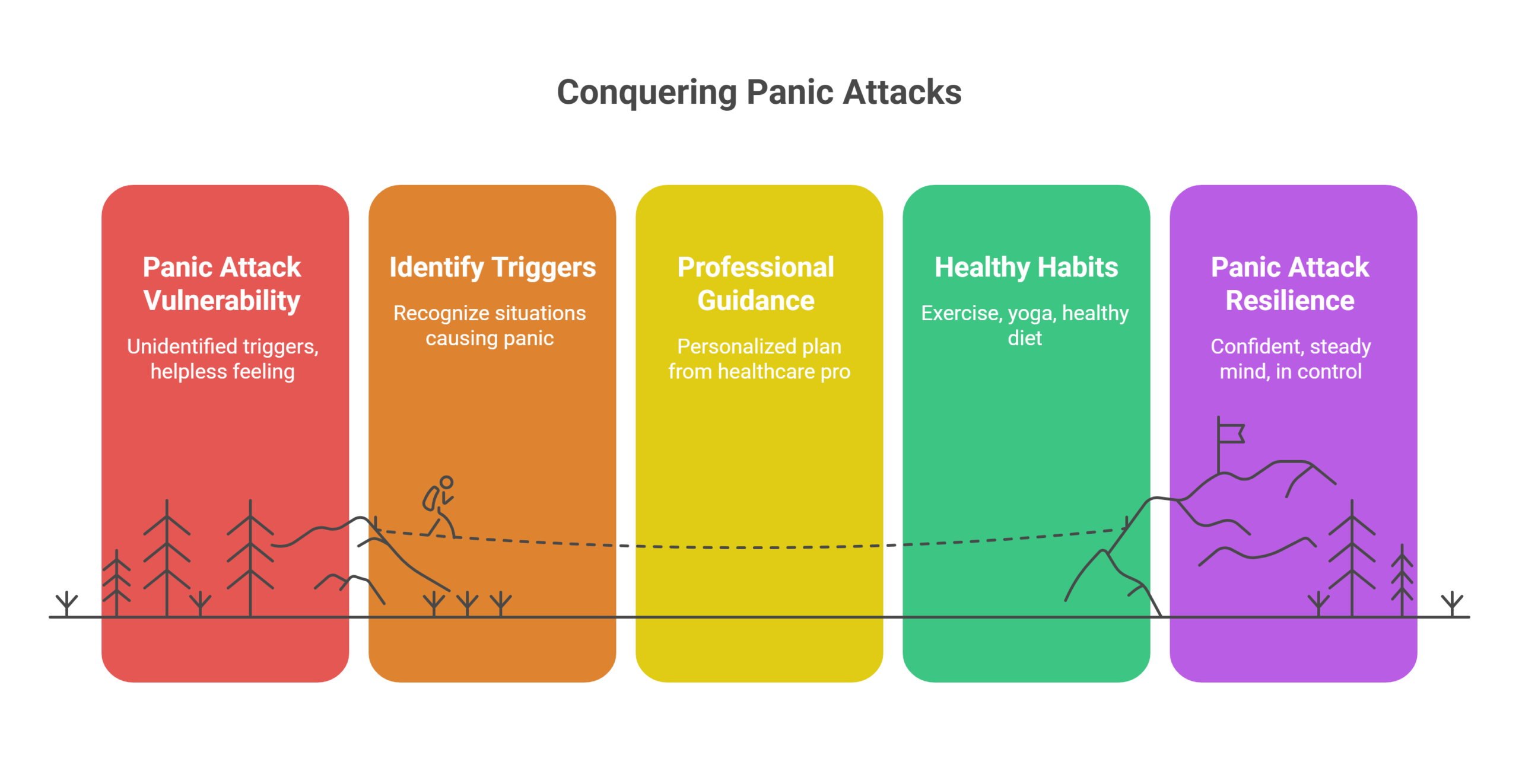
Let’s talk about panic attacks for a sec. They’re like those unexpected guests that crash your party, right? And believe it or not, they can be triggered by certain situations or stress over time. I remember the moment it clicked for me, like, “Oh, that’s what sets me off.” Figuring out what your panic triggers are is a big deal because once you know, you can kick those surprises out before they even happen.
Strategies to Manage Triggers
Reaching out to a healthcare pro is like getting backstage passes; they let you in on the secrets behind your panic triggers. It’s not just about finding the triggers but also about what to do once you spot them. They can whip up a personalized plan as unique as your mom’s secret cookie recipe.
But hey, don’t stop there. You don’t need a degree to pick up some good habits that keep panic at bay. Things like hitting the gym, chilling out with some yoga, eating your veggies, and saying no to the booze and smokes. All that wholesome living can boost your mojo and keep those panic triggers at a safe distance.
Now, let’s not forget about the arsenal of coping strategies and tricks at your disposal. Learning about what’s happening in your brain during a panic attack can take you from feeling helpless to badass. I dove into reading about it and whoa, knowledge really is power. The more you know, the better you can dodge those attack-inducing situations like a mental ninja.
Standing up to panic attacks isn’t just about doing a few push-ups or downloading an app. It’s about really getting to know what sets them off for you. With a game plan that mixes personal strategies and professional advice, you can face the panic with confidence and a smile, ready to keep your mind as steady as a rock.
Prevention and Long-Term Management
Alright, let’s talk panic attacks. If you’re trying to keep them at bay and manage them like a seasoned pro, focusing on prevention and long-term strategies is your best bet. It’s about chilling out, making smart lifestyle choices, and knowing panic disorders like the back of your hand, which helps in reducing their grip over time.
Stress Reduction Techniques
Beat stress, beat panic—simple as that. Here are some go-to moves for keeping stress in check:
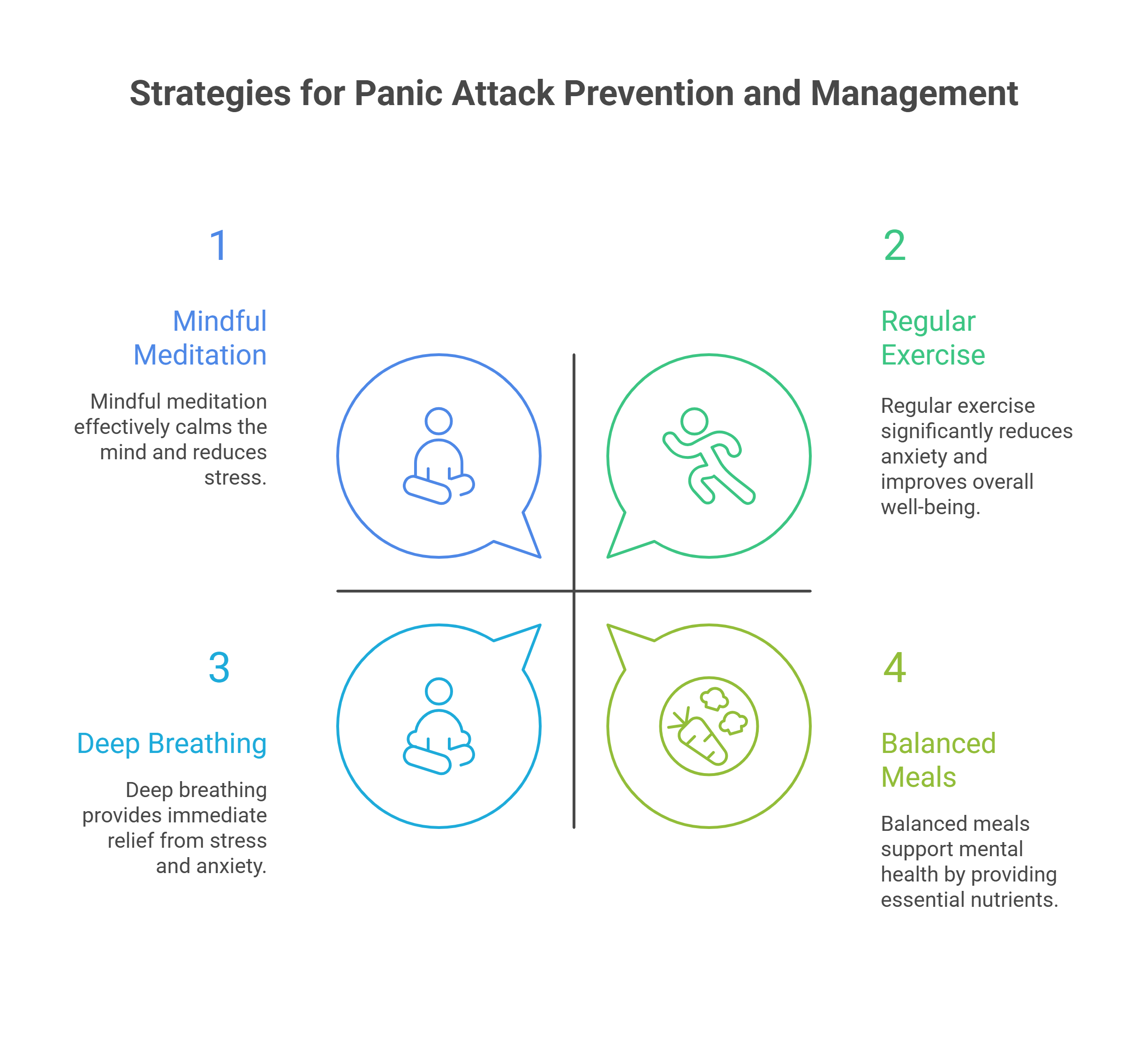
- Mindful Meditation: Hang out in the now. Breathing and being present help kick anxiety to the curb.
- Deep Breathing: Think of diaphragmatic breathing as your anti-panic button. Breathe deep, chill out.
- Yoga & Stretching: Bend it like a yogi! It’s not just for bends—it’s for a peaceful mind, too.
Healthy Lifestyle Choices
Living right isn’t just about salads and gym selfies. It’s a game changer for panic stuff, too. Try these on for size:
- Regular Exercise: Break a sweat in your own way, be it a walk or run. It keeps the blues (and anxiety) away!.
- Balanced Meals: Feed your body and watch your mind smile. Nutrient-rich foods really do make a difference.
- Quality Sleep: Hit the hay for a full cycle. Proper Zzzs mean less chance of pesky panic hitting your dreams.
Educating Yourself on Panic Disorder
Knowledge isn’t just power. It’s peace of mind when you’re facing a panic disorder. Here’s how:
- Spotting Symptoms: Know what a panic attack looks like, so you can say, “Not today!”
- Trigger Tracking: Figure out what sets you off—be it stress, trauma, or certain scenes—so you can steer clear.
- Treatment Tactics: Scout your options, from therapy to medicine, creating a well-rounded plan to tackle those panic episodes head-on (Cleveland Clinic).
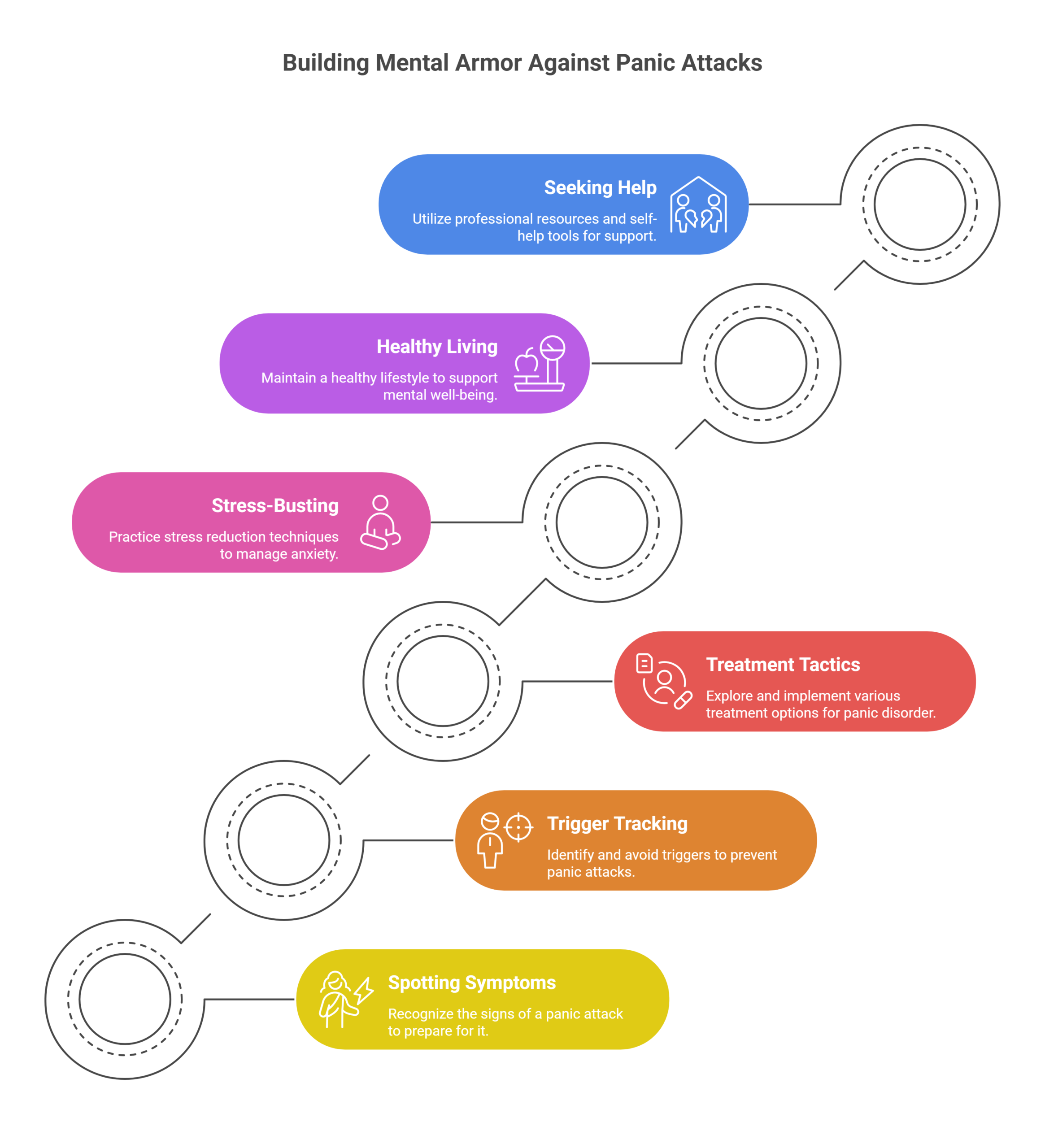
Mix a bit of stress-busting with healthy living and a good dose of knowledge, and you’ve got a solid foundation for managing those panic moments. And don’t forget—help from a doctor or self-help tools can boost your mental armor against the sneaky attacks.
With consistent practice, you can manage panic attacks naturally and live a calmer, healthier life.