
 Understanding Stigma and Help-Seeking
When thinking about how men go through panic attacks differently, it’s crucial to grasp the impact of stigma on men’s mental well-being and the hurdles they face in getting help.
Impact of Stigma on Men’s Mental Health
Men often deal with a heavy cloud of stigma when it comes to mental illness. This isn’t just bad for their heads; it also messes with their willingness to chat about their struggles and get the right help. The societal gossip and sideways glances mean they’re less likely to lean on others or hit up a counselor, which leaves them feeling more alone and often strains their wallets.
The whole “be a man” narrative makes it tough for men to accept they’ve got mental health issues. Instead of opening up, many end up feeling isolated, which only makes things worse. This wall between them and support just grows, making it harder to fight panic attacks and anxiety.
Barriers to Mental Health Help for Men
Research shows men have trouble opening up about their mental health woes and getting pro help because of the stigma that’s hotter than a BBQ grilling in July. They’re hesitant to step into a therapist’s office or stick with any kind of treatment plan.
Men are also scared stiff of breaking away from the tough-guy image. This is especially true in places where being macho is the air they breathe, like certain jobs or sports teams. They feel like they have to live up to this old-school dude code that clashes with them admitting they’re struggling.
To break down these barriers, guys are finding ways to battle the stigma beast. They’re turning to their buddies, learning more about mental health, and rethinking what it means to seek help. By jumping into these actions, men are chipping away at the stigma of mental health struggles, paving the way for more support for anyone dealing with anxiety and panic attacks.
Coping Mechanisms and Stigmatization
Mental health can be a bit of a battlefield, and for many guys, it’s a tough arena. The stigma surrounding mental illness can make it harder to tackle, especially when panic attacks come into play. The pressure on men to “man up” often builds this invisible wall, stopping them from getting the help they really need.
The Stigma Showdown
So, here’s the lowdown: many men feel the sharp sting of stigma when mental health is on the table, making them hesitant to ask for help. The fear of shattered social ties and financial strain often keeps them quiet. It’s like living in the shadows, caught between silence and survival.
The idea of what it means to be a ‘real man’ can be a real pain, especially if you’re in a place where the macho image rules, like in the office or on the field. It’s this old-school thinking that makes it tough for guys to admit when they’re feeling low or overwhelmed, keeping them from reaching out for the support they need.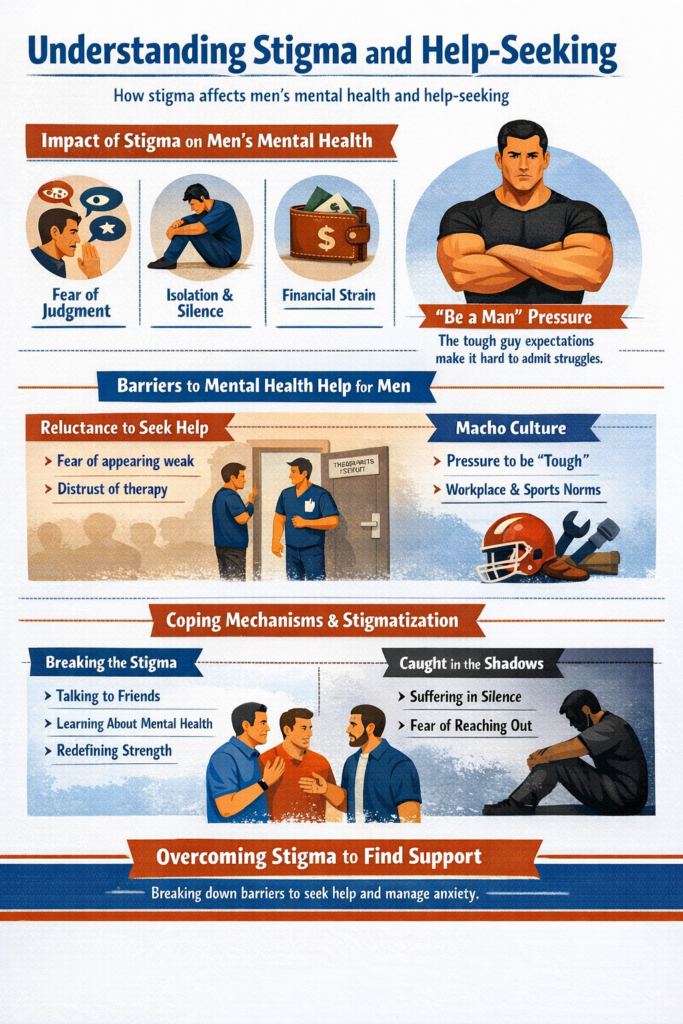
Fighting Back: Breaking the Stigma
Despite the hurdles, a lot of men are stepping up and fighting back against the stigma and its nasty side effects. Finding ways to deal with the negativity is crucial. Here’s what some are doing:
- Lean On a Friend: Having folks around who get what you’re going through is pure gold. It cuts down on feeling like you’re battling alone and chips away at that stigma.
- Learn the Language: Knowing more about mental health can give guys the courage to seek help and figure out how to take better care of themselves.
- Flip the Script: Changing the way we think about mental health—from seeing help-seeking as a weakness to recognizing it as a strength—can break down walls and open up healthier attitudes.
By getting involved in these ways, men can punch through the tough stigma surrounding mental illness and carve out a supportive space. Efforts to make mental health less of a taboo and more of an open conversation are stepping stones to better outcomes for everyone, especially those wrestling with panic attacks.
Gender Disparities in Panic Disorder
Let’s talk about how panic disorder feels different for guys and gals, and the unique mess men face when dealing with this mental rollercoaster.
When Guys and Gals Handle Panic Differently
Ever notice how fellas aren’t always rushing to spill their guts about feeling anxious? Research says it’s partly due to some old-school attitudes. Men, especially younger dudes, often think it’s weak to admit they’re battling depression or anxiety (PMC). The expectation to “man up” and keep it together can prevent guys from admitting they’re in the panic zone or reaching out for a lifeline.
Let’s face it, if society’s telling you to bottle things up, it’s hard to say, “Hey, I’m not okay.” We need to make it cool to talk about these feelings. Let’s swap the tough-guy act for a space where guys can share what’s really going on.
How Being “Manly” Mucks Things Up
For a bunch of dudes, making sure they fit the “macho man” image is like carrying a boulder on their back. In places like locker rooms or work settings, showing weakness is like breaking a bro code (PMC). When you have to be tough and unfazed, admitting you’ve got panic attacks feels like a no-go.
But guess what? Some guys are breaking the mold. They’re swapping war stories, learning more about mental health, and trying to shake off the idea that needing help is a flaw. Spreading the word can make it easier for guys to own their struggles and get back on track.
By shining a light on how panic disorder presents itself differently across genders and the way macho stereotypes fuel stigma, we’re peeling back the pressure that stops men from getting the help they really need. Let’s change the conversation and give all the fellas out there a fighting chance to slog through anxiety and come out swinging.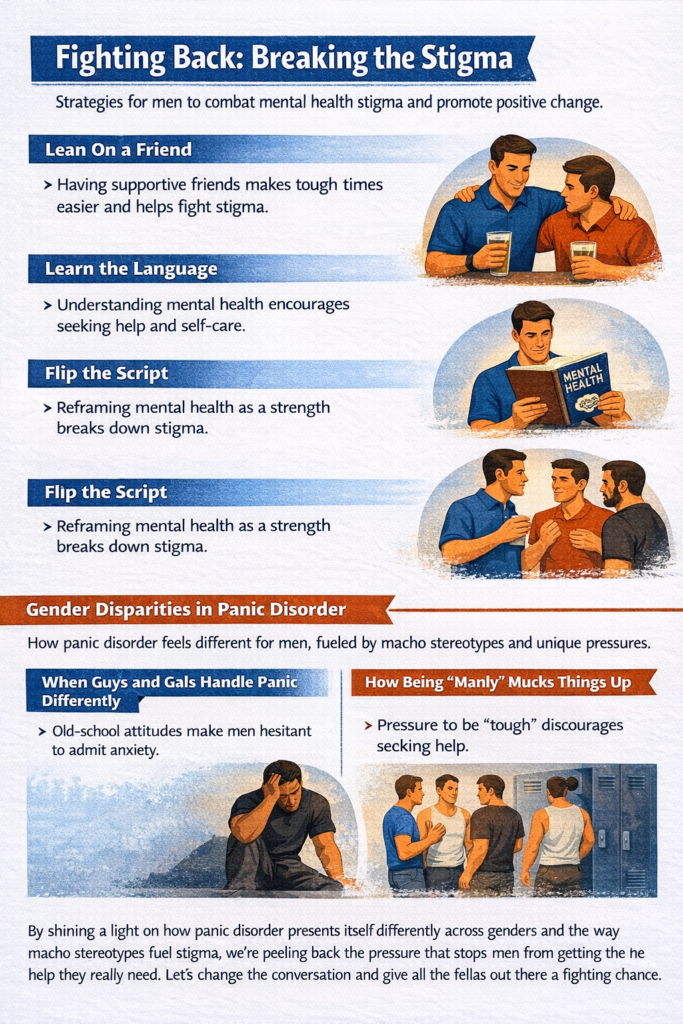
Gender-Specific Responses to Anxiety
Dealing with anxiety isn’t the same for everyone, and for men, it can sneakily mold the way they show anxiety in their relationships and careers.
Men’s Expressions of Anxiety in Relationships
When anxiety hits, guys might react in all sorts of ways in their relationships. They often struggle to open up about what’s eating at them, which can mean a load of stress and lonesomeness bottled up inside. The UNC Men’s Health Program points out that men might flip their anxiety into anger, causing blow-ups that put strain on their personal ties, work life, and sometimes even get them into hot water legally.
The whole “tough guy” act that society drums up can make it even harder for men to share what they’re dealing with, turning anxiety into a tangled mess of anger and rocky relationships if they’ve got no one to lean on.
Effects of Anxiety on Men’s Work and Ambitions
Anxiety has a way of springing up in a man’s work life too—messing with how he sees himself and his productivity. Many guys blow off steam through hard-core workouts or pumping iron, which helps get rid of that built-up angst. Exercise can be a great stress-buster, but it’s key to not go overboard to the point where you’re worn out or hurt yourself (UNC Men’s Health Program).
Ambitious men tend to fret over missed targets and the nagging fear that they might never reach their full potential. Even when everything looks great from the outside, inside there might be these constant worries gnawing away at them. The push to hit a certain level of success—not just in the workplace but life in general—can seriously ramp up anxiety and stand in the way of truly growing as a person.
Plus, when it comes to the dating game and emotional stuff, anxiety can mess things up again. Fear of hearing “no” and the pressure to always step up and make a mark socially often hype up the anxiety and gut-level doubts. Without having the right emotional outlets or someone to talk things through with, guys might find it tough to speak up about their wants or worries, and that can lead to more anxiety, angry outbursts, and relationship troubles.
By seeing how anxiety plays out differently in men, especially in relationships and on the work front, we can better support open chats, showing feelings, and taking care of one’s mental health overall. When we grasp the full picture of anxiety’s hold on men, it means stepping up healthy habits, pushing for mental health confidence, and setting up spaces where emotional health shines.
Genetic and Socio-Cultural Factors
When we dig into what causes panic attacks in guys, it’s clear that both the genetic stuff and the whole social background thing matter big time. They really shape how panic disorders pop up and are understood among different crowds.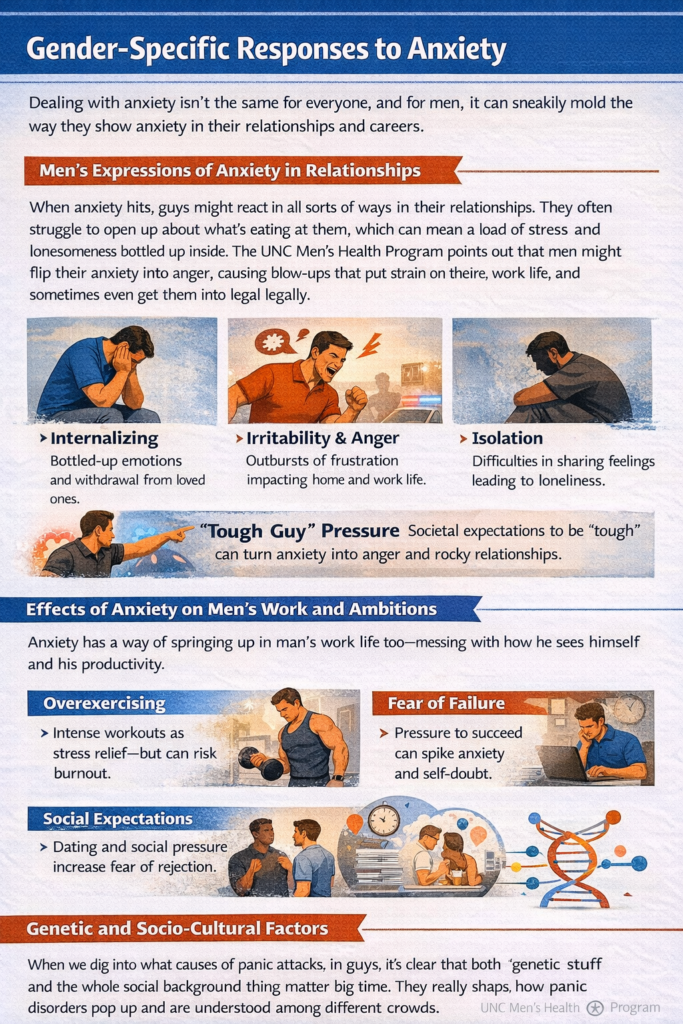
Genetic Susceptibility to Panic Disorder
Okay, about the genes. Studies, especially with twins, show we’re maybe 30% to 43% cooked up for panic through our DNA (Study Source). This means our genes have a say in creating that panic business. Especially the ones buddying up with our brain’s chemical messengers like COMT, MAO, and the Serotonergic system—they’re on the suspect list for panic (Study Source).
But, it’s not all cut and dried. Some studies just didn’t line up right or couldn’t prove their point twice. This tells us that there’s a real twisty dance between what’s in our genes and the environment we chill in that messes with panic disorder showing up in males.
Cultural Influences on Symptom Expression
Now, let’s chat about the culture angle. Culture shapes how panic disorders show up and how folks see them. There’s clear evidence of gender and ethnicity shaking things up with panic, showing strong ties in women from certain groups (Study Source). This spotlight on culture says we gotta think about it when we’re looking at panic in men.
Different cultural vibes come with their own baggage about mental health and wearing your feelings on your sleeve, impacting how dudes handle their issues and seek help when needed (Study Source). What society expects can build walls that make guys shy away from mental health care, sticking them in unique predicaments when managing panic attacks.
By getting a handle on both the genetic and cultural aspects, we can get a clearer picture of why panic attacks hit men differently. It also helps us whip up better support and interventions. If panic’s got you or someone you know in a twist, support group platforms and online resources are clutch options for steering this ship.
Differences in Healthcare Usage
When it comes to how men experience panic attacks differently, one big factor is how they go about getting healthcare for anxiety and how it affects their day-to-day life.
Seeking Healthcare Services for Anxiety
Let’s face it, society hasn’t been kind to men when it comes to mental health issues. There’s this weighty stigma that hangs around, making it tough for guys to open up about anxiety. This bit of social baggage doesn’t do anyone any favors, discouraging men from reaching out for the kind of help they need, which can exacerbate feelings of isolation and add financial strain to their lives (PMC). Social norms push men to bottle things up, often leading to reluctance or inconsistent use of mental health services.
Because of this, some men seek out other ways to deal with anxiety, such as hitting the gym and pumping some iron to physically unleash stress and bottled-up feelings (UNC Men’s Health Program). While working out is great for letting off steam, professional mental health support shouldn’t be overlooked. Striking a balance between taking matters into one’s own hands and reaching for professional guidance is key to effectively handling anxiety.
Impact of Anxiety Disorders on Daily Life
Dealing with anxiety can be rough and can mess with a guy’s work, relationships, and overall happiness. It’s not uncommon for men to show irritability and anger as a vent for what’s bubbling up inside, and this can lead to rocky relationships and even legal troubles.
A survey done in Timisoara, Romania from 2020 to 2023 showed an interesting twist – men often rated their own health a little better than women did, like a pat-on-the-back-action, but whenever tested for mood issues on scales like PHQ-9 and GAD-7, women scored higher on depression and anxiety. This was especially true for folks dealing with jaw surgery (NCBI). This shows that despite what might seem like better physical well-being, men might still wrestle more with certain mental health challenges — making it clear we need to focus on ways to cater help specifically towards them.
Nudging men towards opening up about mental health and making sure they have proper resources can make dealing with panic attacks a whole lot easier. It’s about time we made it okay for everyone, especially men, to voice their anxiety and seek the help they deserve.