Peer Support in Mental Health
I’ve been through my fair share of mental health hurdles, and let me tell ya, peer support has made a world of difference. It’s like having a lifeline when you’re trying to stay afloat in choppy waters.
Why Peer Support Matters
Peer support ain’t just a buzzword—it’s become essential, reaching out to folks all over the map. We’ve got over 30,000 trained folks in the US who’re basically the unsung heroes of the mental health world, offering services in 43 states (PMC). The magic of peer support lies in people who know exactly what it’s like to walk in your shoes, which often feels like a hug for the soul.
When you’re dealing with mental health stuff, finding folks who’ve been there too can feel like finding your pack. They get it. They really get it. This bond weaves a sort of safety net, offering encouragement and a sense of belonging that can sometimes be hard to come by in your standard doctor’s office.
Perks of Buddying Up
And it’s not just about a shoulder to cry on. The real deal benefits of peer support? We’re talking fewer trips to the hospital, feeling less of that nasty social isolation creep, and maybe even sleeping a little easier at night knowing you’re not alone (PMC). It can even help dial down some tougher symptoms and cut back on substance use.
On the flip side, those providing the support? They grow too. And their work helps break down that awful stigma around mental health, opening more doors to jobs and showing that recovery is a team effort.
The skills you need to be a peer support pal—things like being all about recovery, focusing on the person, and understanding trauma—are what make these programs tick (PMC). It’s like having a toolkit for kindness and empathy that changes lives.
In a nutshell, peer support lights the way when life’s storms hit, offering a hand and a heart, guiding folks to brighter days with understanding and strength in numbers. It’s about building a little world where people feel heard, understood, and hopeful about tomorrow.
Online Peer Support Platforms
Let’s face it, dealing with panic attacks isn’t a walk in the park. Sometimes, just knowing there’s a virtual shoulder to lean on can make all the difference. That’s where online peer support platforms swoop in to help. They create a safe haven where folks can pour their hearts out, get a bit of comfort, and even huddle up in groups that ‘get’ what’s going on.
Role of Online Support Groups
So, here’s the scoop: PubMed Central talks about how these virtual communities are like lifeboats for folks battling panic attacks. They’re a buzzing hub where people gab about their struggles, swap tips for keeping calm, and feel less alone by linking up with others in the same boat.
The folks at Therapy Trainings® say one-size-fits-all ain’t how it works here; people can jump into these convos whenever suits them best. Anonymity’s an option, or if you’re up for showing some skin, that’s cool too. It’s all about being part of a group that gets it, offers tips, and makes a person feel okay about not being okay, you know?
Benefits and Challenges of Online Support
Joining these online spots can be like finding a crew that has your back. According to JMIR Mental Health, this can be a real game-changer, offering a sense of togetherness, validation, and ideas to tackle the isolation that sometimes comes with panic attacks.
But hey, it’s not all sunshine and rainbows. These groups need someone to referee the chat sometimes—moderation isn’t just a nice-to-have, it’s a must. Those moderators? They keep things friendly, focused, and support-centric.
Facebook happens to be one of those places where support groups are setting up shop more and more. JMIR Mental Health says these platforms are changing the scene for people dealing with panic attacks, making sure there are tools handy to support folks in need.
So, by plugging into these online communities, people dealing with their own panic storms can find a circle of folks who understand, spill their tales, and pick up a toolkit of resources that might just help them build a path towards feeling better.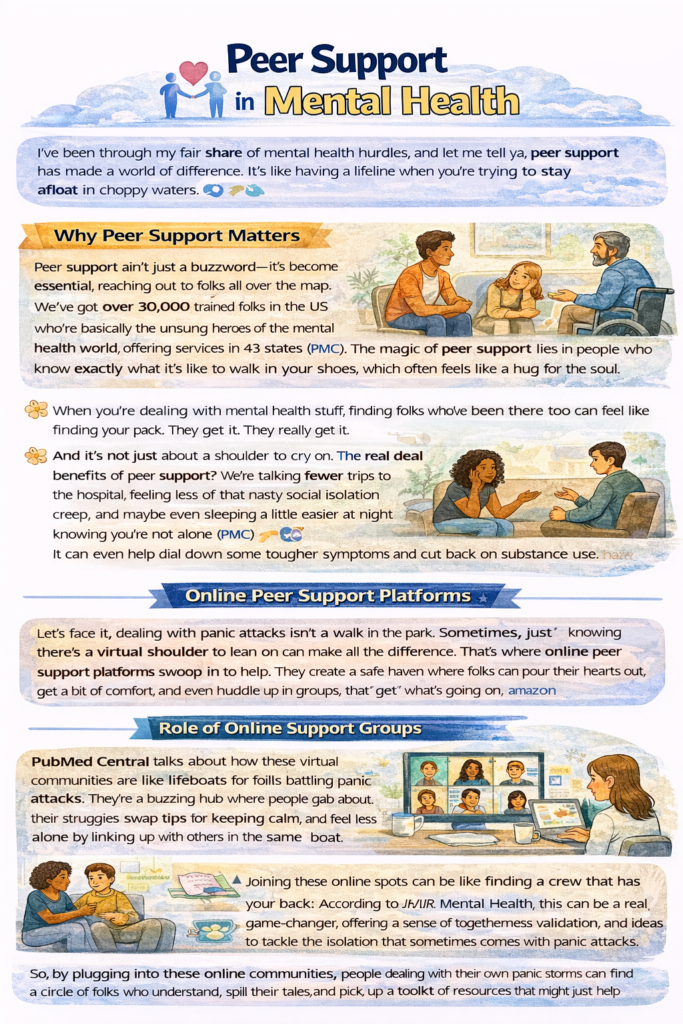
Support Groups for Specific Folks
Exploring support groups built for certain groups gives folks dealing with unique struggles a solid base to lean on and learn from others who’ve been in their shoes. In the field of mental health, teams like CancerCare and Sarcoma Alliance give tailored help for people dealing with specific issues.
CancerCare Support Groups
CancerCare is a standout group offering free support gatherings led by oncology social workers for those affected by cancer. They don’t have a group just for cervical cancer patients, but they do run online support spots for folks going through gynecologic and colorectal cancer treatments. These places let participants spill their guts—sharing experiences, thoughts, and feelings with folks making similar strides.
One of the big draws of CancerCare support groups is the chance to link up with others battling similar stuff. These groups build a sense of togetherness and create a space where people can swap tips, resources, and get some much-needed emotional backing. Being part of such a network can offer folks undergoing cancer treatment a comfort zone where they find understanding and shared experiences.
Sarcoma Alliance Resources
The Sarcoma Alliance is a lifesaver for those facing sarcoma, a rare cancer popping up in soft tissues. This outfit offers a hefty list of support groups for individuals wrestling with sarcoma. Plus, they dish out info on treatment centers that focus on this rare kind of cancer.
Tapping into support through the Sarcoma Alliance means folks dealing with sarcoma get to join a group that truly gets the rare cancer jab. These groups serve as a space for sharing stories, tapping into resources, and leaning on each other for emotional support throughout the diagnosis, treatment, and recovery stages.
Support groups aimed at specific folks play a key role in giving folks a place where they belong, feel understood, and stand shoulder to shoulder with others. By linking up with those in the same boat, people can feel boosted, acknowledged, and backed up in their mental health voyage. For more scoop and advice on handling panic attacks in certain groups, check out our articles on panic attacks in teens, panic attacks during pregnancy, and panic disorders among college students.
Moderation in Peer Support Platforms
Jumping into the world of peer support for folks dealing with panic attacks is an adventure that involves some deep thinking about how to manage online support spaces. The way moderation is handled in these groups can really make or break a user’s experience, painting a picture of safety and encouragement.
Impact of Moderation
Moderators in online peer support platforms are the unsung heroes, setting the stage for a cozy community feeling, boosting people to lean on each other, and keeping an eye out for everyone’s safety. According to PubMed Central, moderators wrestle with the tough stuff like harmful content, keep conversations uplifting, and protect the emotional vibe of the community as a whole.
Having pros who are well-versed in mental health as moderators is like having a trusty tour guide on a tricky hike. They’re there to steer conversations gently, jump in when things get a little too heated, and make sure everyone’s emotional health is a top priority.
Moderating Online Support Communities
Take Togetherall for example; they’ve got “Wall Guides” at the helm, making sure users have a safe and supportive place to speak their mind without sticking their necks out (PubMed Central). These folks are more like friendly overseers with backgrounds in counseling or social work, rather than therapists. They watch over the user interactions, lend an ear, and nip problems in the bud to keep the space safe and engaging.
Moderators don’t just hover over conversations like stern school teachers. They help sprinkle in positivity, enforce fair play rules, and cook up an inclusive spot where everyone feels comfy sharing their stories and reaching out for help. Their relentless efforts to keep the space hearty and respectful are a big deal in making online peer support groups actually work for those going through panic attacks.
Good moderation isn’t just about warding off internet trolls; it levels up the user experience, nudges participation, and builds little bridges of hope and understanding among people who share the same battles. By spotlighting why moderation matters, these online havens can shine as strongholds of support and empowerment for anyone facing panic attacks.
Celebrity Advocacy for Support Groups
Hearing folks use their power to share real-life experiences can make all the difference for people dealing with mental health stuff. Take Selena Gomez and Prince Harry, for instance—they’ve been pretty open about how support groups have given them a leg up when battling panic attacks.
Selena Gomez’s Experience
Selena Gomez, who you might know from her music or acting gigs, isn’t shy about her struggles. She’s all about peer support groups, crediting them with a big slice of her recovery pie. These groups offer a kind of understanding and camaraderie that’s hard to find elsewhere. It’s like having a group of pals who just get it. Selena’s out there saying that leaning on people who truly understand what you’re going through can be incredibly healing. If you’re checking out support groups and craving that sense of belonging, Selena’s journey might just strike a chord with you (Therapy Trainings®).
Influence of Prince Harry
Then there’s Prince Harry, a guy who’s become somewhat of a mental health warrior. He’s all in for therapeutic groups, especially when it comes to battling anxiety and panic attacks. With the help of trained pros, these groups work through evidence-based methods that help folks find their footing again. Prince Harry’s push for making mental health care more accessible is about giving everyone the tools they need to face panic attacks head-on. His dedication to these kinds of groups shines a light on just how much expert-led support can boost someone’s ability to heal and keep going (Therapy Trainings®).
Celebs stepping up and sharing their battles break down barriers and challenge the stigma tied to mental health issues. With their stories in tow, folks like Selena and Prince Harry remind us all why it’s crucial to reach out, form connections, and dive into interventions that are proven to work. If a pop star and a prince are finding value in this, maybe it’s worth giving a shot for the rest of us too.
Transformation through Peer Support
Hey there, it’s me, talking straight from the heart. If you’re wrestling with panic attacks, you know how unsettling they can be. Trust me, I’ve been there myself. But guess what? There’s a silver lining—peer support. It’s like finding your tribe who just “gets you” without you needing to explain every little thing. Let’s dive into how this support can spark a real change.
Personal Growth through Support
Imagine hanging out with folks who totally understand your battles. That’s where a tight-knit community comes in handy. Sharing stories and swapping tips with people in the same boat can change the way you cope. It’s like having a toolbox full of tricks for those heavy days.
Joining online support groups specially designed for folks like us opens up a world of honesty and encouragement. It’s a place to let your guard down, pass the mic around, and listen to others who are living it too. This warmth and understanding in these groups help erase that lonely feeling, offering a big ol’ dose of comfort and new ways to face panic attacks without losing your cool.
Making the Most of Peer Support Resources
Eye on the prize—getting the support and comfort you need on this wild ride with panic attacks. Think of online groups as this cozy space with seasoned moderators and pros steering the ship. This space lets you pour your heart out, seek advice, and tap into a well of helpful stuff.
With a stellar lineup of therapeutic advice and heartfelt peer stories, you’ll bump into all kinds of coping hacks and learn about therapies that actually work. These resources are a ticket to taking charge of your mental wellness, planting seeds for growth, and making sure you know when to request that helping hand.
Throw yourself into these peer support groups, soak up the advice, and you’ll be on your way to building a sturdier, braver version of yourself. These gatherings light the way when things get rough, reminding you you’re not alone. They offer hope, empathy, and companionship—exactly the support system needed to keep sailing through stormy times.