
Understanding PTSD and Traumatic Events
Dealing with post-traumatic stress disorder (PTSD) and the aftermath of traumatic events is like trying to piece together a puzzle in the dark. It’s important to grasp the symptoms and causes to understand what’s happening.
Symptoms of PTSD
PTSD can sneak up within three months after a traumatic situation or might take its sweet time and show up later. For it to be PTSD officially, these pesky symptoms need to hang around for over a month and mess with daily living (NIMH). Some folks kick these symptoms to the curb in about six months, while others might wrestle with them for a heck of a lot longer.
Kids and teens react differently to trauma compared to grown-ups. Little ones under six might start wetting the bed or find it hard to sleep alone. Older kids and teenagers might act out, break rules, or even have revenge fantasies (NIMH).
Causes of PTSD
PTSD often gets its start from scary situations where someone feels like their life is in danger, or they could get hurt real bad. For PTSD to be diagnosed, these troubling symptoms need to stick around for over a month and be a real pain in the butt by affecting social and work life (Mayo Clinic). It’s tough handling PTSD alone, so getting help from someone who knows the ropes can make a big difference.
Bouncing back from PTSD isn’t just about toughing it out; it’s a mix of changing the way you think and dealing with feelings, plus getting some backup from friends and family. It’s part of a whole biopsychosocial circus of recovery. The Integrated Biopsychosocial Model for Posttraumatic Stress Recovery (IBM-PSR) points out how your interactions with others can either help or hinder your healing process (PubMed).
By really getting to know the ins and outs of PTSD, folks can start moving towards getting better, stronger, and getting the right kind of help when they need it.
Approaches to Managing PTSD
Managing post-traumatic stress disorder (PTSD) is like tackling a puzzle that’s missing the cover picture—it requires piecing things together from different angles to get a full view of the situation. Various strategies such as talking it out, meds, and lifestyle tweaks help put these pieces into place.
Psychotherapy for PTSD
Let’s start with talking it out—psychotherapy, the fancy term for what regular folks call talk therapy. A good therapist can be like a guide, helping you navigate through your rocky memories in a safe space where you won’t feel judged, and it isn’t forbidden to feel a bit lost. They help you get a handle on triggers and symptoms and even toss in a few solid skills for living with them.
Here’s a mix of what kind of therapy might roll into your therapy sessions:
- Trauma-Focused Cognitive-Behavioral Therapy: This one’s about seeing how thoughts, feelings, and actions can get tangled up after trauma and finding ways to untangle them.
- Psychological Debriefing Techniques: Think of this as a heart-to-heart right after something goes wrong, giving support when it’s needed most.
- Crisis Intervention Counseling Techniques: Quick help to ease acute stress and steer clear of lasting distress.
Mixing up talk therapy with other treatments can really help keep symptoms in check while improving how you feel day-to-day.
Medications for PTSD
In addition to talking therapy, meds might be thrown into the mix to help with PTSD. Medications like selective serotonin reuptake inhibitors (SSRIs) often get prescribed—think Zoloft or Paxil. These little pills help out with feelings of sadness, anxious vibes, feeling mad at the whole world or just feeling emotionally numb.
Remember, a doc should always call the shots with meds, to check they’re helping more than hurting. Stick to what’s been prescribed and flag anything unusual to your healthcare pal.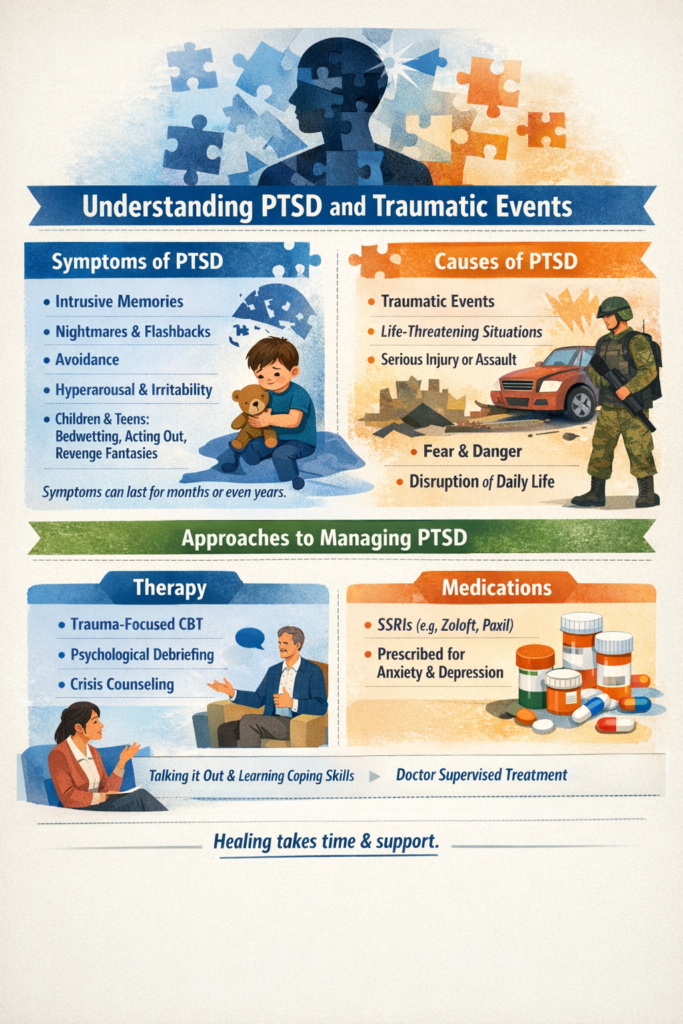
Lifestyle Changes for PTSD
Adding a little shake-up to your daily routine can shine a light on dealing with PTSD better. Working on stress-busting skills, chilling with some relaxation techniques, catching enough Z’s, and a bit of a workout can do wonders for coping and building resilience.
Here’s a few easy changes that could make a big difference:
- Keep a regular sleep schedule to get those good rest vibes flowing.
- Move your body a bit each day; it’s a known stress-buster and mood-lifter, plus your body will thank you.
- Find some zen through deep breathing, mindful moments, or even yoga to mellow out nerves.
Combining these lifestyle changes with the support of talk therapy and medication can create a solid approach to managing PTSD. Consistent communication with medical and mental health professionals ensures your treatment is tailored to your personal needs and circumstances.
Nutrition and PTSD Management
Managing post-traumatic stress disorder (PTSD) isn’t just about therapy and medications—what you eat matters too. Proper nutrition works wonders in tackling the effects of traumatic experiences, and it’s a huge part of the healing puzzle.
Impact of Nutrition on Mental Health
What you put on your plate plays a huge role in how you feel and think. For folks battling PTSD, focusing on certain nutrients can help ease the struggle. Foods packed with vitamins D and B12, Omega-3 fatty acids, and antioxidants can be real game-changers. They help keep your mood stable, your brain healthy, and inflammation at bay.
Eating a mix of colorful fruits and veggies, lean meats, whole grains, beans, and good fats keeps your mind and body in fighting shape. These foods are like the ultimate support team for your mental health and recovery journey.
Recommended Nutrients for PTSD
To keep PTSD in check, it’s crucial to chow down on foods that boost your mental game. Steer clear of those that might throw you off balance. Here are some nutrients to keep in mind:
| Nutrient | How It Helps with PTSD | Where to Find It |
|---|---|---|
| Vitamin D | Lifts mood and supports mental health | Fatty fish, fortified dairy products |
| Vitamin B12 | Keeps your brain ticking and fights off fatigue | Meat, fish, dairy products |
| Omega-3 Fatty Acids | Tackles inflammation and boosts brain health | Fatty fish, flaxseeds, walnuts |
| Antioxidants | Shields your brain from stress | Berries, dark chocolate, beans |
| Magnesium | Calms nerves, helps you relax, and gets you sleeping like a baby | Leafy greens, nuts, seeds |
| Zinc | Keeps your immune system strong and helps manage stress | Shellfish, legumes, seeds, nuts |
Mix these nutrients into your diet to give your mind the nourishment it needs to combat PTSD symptoms. While you’re at it, ditch foods high in sugar, caffeine, and alcohol—they can crank up your symptoms.
Knowing how nutrition fits into PTSD management helps you make choices that ease your path to recovery. Feeding your body the right nutrients gives a solid boost to your mental wellness as you face the hurdles of post-traumatic stress.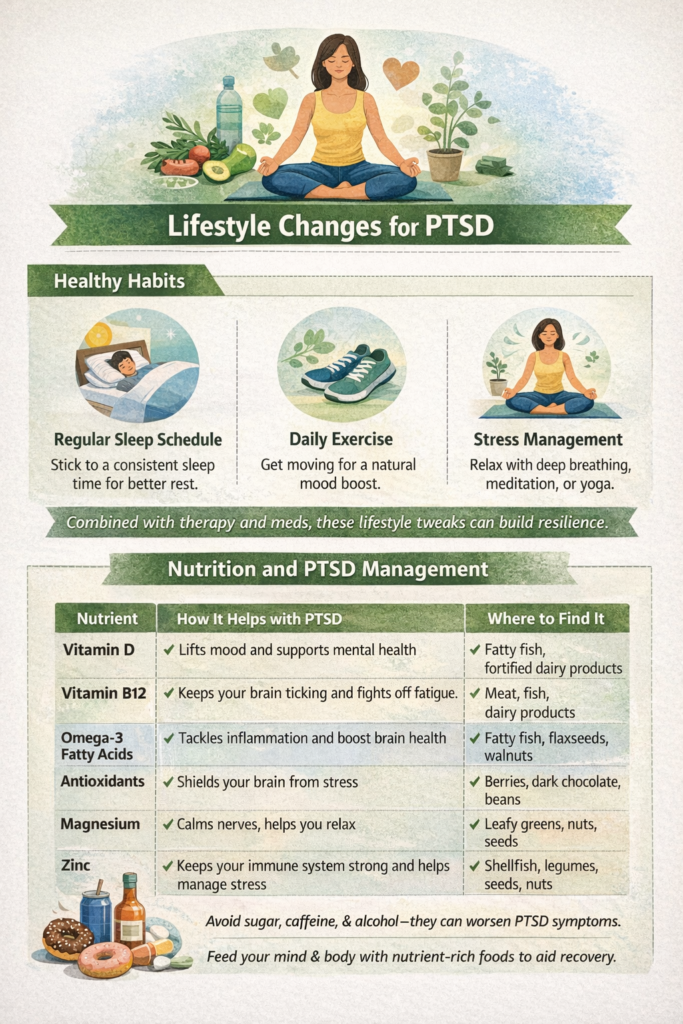
Exercise and PTSD Recovery Strategies
Taking a good look at how exercise helps with PTSD recovery brings out so many upsides for both the mind and the body. Getting moving regularly can really do wonders for keeping PTSD symptoms in check and setting you on the path to recovery after going through tough times.
Benefits of Exercise for PTSD
Getting active, whether it’s walking, cycling, taking a dip in the pool, doing yoga, or practicing pilates, is a big piece of the puzzle in handling PTSD (Compassion Behavioral Health). Here’s what exercise can do for those dealing with PTSD:
- Symptoms on the Down Low: Sticking to an exercise routine can cut down on PTSD symptoms like those pesky intrusive thoughts, feeling on edge, and mood swings.
- Better Coping Toolbox: Being physically active provides a safe space to work through emotions and stress, acting as a solid coping strategy for people who’ve experienced trauma.
- Less Stress: Exercise can help ease stress triggers and promote a sense of calm, which helps manage the anxiety and tension linked to PTSD.
- Boost to Self-Confidence: Regular exercise can help build self-esteem and self-worth, giving people the confidence to take charge of their journey to recovery.
Recommended Physical Activities
When it comes to mixing exercise into a PTSD recovery plan, it’s important to pick stuff that feels right and comfortable. Here are some activities that can be just the ticket:
- Walking: Simple and effective, walking is easy to fit into daily life. A walk outside in nature can also bring added calming benefits.
- Cycling: This low-impact cardio option is not only good for fitness but also does a lot for mental wellness.
- Swimming: With swimming, you get a full-body workout that also invites peacefulness and mindfulness, great for dialing down stress.
- Yoga: With its focus on the mind-body connection, yoga mixes physical postures with breathing exercises and meditation to boost flexibility, strength, and mental health.
- Pilates: Centered on core strength and stability, pilates offers a gentle yet powerful workout suitable for those handling PTSD.
Tying regular exercise into a broader PTSD recovery strategy can unlock the healing perks of physical activity, aiding mental health and overall well-being. Chatting with healthcare or mental health experts to customize an exercise plan that matches personal needs can pave the way for steady recovery progress.
Post-Traumatic Support Systems
When tackling the ups and downs of recovering from post-traumatic stress, one thing stands out as super important: having a solid crew of folks who’ve got your back. You know, those people who help you heal and keep you strong. In the world of managing stress after tough times, two big things pop up—how important your social circle is and this really cool way of looking at recovery called the Integrated Biopsychosocial Model for Recovery.
Role of Social Support
Feeling like someone’s in your corner can really make a difference when you’re bouncing back from post-traumatic stress disorder (PTSD). Tons of studies back up how crucial it is to have a good support system around you (PubMed Central). Those positive vibes you get from family, friends, or anyone in your circle? They’re not just warm fuzzies. They give you comfort, help you feel understood, and remind you that you’re not alone in going through the tough stuff.
Having folks around who care—whether it’s your partner, family, or close pals—can really help cut down the stress and other bad stuff that comes after something traumatic happens. They bring a little comfort and cheer that help you make headway in treatment and lift up your mental health overall. Through these connections, you find the strength to tackle what life throws at you head-on.
Integrated Biopsychosocial Model for Recovery
Now, onto this game-changer: the Integrated Biopsychosocial Model for Posttraumatic Stress Recovery (IBM-PSR). This approach mixes up how we think about the mind, body, and our social world to really unpack what helps people bounce back after life’s curveballs (PubMed). It looks into how you cope on your own and with others around you, giving a fresh perspective on how relationships, self-growth, and your body’s stress reactions play into healing from trauma.
The IBM-PSR shines a light on how we handle stress—inside, with stuff like changing the way we think and regulating emotions, and outside, with leaning on friends and family (PubMed). It’s a two-way street—your support network can either help you or become a roadblock, depending on how those relationships are managed.
Basically, this model paints a picture of how your body, mind, and social life all jumble together in the healing process. It shows how important having a supportive gang is for bouncing back stronger after tough times. By connecting all these dots, you’re better equipped to move toward healing with the backing of people who truly care.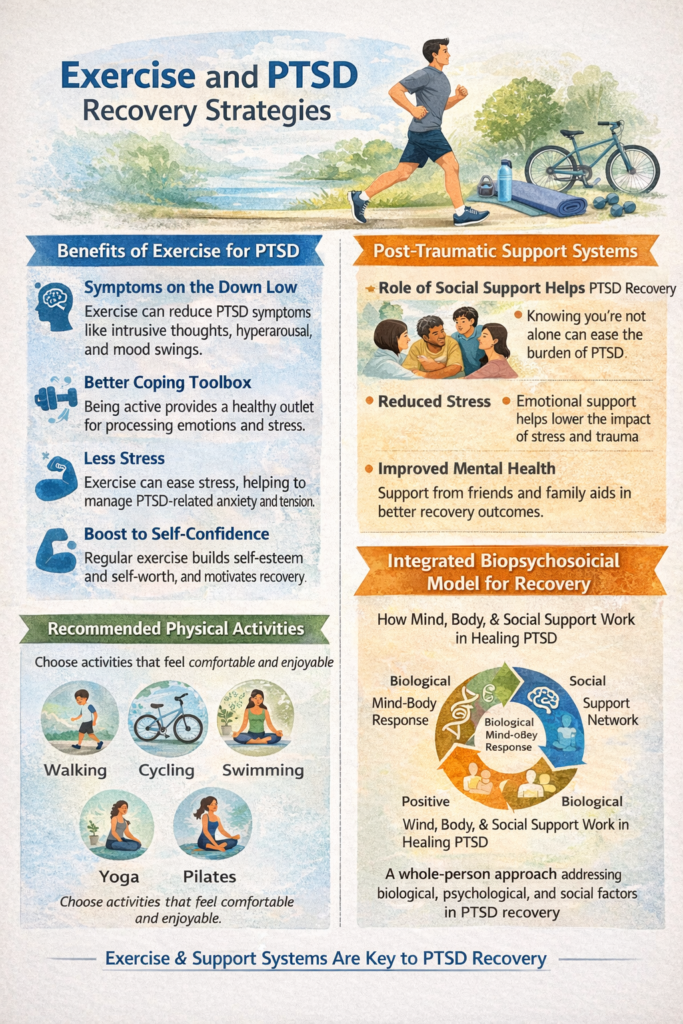
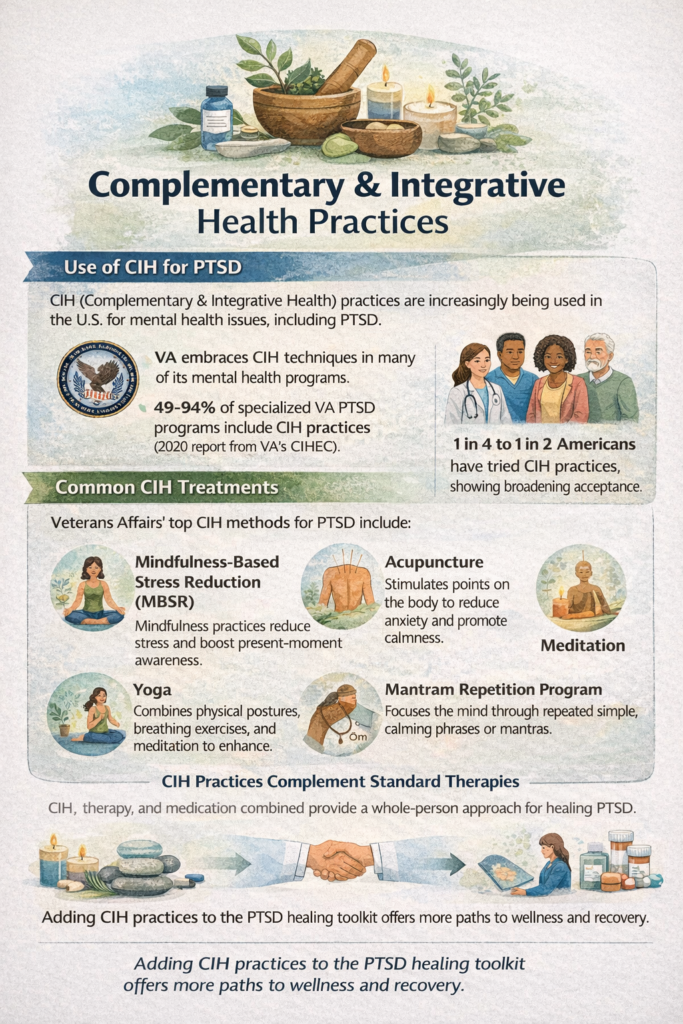
Complementary & Integrative Health Practices
If you’re dealing with post-traumatic stress disorder (PTSD), checking out Complementary and Integrative Health (CIH) options might give a helpful twist to the usual treatments. These practices can work hand-in-hand with standard therapies to boost your overall well-being and aid your recovery path. Let me break down how CIH plays a role for PTSD and what some common practices involve.
Use of CIH for PTSD
Here in the US, more folks are turning to CIH for mental health issues, including PTSD. Even the Department of Veterans Affairs (VA) sees the value in these practices, with many VA mental health setups putting them to work. It’s no surprise then, that both Veterans and everyday folks are getting on board—about one in four to one in two Americans report trying out these practices. It really shows how accepted these methods have become in helping tackle emotional and mental hurdles.
Common CIH Treatments
According to a 2020 report from VA’s Complementary and Integrative Health Evaluation Center (CIHEC), a whopping 96% of specialized PTSD programs at the VA include CIH practices. Some favorites are mindfulness, stress busters, relaxation drills, progressive muscle relaxation, and guided imagery.
Sure, the jury’s still out when it comes to how effective some of these are for PTSD, but certain ones have shown to be promising. Mindfulness-Based Stress Reduction (MBSR), for instance, snagged a “weak for” nod in the 2023 VA/DoD Clinical Practice Guideline for PTSD. Plus, things like acupuncture, mantram repetition programs, meditation, and yoga are getting props for being helpful to those with PTSD.
Important to remember that VA spots might mix these CIH practices with tried-and-true therapies and meds, giving Veterans a complete approach to mental healthcare. CIH isn’t usually the first thing recommended for PTSD, but it’s definitely a handy backup that can give extra perks and round out more traditional treatments.
By adding CIH practices to the PTSD playbook, folks have more ways to seek out healing and wellness, paving a stronger recovery and resilience road.