
Understanding Stress in First Responders
Hey there! Let’s talk about first responders—the superheroes in everyday clothes who race towards danger while the rest of us run the other way. But let’s pause for a second, have you ever thought about the mental toll their job takes on them? Yeah, it’s a big deal, and digging into this can help us figure out ways to support these heroes better.
Impact of Stress on First Responders
Being a first responder—whether you’re a cop, firefighter, paramedic, or even a correctional officer—ain’t a walk in the park. There’s this mountain of stress that comes with the badge or uniform. Imagine dealing with traumatic events one after another, juggling long grueling hours, making life-or-death decisions, and still being expected to keep your cool. That’s bound to mess with anyone’s mental space. And trust me, this stress doesn’t just clock out when their shift ends.
A lot of these folks find themselves battling burnout, that sneaky burnout villain that leaves you feeling like you’re running on empty. Emotional exhaustion and feeling like you’re just going through the motions can creep up and smack them right in the face. But finding some purpose, some reason to hold onto, can be like discovering their own secret weapon to keep burnout at bay. That’s why we gotta shine a light on the mental side of these high-pressure gigs.
Common Stressors Faced
So, what’s playing into this stress drama apart from the intense scenes they witness? Think about stuff like short-staffed teams, a boss whose mood swings like a kid on a playground, or the misery of shift work that destroys any chance of a normal sleep schedule. Outside the job, the dreams of catching some z’s may be crushed by public judgment and the stigma surrounding mental health struggles. All this adds fuel to the stress fire.
Knowing and tackling these stress triggers is like building a fortress of support around first responders, boosting their mental resilience so they can keep being the heroes we all need. It’s on organizations to step up, admit that these challenges are real, and create solid support systems. That way, they’re not just improving the mental landscape for these front-line warriors, but also preparing them to thrive, not just survive, in this relentless role they play every day.
Strategies for Stress Management
Working as a first responder ain’t no walk in the park. These heroes among us—whether they’re cops, firefighters, or paramedics—face the kind of stress that could buckle even the strongest knees. Taking care of their mental well-being is key so they can keep doing their jobs and helping us out when things get real.
Building Resilience
First responders stare potential burnout, stress, and PTSD square in the face every day. The job ain’t for the faint of heart, but it’s crucial to build resilience like stacking bricks on a wall. Understanding what makes a person resilient helps these folks handle what’s thrown at them and bounce back. This psychological armor gives ’em the tools they need when things get tough—they get knocked down but get up again, like that song your dad loves.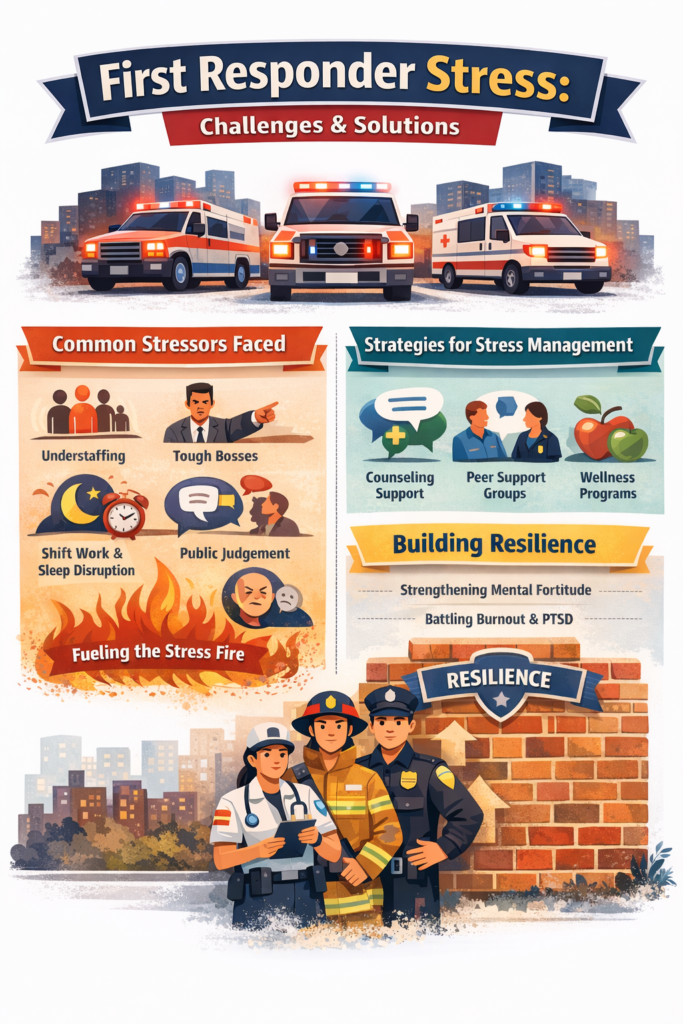
Sleep Quality Importance
Getting enough zzz’s is like gold for first responders’ brain health. Research ain’t groundbreaking here: folks with sleep problems tend to struggle mentally and do worse on the job. When your sleep is off, your thinking goes haywire, emotional control is like wrangling cats, and work performance takes a nosedive. Setting up some solid sleep habits and a chill sleep zone can work wonders for their mental health.
Accessing Mental Health Support
Cops, correctional officers, and paramedics all face the threat of burnout and stress, thanks to the often crazy nature of their work. Things like staff shortages, always-changing bosses, and shifts that would make anyone cranky can crank up the stress meter. Organizations need to offer mental health services cooked up just for these folks—think trauma-focused therapy or stress management courses designed for the real stuff they deal with.
Stacking up resilience, catching quality snooze time, and ensuring these front-line pros have access to mental health services can make all the difference. Not only does this help the first responders themselves stay on top of their game, but it keeps the communities they serve even safer and more effective. Investing in their well-being is like throwing down a safety net for everyone, from the first responders to the folks they protect.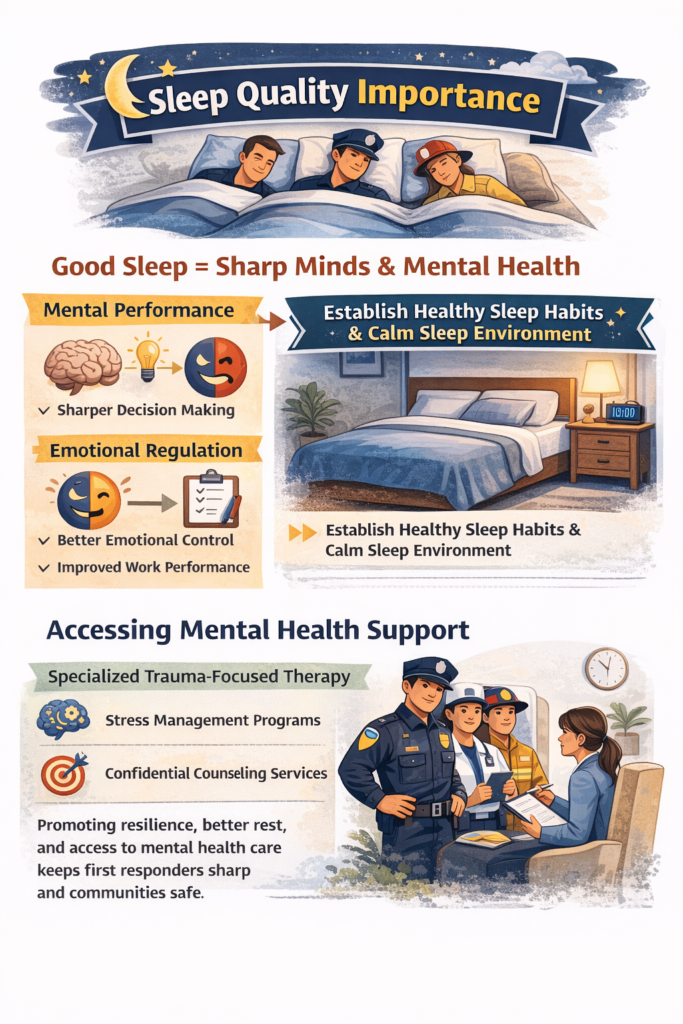
Effective Stress Management Techniques
Alright folks, let’s talk stress. As someone in the thick of things, I get it—stress doesn’t just knock politely on your door; it kicks it down. So it’s absolutely crucial to keep that mental space intact when you’re racing against time in those hair-raising situations. Let’s dive into some practical stuff that’ll help keep stress in check. We’re focusing on three feel-good tricks of the trade: the magic of nature, the art of breathing cool and calm, and the muscle chill-out session. Let’s break it down, shall we?
Nature Therapy Benefits
You ever heard of using the great outdoors as a stress-busting buddy? It’s called nature therapy, but you can think of it as Mother Nature’s way of giving you a big, leafy hug when things get rough. For you, the real-life heroes dealing with immense pressure and sometimes heart-wrenching circumstances, spending time outside can melt those stress headaches away like butter on a hot skillet. So, the next time you get a chance, drop by your local park or just wander through any green space you find—no memberships needed!
You see, when you’re taking in that fresh air, cortisol—yep, that’s the pesky stress hormone—takes a dramatic fall. Plus, you’ll find your mind chilling out to some serious peace and quiet. Whether it’s a bit of gardening, trekking up a trail, or just sauntering through the woods, these outdoor antics are perfect for resetting the mind. It’s all about leading your stress out the door and letting resilience stroll right on in.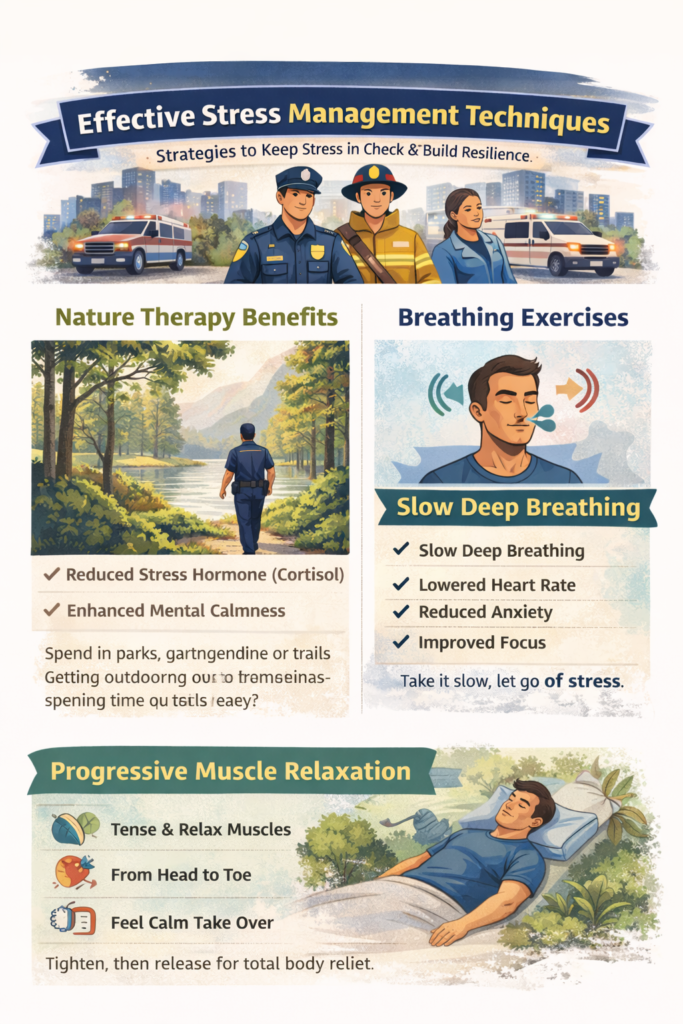
Tactical Breathing Technique
Next up is tactical breathing, or as some might call it, a lifesaver masquerading as a breathing exercise. Picture this: a breathing method that not only keeps you from losing your cool but also transforms you into a master of calm in the eye of the storm. It’s used by the military and first responder squads alike—and if those folks swear by it, you know it’s the real deal.
Here’s how you do it: Breathe in deep through your nose for a solid four-count, hold onto that breath for another four, then let it go through your mouth nice and slow over four beats, pause, and start again. It’s that simple. This superstar of a technique helps your body say a collective “Ahh,” dialing down stress and pumping up your zen levels by leaps and bounds.
If you sprinkle a little tactical breathing into your day-to-day or call on it when the going gets tough, you’ll notice a sharper focus and a calmer demeanor when the world around you seems to be anything but.
Progressive Muscle Relaxation
Last but not least, let’s chat about the timeless art of Progressive Muscle Relaxation (PMR). This is your go-to method when muscles are tighter than your schedule and stress feels like your constant shadow. With PMR, you’ll become adept at identifying and loosening the physical stress that’s ticking away like a time bomb.
Here’s the drill: Intentionally tense specific muscle groups—a gentle squeeze, nothing drastic—for just a few heartbeats, and then let them go slack as if fangirling about your favorite movie star. It’s a nifty way to tune into your body’s signals, helping you tell the difference between being all knotted up and feeling at ease.
Working PMR into your regular grind doesn’t just say goodbye to stress—it packs it up and sends it packing. You’ll be amazed by how much control you reclaim over your body’s stress responses. And hey, when your job is as intense as responding to emergencies, any extra ammo against tension is a win!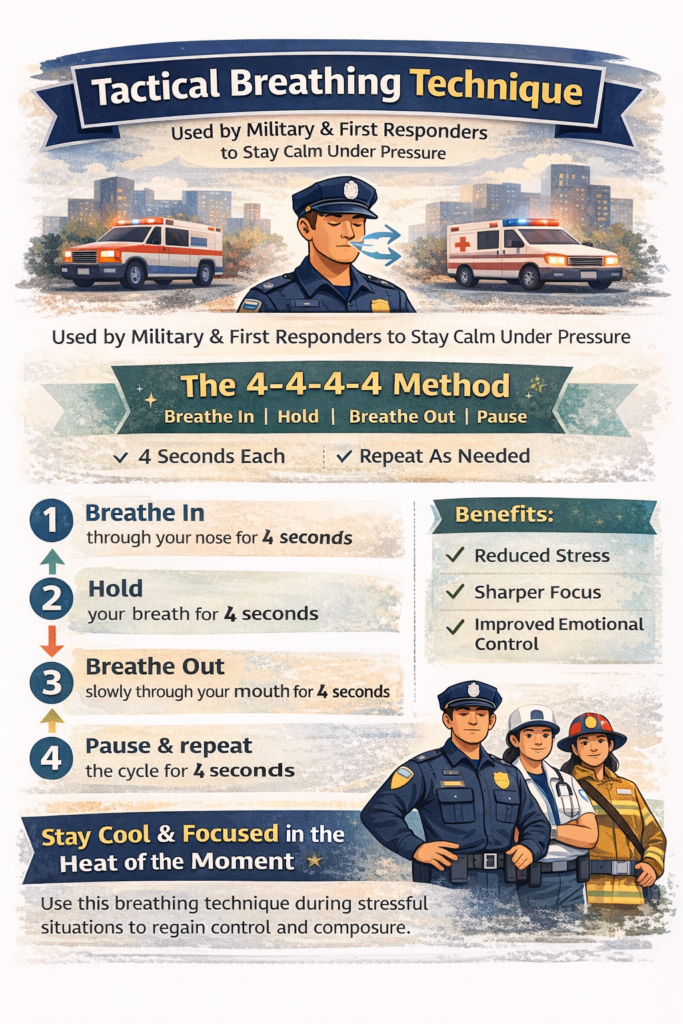
Promoting Mental Well-being
As a first responder, I know that managing stress is like a never-ending rollercoaster. It’s all about keeping my sanity while handling high-pressure situations. So, let’s talk about some simple yet effective ways to keep our heads cool: mindfulness meditation, jotting down thoughts in a journal, and getting a grip on resilience.
Mindfulness Meditation
Mindfulness meditation is like the Swiss army knife for chilling out. It’s not just for those yoga-loving types. It’s about pausing, taking a breath, and living in the now. No more dwelling on the past or worrying about the future. When I practice this, I’m better at tackling work demands, keeping my cool, and bouncing back from setbacks like rubber.
Structured Journaling
Now, don’t roll your eyes—structured journaling isn’t just a diary with a lock. It’s a lifesaver, especially when the pressures are piling up. Writing down daily experiences lets me unload stress and really feel the emotions instead of bottling them up. It’s kinda like detective work—figuring out what’s been dragging me down and then tackling it head-on. That’s how journaling saves my bacon and helps keep my mind sharp.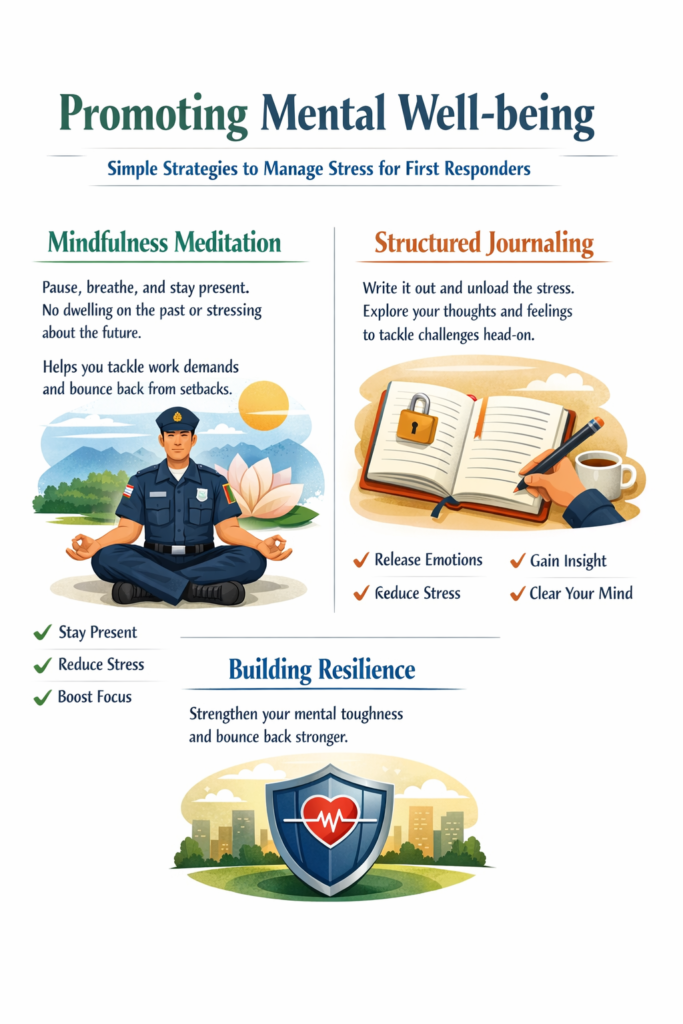
Increasing Resilience Awareness
Building resilience isn’t just a fancy term thrown around by corporate folks. It means spotting stress signs and gearing up with healthy ways to cope before things go sideways. Learning about resilience has given me the know-how to nip problems in the bud, lean on my team for support when I need it, and face whatever comes with confidence. Programs like ECHO are fantastic for brushing up on psychological first aid skills, something every responder should have on their mental tool belt.
By making mindfulness, journal scribblings, and resilience training my go-to strategies, I’m not just surviving the daily grind—I’m thriving. It’s like turning my brain into a well-oiled machine, ready to handle anything thrown my way. With these tools, I’ve found I’m living better and with less stress, even when the world around me gets a bit too wild.
Specialized Training for First Responders
When we talk about handling stress for first responders, you’re looking at training that packs a punch. These brave folks need the right tools and resources to face the rollercoaster of obstacles they encounter on the job. From online mental health resources to workshops that boost your mental fortitude, plus disaster response drills—these programs are tailor-made for those on the front lines.
Online Mental Health Support
First responders often lean on online mental health services because, let’s face it, getting help needs to be as simple as ordering a pizza. But not every site is a five-star experience. They gotta be reliable and up-to-date. There’s a big push to make sure these digital supports are top-notch and in tune with what works best nowadays.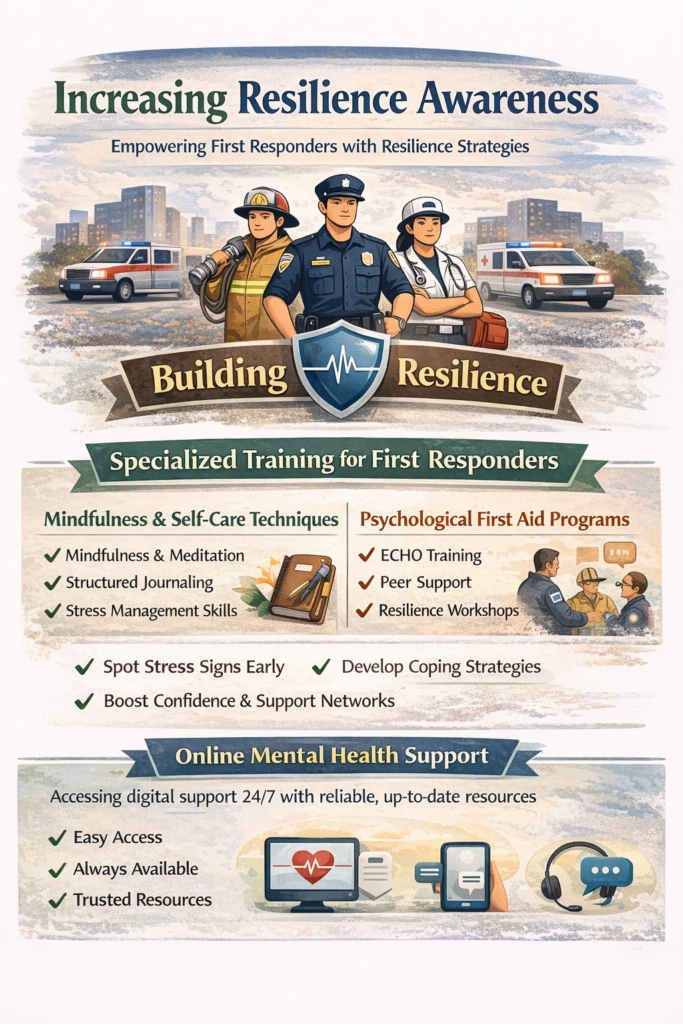
Resilience Building Workshops
Think of resilience like a mental muscle that needs regular workouts, especially for first responders dealing with high stress. Workshops focused on resilience are crafted to boost their ability to handle life’s curveballs. Programs like the Extension for Community Outcomes (ECHO) have been getting high marks, as attendees are picking up psychological first aid tricks and learning to spot when a buddy needs a hand.
Disaster Response Trainings
When everything hits the fan, specialized training is the ultimate lifeline for responders to do their job and protect their mental space. The folks at the Substance Abuse and Mental Health Services Administration (what a mouthful!) have cooked up training just for these heroes.
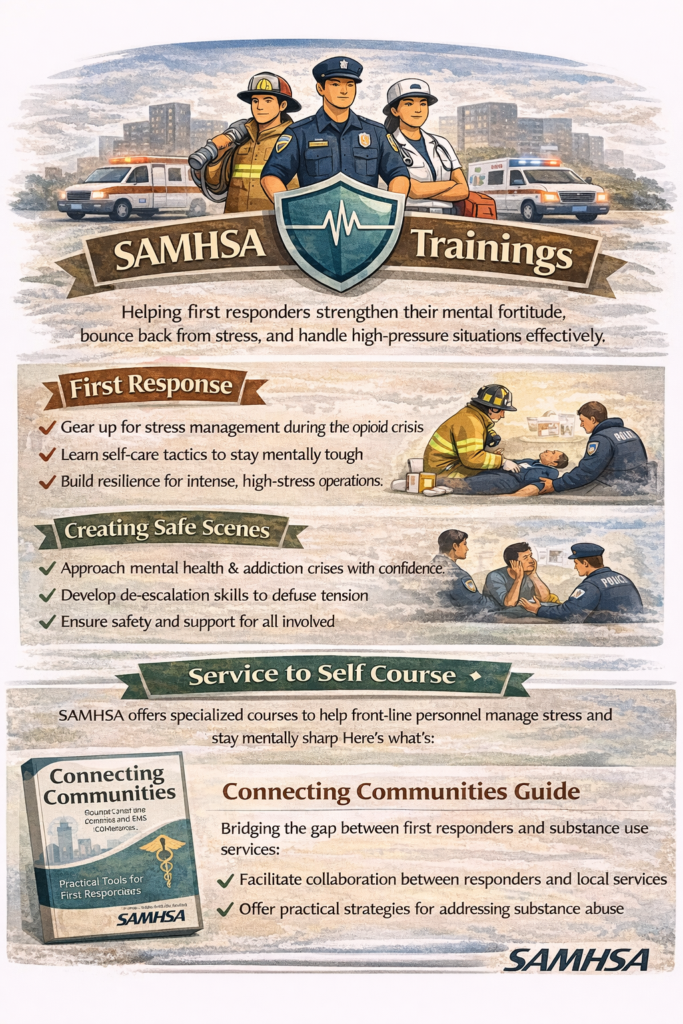
- The ‘First Response’ class homes in on stress during opioid crises, offering solid tactics for hair-raising encounters.
- ‘Creating Safe Scenes’ helps teach responders how to manage situations with folks in mental health or substance use turmoil.
Plus, there’s ‘Service to Self’, an online course crafted for dragon-slaying fire and healthcare pros. Covering on-the-job stress to tackling personal and workplace mental hurdles, it hands out a smorgasbord of tools to keep first responders mentally fit.
Getting involved in these training sessions means first responders emerge more ready, tougher, and better at juggling the special pressures their jobs serve up. It’s not just great for their heads; it’s also vital for keeping emergency services ticking smoothly.
Resources for First Responders
When it comes to dealing with those high-pressure situations that first responders face, having the right tools makes all the difference. The folks over at SAMHSA are doing amazing things with courses full of practical advice tailored for anybody working on the front lines of emergencies. Here’s what’s in the toolbox for first responders looking to step up their game: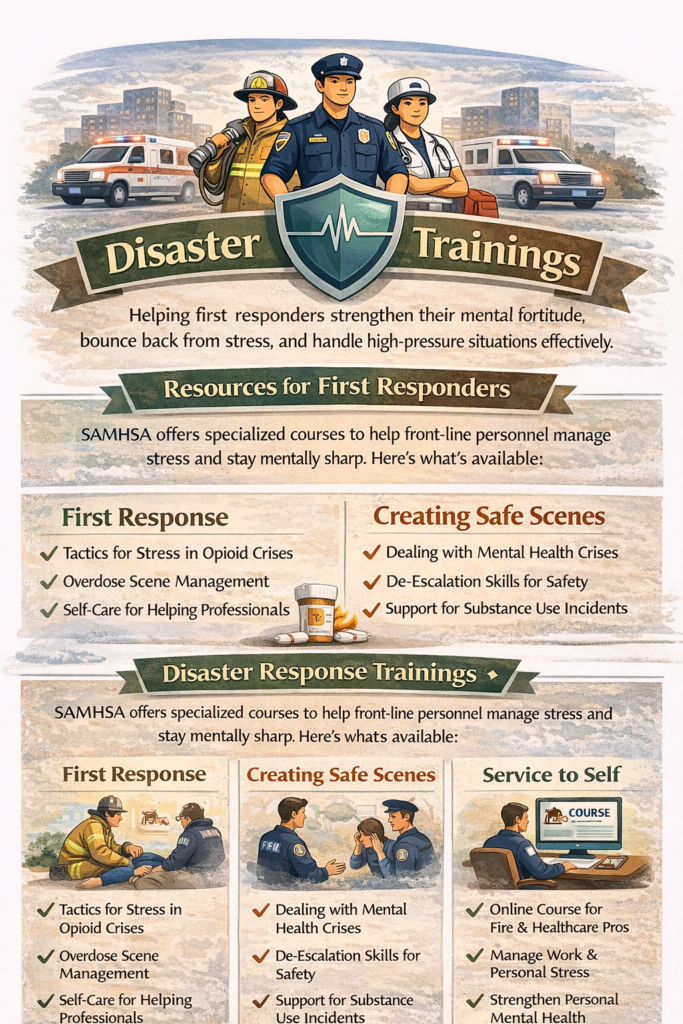
SAMHSA Trainings
SAMHSA’s online trainings are gold for first responders, giving them essential tips and tricks to manage tough situations they’ll run into on the job. Check out these standout courses:
- “First Response”: Think of this as a survival guide for handling the stress that comes with the opioid crisis. This course is all about arming first responders with ways to keep their cool and practice self-care during intense operations. They focus a ton on mental strength and looking out for your own well-being (SAMHSA).
- “Creating Safe Scenes”: If you’re dealing with crises tied to mental health or addiction, this one’s for you. The course breaks down how to keep situations under control and ensure everyone’s safety when tensions run high (SAMHSA).
Service to Self Course
Another gem from SAMHSA is the “Service to Self” online course specifically for fire and emergency medical services crews. This one tackles the mental hoops you’ve gotta jump through in these jobs. It’s all about stress management, building up toughness, and knowing exactly how to handle mental health hurdles that might pop up (SAMHSA).
Connecting Communities Guide
Patching up the gap between first responders and substance use services is what SAMHSA’s “Connecting Communities to Substance Use Services: Practical Tools for First Responders” guide is all about. It dishes out easy-to-follow strategies to boost teamwork between responders and the local services, creating a full-circle approach to help folks struggling with substance abuse (SAMHSA).
Dive into these resources to sharpen your skills, get smarter, and make sure you’re taking care of your mind when facing high-stakes situations. SAMHSA’s courses and guides are here to back up emergency folks like you with the support and know-how needed to handle the chaos like a pro.