Understanding CISM Basics
When it comes to handling stress in tough situations, wrapping your head around Critical Incident Stress Management (CISM) is a game-changer for dealing with the aftermath.
What is CISM?
Think of Critical Incident Stress Management (CISM) as your all-inclusive crisis toolkit. It’s got a bunch of tools that kick into gear before the storm hits, during, and after the dust settles. This setup is there for folks, small groups, entire families, big organizations, or entire communities, giving everyone a game plan to tackle the mental toll when things go sideways (you can scope it out more at ICISF’s site).
The Importance of CISM
So why fuss over CISM? This thing handles stress like a pro, especially when we’re talking traumatic stress. It started way back in the mid-’70s and has grown into this big thing that covers the whole crisis journey—from getting prepared before chaos ensues to holding up the fort with follow-ups (get the full scoop at ISTSS).
At first, the emergency folks grabbed onto CISM in the late ’70s. But it’s not just for them anymore; schools, entire communities, and all sorts of organizations have jumped on the bandwagon. Its growth shows just how spot-on CISM is for helping everyone everywhere deal with stress from rough situations. It’s all about taking care of your head and heart, even when the world turns topsy-turvy (again, more deets at ICISF).
Getting the hang of CISM’s main ideas is a must for being there for others when disaster hits. It’s all about making sure folks come out the other side with their minds intact and ready to face another day together.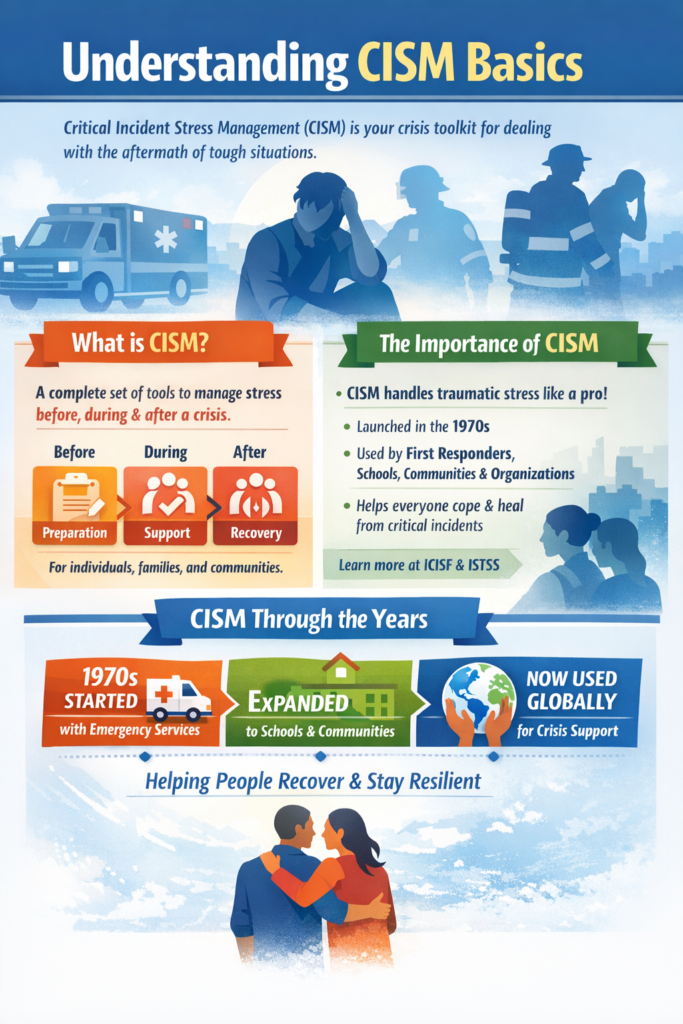
Components of CISM
When it comes to handling the chaos after a traumatic event, knowing the parts of Critical Incident Stress Management (CISM) is like having a trusty handbook. At the heart of CISM is a seven-step process and the whole shebang known as Critical Incident Stress Debriefing (CISD). Both are lifesavers for folks trying to find their footing after something devastating comes crashing down.
Seven-Step Process
Imagine this seven-step process as your roadmap through a storm. It’s the backbone of CISM, laying out a step-by-step approach to help people weather life’s hardest hits:
- Assessment: Think of it like taking a quick pulse check—gauging just how much the incident has rocked folks.
- Stabilization: This is about throwing the emotional life preserver to help people stay afloat when stress is about to pull them under.
- Information Gathering: Like piecing together a puzzle, this means gathering the facts to see the full picture of what went down.
- Planning: With the info in hand, it’s time to hash out a game plan tailored to what each person needs to get through it all.
- Intervention: Here’s where the rubber meets the road—carry out the strategies that meet folks right where they need help.
- Progress Evaluation: Keep tabs on how well things are going and tweak the support plan as life unfolds.
- Follow-Up: It’s all about the long haul—keeping the support flowing until folks feel like they’re back on solid ground.
This straightforward map ensures nobody’s left out in the cold during tough times, making sure they get help right when they need it and stay supported over the long haul.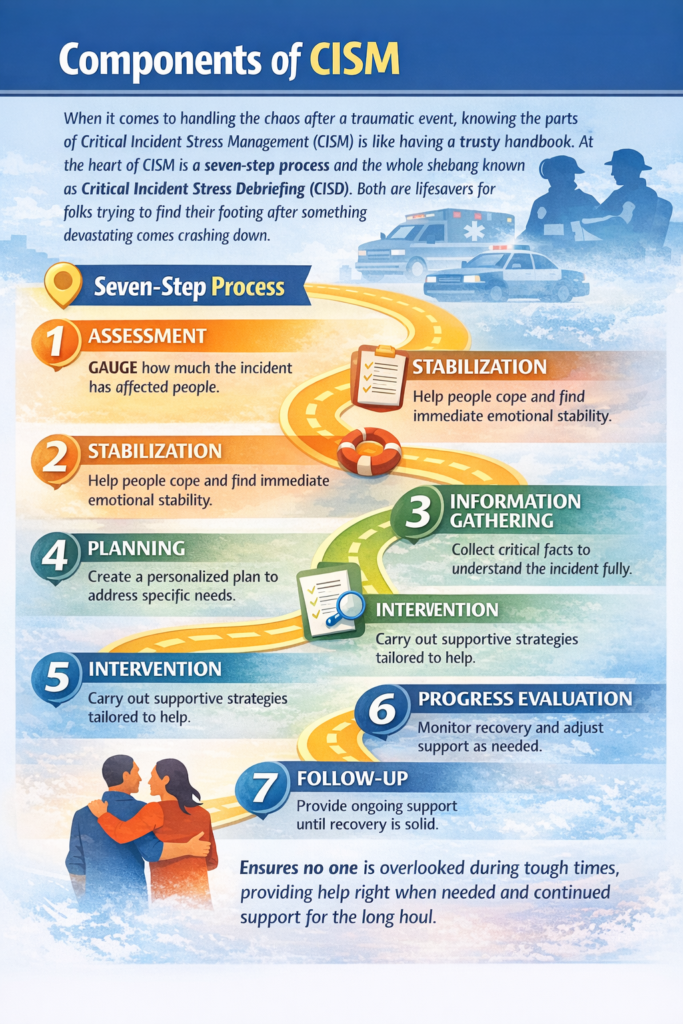
Critical Incident Stress Debriefing (CISD)
Critical Incident Stress Debriefing (CISD) might just be the secret sauce of recovery after life throws a sucker punch. Think of it like group therapy—giving folks a space to pour out what they’re carrying in a circle of understanding (California Prime Recovery).
Not just a bunch of talk, research backs up CISD as a powerful tool for healing and taking the sting out of traumatic stress. A deep dive into the effects of CISD showed that it packs a punch in helping folks bounce back (ISTSS).
CISD acts as the emotional release valve, letting folks talk out their feelings, build better coping skills, and find strength in numbers. It’s one of those early actions in trauma recovery that just keeps on giving.
Blend these seven steps with a dash of CISD within CISM, and you’ve got a solid approach to helping folks pick up the pieces after life’s heavy-hitters. Together, these tools shine a light on mental healing and make the journey back to normalcy just a bit smoother, building back hope and toughness when it’s needed most.
Psychological Impact of Traumatic Events
After dealing with intense situations using crisis management techniques, it’s like piecing together a puzzle to grasp how folks handle the emotional rollercoaster of trauma. Tackling these mental messes with the right kind of support is kind of a must, using tools like emotional first aid.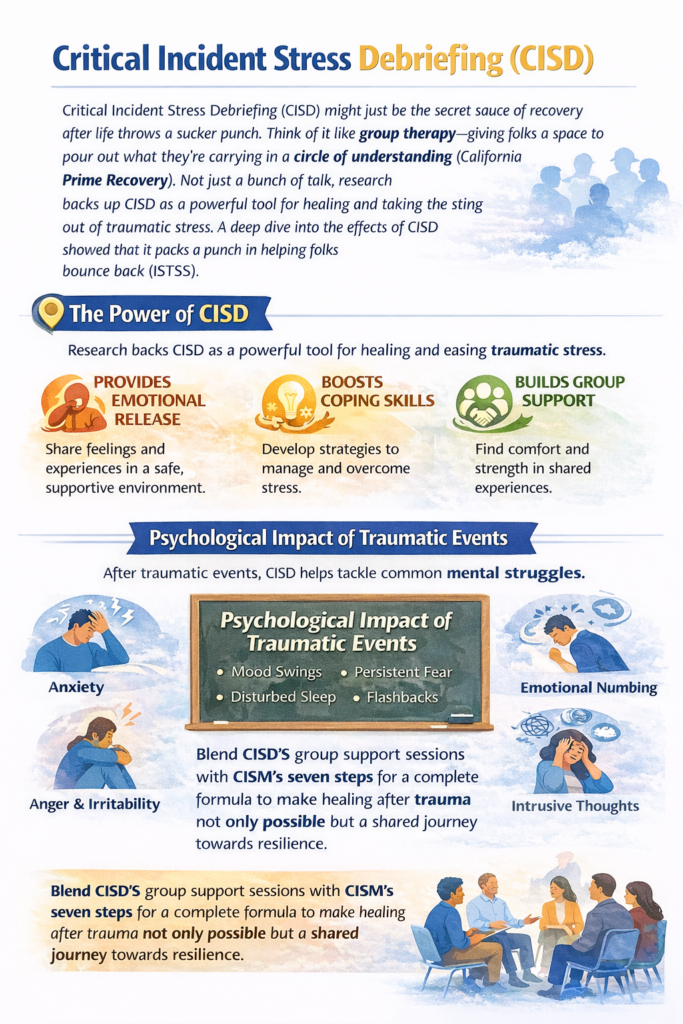
Emotional Effects of Trauma
When life throws an unexpected curveball, emotions can hit like a tidal wave. Fear, anxiety, shock, and disbelief are just the tip of the iceberg. Folks might feel like they’re lost at sea, trapped in a raft of helplessness, guilt, or even anger. The way trauma tugs on your heartstrings can depend on a bunch of things—the situation, how tough you are inside, and whether you’ve ridden this emotional rollercoaster before. Getting a grip on these feelings is like finding your path again to peace.
After a trauma storm, personal security might feel shaky. Being jumpy or overly alert becomes the norm. Some might relive the experience in nightmares or feel like they’re stuck on auto-pilot, unable to connect emotionally. This mental storm can mess with daily life, making it crucial to have a solid game plan for mental healing.
Psychological Support for Trauma
Lending the right emotional support is huge when someone’s been thrown off course by trauma. By weaving smart care techniques into the mix, we get a clearer view of how trauma really affects someone and use that intel to guide healing. The groundwork here is all about making sure folks feel safe, heard, and in control of their healing journey.
Therapies like mental first aid or counseling help lay down tracks to guide folks through their disturbances and come up with fresh ways to cope with stress. These methods aren’t just about making things “less bad”—they’re about building a new kind of strength from within.
The bond between a person and their mental health pro can be a game-changer. It’s a special connection that influences mental health like nothing else, underscoring the need for a warm, understanding space where one’s trauma can be tackled head-on.
So, when looking at dealing with trauma head-on, it’s all about acknowledging those messy feelings and meeting them with the best support possible. Blending principles of trauma-aware care with rock-solid treatment, folks can start patching up emotional wounds and rebuild their resilience. It’s a path to recovering one’s sense of self after life’s chaotic moments.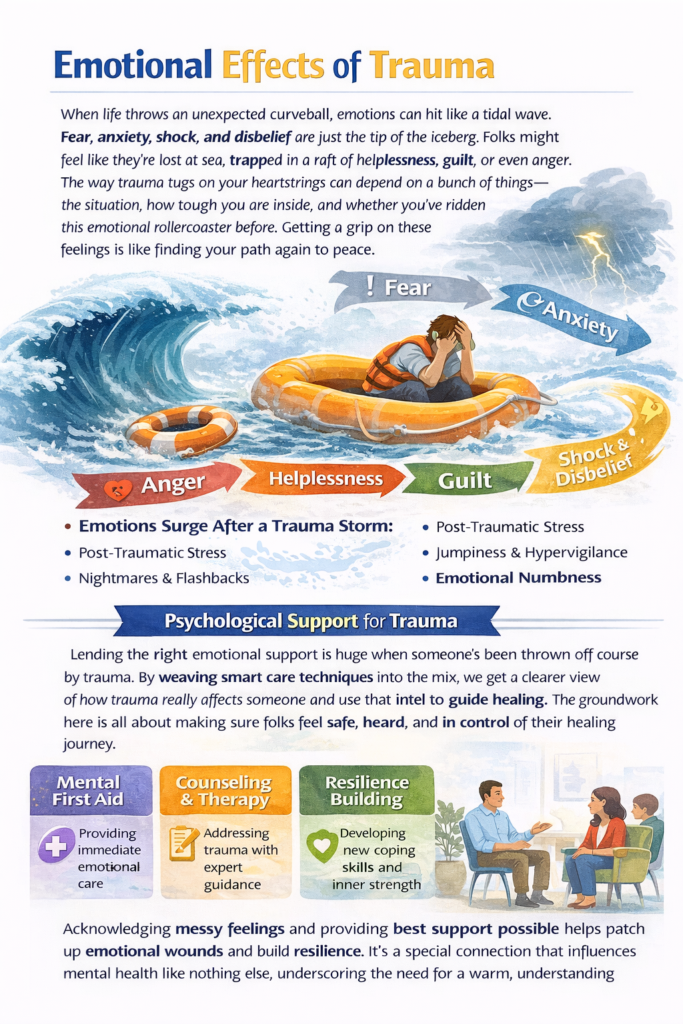
Effectiveness of CISM Interventions
So, we’re diving into the world of Critical Incident Stress Management (CISM). Here’s the lowdown on what really works, and what’s just smoke and mirrors, when it comes to these interventions.
Empirical Validation
Listen, CISM has put in a good shift over the years. It’s been tossed around in all sorts of studies and trials, and man, it’s holding its ground pretty well. It’s like the reliable toolbox for crisis response, helping folks dealing with some pretty rough stuff. I’m talking mass shootings, riots, you name it, CISM’s been there, helping people come out the other side a little less frazzled (ICISF).
These interventions, like the fancy-sounding Critical Incident Stress Debriefing (CISD), have given folks in the thick of it a hand in knocking down posttraumatic stress vibes faster than you’d expect. When you’re in the heat of it, that kind of help is like a cool breeze on a scorching day (ISTSS).
Misconceptions and Evidence
But not everyone’s on board with the CISM train. Some folks out there are scratching their heads, wondering if these interventions are all they’re cracked up to be, especially when it’s about wrestling down PTSD symptoms.
Now, studies are a bit of a mixed bag. Some folks say CISD calms the PTSD storms, while others act like it’s just another Tuesday, no noticeable change. The results can feel like trying to nail jello to a wall. One moment it’s working wonders, the next it’s meh, nothing special. Makes you wonder if science needs a cup of coffee to wake up and figure it out (PubMed Central).
Over in the UK, the health powers-that-be—like NICE—aren’t throwing any CISM parades. They reckon, rather than diving into debriefing sessions as preventive magic pills, it’s better to keep tabs on folks in the first month after trauma hits. Apparently, the jury’s still out on whether CISM’s the knight in shining armor it claims to be (PubMed Central).
As the thought train chugs along in the field of CISM, it’s crucial to keep poking, prodding, and sorting out what works and what doesn’t. By playing scientist and keeping an eye on what’s new and credible, folks in this gig can actually dish out meaningful support to those tangled up in traumatic webs.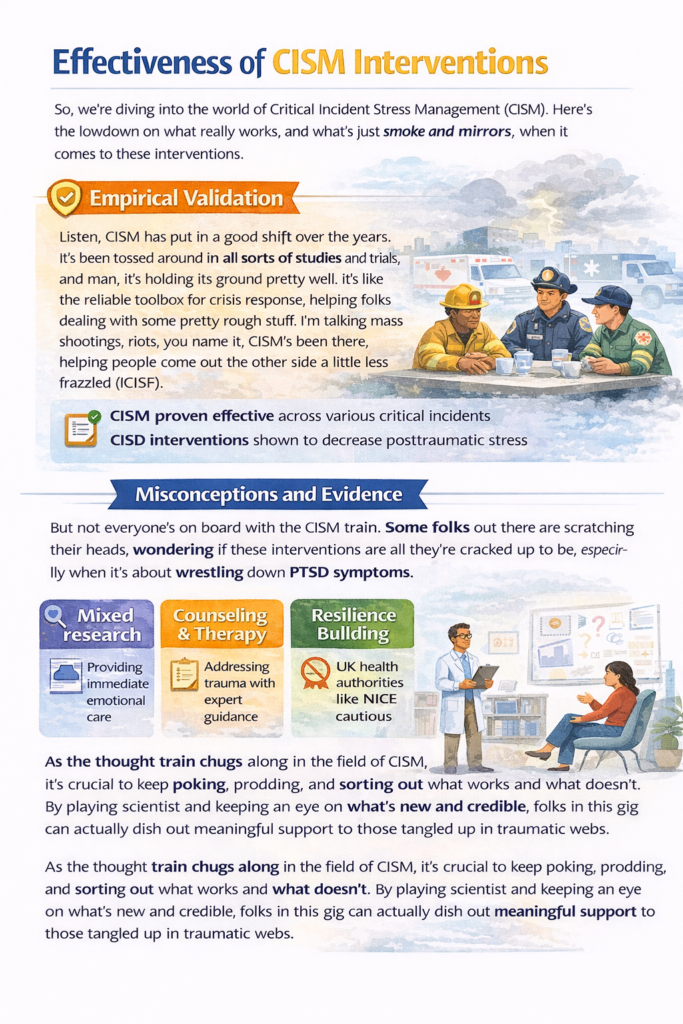
Evolution of CISM
So let’s talk about how traumatic incident stress management models (CISM) have changed since back in the day, specifically from the late 1970s to where we are right now. Originally, it was all about helping folks in emergency services deal with those tough situations they face. Nowadays, it’s like the gold standard for handling stress in all sorts of places.
From Late 1970s to Present
Way back in the late ’70s, CISM was mostly hanging around with emergency services. They needed a way to help out folks who saw some pretty harsh stuff while doing their job. It started as a plan to give structured support for what was going on in the heads of first responders and such. Those initial ideas are what grew into the CISM we know now.
Standard of Care Beyond Emergency Services
Though CISM began its life in emergency service land, it has since moved into so many other areas. It’s not just for helping the heroes in uniforms anymore. Schools, neighborhood groups, and businesses have all caught onto how useful CISM can be. Turns out, making sure people are okay after a tough time is important everywhere!
The fact that CISM spread out beyond its beginnings shows just how much people realize it’s important to look after the mental health of anyone who’s been through a tough situation. By slipping CISM into all sorts of organizations, folks find they can support their people better, help everyone stay strong, and keep mental health in check across different areas. This shift shows how flexible and helpful CISM is when it comes to dealing with the ever-changing needs of people who go through these critical moments.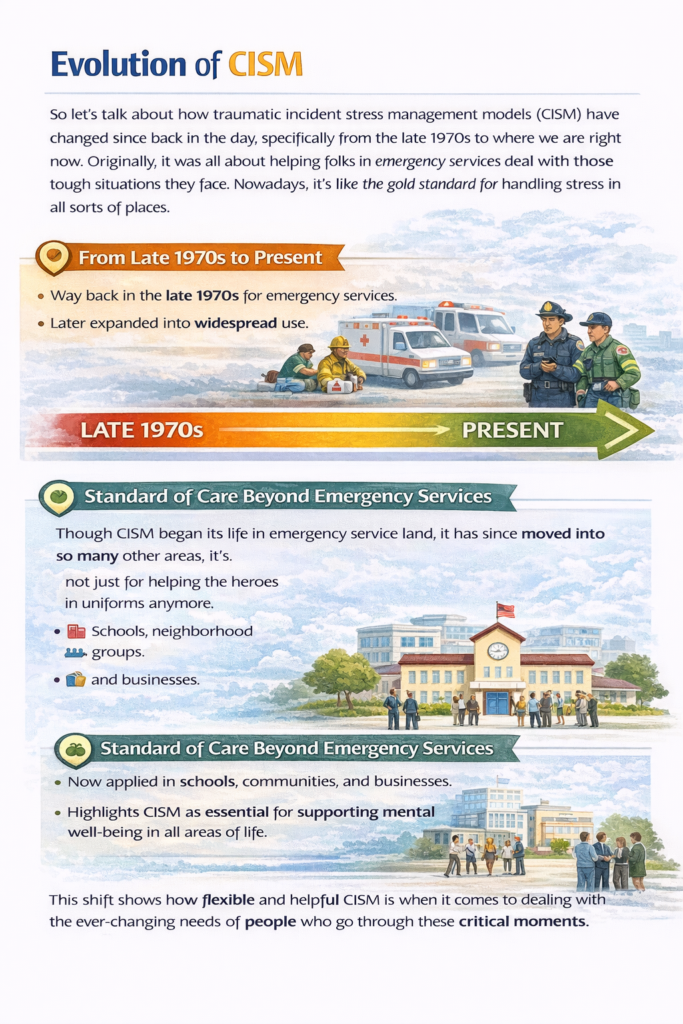
Implementing CISM Programs
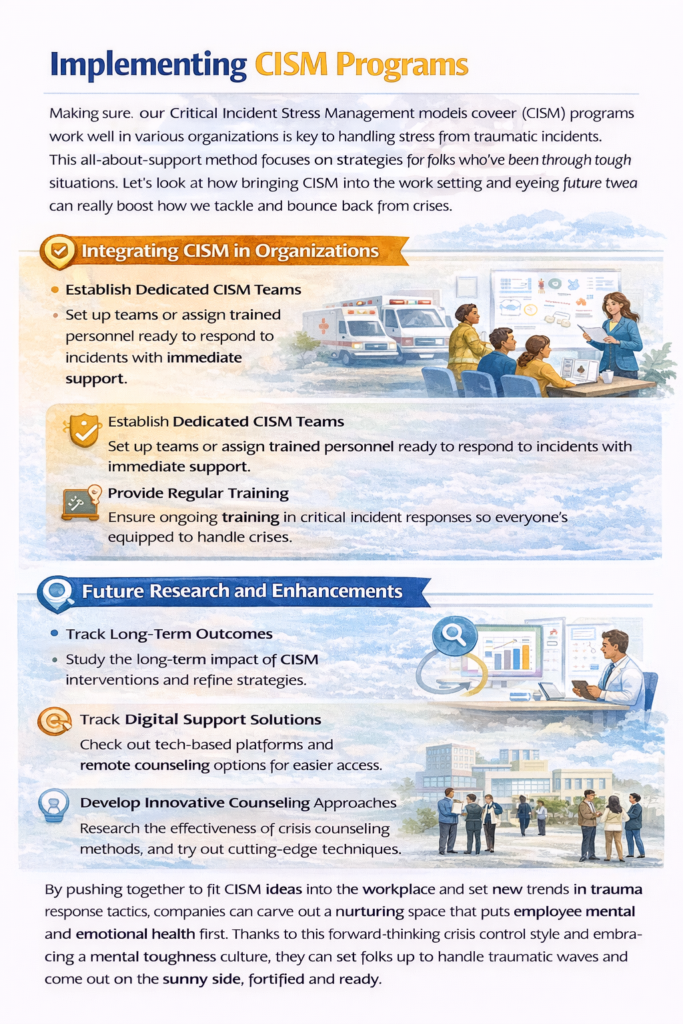
Making sure our Critical Incident Stress Management (CISM) programs work well in various organizations is key to handling stress from traumatic incidents. This all-about-support method focuses on strategies for folks who’ve been through tough situations. Let’s look at how bringing CISM into the work setting and eyeing future tweaks can really boost how we tackle and bounce back from crises.
Integrating CISM in Organizations
Welcoming CISM programs into companies sets up a support system for those facing rough patches. When businesses fold CISM practices into their everyday operations, they can front-foot the mental health care of their team. This step means crafting rules and procedures focused on giving a leg-up during hard times, offering crisis help, and ironing out post-incident processes like psychological debriefings.
Places can set up special CISM squads or appoint skilled folks to jump into action when something goes sideways and people need a hand. Rolling out regular training, like critical incident response training, makes sure everyone’s got the right tools to tackle crises and be there for each other. Promoting open chats and heartfelt support at work majorly amps up a company’s ability to lessen the blow of tough situations on the team.
Future Research and Enhancements
Keeping at it with research and tweaks in CISM is critical for leveling up how we handle trauma and grow resilience in those facing intense episodes. Future brains-on efforts should look at the long-haul effect of CISM actions, pinpoint top-tier tips for stress management lessons, and think up fresh ways to meet the changing needs of varied groups.
Checking out the tech angle, like digital platforms for on-the-spot help and remote therapy, can widen the CISM programs’ reach and make them more accessible. Plus, diving into studies on how well crisis counseling techniques work, alongside novel methods, can spill the beans on fine-tuning trauma recovery efforts.
Backing ongoing research keeps organizations sharp on the latest, proven CISM practices, letting them forever upgrade their crisis action playbooks. By mingling with mental health professionals, scholars, and field pros, organizations can shape their CISM programs to fit what their people really need, polishing overall wellness when the going gets tough.
By pushing together to fit CISM ideas into the workplace and set new trends in trauma response tactics, companies can carve out a nurturing space that puts employee mental and emotional health first. Thanks to this forward-thinking crisis control style and embracing a mental toughness culture, they can set folks up to handle traumatic waves and come out on the sunny side, fortified and ready.