Understanding Psychological Resilience
When it comes to handling stress during critical incidents, getting a grip on psychological resilience in crisis situations is super important for folks like first responders, healthcare workers, organizations, mental health pros, people who’ve been through trauma, and educators.
Definition of Resilience
So, what’s resilience all about? It’s basically being able to roll with the punches, adapt to life’s curveballs, and somehow come out stronger on the other side. It’s not just about bouncing back; it’s about learning and growing from tough times. Resilience is like learning to ride a bike without training wheels – a bit wobbly at first, but once you get it, you’re good to go. It’s a process that changes over time and helps folks find their footing after facing hard knocks.
Factors Influencing Resilience
There are a few things that can make a big difference in how resilient someone is. Being optimistic, able to think outside the box, having solid coping skills, keeping up relationships with friends and family, staying physically healthy, and sticking to personal values can all boost resilience (NCBI).
Then there’s the science side of things. Genes, brainwork, and what happens around us all mix together to shape resilience. Epigenetics comes into play, helping us understand how stuff like our environment can tweak our genes and influence how we handle challenges. It’s proof that people can adapt to tricky situations (Larry G. Maguire – Human Performance).
Think of resilience as having a toolbox filled with your strengths, coping tricks, and support from others. It’s like an invisible shield, helping you get through stormy weather. Believing in yourself and having people who’ve got your back go a long way in making sure you can handle tough times and push through with confidence.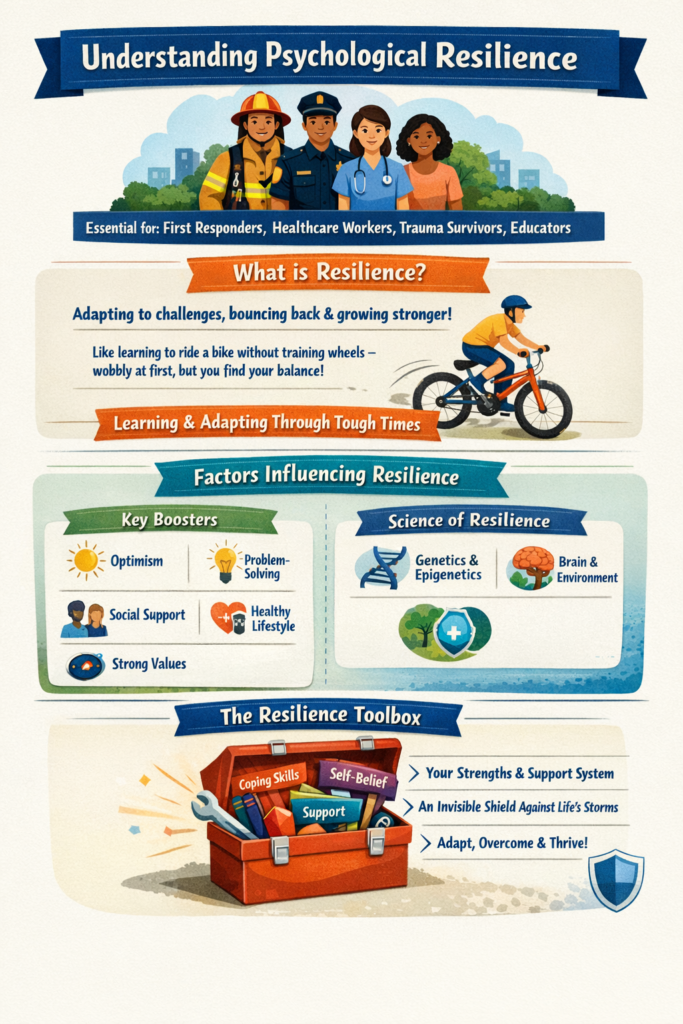
Resilience in Coping Strategies
So, you’re dealing with some rough patches, huh? When life decides to throw curveballs, how we manage stress says a lot about our mental grit. You got your good coping methods and ones that ain’t so hot. But knowing which is which can make a world of difference in getting through those tough times.
Adaptive Coping Strategies
Let’s talk about the good stuff first. Adaptive coping methods are basically your go-to moves when stress tries to knock you down. They’re all about helping you face life’s challenges without losing your cool and bouncing back stronger.
Now, folks who are into these positive coping styles tend to handle stress pretty well. A bit of research from Brain Sciences suggests that not getting lost in distractions or straight-up giving up can skyrocket your resilience.
Got some top adaptive strategies right here:
- Problem-solving: Roll up your sleeves and tackle issues head-on with a clear plan of action.
- Seeking social support: Reach out for an arm around the shoulder and wise words when times get tough.
- Positive reframing: Finding a silver lining in a dark cloud and spinning life’s lemons into lemonade.
Making these strategies your jam boosts your psychological defenses and helps you steer through life’s storms with some serious finesse.
Maladaptive Coping Strategies
Now, on to the not-so-glamorous methods. Maladaptive strategies might seem like quick fixes, but they usually end up causing more grief than relief. These habits can really mess with your ability to handle stress in the long run.
Spotting these bad habits is half the battle. Here are some you might want to dodge:
- Avoidance: Burying your head and hoping problems disappear on their own.
- Substance abuse: Reaching for alcohol or drugs just to dull the emotional pain.
- Negative rumination: Stuck on a loop of pesky negative thoughts without ever seeing a way out.
If you find yourself dabbing into these, stress management might turn into a struggle. The key is catching them early and switching gears.
People often on the frontline of stress—think First Responders and Emergency Personnel, Healthcare Workers, and Mental Health Practitioners—need to stick to adaptive strategies while throwing maladaptive ones to the curb. By playing it smart with their coping styles and calling in some support when needed, folks can keep their heads above water and tackle life’s challenges with grit and guts.
Enhancing Psychological Resilience
When life throws curveballs—especially at first responders and healthcare pros—keeping your head together is gold. Building up that psychological resilience means you’re stacking up cards like reliable friends and a strong self-image, which turns out, is kind of a big deal.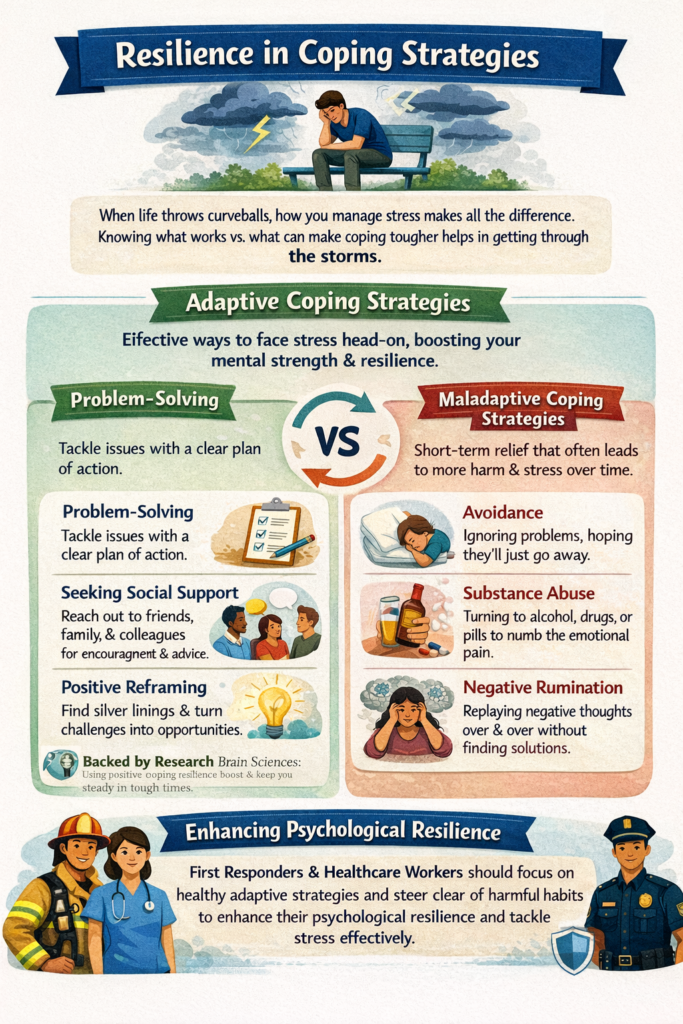
Building Social Support Networks
Social support isn’t just a nice-to-have; it’s the secret sauce that boosts your bounce-back ability, especially if you’re knee-deep in the thick of it all. Check this out: when COVID-19 was running rampant, studies found that the stronger your squad, the less mental stress you were under. That just goes to show that having a solid crew can really take the edge off stress and trauma.
For folks in high-pressure gigs like ambulance drivers, nurses, and such, having a solid group you can lean on is like having your very own cheer squad. It can be anyone—co-workers, friends, family, or even a mental health expert. Chatting openly, calling for reinforcements when things get tough, and joining peer groups can seriously amp up that support.
Cultivating Positive Self-Perception
Self-perception is a fancy way of saying how you see yourself and it’s a game-changer when things get rough. The whole resilience thing is all about knowing who you are and what you’re made of. Past experiences shape this, influencing how you tackle life and connect with others.
Psych-speak tells us that believing in yourself and thinking you’ve got some control over your life paves the way for a sunnier outlook and smarter coping. A hefty dose of self-belief and taking charge mindset means you’re facing off tough times with confidence.
For the brave ones on the frontline and those dealing with trauma, a healthy self-view kicks off with taking care of yourself, getting mindful, and being kinder to number one—you. Feel your feelings, aim for realistic goals, and pat yourself on the back for the little wins. That’s how you build a resilience backbone to stand tall when the going gets tough.
By leaning into these mind-fortifying tactics, you give yourself a sturdy shield for your mental health when the chips are down. Whether you’re stacking up your social supports or boosting your self-esteem, building up psychological resilience is all about growing into a stronger you.
Resilience in Traumatic Events
Coping with tough situations and traumatic events is no small feat, especially for our frontline champions like First Responders and Healthcare Workers. Whether it’s police officers, firefighters, paramedics, search-and-rescue teams, nurses, or doctors, resilience is their secret weapon. Let’s get into how these folks keep their spirits up and bounce back when the going gets tough.
Resilience Among First Responders
First Responders dive headlong into emergencies and disasters, often armed with nothing but nerves of steel. Their sturdiness isn’t just by chance; it’s linked to better mental health, helping them handle job stress and trauma. Our resilient heroes have figured out ways to cope well—they focus on staying positive and reach out when they need a helping hand.
These pros are ready for action, thanks to training that ensures they look after themselves, even during chaos. Teams get specialized incident response skills to raise their resilience game. By tapping into their training and street smarts, First Responders can face and weather traumatic events with grit and gusto.
Resilience in Healthcare Workers
Healthcare Warriors, especially those battling pandemics and crises, deal with massive pressure and emotional roller coasters. Science says having a support network boosts their resilience, brightening mental health outcomes. The COVID-19 saga highlighted just how vital their resilience is in tackling unprecedented hurdles.
These valiant souls mix problem-solving and keeping their emotions in check to manage stress, holding onto their sanity (NCBI). Those who are more resilient tend to sidestep anxiety, stress, and exhaustion, proving resilience’s protective magic (NCBI).
Healthcare outfits put their money where their mouth is by offering stress management training courses, helping staff beef up their resilience and coping abilities. By fostering a supportive environment and taking care of mental health, organizations show they have the back of their unsung heroes as they brave traumatic events with courage and strength.
In the end, the resilience shown by First Responders and Healthcare Workers in tough times highlights why it’s crucial to arm them with the right tools, lessons, and backup to thrive. Acknowledging and cheering on their resilience helps to promote mental health and keeps our essential workers cool under pressure during make-or-break situations.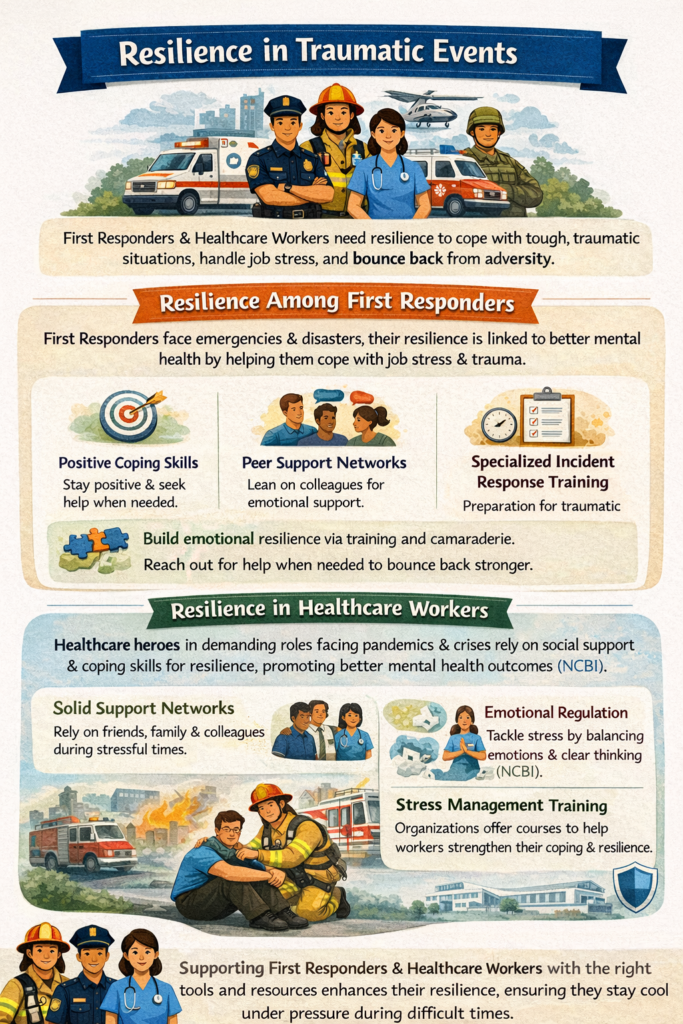
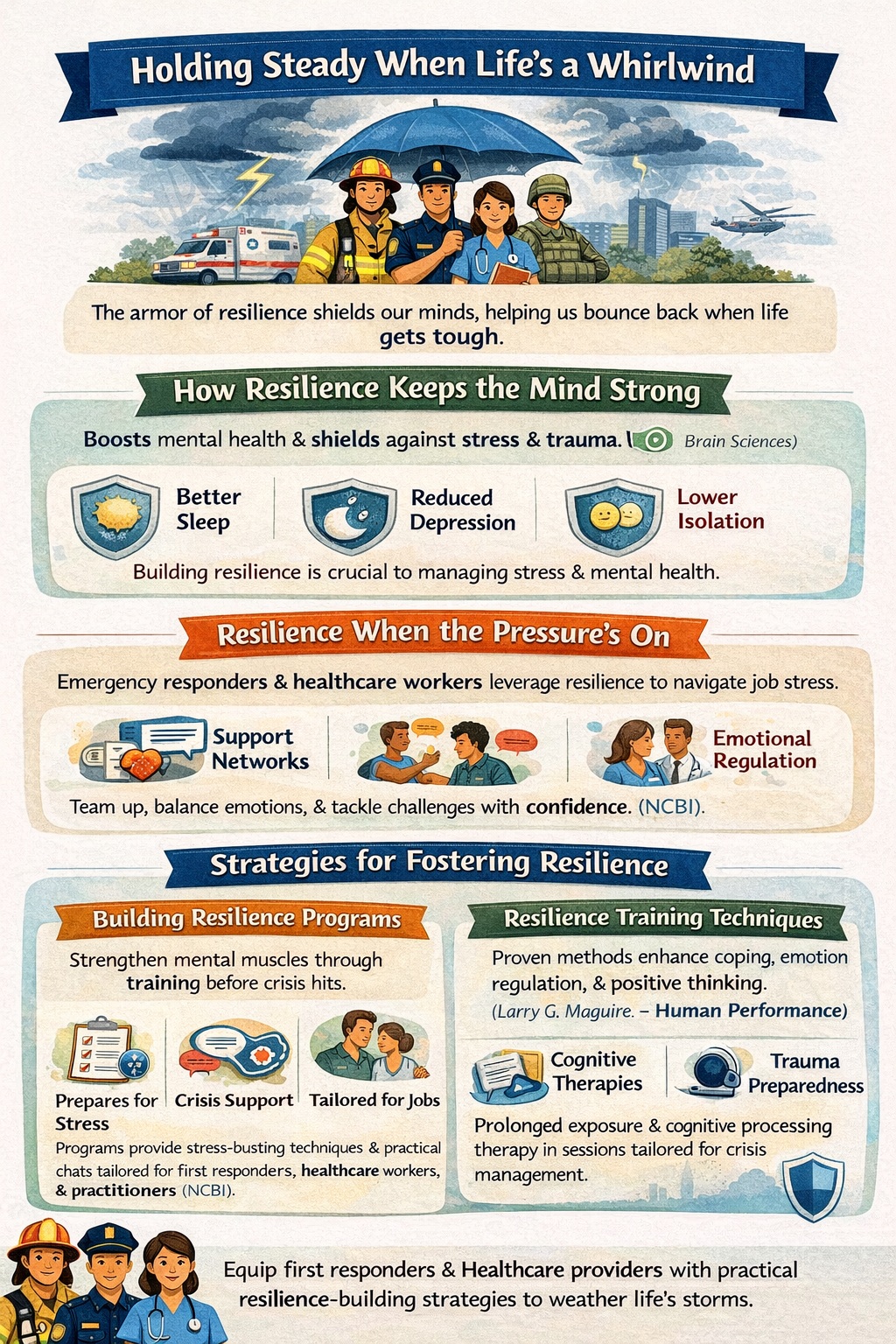
Holding Steady When Life’s a Whirlwind
When life throws those curveballs, the armor of resilience is right there, offering a helping hand to shield our minds. How well we tough it out through hard times rests heavily on our ability to bounce back, a skill that keeps us steady even when everything else feels like it’s falling apart.
How Resilience Keeps the Mind Strong
Resilience isn’t just a buzzword; it’s like the secret sauce to dodging mental storms. Folks who have got it seem to weather life’s rocky moments with less mental fuss, kinda like having an umbrella ready when the storm hits (Brain Sciences). When this resilience tank runs low, that’s when the bad stuff sneaks in—like lousy sleep, down-in-the-dumps moods, and feeling all alone. That’s why stepping up and building up our tough-it-out muscles is super important to keep our heads above water when things get dicey.
Resilience When the Pressure’s On
For those on the front lines, like emergency responders and healthcare crews, tapping into their inner resilience isn’t just smart; it’s a lifeline. It’s that special something that helps them shake off the emotional slugfest their jobs dole out and keep on trucking without losing their cool.
Turns out, having buddies to lean on, whether they’re family or fellow workers, does wonders for keeping anxiety and gloom at bay, especially when the going gets tough (NCBI). These heroes have mastered both cool-headed problem-solving and dealing with their feelings head-on, reinforcing their resilience and gathering good vibes from folks around and social support (NCBI).
Healthcare warriors who’ve got resilience down pat seem to dodge pandemic blues, staying clear of the stress, weariness, and anxiety that might otherwise knock them off track. It’s clear by now that resilience doesn’t just hold its ground—it’s a lifeline keeping mental and emotional health afloat in times of chaos (NCBI).
Getting a handle on how resilience acts like a mental safety net is a big win for boosting the spirits of anybody up against life’s gnarly moments. By stacking up strategies and tweaks to toughen our resolve, we can help folks shore up their mental strength, keeping them cool, calm, and collected no matter what challenges roll their way.
Strategies for Fostering Resilience
When life throws you a curveball, bouncing back is not just about luck; it’s about resilience. This magic trick of the mind helps us handle life’s chaos and come out stronger.
Developing Resilience Programs
You wouldn’t jump into a marathon without training, right? Well, building resilience works the same way. Before life gets tough, it’s smart to invest in strengthening your mental muscles. That’s where resilience programs come into play, providing tools and tips that get you ready to tackle life’s hurdles head-on (NCBI). These programs help folks gear up for challenges, easing the shock and boosting recovery when the going gets tough.
These programs pack a punch with stress-busting techniques, ways to handle tough times, and chats that help process what happened. With a buffet of resources and support, they focus on helping you stand firm against life’s curveballs and bounce back with style.
But it’s not a one-size-fits-all deal. Different folks, like First Responders and Emergency Personnel, Healthcare Workers, and Mental Health Practitioners, face unique pressures. Tailoring programs to suit them makes all the difference, offering specific advice and tools to weather their storms and improve mental health.
Resilience Training Techniques
Think of resilience training as the gym for your mind. We’ve got proven workouts in the mix, like prolonged exposure therapy and cognitive processing therapy, helping folks arm themselves against PTSD head-on. These therapies beef up your coping toolkit, sharpen emotional control, and promote positive thinking – all key players in the resilience game.
Psychological know-how reminds us that how we think and believe in ourselves shapes how we deal when life gets gnarly. Stuff like self-belief and knowing you’re in control can boost resilience, shifting how we tackle adversity and bolster our inner strength (Larry G. Maguire – Human Performance). By injecting these ideas into training, individuals get the mental armor to face life’s messy bits with confidence.
These training techniques roll out a variety of mindwork tactics: from therapy rooted in cognitive-behavioral principles and crisis chats to trauma-prep programs. They work on managing stress, steering emotions, and fostering a feeling of empowerment and control when under pressure.
By spicing things up with resilience-building activities for emergency responders and embracing trauma-aware approaches in crisis management, both organizations and individuals can pave the way for effective resilience training. This approach not only nurtures mental health but also equips people to tackle critical situations with grit and gumption.