

Understanding Crisis Intervention
Crisis intervention’s like the first-aid kit for the mind, stepping in when life’s thrown a mean curveball. It’s all about jumping on immediate solutions to soothe intense distress plus shutting down any further turbulence. Here’s the scoop on what crisis intervention entails:
Definition of Crisis Intervention
This isn’t just your average heart-to-heart or vent session. Crisis intervention is all about watching folks who’ve hit rock bottom and tossing them a lifeline, pronto. The main gig is brief, yet intense – think of a lifeguard saving someone from drowning. We’re talking about getting folks through the storm and back to their old selves(Imagine Nampa).
Goals of Crisis Intervention
The big cheeseburger here is stopping things from going downhill, especially if someone’s on edge or downright teetering on the brink of danger. It’s about hopping in right away, addressing what’s at hand, and making sure that person is safe and sound. Fending off a nosedive, crisis intervention ensures individuals are shielded from further harm(Imagine Nampa).
Moreover, it’s about grounding folks, chilling those symptoms, and prepping them to either bounce back to normal or head into more care after the chaos. Don’t confuse these techniques with your run-of-the-mill talk therapy – they’re in a league of their own, seriously laser-focused on quick and acute challenges(CAMFT).
Don’t sleep on understanding these tools and what they aim to do – they’re key to catching folks before they spiral. Using the right crisis intervention strategies, responders can create a safe, stable space for those caught in life’s storms.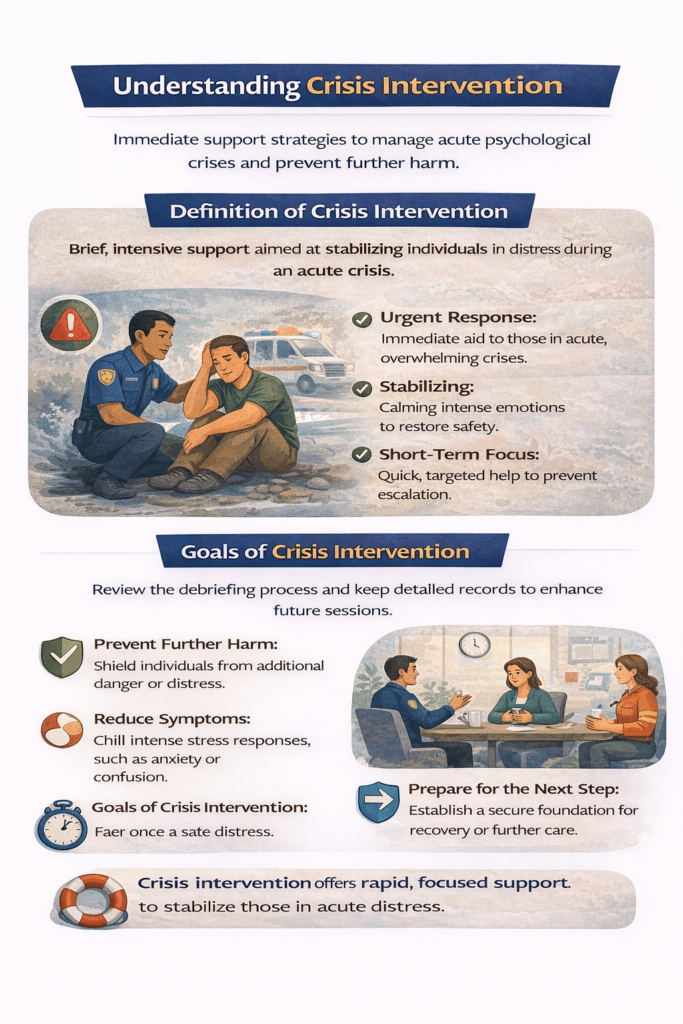
Crisis Intervention Strategies
When life throws a curveball, it’s crucial to have a toolkit ready to handle the fallout. Enter crisis intervention—your mental first aid kit for those unexpected moments when everything feels out of control. We’ll explore three essential strategies: calming down the chaos, ditching bad habits, and getting to the heart of the matter.
Stabilizing Symptoms
Ever felt like a shaken soda bottle, ready to explode? That’s where stabilizing symptoms comes in—aiming to calm the storm before it wreaks havoc. Folks in this state might be harming themselves or others, and quick action is needed. It’s about hitting the brakes on extreme emotions and risky actions so that nobody gets hurt. With a soothing approach, crisis intervention experts step in to help you take a deep breath, find your footing, and feel a tad safer.
Eliminating Maladaptive Coping Skills
Let’s face it, when life gets tough, we sometimes pick lousy ways to cope—booze, pushing people away, or flying off the handle at minor annoyances. Crisis intervention steps in to shine a light on these not-so-helpful habits. Whether it’s teaching teens better ways to deal with stress or providing relapse prevention tools, this strategy is all about swapping bad coping skills for healthy ones. Over time, these changes can help you build emotional muscle and keep the ship steady even in rough waters.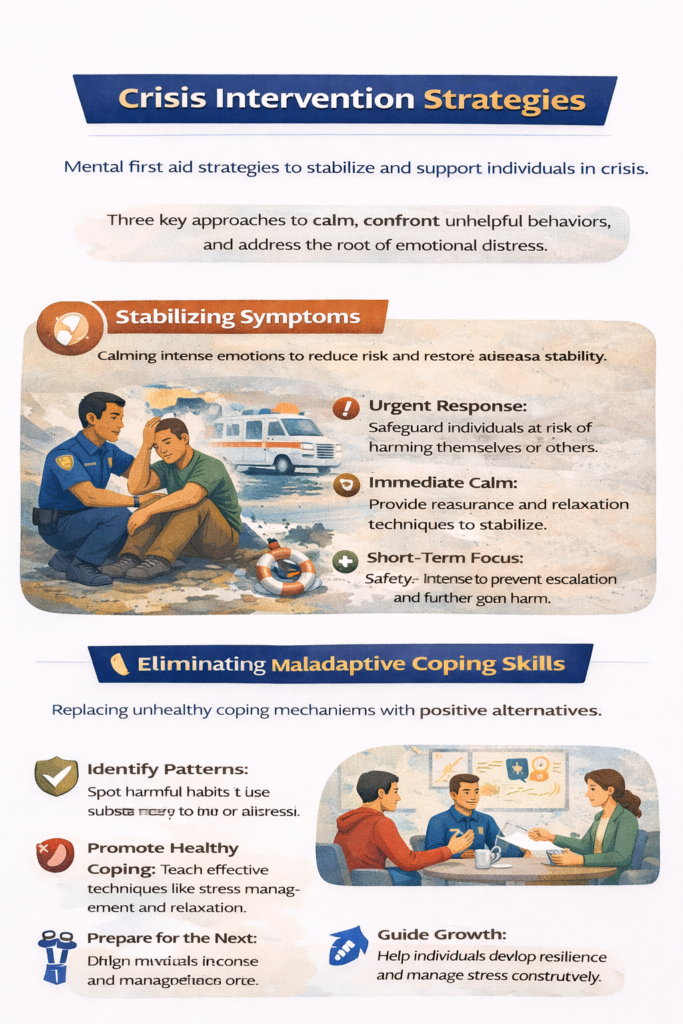
Identifying Underlying Issues
Sometimes the things that set us off run deeper than the immediate crisis itself, like a fire smoldering under the surface. Identifying underlying issues is about digging a bit deeper to find out what’s really fueling the flames. Through reflection and conversation, folks can uncover the root causes of their turmoil and start tackling these head-on. This approach sets the stage for deeper healing and lasting peace of mind, opening the door to ongoing therapy and recovery.
By embracing these crisis intervention strategies, mental health pros help guide individuals on a journey from chaos to calm, empowering them to rebuild and thrive.
Modalities in Crisis Intervention
When you’re deep in the chaos of critical incident stress management, there’s a toolkit of approaches to help folks wrestle with the fallout from traumatic events. These tools are like Swiss Army knives for crisis, each serving its unique purpose when life’s storm clouds gather.
Disaster Mental Health
Think of Disaster Mental Health as the mental first-aid kit when disaster strikes the neighborhood. It’s a slice of Crisis Response that kicks in after big, ugly calamities hit. Folks caught in such events often face both immediate and ripple-effect trauma (CAMFT). The game plan here is to swoop in quickly, offering a shoulder and a helping hand to those swept up in chaos. This support’s all about boosting spirits and finding ways to cope amid the wreckage.
Crisis Intervention Planning
Now, let’s talk Crisis Intervention Planning, which is like plotting out the roadmap before you hit the road on a stormy night. You need a solid action plan to tackle those chaotic incidents. This involves pinpointing who needs help, choosing the right kind of help, figuring out when to step in, and understanding the landscape – all while making the most of available resources (CAMFT). When the plan’s airtight, responders can execute it without a hitch, making their life-saving moves more effective and timely.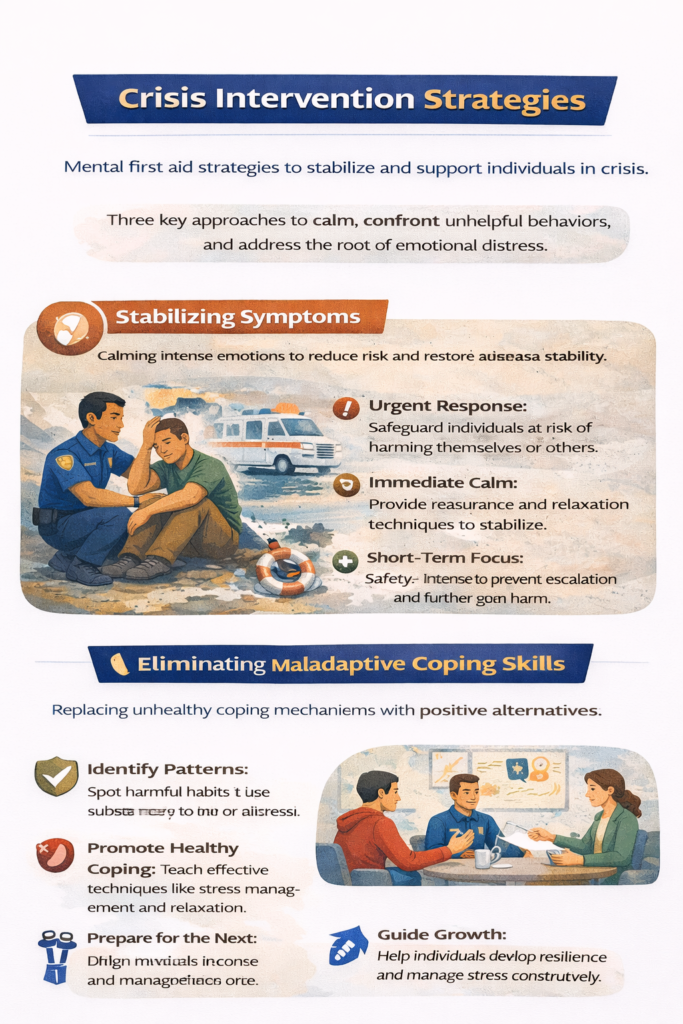
Staff Support Post Action
Once the dust settles, there’s the whole crew that sprung into action who need a little TLC too. Post-Action Staff Support is like the chill-out lounge for those crisis heroes coming off the frontlines. It’s about sitting down, hashing out the experience, checking in on feelings, and remembering to catch their own breaths after the madness (CAMFT). This sort of structured post-crisis chat breaks down into three steps: reflecting on what happened, dealing with the emotions, and reinforcing personal care to keep them strong for next time.
By weaving together Disaster Mental Health, Crisis Intervention Planning, and Post-Action Staff Support, those who jump into the fray can better ease the blows of critical incidents. With these in their pocket, they’re all set up to offer timely help, boost resilience, and set the stage for bouncing back when life deals a rough hand.
The Six-Step Crisis Intervention Model
Crisis can hit like a freight train, leaving folks dazed and confused. Enter the trusty Six-Step Crisis Intervention Model—a guiding light for crisis counselors. With each step crafted to help folks find their footing, it’s like a GPS for emotional turmoil. So, let’s have a closer look at this powerhouse of a model, shall we?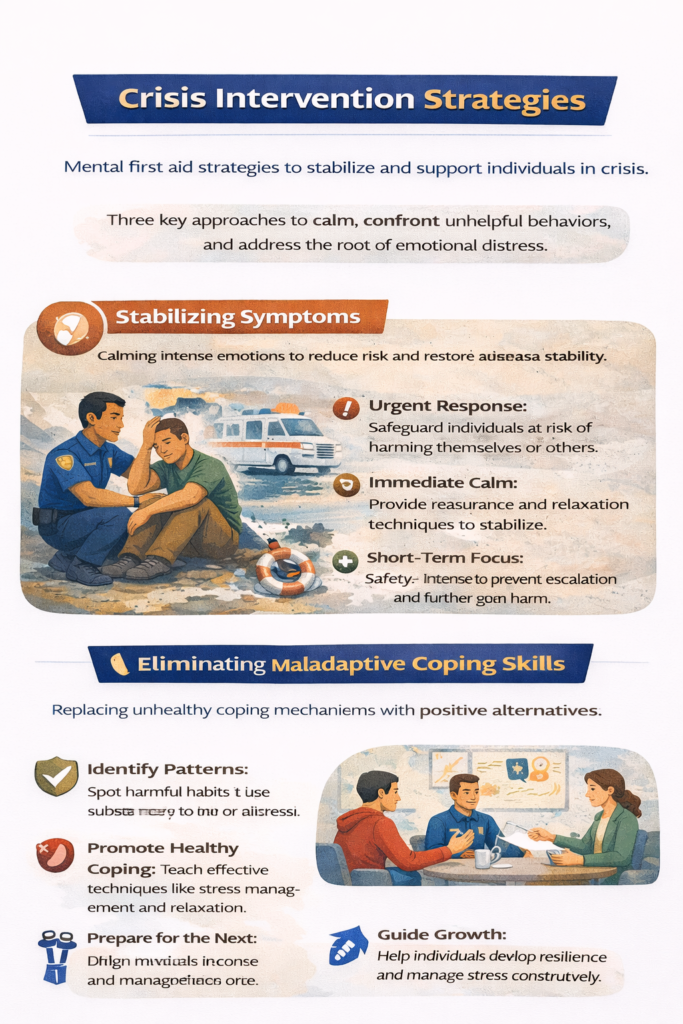
Step 1: Define the Problem
First things first: nail down what’s going on. Think of it as going through the toolbox to figure out what tool you’ll need. We gotta ask the right questions—what’s got you flipped inside out? Understanding the problem at its core is like finding the loose thread in a tangled mess. Once we’ve pinpointed it, we’re on solid ground for tackling what lies ahead.
Step 2: Ensure Safety
Priority number one: make sure things are safe—heart pounding or sky falling, none of it gets fixed if someone’s in harm’s way. We need to be the calm in the storm, eliminating any hazards. It gives folks a breather, helps them to exhale, and sets the stage for everything else to come.
Step 3: Provide Support
Offer kind ears and open hearts—sometimes, that’s just what the doctor ordered. Being there, truly listening, and providing a judgment-free zone can work wonders. At this stage, it’s all about connection and establishing trust, creating a lifeline to pull someone out of their distress.
Step 4: Explore Alternatives
Time to get creative—let’s look at what’s possible! Think outside the box, and maybe even stomp on it a little. By discussing options and working through different scenarios, we bring a world of possibilities to the table. This step’s all about widening perspectives and paving new paths.
Step 5: Make Collaborative Plan
No lone rangers here—teamwork makes the dream work! We need a plan that’s put together with a spirit of collaboration, one that folks actually feel they can achieve. Tailor it to fit like a glove, and make sure it covers all the bases. Folks not only need a map out but also to know they hold the compass.
Step 6: Obtain Commitment
We’re not done yet—commitment is key. It’s like signing the contract with yourself. Get them on board with the plan, ensure it’s something they can see through to the end. Follow through with a handshake (metaphorically speaking!). Check-ins help keep the motivation juices flowing and remind folks they’re not alone.
By holding to these six steps, crisis folks can steer those in tough spots towards calmer waters. Empowering individuals to find their way out and bounce back not only puts out fires but builds the foundation for recovery and growth. Like tuning an old radio, each step helps find the right frequency to broadcast some peace and progress.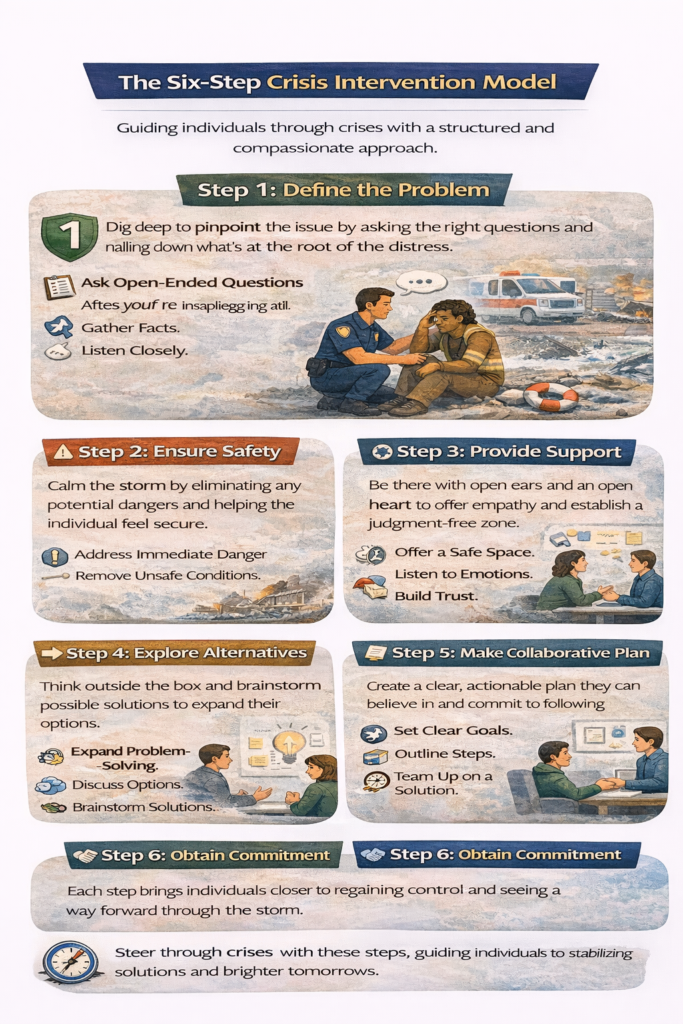
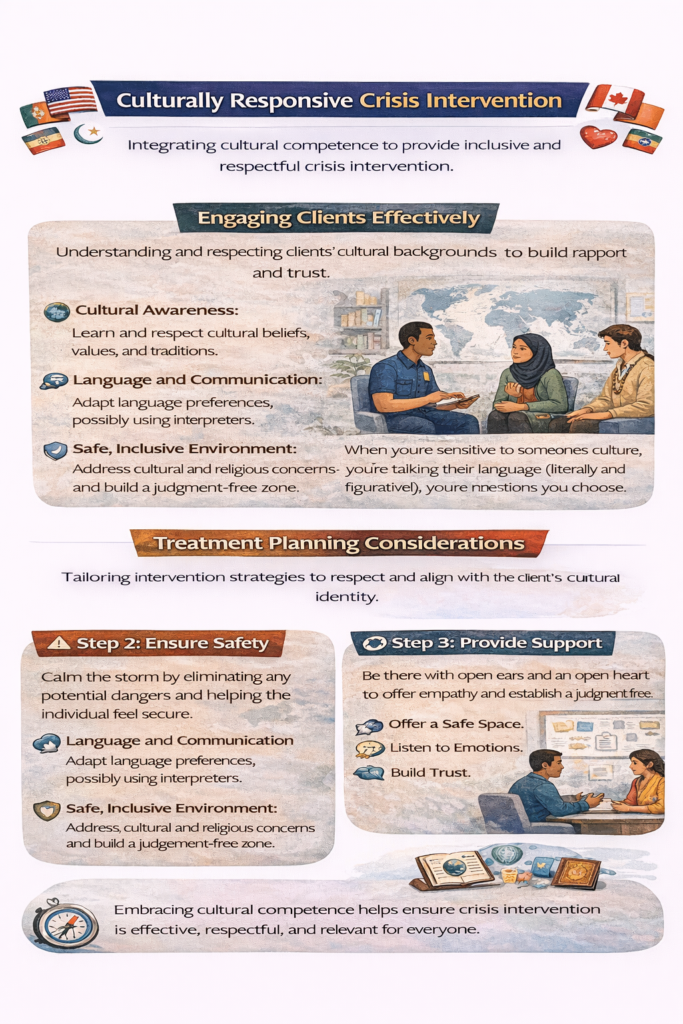
Culturally Responsive Crisis Intervention
When it comes to crisis intervention, getting a grip on cultural smarts is your secret sauce for really connecting with folks from all walks of life. Getting the hang of different cultural vibes and weaving them into how you help people? That’s gold for turning things around.
Engaging Clients Effectively
Connecting with folks in a jam? It’s more than just putting yourself in their shoes; it’s about digging deep into what makes them tick culturally. Recognizing and honoring their beliefs, values, and what feels “normal” to them can open doors to trust and understanding. That’s where honest listening and staying humble about culture come in handy.
When you’re sensitive to someone’s culture, you’re talking their language (literally and figuratively). You’re adjusting how you communicate and the methods you choose to fit their world. Crafting an environment where they feel they’re in a safe, no-judgment zone makes all the difference in helping them find stability again.
Treatment Planning Considerations
In crisis intervention, plotting the course of action has got to account for each person’s unique cultural fabric. You’re looking at where they’re coming from—socially and culturally—and letting that guide you. This means not just ticking boxes but genuinely tailoring your approach to their cultural milieu.
You’ve got to be adaptable with your plans, ready to shift gears based on a client’s cultural leanings and wishes. Bringing clients into the planning mix and valuing their beliefs can turn the volume up on the effectiveness dial. Keeping that cultural dialogue open means challenging yourself to constantly learn and reflect on how to be better.
Cultural competence is not just a “now and then” focus. It’s about being committed to your growth and pushing your understanding further. It’s the cornerstone of practicing with fairness, openness, and genuine respect for everyone you meet along the way. That’s how you make crisis intervention work for every person, every time.