Uncategorized

Critical Incident Stress Debriefing (CISD): Purpose, 7 Steps, Benefits, and Effectiveness

Explore effective CISD intervention strategies: From assessment to trauma support, we heal together post-critical incidents.

January 17, 2026 0
Share

Understanding Critical Incident Stress

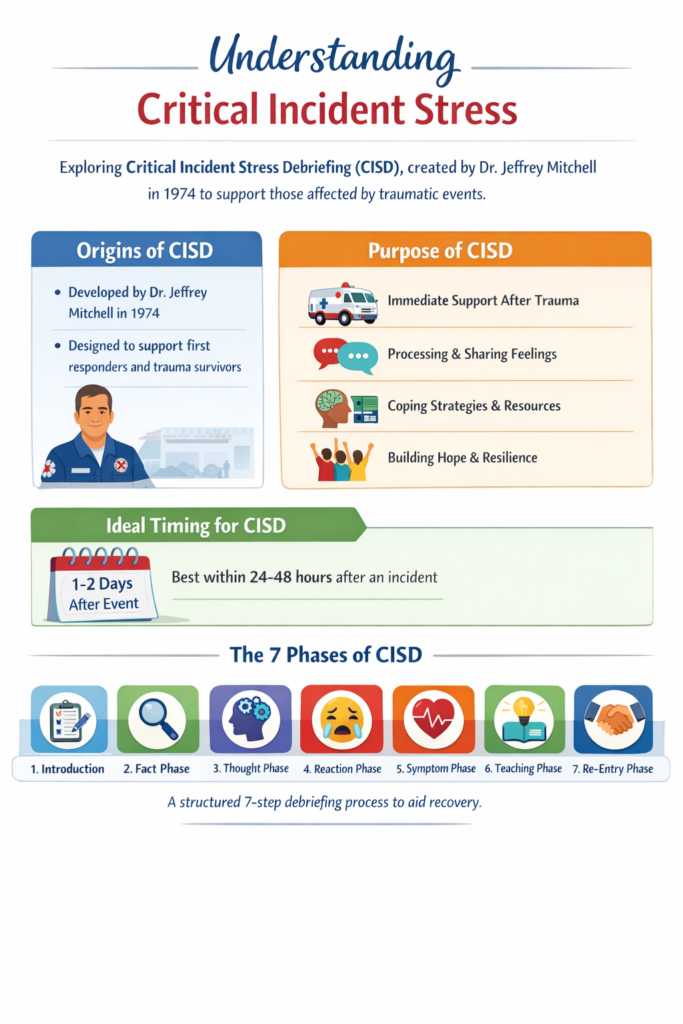
So, let’s chat about this thing called Critical Incident Stress and its management. A big part of getting a handle on it involves something known as Critical Incident Stress Debriefing (CISD). Back in 1974, Dr. Jeffrey Mitchell came up with CISD. Why? Well, his time as a paramedic and firefighter taught him that after dealing with really tough situations, folks often need a structured way to cope afterward. That’s where CISD steps in.

Origins of Critical Incident Stress Debriefing

The story of Critical Incident Stress Debriefing starts with Dr. Jeffrey Mitchell. He noticed that when first responders or folks witnessing trauma go through harrowing events, it impacts their mental health. His work in this area brought about the CISD model, which is geared toward immediate emotional and mental support following such tough times. Over time, this method has gained momentum, finding its place across different fields to help people bounce back after distressing events.

Purpose of CISD

Fast forward to now, the purpose of CISD stands pretty firm. It’s all about stepping in with support for those who’ve been through the wringer. The process breaks down into seven phases, each having a shot at keeping trauma from digging its roots too deep. Here’s what CISD is all about:

  • Jumping in ASAP post-trauma to keep long-haul psychological impacts at bay.
  • Giving folks a space where they can process what just happened, collect their thoughts, and shed some light on their emotional responses.
  • Dishing out knowledge on how stress affects us, offering those nifty coping tricks, and pointing toward any helpful resources available after debriefing.
  • Building a sense of “we got this” and hope for what lies ahead among those who’ve just been through a storm.

Getting the full picture of how Critical Incident Stress Debriefing works can really help in making smart choices about weaving CISD into critical incident response team training for first responders, healthcare workers, and emergency personnel.

Implementation of CISD

When diving into the nitty-gritty of Critical Incident Stress Debriefing (CISD), timing and its overall impact are where the magic happens.

Ideal Timing for CISD

Think of CISD like a lifeline tossed right after the storm—it should happen pronto, ideally a day or two after the traumatic event. This approach is like offering a cozy blanket to folks who’ve just been through the wringer, helping them process what went down and how to get back on their feet (Verywell Mind).

We’re talking a seven-step journey here. It starts with checking out how the incident shook up everyone involved and then tackling any pressing safety concerns. It also lets emotions run their course, forecasts how people might react later, goes through the incident from top to bottom, wraps things up, and helps folks rejoin their communities or head back to work (BetterHelp).
Effectiveness of CISD

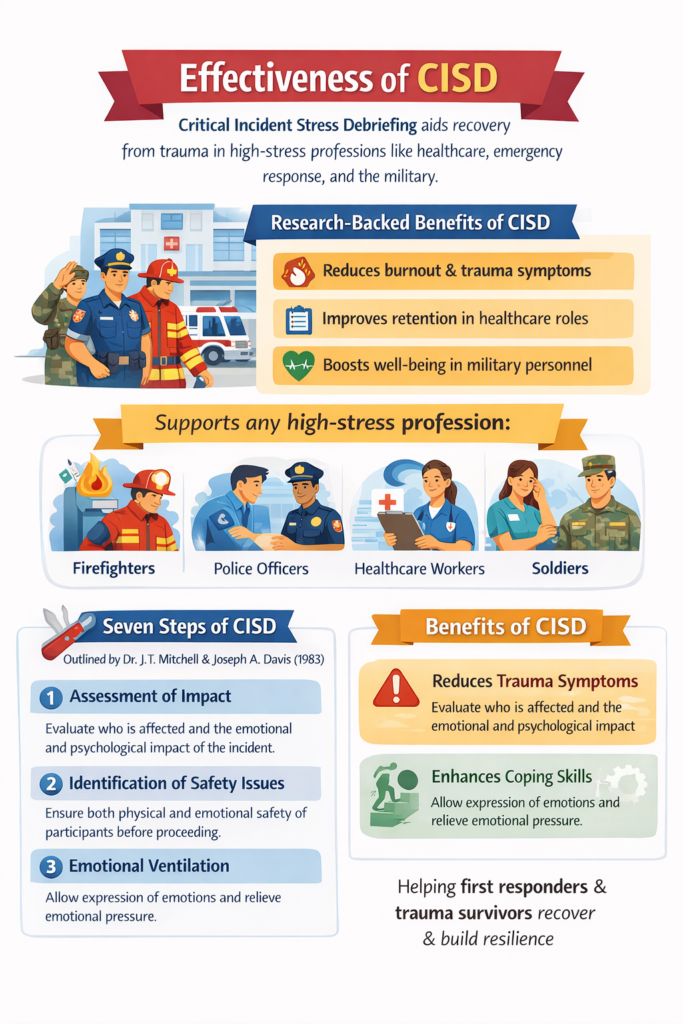
Plenty of research backs up CISD’s superpowers across different scenes. In emergency settings, it cools down burnout and trauma symptoms among healthcare pros. By the way, it’s a handy tool to keep employees from jumping ship in healthcare roles and boosts both physical and mental vibes for military folks (Verywell Mind).

Originally, it was all about those facing risky workplace situations or industrial mishaps, but CISD’s perks now touch anyone in the hot seat of high-stress jobs. Whether you’re a firefighter, cop, emergency responder, or in the military, it gives you a sturdy shield against trauma in your line of duty (BetterHelp).

Getting how crucial timing is and the wins that CISD brings along highlights why this strategy should be deeply woven into support plans for those dealing with critical incidents. By offering quick and structured support, CISD is like a guardian angel nudging folks toward bouncing back after life throws a curveball.

Seven Steps of CISD

When life takes a nasty turn and throws a whopper of a traumatic event, the seven steps of Critical Incident Stress Debriefing (CISD) are like that trusty Swiss Army Knife of emotional first-aid. Outlined by Dr. J. T. Mitchell and Joseph A. Davis back in 1983 for the Journal of Emergency Medical Services, these steps have been around the block, helping folks sort through the aftermath of such events.

Assessment of Impact

Step number one is all about taking stock. We look at what’s hit the fan and how the people involved are holding up. We check in on everyone—those directly affected, the ones around the edge, even the support crew. How’s everyone doing emotionally and psychologically? We need to know this to tackle their particular bag of worries and stressors head-on during the debriefing.

Identification of Safety Issues

Next up, we’re on the lookout for anything dicey because, let’s face it, some incidents throw up hazards you wouldn’t see coming. Both physical and emotional safety need to be secured tight. It’s the thing that makes sure everyone feels comfy enough to be real and raw about what’s going on in their hearts and heads.

Emotional Ventilation

This part is where participants get to blow off steam. They share what’s been festering upstairs since the incident. It’s all about letting the emotions flow—whether they’re letting off steam, venting, or getting it all off their chests. This phase is where the healing takes its first baby steps, allowing people to express their views and purge the emotional pressure cooker.

The whole shebang of the seven steps in CISD offers up a playbook for holding debriefing sessions that matter—ones that help folks bounce back from trauma. Sticking to these steps, professionals can grab people by the hand and lead them from the thick of the chaos to a place where healing begins, and life seems a little brighter.

If you’re itching to get smarter about handling stress and trauma, take a gander at resources like trauma-focused cognitive-behavioral therapy and critical incident response team training. They’re your go-tos for beefing up your skills and wisdom in the field of critical incident stress management.

Benefits of CISD

When we dig into what Critical Incident Stress Debriefing (CISD) offers, it’s clear it plays a big part in helping folks bounce back from life’s nasty surprises. There are two big perks: it tones down those pesky trauma symptoms and beefs up your handling skills, which is a blessing for anyone trying to sort out and move on from rough situations.Critical Incident Stress Debriefing (CISD)
Reduction of Trauma Symptoms

CISD has shown it can dial down burnout and trauma symptoms for medical heroes like nurses and doctors in fast-paced, high-stress environments. This, in turn, gives their bodies and minds a much-needed health boost after they’ve dealt with those nerve-wracking incidents (Verywell Mind). By setting up a game plan to handle the emotional chaos post-trauma, CISD gives folks a chance to wade through their emotional swamp and shrug off the long shadow of trauma.

Taking part in these CISD chats means they get to pour out what’s been bottled up inside, around the event that shook them. This heart-to-heart can seriously nip symptoms of PTSD, anxiety, and depression in the bud, helping individuals regain their footing and sense of self.

Enhancing Coping Skills

CISD doesn’t just put out the fires of immediate trauma; it also prepares people to deal with future challenges like a pro. These organized debriefing meet-ups work on strengthening the backbone of resilience and sharpening those handy coping tools through group chats and the expertise of seasoned pros.

When diving into the CISD debriefing process, participants get wise to spotting and employing ways to keep stress at bay, handle emotional waves, and tackle tough spots cleverly. These skills better arm participants for whatever stormy skies they may encounter down the road, slashing the odds of long-lasting mental scars.

CISD sessions are like gearing up with survival tools in a supportive team environment, letting people handle traumatic episodes with newfound strength and grit. The blend of trimming down trauma reactions and boosting coping strategies reveals the goldmine of support CISD offers for the mental health and recovery of those impacted by critical events.

Consideration for CISD Effectiveness

When it comes to Critical Incident Stress Debriefing (CISD), folks can get pretty chatty about whether it really does the trick. You’ve got some who swear it’s the best thing since sliced bread post-crisis, while others wag their fingers, suggesting it might not hit the mark for everyone.

Mixed Results and Debates

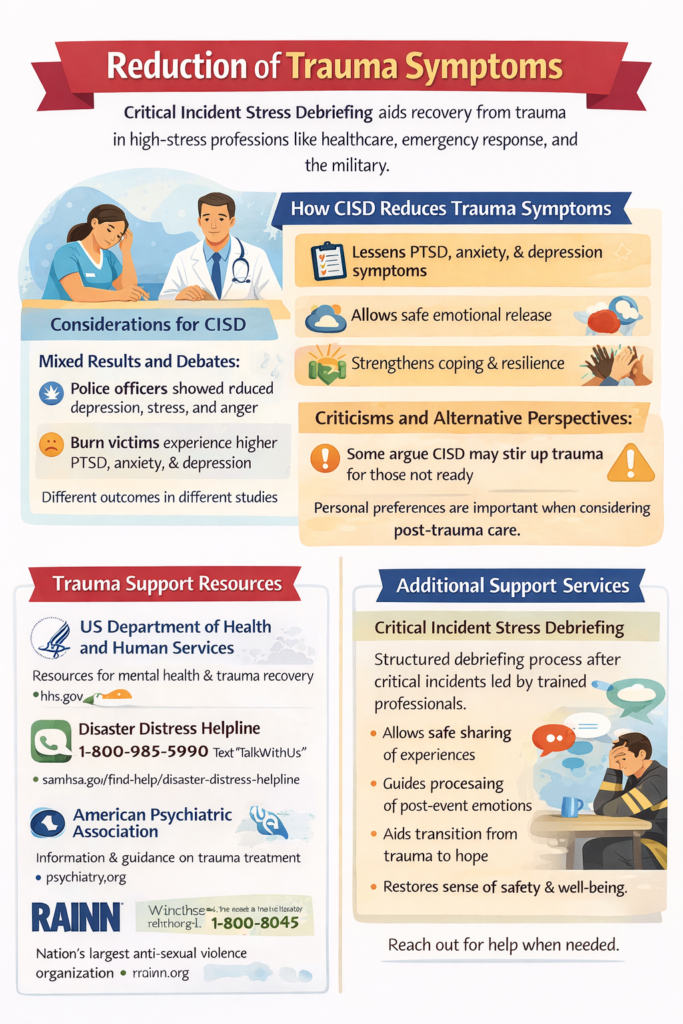
Research can be a real head-scratcher sometimes. Take this, for instance: one study rounded up a bunch of police officers who’d been in hairy situations. Turns out, giving them the ol’ CISD treatment within 24 hours seemed to help them keep their cool with fewer bouts of depression, stress, and anger afterward. Sounds promising, right? (Choosing Therapy)

But hang on, not all sunshine and rainbows there. Another study with burn victims tells a different tale. Those who tried out CISD were actually more frazzled a year later, showing higher PTSD, anxiety, and depression levels. Who knew the results could twist like that? It shows just how tricky it can be to nail down CISD’s effectiveness across the board.

Criticisms and Alternative Perspectives

The naysayers have a few talking points. They believe CISD might sometimes do more harm than good, especially if it stirs the trauma pot for folks who just aren’t ready for that kind of deep dive. This has led organizations, like the American Red Cross, to side-eye its use and even nix it for emergency responders, worried about unintended harm. (Choosing Therapy)

Some argue that while CISD has its perks for certain people, it’s not a one-size-fits-all deal for dealing with trauma. Everyone dances to their own beat when it comes to handling trauma, so it’s crucial to take personal preferences into account when picking the best way forward.

Debates around CISD aren’t fading away any time soon. It’s crucial to weigh the pluses and minuses carefully. As long as we’re aware of the mixed bag of research findings and keep open to different views, we can make smarter choices on how best to support people hit by critical incidents.

Support Resources Post-Trauma

Going through something heavy, like a big life-altering event, can leave anyone feeling lost. Turning to trauma support organizations can truly be a game-changer on the road to recovery. These groups are like lifelines, loaded with tools and services to help folks bounce back. Here’s a list of some places that are making a huge difference:

Trauma Support Organizations

  • US Department of Health and Human Services: This big-name government group is a hub of resources and info for folks dealing with trauma. They cover everything from mental health check-ins to help after disasters. When it comes to having someone’s back in tough times, they step up in a big way.
  • Disaster Distress Helpline: Ever feel like you need to talk to someone, like, right now? This hotline is there for those “I can’t even” moments triggered by natural disasters or other traumatic stuff. It’s a no-judgment zone open 24/7, offering a listening ear and some sensible advice.
  • American Psychiatric Association: These mental health pros are all about spreading the word on trauma and getting people the help they need. They dish out crucial info and even guide individuals in charting their recovery path.
  • Rape, Abuse, and Incest National Network (RAINN): Known as the largest group working against sexual violence in the United States, RAINN is a beacon of support. They provide a lifeline through their helpline and a treasure trove of online resources for those picking up the pieces after trauma.

Hooking up with one of these centers offers more than just help. You become part of a space filled with understanding and shared experiences, providing a solid ground as you navigate the stormy waters of trauma recovery.

Additional Support Services

Beyond the support groups, other services can keep that healing train moving. Take Critical Incident Stress Debriefing (CISD), for instance. It’s a structured chat, “debriefing” if you will, geared to bridge the emotional gap after critical incidents. Pros lead these talks to help folks:

  • Speak freely about their experiences without worry.
  • Work through the emotional rollercoaster post-event.
  • Shift from trauma towards a brighter, hopeful, future.
  • Reclaim a sense of safety and well-being.

CISD is a real lifesaver for pros in risky jobs—think firefighters, police, rescue workers, and military personnel. By jumping into these debriefing sessions, participants can face their emotions straight on, hone their coping skills, and lay down the groundwork for lasting mental stability and happiness.

When the going gets tough, leaning on trauma support centers and services like CISD can tip the scales toward healing and long-term peace of mind. They’re not just support—they’re a guide, a friend in the corner for anyone striving towards recovery and resilience.
Share this article:
Drarjony
About the Author

Drarjony

Drarjony is a contributor at this publication.

Leave a Reply

Your email address will not be published.Required fields are marked *

Uncategorized

Critical Incident Stress Debriefing (CISD): 7 Key Benefits, Risks, and Best Practices

Empower emergency responders with CISD strategies tailored for their well-being and resilience.

January 9, 2026 0
Share

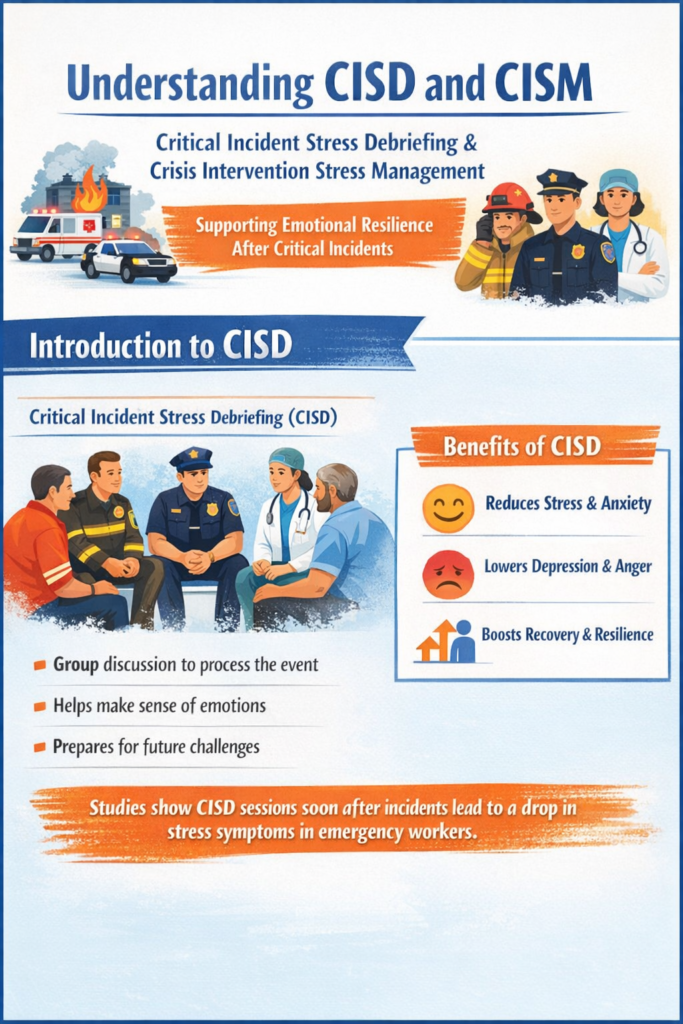
Understanding CISD and CISM

When it comes to keeping cool in the chaos of critical incidents, Critical Incident Stress Debriefing (CISD) and Crisis Intervention Stress Management (CISM) techniques are the go-to moves for ensuring emotional resilience and well-being in those trailing through tough times.

Introduction to CISD

Critical Incident Stress Debriefing (CISD) is like gathering your team in a huddle to hash things out after a tough game. It’s all about giving folks a safe spot to talk through what they’ve been through, making sense of their feelings, and getting ready for any future emotional curveballs. According to some thoughtful research from NCBI, CISD is a champ at cutting down on stress symptoms in folks from all walks of high-stress life, like emergency workers and those in crisis-heavy jobs.

By having these CISD pow-wows with people like emergency services personnel within a day after a critical incident, it’s been shown that there’s a noticeable dip in things like depression, anger, and stress in the months that follow. Think of it as a mental pre-game ritual, getting folks ready to bounce back stronger and steady.

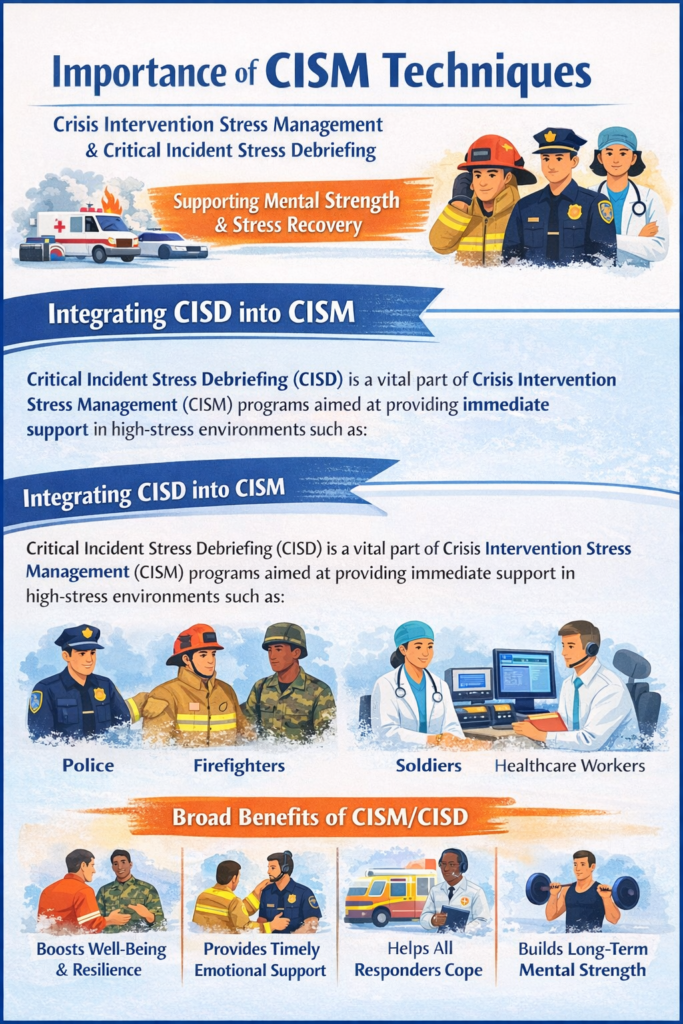
Importance of CISM Techniques

Crisis Intervention Stress Management (CISM) is the big umbrella under which CISD cozily fits, playing a crucial role in offering timely support and a shoulder to lean on when tough times hit. Using CISD as part of CISM plans has bolstered its reputation for soothing the psychological knocks from traumatic events. As noted by NCBI, these methods have made life a bit easier for a wide range of folks—police officers, firefighters, soldiers, and even prisoners of war.

Workplaces that sail through high-stress waters, like healthcare facilities and emergency services, would do well to weave CISM methods, like CISD, into their playbook. By setting up a framework for support and chit-chats after critical incidents, they actually help boost their people’s well-being and grit in the face of tough situations.

Integrating CISD into disaster response plans provides that warm cocoon of support—not just for the folks on the front lines but also for the volunteers, hospital staff, and dispatchers. This all-encompassing approach ensures everyone stepping into crisis situations gets the mental boost they need to face the challenges head-on.

As we get a closer look at CISD and CISM, it’s crystal clear that these methods lay the groundwork for building mental strength, easing stress-related woes, and creating a solid support base for anyone dealing with tough times. By keeping the focus on refining and rolling out the best practices in CISM, we’re setting the stage for improved emotional recovery and strength long after the storm has passed.

Effectiveness of CISD

How does Critical Incident Stress Debriefing (CISD) help folks in emergency services bounce back after they’ve been through the wringer? This part digs into the perks of CISD and shares some head-nodding evidence from studies that back its effectiveness in different scenarios.Critical Incident Stress Debriefing (CISD)

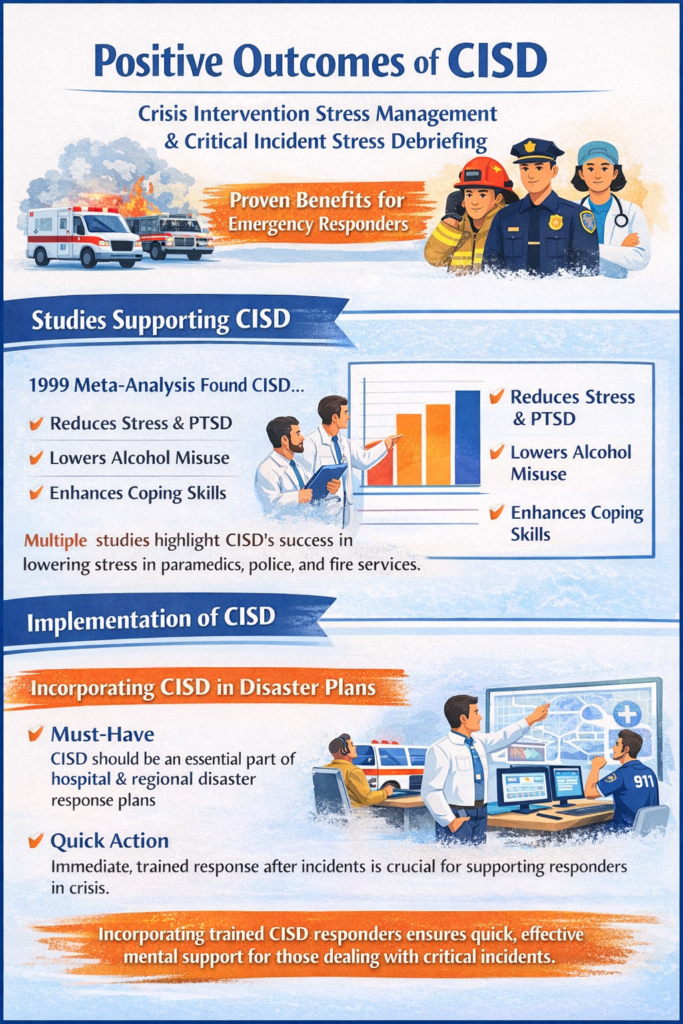
Positive Outcomes of CISD

So, what’s this CISD about? It’s a get-together for emergency crews like a group therapy hangout to help folks talk it out after things go sideways. By dishing out a cozy spot for folks to spill what’s eating them, CISD helps make sense of feelings, ensures nobody feels like the odd one out, and gets them ready to tackle tough situations again with a bit more steel in their spine.

Some brainy folks have noticed that if emergency workers—be it paramedics, cops, or firefighters—get in on a CISD session within a day of the you-know-what hitting the fan, they’re way less likely to get bogged down by sadness, anger, or stress a few months later. This quick response isn’t just good for their peace of mind; it helps them stay sharp and ready for when the next call comes.

Studies Supporting CISD

A whole pile of studies give CISD a thumbs-up for helping iron out stress wrinkles and boosting mental health. Back in the late ’90s, a big review of the research showed that CISD packed a punch when it comes to easing psychological distress after traumatic events. Even more, it’s a good pal in reducing stress and cutting down on hitting the sauce too hard among the likes of British forces and emergency crews.

Specific digs into what works for cops, fire crews, and EMTs show time and again that sitting down for a CISD chat after things go pear-shaped does wonders for keeping stress levels in check. Those who dive into these sessions come out calmer and more grounded than those who don’t. This makes a solid case for having CISD in the toolkit for keeping our frontline heroes mentally fit and ready to roll.

Seeing how CISD scores on the mental well-being scale, it’s clear this intervention is key in helping folks recover from the wild ride that comes with emergency response roles. Fitting CISD into thorough critical incident response plans doesn’t just make sense—it’s a must-have to keep our frontline folks on their A-game, handling high-pressure gigs without cracking under the weight.

Implementation of CISD

When we’re talking about how to weave Critical Incident Stress Debriefing (CISD) into the fabric of emergency situations, it’s all about ensuring that disaster plans don’t just exist on paper but are ready to spring into action when things go south. Getting the right training on board to support folks when crisis hits is a big part of making that happen.

Incorporating CISD in Disaster Plans

Making sure CISD is a rock-solid part of hospital and regional disaster game plans ain’t a “nice to have” but a “must-have”. This isn’t just for those heroic souls saving lives in the ER, but for the unsung heroes like the 911 dispatchers pulling a double shift to keep the rest of us safe (NCBI). By setting CISD as part of the usual drill when disaster strikes, we can help cushion the mental blow of the chaos that can crush the folks on the field.

You gotta have the right humans, ready and trained, to dish out CISD when it’s needed most. Doing this pronto after a nasty incident isn’t just about damage control—it’s about preventing these stress snowballs from getting outta hand. Giving a mental high-five to each other is super key for emergency, health, military, and disaster crews to keep their heads straight.

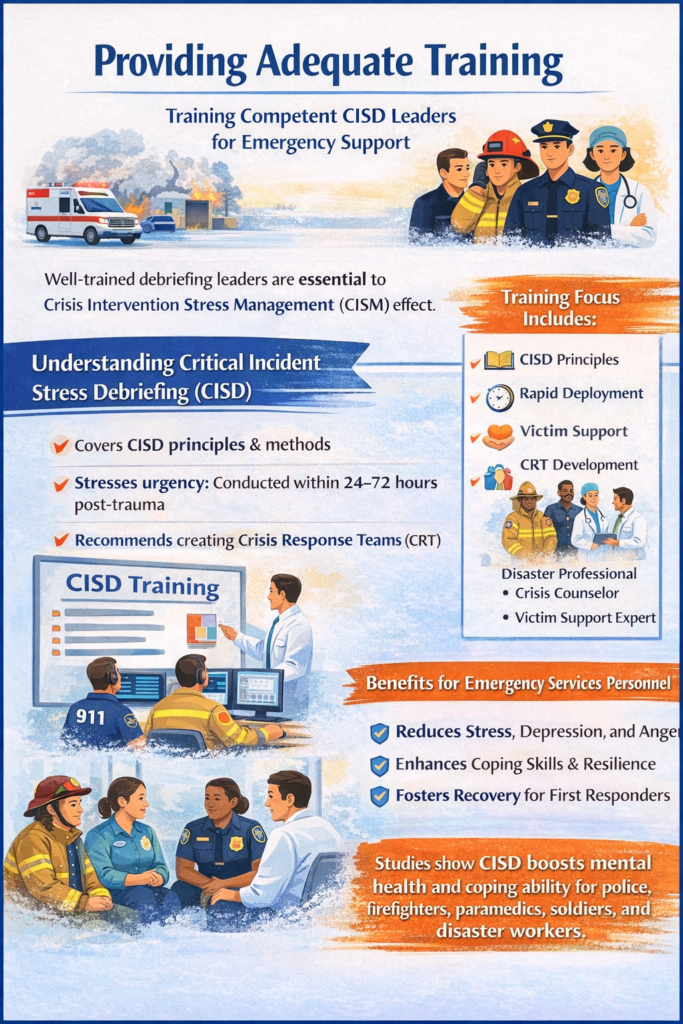
Providing Adequate Training

To pull off CISD well, the folks leading these debriefings need to know what they’re doing. Training them up to snuff isn’t optional, it’s necessary. The American Academy of Experts in Traumatic Stress stresses how key it is for people to be well-versed in CISD moves to help out after trauma (AAETS).

Training camps gotta cover all the ins and outs of CISD—what it’s about and how to do it, all the way to the finer points like getting in there fast. Fact is, CISD works best when you get on it right away, ideally within 24 to 72 hours after the trauma (AAETS).

To kick it up a notch, organizations should think about pulling together Crisis Response Teams (CRT) with experts from all corners, like disaster pros, victim help folks, and crisis specialists. When stuff hits the fan, these teams can swoop in with emergency support and a calm, guiding hand. Putting resources into building these teams and beefing up training means everyone’s better prepped to deliver the CISD goods when it counts in an emergency.

Target Audience Perspectives

Alright, let’s get real about Critical Incident Stress Debriefing (CISD). If you’re in the thick of it like our brave police officers, firefighters, paramedics, and search-and-rescue folks—or if you’re a healthcare superhero, from nurses and doctors to mental health pros—you know stress can pile up quick. This CISD isn’t just some fancy acronym; it’s a lifeline when things get heavy.

Benefits for Emergency Services Personnel

When the going gets tough, it’s good to have a secret weapon against stress and all its ugly buddies like depression and anger. Studies say emergency personnel and those prehospital heroes see big mood improvements after taking part in CISD sessions within 24 hours of a mind-wracking event. It’s like hitting a reset button for the soul (source).

And there’s more—CISD has done wonders for all sorts of folks, from soldiers and prisoners of war to hostages and disaster workers. Those narratives might sound like bedtime stories, but guess what? Scholarly works back it up. CISD and its stress-busting buddies are showing real promise in helping our frontline workers process the heavy stuff (source).

Folks who’ve gone through CISD tend to show real grit and bounce-back power. Take it from those who’ve walked this road—they’ve got better coping chops and resilience, making it easier to handle their tough gigs. By giving a safe space to process all that chaos, CISD helps these superheroes heal and stay strong, even when the going gets rough.

Recommendations and Future Directions

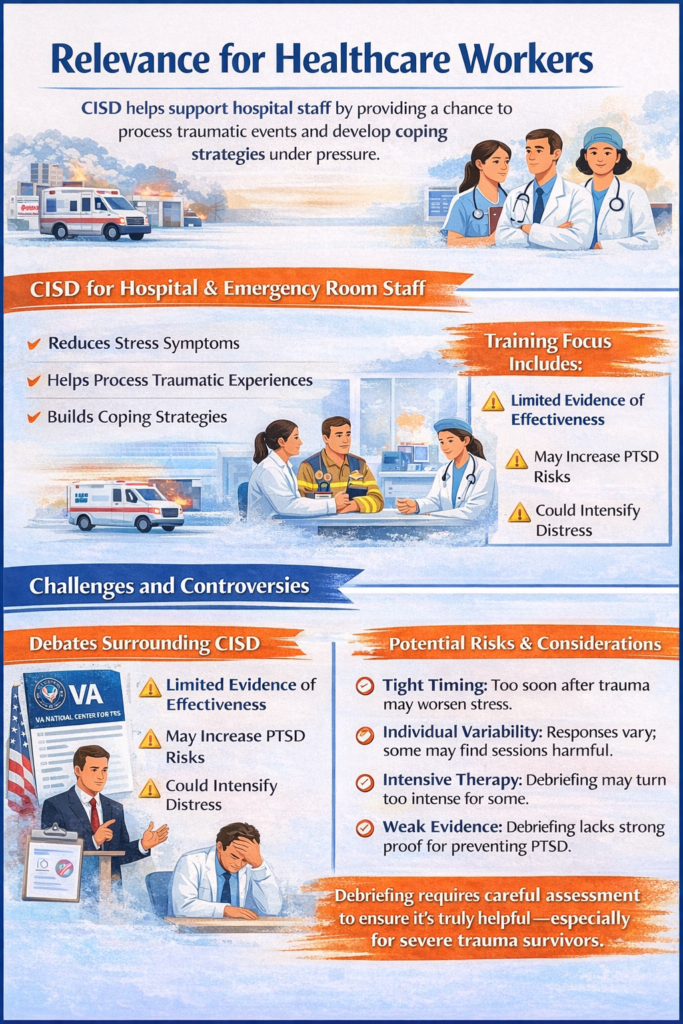
Relevance for Healthcare Workers

In the hospital hallways and emergency rooms, CISD holds serious clout. When things go haywire, having CISD baked into the plan to support on-call staff, as well as volunteer squad members and 911 maestros, is clutch. It also takes specially trained folks to run these debriefs right—knowing how to keep stress reactions in check is key (source).

Healthcare pros who’ve hit up CISD often see a drop in stress symptoms, and let’s face it, that’s some critical relief. By jumping into these sessions, they get the chance to work through feelings, recount their experiences, and whip up some smart strategies to keep their cool under pressure.

So, for both our emergency services whizzes and healthcare warriors, CISD lays down a solid foundation for handling life’s toughest challenges. Given the nod it deserves, they can beef up their resilience, uphold their mental wellness, and press on with their mission to save the day—even when the chips are down.

Challenges and Controversies

Debates Surrounding CISD

There’s been quite a bit of chatter in the mental health world about Critical Incident Stress Debriefing (CISD)—a method long used in emergency situations to help people deal with immediate stress after serious events. But not everyone is on board with it anymore. Some studies and guidelines, especially those from groups like the VA National Center for PTSD, suggest that CISD might not be as helpful as once thought. In fact, they say it might not even cut down on the chances of developing PTSD, depression, or anxiety. There’s even some buzz about it possibly having negative effects, making symptoms worse for some folks. This has people rethinking how, when, and for whom CISD should be used.

Potential Risks and Considerations

Here’s the tricky part with CISD: there are concerns that it might do more harm than good, especially if someone has faced really intense trauma. Turns out, instead of helping people chill out after a tough event, talking it out in these debriefing sessions might just wind folks tighter, ramping up their distress rather than easing it.

Not every session works like magic, and for some, talking out the trauma can actually make it feel worse. Plus, there’s this fine line between debriefing and diving deep into therapy during these sessions, which might not be what’s best for everyone. Some big names, like the International Society for Traumatic Stress Studies, say there isn’t a lot of solid proof that debriefing stops trauma-related issues before they start.

Debriefing might still have its time and place, especially as a moment to spot folks who need more, teach them what to watch out for, guide them toward extra help, or give a nudge of support from groups and organizations. For people really at risk of PTSD or other mental health battles after critical events, though, something more intensive might be necessary. Bottom line: we gotta tread carefully and use debriefing thoughtfully, making sure it’s grounded in evidence and used where it truly fits.

When it comes to helping emergency service folks deal with tough situations, it’s super important to stick to what works and pay attention to new strategies and methods in handling stress. Doing a good job here means a huge boost to how well people bounce back and keep going after scary stuff happens.

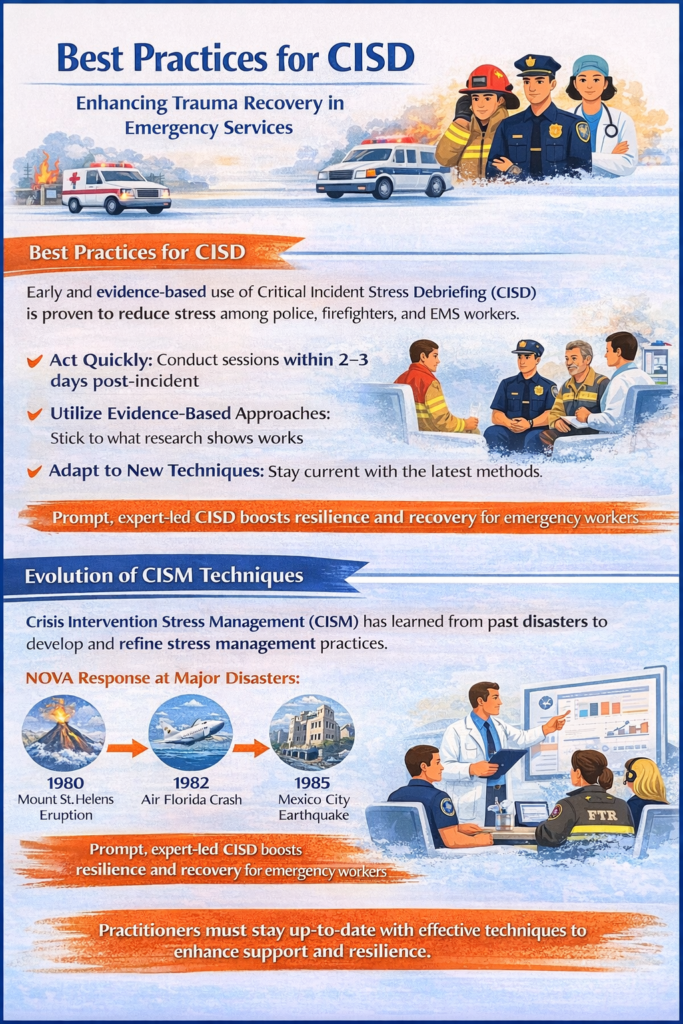
Best Practices for CISD

It’s no secret that Critical Incident Stress Debriefing (CISD) really helps manage stress for police, firefighters, and EMS workers. Folks who get CISD after a rough event tend to stress less than those who don’t try it out (NCBI).

If you want the best outcome, jump on CISD within two to three days after the incident. Catching it early can mean fewer stress meltdowns later (American Academy of Experts in Traumatic Stress). A deep dive into what went down helps folks heal, find their groove, and get back on track with normal life.

Evolution of CISM Techniques

Over the years, big events have played a part in shaping how we help people handle stress. The National Organization for Victim Assistance (NOVA) has been at the front line helping out during disasters like the eruption of Mount St. Helens in 1980, the Air Florida crash in 1982, and Mexico’s earthquake in ’85, which fine-tuned how we respond in crises (AAETS).

As we keep learning and growing in how we handle stress from critical incidents, practitioners need to keep up with what’s new and what works best. By getting on board with the latest methods and tweaking our techniques, emergency service pros can step up their game in offering solid support and helping people stay strong after tough times.

Share this article:
Drarjony
About the Author

Drarjony

Drarjony is a contributor at this publication.

Leave a Reply

Your email address will not be published.Required fields are marked *