
Critical Incident Stress Management Overview
I’ve seen firsthand how dealing with critical incidents can weigh heavily on folks, especially those who rush in when everyone else is rushing out, like first responders or emergency workers. Healthcare heroes, mental health pros, and, honestly, anyone caught up in traumatic events will know. That’s why getting a grip on Critical Incident Stress Management (CISM) matters. Trust me, this stuff lends a hand in keeping our mental heads above water and building up some fortitude when life pokes.
Understanding CISD Importance
Imagine this: right after the chaos of a critical event, you get a chance to unpack your bag of emotions in a safe zone. That’s what Critical Incident Stress Debriefing (CISD) is all about. It’s a structure that lets you sift through your feelings and the chaos swirling in your mind (BetterHelp). This heads-up strategy is like an emotional toolbox, warding off those stress and trauma goblins that lurk after the storm, and nudging you towards gaining some mental armor.
Benefits of CISD
CISD shines brightest for the brave ones standing in the line of chaos—emergency crews, law enforcers, firefighters, disaster teams, and troops (BetterHelp). By diving into this debriefing, folks can:
- Tackle emotional waves and physical reactions that sneak up after a crisis.
- Snooch out the “whys” behind their reactions and figure out new ways to cope.
- Tap into backing from fellow warriors and mental health experts.
- Sniff out lingering effects from the incident and hatch plans to tackle them.
- Makes it easier to gear up and return to work or back to the grind of life.
Thanks to Dr. J. T. Mitchell and Joseph A. Davis, Ph.D., there’s a robust seven-step map for this process that digs deep into the soul of mental wounds (BetterHelp). By creating that cozy cocoon for folks to spill their thoughts and feelings, CISD does an enormous service in minding mental health and staving off long-haul issues like PTSD, anxiety, or depression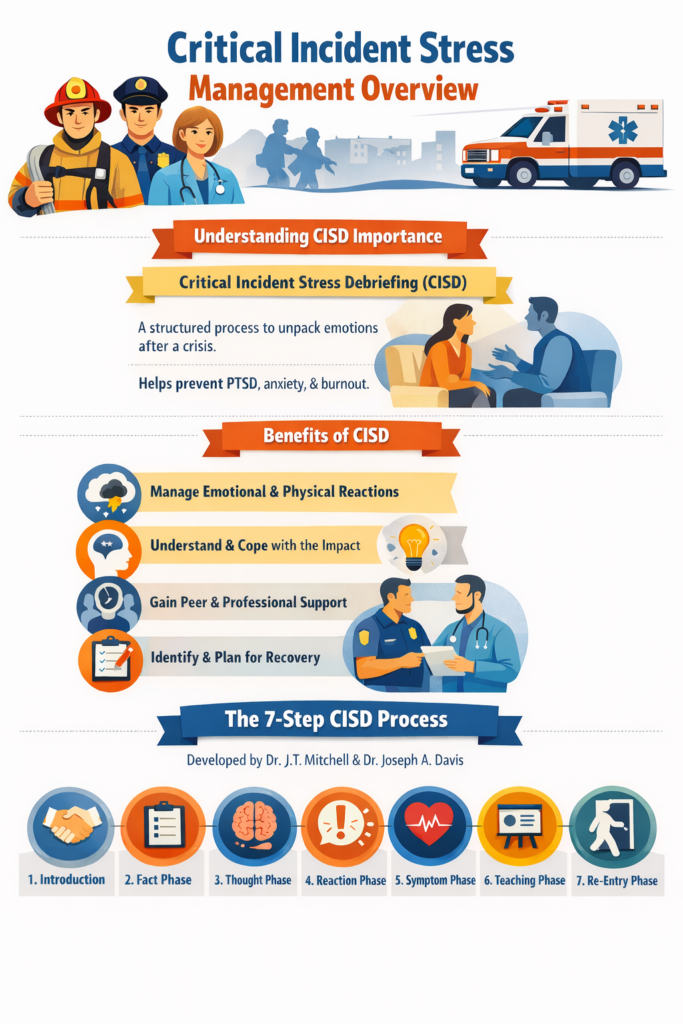
The Seven Steps of CISD.
Handling stress from overwhelming incidents ain’t easy, but there’s a handy method called Critical Incident Stress Debriefing (CISD). It’s like a seven-step you-can-do-this plan from Dr. J.T. Mitchell and Joseph A. Davis, Ph.D., helping folks tackle life when it feels like a movie went wrong. Let’s break down these steps:
Figuring Out What Happened
First things first, you gotta know what you’re dealing with. This step’s all about measuring how the incident shook folks up emotionally and mentally. By sizing up the situation, you can dish out the right kind of help without playing a guessing game.
Spotting Safety Concerns
Next, we need to sniff out any safety red flags, especially for those in gritty jobs like EMTs or firefighters. It’s about making sure everyone’s secure and there’s no lingering danger waiting to pounce when backs are turned.
Letting it All Out
Here’s where folks get to just talk. Sharing thoughts and feelings in a supportive circle, kind of like a group hug for the mind, helps release pent-up emotions. This step lets people pour it all out, which is a huge relief.
Picturing What’s Next
Being ready for surprise flare-ups of emotions is smart. This step helps folks brainstorm how they might feel down the line and craft a game plan for when those emotions come knocking again.
Playing Detective with Impacts
Time to play detective and piece together how the incident has messed with everyone. This structured walkthrough helps identify the nitty-gritty of the ordeal, so everyone can tackle what needs fixing.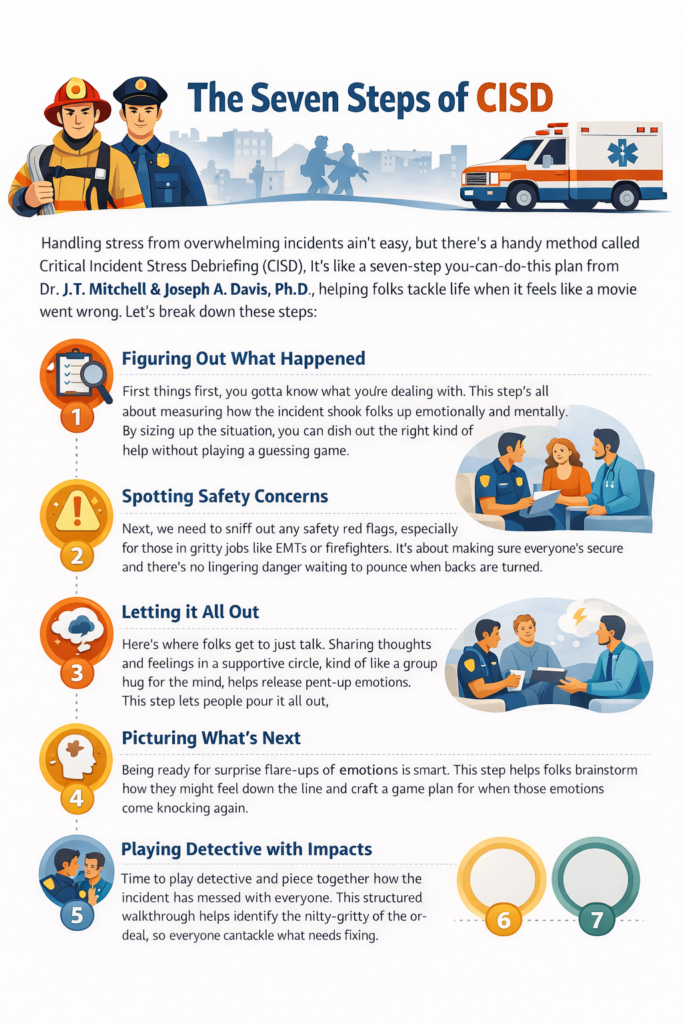
Wrapping it Up
No good chat ends without tying up loose ends. Acknowledging all the good vibes and support received acts like a big group high-five. It’s the moment to recognize the strength that’s been shown and ease into a calmer mindset.
Easing Back Into Life
Finally, it’s all about taking baby steps back into the world. Helping each other pick up where life left off, remembering self-care is crucial for easing the return to daily routines.
With the seven steps of CISD, folks facing trauma find a straightforward path to healing. It gives them a steady hand to rebuild and regain their footing after life’s shaken them to the core.
Effectiveness and Research Findings
In the world of Critical Incident Stress Debriefing (CISD), folks have done a bunch of research to see both the perks and pitfalls of this method.
Positive Outcomes of CISD
Loads of research shows that CISD can really help people who’ve been through tough situations. Like, a bunch of studies found that those who got help with CISD right after something traumatic felt less depressed, angry, and stressed out overall. Many emergency workers who sat down for debriefing chats after things like natural disasters said they felt better mentally. It seems CISD does help trim down the mental distress.
Take this one super thorough study—it looked at five other studies and talked to 341 grown-ups—showed CISD really worked well in easing bad mental outcomes. The magic of CISD lies in making reactions feel more normal, teaching about health, and stressing on ways to cope, which seems to help folks bounce back and heal after really tough events.
Conflicting Research Results
Even though some people swear by the perks of CISD, not everyone agrees. Some research shows good stuff about CISD helping people feel less moody and stressed after bad events, but some experts say the effects aren’t so cut and dry.
A few studies pointed out that digging deep into tough memories during CISD chats might actually make PTSD symptoms worse. In some cases, folks who did CISD ended up with more PTSD, anxiety, and depression compared to those who skipped it.
These critiques show it’s super important to check who’s suitable for CISD and put it inside a bigger plan for dealing with critical stress, run by folks who know their stuff. When integrated into a larger plan, CISD can be more beneficial, while also sidestepping some of its downsides.
Implementing CISD
CISD, or Critical Incident Stress Debriefing, isn’t just another item on a checklist; it’s a lifeline for those grappling with intense situations on the job. When it’s time to roll out CISD, you gotta get your ducks in a row, think about who it’s for, what snags you might hit, and the best ways to tackle it.
Target Professions
So, who really benefits from this CISD thing? We’re talking about folks who spend their 9-to-5 (and then some) facing tough situations head-on:
- Rescue and emergency crew
- The boys and girls in blue
- Those brave firefighters
- Disaster response teams
- Our military personnel
These people deal with stuff most of us wouldn’t want to imagine. That’s why a planned debriefing can really help them keep balanced and manage stress from critical incidents. It’s all about giving a helping hand when they need it most.
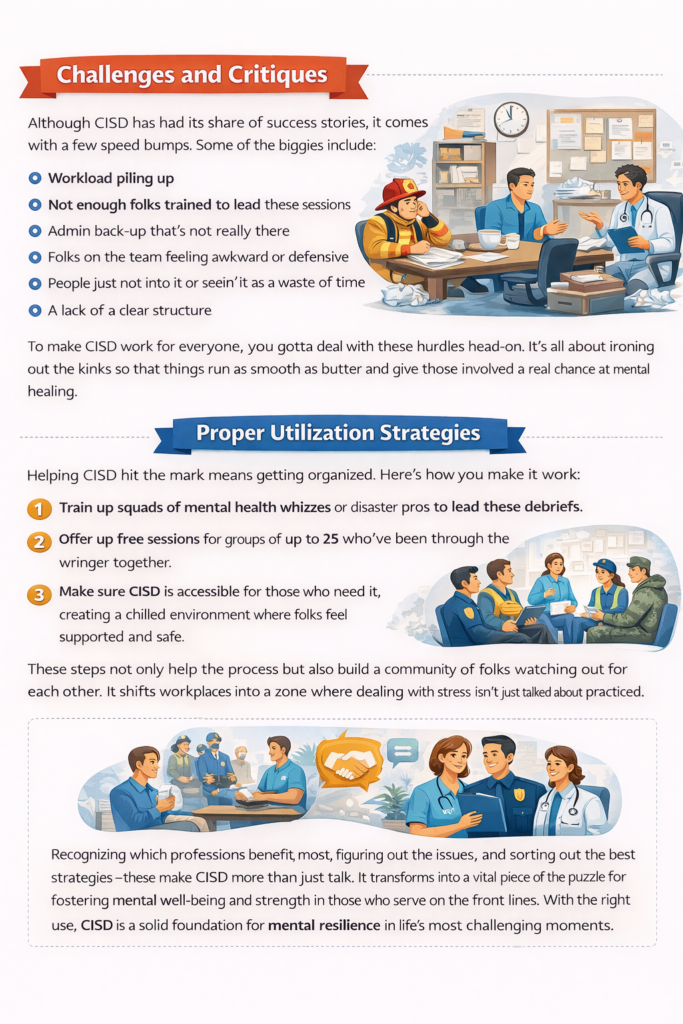
Challenges and Critiques
Although CISD has had its share of success stories, it comes with a few speed bumps. Some of the biggies include:
- Workload piling up
- Not enough folks trained to lead these sessions
- Admin back-up that’s not really there
- Folks on the team feeling awkward or defensive
- People just not into it or seein’ it as a waste of time
- A lack of a clear structure
To make CISD work for everyone, you gotta deal with these hurdles head-on. It’s all about ironing out the kinks so that things run as smooth as butter and give those involved a real chance at mental healing.
Proper Utilization Strategies
Helping CISD hit the mark means getting organized. Here’s how you make it work:
- Train up squads of mental health whizzes or disaster pros to lead these debriefs.
- Offer up free sessions for groups of up to 25 who’ve been through the wringer together.
- Make sure CISD is accessible for those who need it, creating a chilled environment where folks feel supported and safe.
These steps not only help the process but also build a community of folks watching out for each other. It shifts workplaces into a zone where dealing with stress isn’t just talked about but practiced.
Recognizing which professions benefit most, figuring out the issues, and sorting out the best strategies—these make CISD more than just talk. It transforms into a vital piece of the puzzle for fostering mental well-being and strength in those who serve on the front lines. With the right use, CISD is a solid foundation for mental resilience in life’s most challenging moments.
Importance of Support and Training
When dealing with tough times in critical incident stress management, support and training are the unsung heroes helping folks digest the heavy stuff. Don’t underestimate the value of healthcare workers’ insights, figuring out who needs what kind of training, and recognizing what’s stopping effective chats after shake-up events.
Challenges and Critiques
Although CISD has had its share of success stories, it comes with a few speed bumps. Some of the biggies include:
- Workload piling up
- Not enough folks trained to lead these sessions
- Admin back-up that’s not really there
- Folks on the team feeling awkward or defensive
- People just not into it or seein’ it as a waste of time
- A lack of a clear structure
To make CISD work for everyone, you gotta deal with these hurdles head-on. It’s all about ironing out the kinks so that things run as smooth as butter and give those involved a real chance at mental healing.
Proper Utilization Strategies
Helping CISD hit the mark means getting organized. Here’s how you make it work:
- Train up squads of mental health whizzes or disaster pros to lead these debriefs.
- Offer up free sessions for groups of up to 25 who’ve been through the wringer together.
- Make sure CISD is accessible for those who need it, creating a chilled environment where folks feel supported and safe.
These steps not only help the process but also build a community of folks watching out for each other. It shifts workplaces into a zone where dealing with stress isn’t just talked about but practiced.
Recognizing which professions benefit most, figuring out the issues, and sorting out the best strategies—these make CISD more than just talk. It transforms into a vital piece of the puzzle for fostering mental well-being and strength in those who serve on the front lines. With the right use, CISD is a solid foundation for mental resilience in life’s most challenging moments.