
Understanding Panic Attacks in Specific Populations
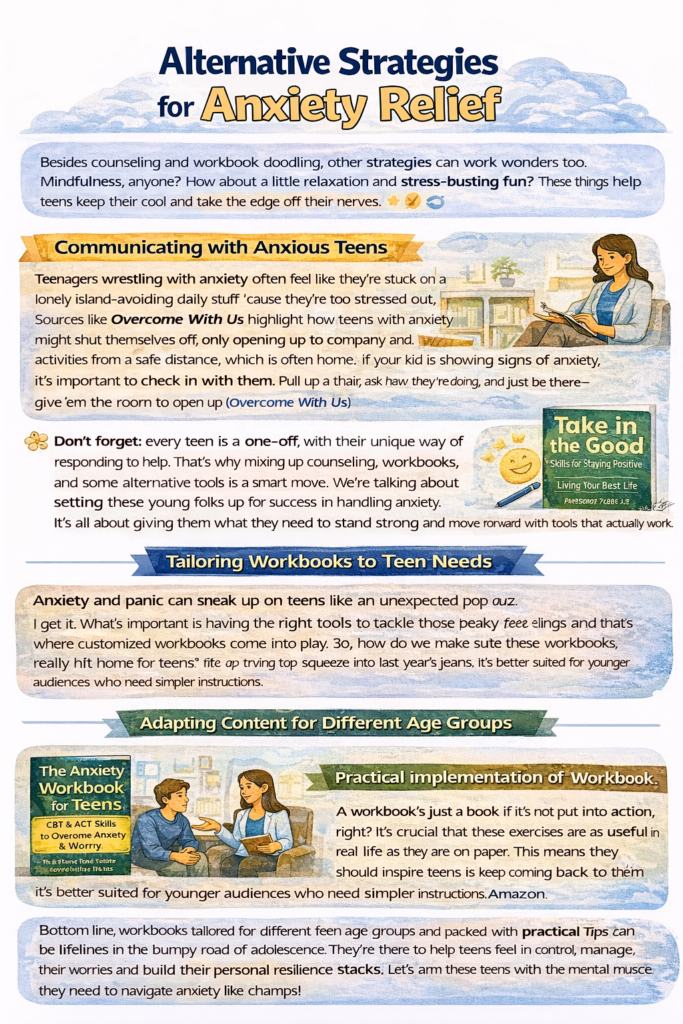
Panic attacks can really throw a wrench into the lives of groups like teens and their caregivers. Getting what these panic attacks do specifically to these folks is key to giving the right kind of backup and guidance.
Impact on Teens
Imagine being a teenager—awkward enough, right? Then throw in panic attacks, and you’ve got a cocktail that’s both overwhelming and distressing. When these attacks start creeping in during adolescence, they can mess with the basics: your day-to-day, hanging out with friends, even getting your homework done. Panic attacks make teens feel lost, scared, and utterly alone with their intense symptoms running the show.
Tools like the “Panic Workbook for Teens” come into play here, giving teens a way to pinpoint those thoughts that fuel their anxiety. This book is like a roadmap—it’s got step-by-step directions teens can follow to handle these panic monsters and take back control over their emotions.
The “Panic Attacks Workbook for Teens,” which hit the shelves in March 2021, is another gem. It’s packed with strategies grounded in therapy designed to help teens tackle panic head-on and keep anxiety at bay (Amazon). With these resources, teens can navigate through the stress, fear, and gloominess that panic attacks often drag along, standing strong against their emotional storms.
Effects on Caregivers
Now, let’s switch gears a bit. Panic attacks don’t just stop at teenagers—they take a toll on caregivers too. If you’re watching your teen spiral into a panic attack, it’s tough. Helplessness and uncertainty can loom large as you wonder how in the world to best support them. Seeing a loved one in such a state of anxiety can stir up distress and worry in their caregivers.
In these scenarios, having a game plan is super important. Caregivers need guidance on how to communicate with anxious teens and offer real help. They can lean on resources like the Cognitive Behavioral Therapy (CBT) Workbook for Anxious Teens, which offers interventions and exercises that are spot-on for teens learning to handle their anxiety in healthier ways (Amazon).
Grasping how panic attacks impact both teens and their caregivers is that initial, crucial step. It paves the way for taking real action against these challenges, paired with getting the right kind of support. Good communication, therapy-based workbooks, and empowering teens with practices like CBT make a huge difference. They’re the tools to keep these unique pressures in check, making those panic shadows shrink away.
Best Workbooks for Teens with Anxiety and Panic
So, you’ve got a teen dealing with anxiety or panic attacks? That’s tough, no doubt about it. But don’t worry, there are workbooks out there that might just be what they need to start seeing light at the end of the tunnel. Here are five top choices that could lend a hand.
Conquer Negative Thinking for Teens
In “Conquer Negative Thinking for Teens: A Workbook to Break the Nine Thought Habits That Are Holding You Back,” teens are given relatable, simple tools to shake off those pesky negative thoughts (ADAA). This isn’t just any workbook; it’s a guide that could help them loosen the grip anxiety has on their lives.
Conquer Your Fears and Phobias for Teens
“Conquer Your Fears and Phobias for Teens: How to Build Courage and Stop Fear From Holding You Back” is like a helping hand for those teenage years filled with fear and worry. It empowers with strategies that face fears and phobias, giving a much-needed boost to tackle panic headfirst.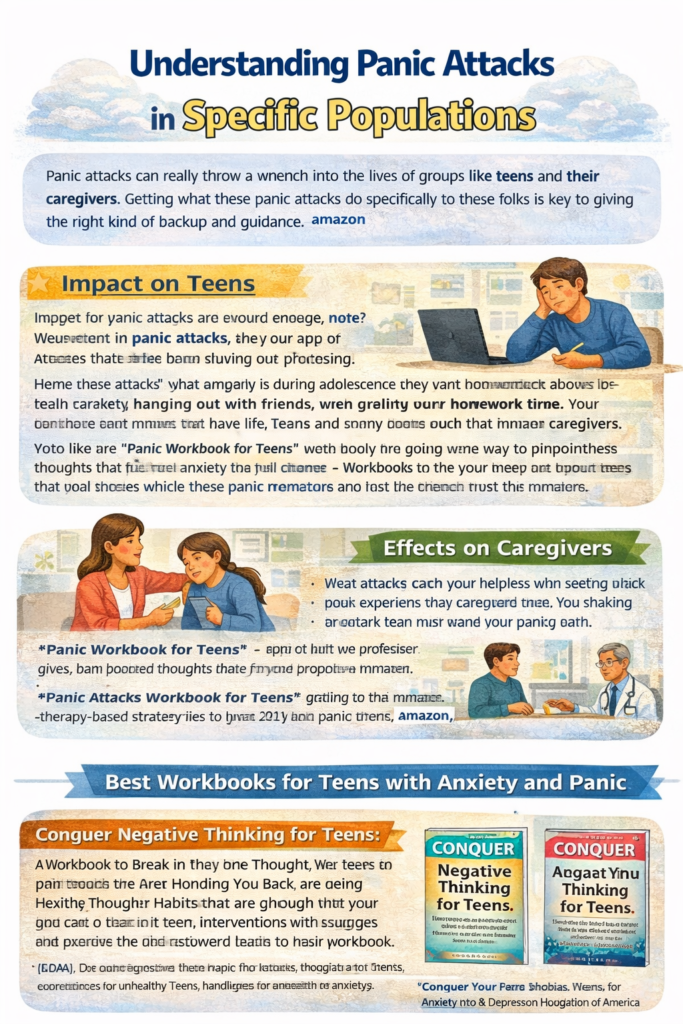
Rewire Your Anxious Brain for Teens
“Rewire Your Anxious Brain for Teens: Using CBT, Neuroscience, and Mindfulness to Help You End Anxiety, Panic, and Worry” is a bit of a Swiss Army knife. It offers a mix of CBT, brain science, and mindfulness exercises to help teens switch up their mental wiring and find some calm in the storm.
The Anxiety Survival Guide for Teens
Dive into “The Anxiety Survival Guide for Teens: CBT Skills to Overcome Fear, Worry, and Panic” for a survival pack of CBT techniques. It’s a lifesaver for learning how to manage fear and turn down the volume on panic.
The Worry Workbook for Teens
“The Worry Workbook for Teens” presents practical CBT tools to crack the never-ending cycle of worry. It’s about guiding teens with specific steps to challenge anxious thoughts and find healthier ways to cope.
These workbooks are more than just books—they’re companions in the battle against anxiety and panic. With relatable exercises and useful tools, they stand by as teens learn to gain control, face their fears, and thrive.
Specific Workbook Reviews and Recommendations
When helping teens tackle anxious feelings and panic, having the right workbook can really make a difference. Below are some workbook reviews and suggestions that have been game-changers for teens dealing with anxiety and panic attacks.
Managing Panic Attacks – A Workbook Review
The “Panic Attacks Workbook for Teens,” released on March 23, 2021, dishes out therapy-based strategies aimed just for teens to handle panic attacks and anxiety like pros. This workbook arms teens with practical tools to sail through panic attacks, offering guidance and a shoulder to lean on during tough times.
Tools for Overcoming Anxiety in Teens
“Rewire Your Anxious Brain for Teens: Using CBT, Neuroscience, and Mindfulness to Help You End Anxiety, Panic, and Worry” stitches together Cognitive Behavioral Therapy (CBT), neuroscience, and mindfulness to help teens get a grip on anxiety. These approaches help teens rethink their thoughts and emotions, giving them a better handle on anxiety and worries.
Cognitive Behavioral Therapy (CBT) Resources
“The Anxiety Survival Guide for Teens: CBT Skills to Overcome Fear, Worry, and Panic” is part of the ‘Instant Help Solutions Series’ and focuses on using CBT techniques to squash fear, worry, and panic in teens (ADAA). CBT hands teens the tools to challenge negative thinking and build coping skills to tackle anxious feelings.
Mindfulness and Anxiety Relief Workbooks
For teens wanting mindfulness tips to ease anxiety, “Conquer Negative Thinking for Teens” and “Conquer Your Fears and Phobias for Teens” are must-haves (ADAA). These workbooks steer teens toward spotting and tackling negative thoughts and fears that can fan their anxiety, helping them build bravery and bounce back.
By diving into these workbooks, teens find structured support and solid strategies to deal with their anxiety and panic attacks. Each workbook offers a mix of unique approaches and tools to help teens build coping skills, resilience, and ultimately face their anxiety challenges head-on.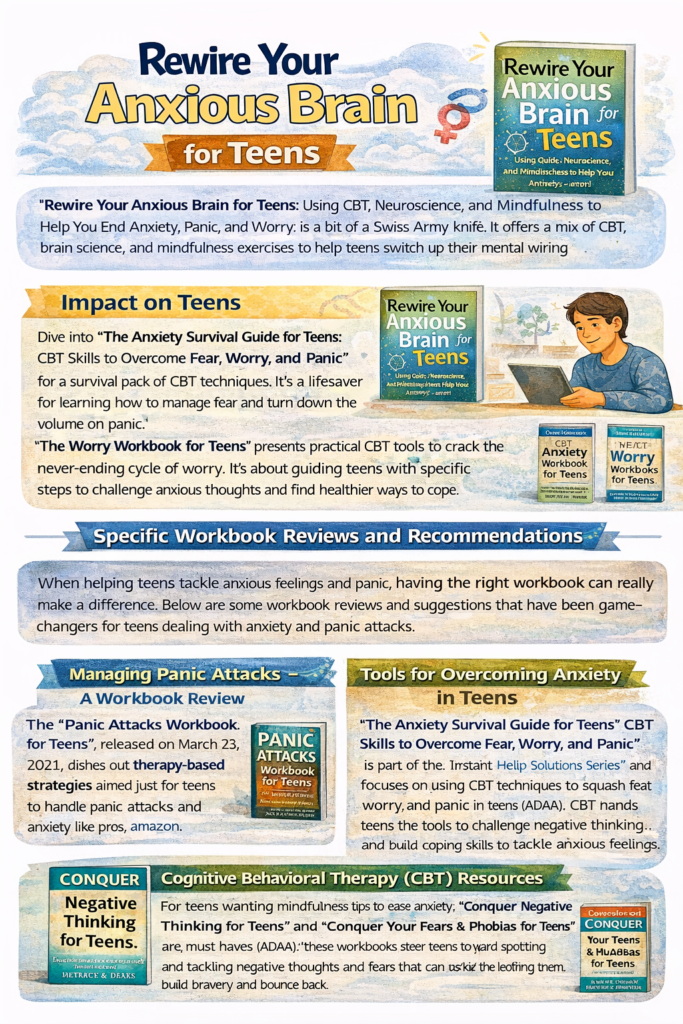
Guidance for Caregivers and Individuals
Taking care of someone dealing with anxiety and panic attacks, especially teenagers, ain’t a walk in the park. Good chats and a bit of professional guidance can really set the stage for improvement and managing those overwhelming feelings.
Communicating with Anxious Teens
Teenagers wrestling with anxiety often feel like they’re stuck on a lonely island—avoiding daily stuff ’cause they’re too stressed out. Sources like Overcome With Us highlight how teens with anxiety might shut themselves off, only opening up to company and activities from a safe distance, which is often home. If your kid is showing signs of anxiety, it’s important to check in with them. Pull up a chair, ask how they’re doing, and just be there—give ’em the room to open up (Overcome With Us).
Just like having heart-to-heart talks, making sure anxious teens feel heard and supported can make all the difference. Let them know their feelings matter; nodding your head along, showing you’re listening, and offering a shoulder to lean on really helps build those trust bridges.
Importance of Seeking Professional Help
If the teenager’s anxiety is running the show, it’s time to get some pros in the mix. Counselors can guide the way, offering up good advice and introducing workbooks that go hand-in-hand with therapy, giving teens some homework to tackle those big feelings of theirs. These workbooks—tailored to anxiety—are packed full of activities and tricks for understanding and wrestling down anxiety.
And hey, don’t just leave it to the counselors. Dive in—with your teen—into those workbook activities. Tag-teaming these exercises not only brings you closer but gives your teen more ways to learn how to handle anxiety’s ugly moments. These workbook gems can help them toughen up and fight back when anxiety tries to get the better of them.
Never forget, grabbing outside help and making use of workbooks can boost anxious teens in understanding their wild emotions and finding healthier ways to cope. Combining counseling, workbook tasks, and steady support sets the stage for a powerful team effort in tackling anxiety and keeping a clear mind.
Additional Support and Resources
Let’s talk about helping our teenagers tackle anxiety and panic. It’s not just a phase they go through; it’s a real struggle. Knowing the kind of support they need can make a big difference. Good counselors guide and offer strategies that actually work for teens trying to get a grip on their feelings.
Role of Counselors in Anxiety Management
When dealing with anxious teens, a solid counselor can be a game-changer. They’re like a lifeline, giving teens tools to work through those intense emotions. Trust me, they know their stuff. Plus, they suggest workbooks that are more than just an extra chore—stuff that teens will find helpful when tied in with one-on-one sessions (Overcome With Us). With counselors on board, teens get that personalized touch, meaning they’re not alone in this.
Combined Approach: Workbooks and Counseling
Pairing up workbooks with counseling can make a world of difference. It’s like having the best of both worlds—structured tools and personal guidance. Workbooks make everything practical. They’re not just full of words; they are a toolkit for real life.
One popular pick for teens fighting anxiety vibes is “The Anxiety Survival Guide for Teens: CBT Skills to Overcome Fear, Worry, and Panic.” It’s crafted by a pro in cognitive therapy who gets what teens need. Aimed at those 13 and up, this gem is packed with exercises designed to tackle anxiety head-on.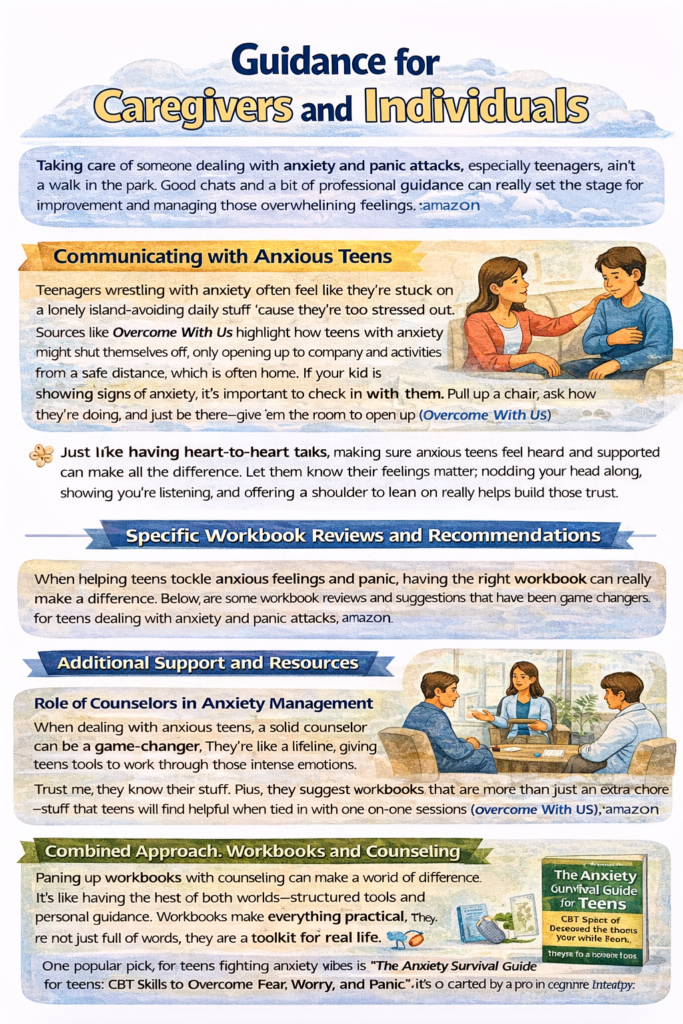
Alternative Strategies for Anxiety Relief
Besides counseling and workbook doodling, other strategies can work wonders too. Mindfulness, anyone? How about a little relaxation and stress-busting fun? These things help teens keep their cool and take the edge off their nerves.
On the flip side, if you’re all about that feel-good vibe, try “Take in the Good: Skills for Staying Positive and Living Your Best Life.” It’s not just a journal but an experience, helping teens zero in on the upside of life. Through its activities, they can boost their feel-good factor and learn to get through tough times with confidence (Overcome With Us).
Don’t forget: every teen is a one-off, with their unique way of responding to help. That’s why mixing up counseling, workbooks, and some alternative tools is a smart move. We’re talking about setting these young folks up for success in handling anxiety. It’s all about giving them what they need to stand strong and move forward with tools that actually work.
Tailoring Workbooks to Teen Needs
Anxiety and panic can sneak up on teens like an unexpected pop quiz. I get it. What’s important is having the right tools to tackle those pesky feelings and that’s where customized workbooks come into play. So, how do we make sure these workbooks really hit home for teens?
Adapting Content for Different Age Groups
When it comes to anxiety workbooks, age matters. Think of it like picking the right playlist for a long road trip; you don’t want to bore your little brother or freak out your grandma. ‘The Anxiety Workbook for Teens’ is a solid starting point. It’s jam-packed with activities that help teens develop a positive self-image and manage worries before they get too big. You can check it out on Amazon if you’re into that sort of thing.
One thing folks love about this workbook is its ability to dish out real tools teens can use to tackle anxiety. It’s got clear instructions and activities that make it feel approachable, even if you’re crawling with nerves. However, keep in mind that some older teens might find it a bit too basic, like trying to squeeze into last year’s jeans. It’s better suited for younger audiences who need simpler instructions.
Practical Implementation of Workbook Exercises
A workbook’s just a book if it’s not put into action, right? It’s crucial that these exercises are as useful in real life as they are on paper. This means they should inspire teens to keep coming back to them even when they’re totally stressed out.
The key here is consistency and being relatable. Teens should find these exercises easy to integrate into their daily routines. It should be like a comfy pair of sneakers that gets broken in over time, not those shoes you wear once to prom.
It’s also worth mentioning whether the workbook is sturdy enough to withstand the wrath of a bustling backpack or a messy desk. Durable workbooks with user-friendly content usually get better feedback, and they’ll be more likely to get picked up again.
Bottom line, workbooks tailored for different teen age groups and packed with practical tips can be lifelines in the bumpy road of adolescence. They’re there to help teens feel in control, manage their worries, and build their personal resilience stacks. Let’s arm these teens with the mental muscle they need to navigate anxiety like champs!