
Understanding Critical Incident Stress
Look, let’s chat about something quite important, especially if you’re in the line of duty dealing with tough moments. We’re diving into the nitty-gritty of managing stress in those critical incidents that pop up for First Responders. We’re talking about those folks who regularly face some pretty intense and gnarly circumstances.
CISM training courses play a critical role in helping professionals navigate crisis situations effectively, especially in high-stress environments.
Definition and Significance
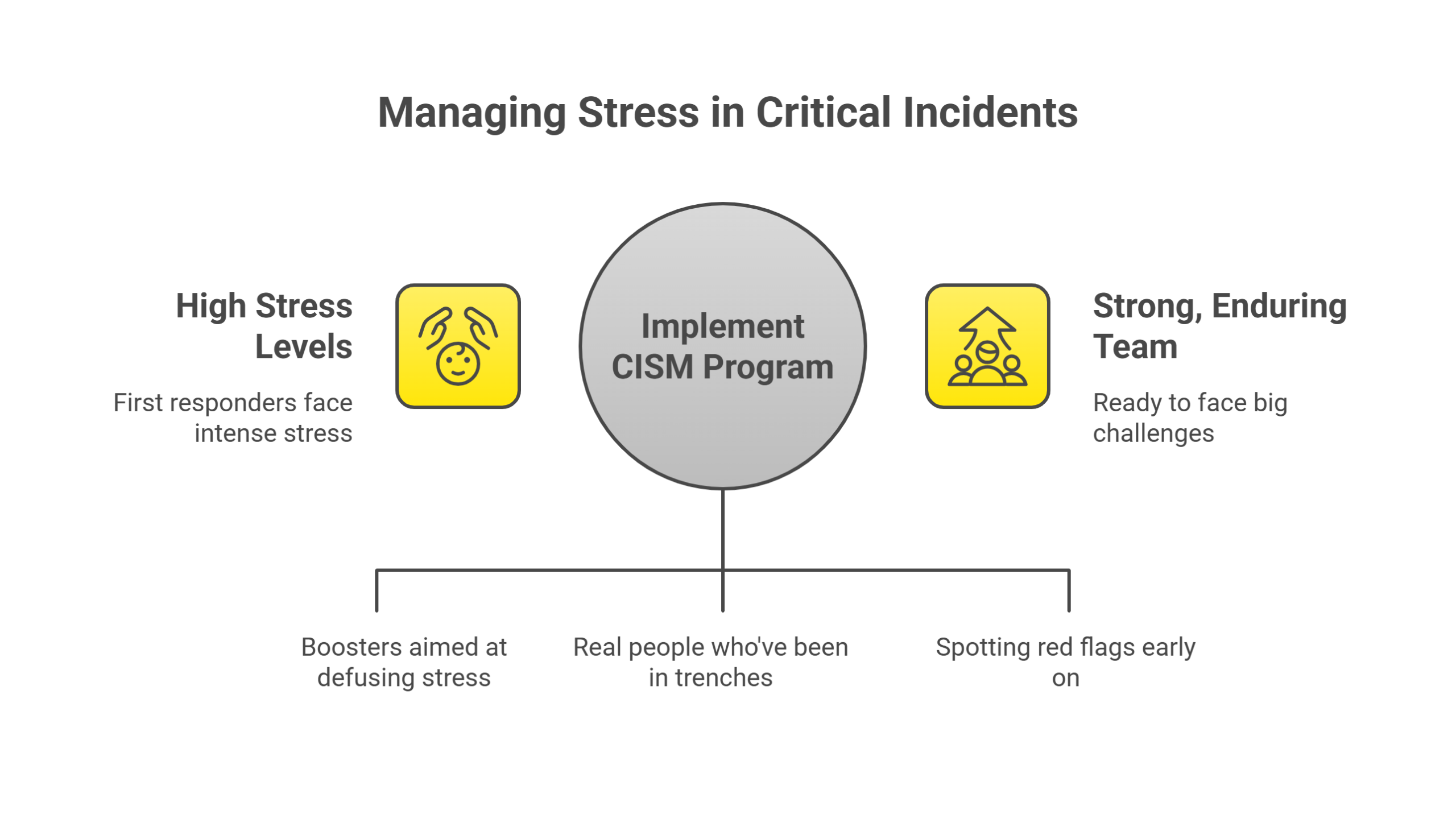
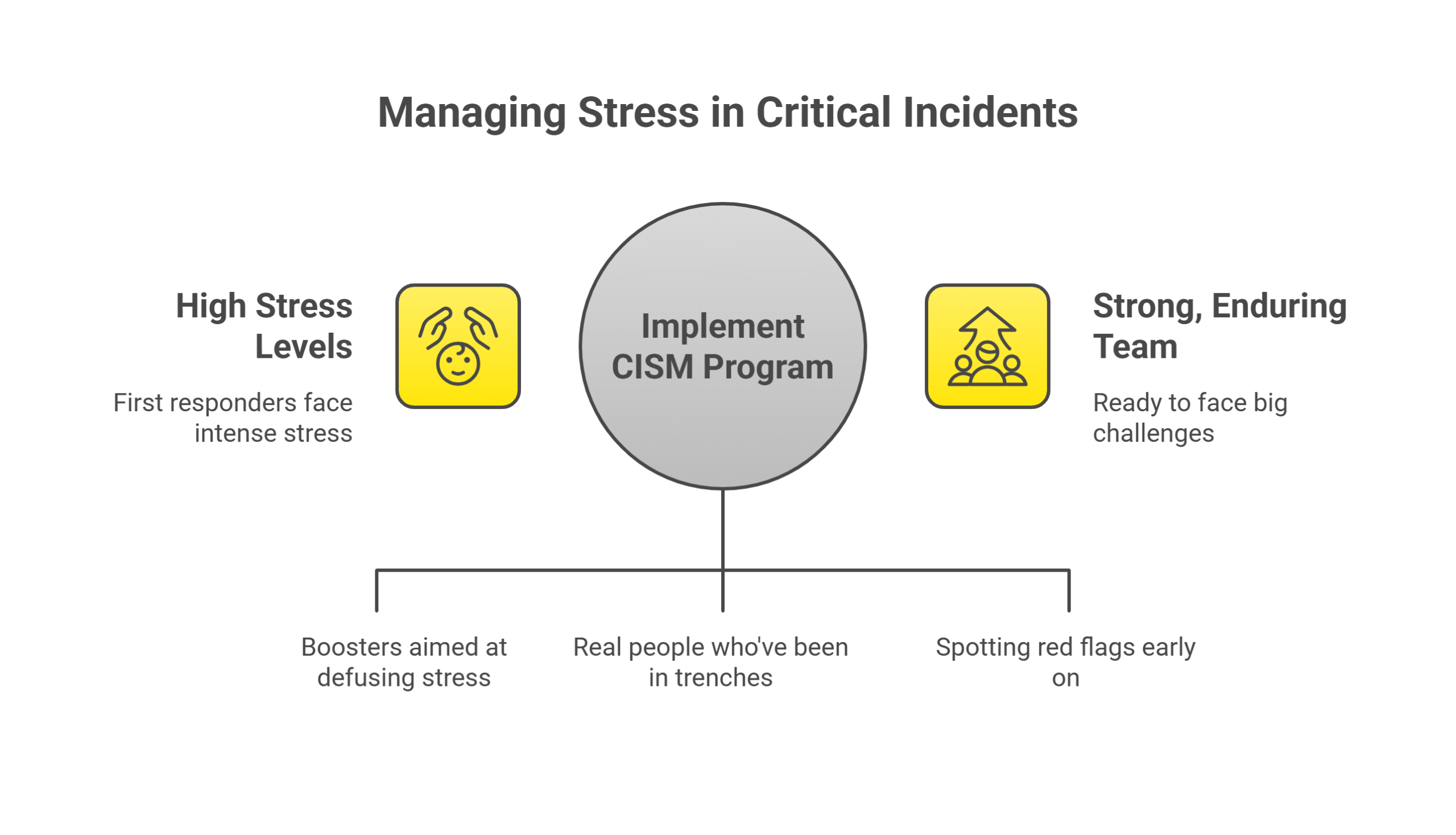
So, Critical Incident Stress Management (CISM) is like a trusty toolkit. It’s packed with things you might need before a storm hits—stuff like education and resilience boosters aimed at defusing work-related stress bombs for people in high-pressure gigs like firefighting or air traffic control. This clever program isn’t just a fancy concept; it’s a lifesaver that provides mental armor to help tackle those events most of us can’t even begin to imagine (National Interagency Fire Center). It’s about giving people the finesse to walk away from incidents without adding unnecessary weight to their shoulders, and maintaining a healthier vibe at work.
Impact on First Responders
Here’s where the rubber meets the road: First Responders—our police, firefighters, paramedics, search-and-rescue teams—are constantly in the thick of things. Their job descriptions might as well say full-time bravery required. Unsurprisingly, this exposes them to a barrage of emotional heaviness that sticks around longer than expected. Using the CISM trick, we bring in peer support—real people who’ve been in the trenches—to smooth out those nerve-racking ripples (IFATCA).
The real game-changer is spotting red flags early on, stuff like anxiety, trouble sleeping, and emotional numbness. It’s a bit like putting out a fire before it spreads. By looking out for our First Responders’ mental health and handing them the right support, we’re gearing up for a strong, enduring team ready to face big challenges without falling apart. Here’s to keeping minds clear and spirits strong when the going gets tough.
Evaluating Critical Incident Stress Management
When it comes to handling the chaos of critical incidents, taking a good look at how well Critical Incident Stress Management (CISM) truly works is pretty important. This framework was originally put together to help out emergency folks wrangle work-related stress, but recent studies haven’t been too kind.
Effectiveness of CISM Programs
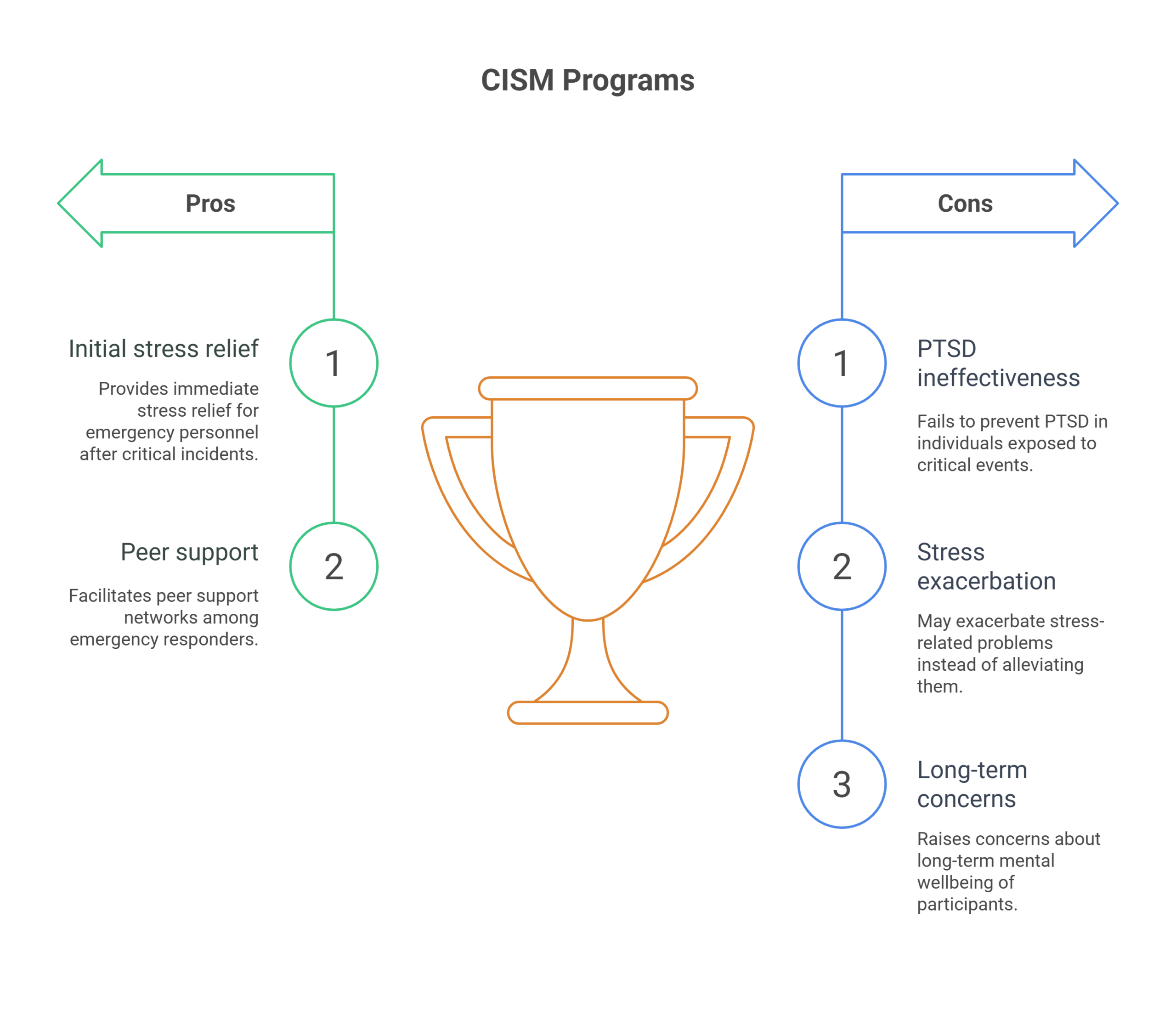
Several new studies are blowing the lid off prior beliefs, suggesting that CISM might fall short on stopping issues like PTSD—yep, even among those who’ve been through the wringer with critical events. Shockingly, some researchers even hint that CISM could be stirring stress-related problems rather than putting them to bed.
The deep dives done through meta-analyses and some heavy-duty trials (RCTs) on CISM aren’t painting a rosy picture. Their insights are starting to question whether CISM is any good at stopping PTSD. Plus, there’re some red flags about what it might be doing to people’s mental wellbeing in the long haul. So, we’re scratching our heads about how much CISM really helps stave off long-term psychological effects.
Research Findings on CISM
The findings are waving a big ol’ caution flag about rolling out CISM blindly in places where emergency responders work. Sure, crisis intervention strategies differ, but the heavy hitter for success is how trauma’s tackled, period.
Until some top-notch studies come back with the green light on CISM’s effectiveness and how to dodge any nasty side effects, it’s wise for outfits and bosses to think twice before making it the go-to prescription for their teams. As the research drill continues, keeping a close eye on, and upgrading, current strategies is key to making sure those who face critical incidents get the support and resilience they deserve.
Components of Critical Incident Stress Management
Critical Incident Stress Management (CISM) is all about supporting folks like First Responders and Emergency Personnel when the going gets tough or even tougher after a harrowing event. It’s packed with handy tools to help you deal with the stress that comes with those high-pressure gigs.
Pre-Incident Education and Preparation
Before things get wild, a little education can go a long way. Think of it as a warm-up session before the big game. Getting training and resources set up ahead of time means that when a crisis hits, everyone’s got a game plan. It’s all about learning the ropes of stress-busting tactics like trauma-focused cognitive-behavioral therapy and crisis intervention strategies. This way, you’re not just standing on the sidelines—you’re in the game, ready to face whatever comes your way.
Crisis Intervention Strategies
This is where the action happens. Crisis intervention strategies jump into action when stuff gets real, offering a lifeline to those who’ve been through the ringer. It’s about jumping in with psychological debriefing and crisis intervention counseling right after something big goes down. The goal? Help folks sort through their feelings and reactions before they morph into bigger issues. By stepping in early, these strategies work to ground individuals, giving them a sturdy footing to start recovering from what they’ve just been through.
Post-Incident Debriefing
Once the dust settles, it’s time for a post-incident debrief. It’s like having a heart-to-heart after all the noise where everyone can finally breathe a little. In this space, folks can chat about what happened, reflect on their response, bond over shared emotions, and chew over any challenges faced head-on during the incident. It offers a moment to seek some reassurance and maybe even laugh or cry it out, knowing they’re not alone. If more help is needed, a nudge towards additional support doesn’t hurt. The spotlight here is on ensuring they don’t walk away cracking under the weight but instead are building back stronger with follow-ups if needed.
By weaving pre-incident education, crisis interventions, and post-drama debriefs into one robust CISM program, organizations can churn out a safety net sturdy enough for those standing at the frontline of stress and adversity. Each piece clicks into place to cater to the varied needs of individuals tossed into high-stress arenas, nurturing mental resilience and keeping well-being in check.
Training Courses in Critical Incident Stress Management
Wrangling critical incident stress management calls for some ace training courses, especially for our heroic first responders and folks who’ve found themselves knee-deep in traumatic events. Figuring out why this training is a lifesaver and what kind of programs are available can make a world of difference in how we handle stress from the chaos.
Importance of Training for Support
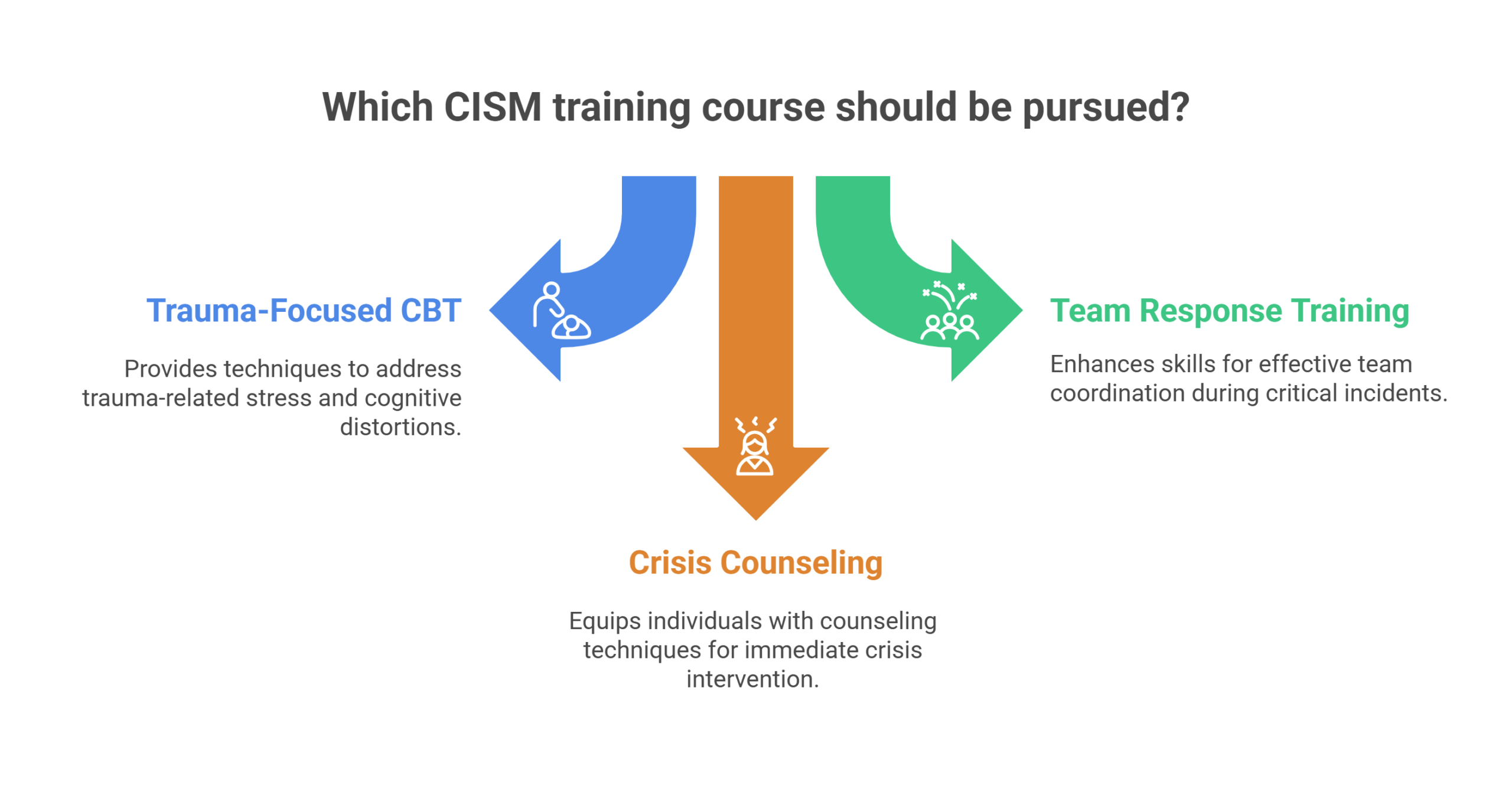
Training in this field isn’t just checking a box; it’s about getting folks up to speed with the skills they need to really back up those dealing with life’s tougher moments. These courses cover heavy hitters like trauma-focused cognitive-behavioral therapy (trauma-focused cognitive-behavioral therapy), techniques for team responses (critical incident response team training), and how to counsel in crisis (crisis intervention counseling techniques).
Jumping into these sessions, first responders pick up tricks to spot critical stress (signs of critical incident stress), handle aftershocks of traumatic events like pros (coping strategies for traumatic events), and boost their mental tough-guy meter in a crisis (psychological resilience in crisis situations). The know-how gained boosts their game with swift action during and after the drama, making sure everyone gets back on track.
Types of Training Programs
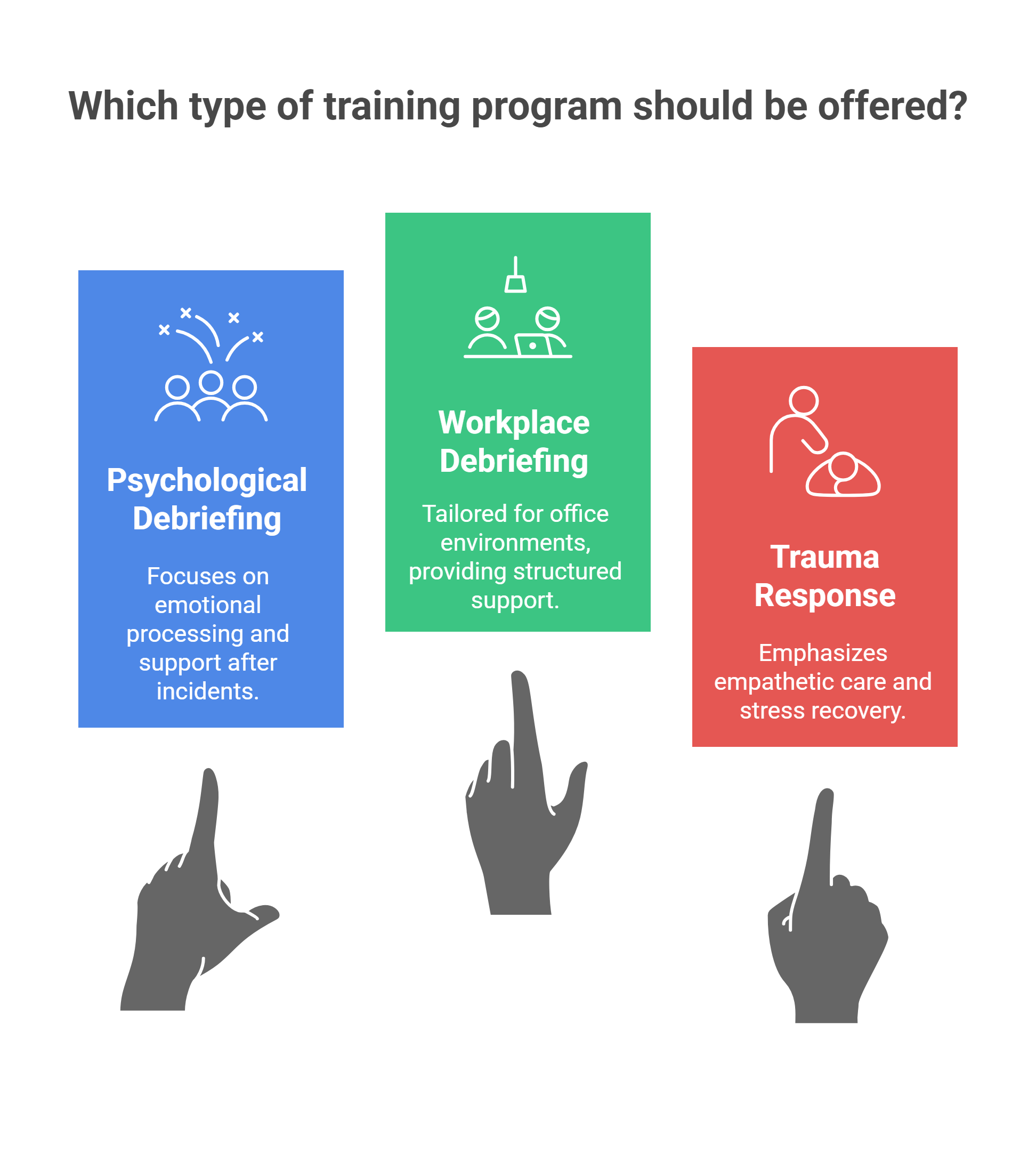
- Psychological Debriefing Techniques: These programs focus on helping folks process the storm of emotions after a critical incident. Key skills include nailing those debriefing sessions, chatting like you mean it, and giving top-notch emotional support.
- Workplace Critical Incident Debriefing: Tailored for the nine-to-fivers, these gems offer tools for the office to handle incidents with a blend of structure and support. The focus here is on conjuring a safe haven where employees can spill their guts and feel listened to.
- Trauma Response Training Programs: These outfits give a masterclass in reacting to traumatic situations. The spotlight’s on empathetic care, being the best darn listener in town, and helping folks recover from the stress after the storm (post-traumatic stress recovery strategies).
Training courses in this area are like a magic toolkit that pumps up folks with superpowers to help and act when the going gets rough. By diving into a range of training sessions, participants can really level up their skills, widen their horizons, and be the backbone for those weathering the storm of critical incidents.
Key Elements of CISM Training
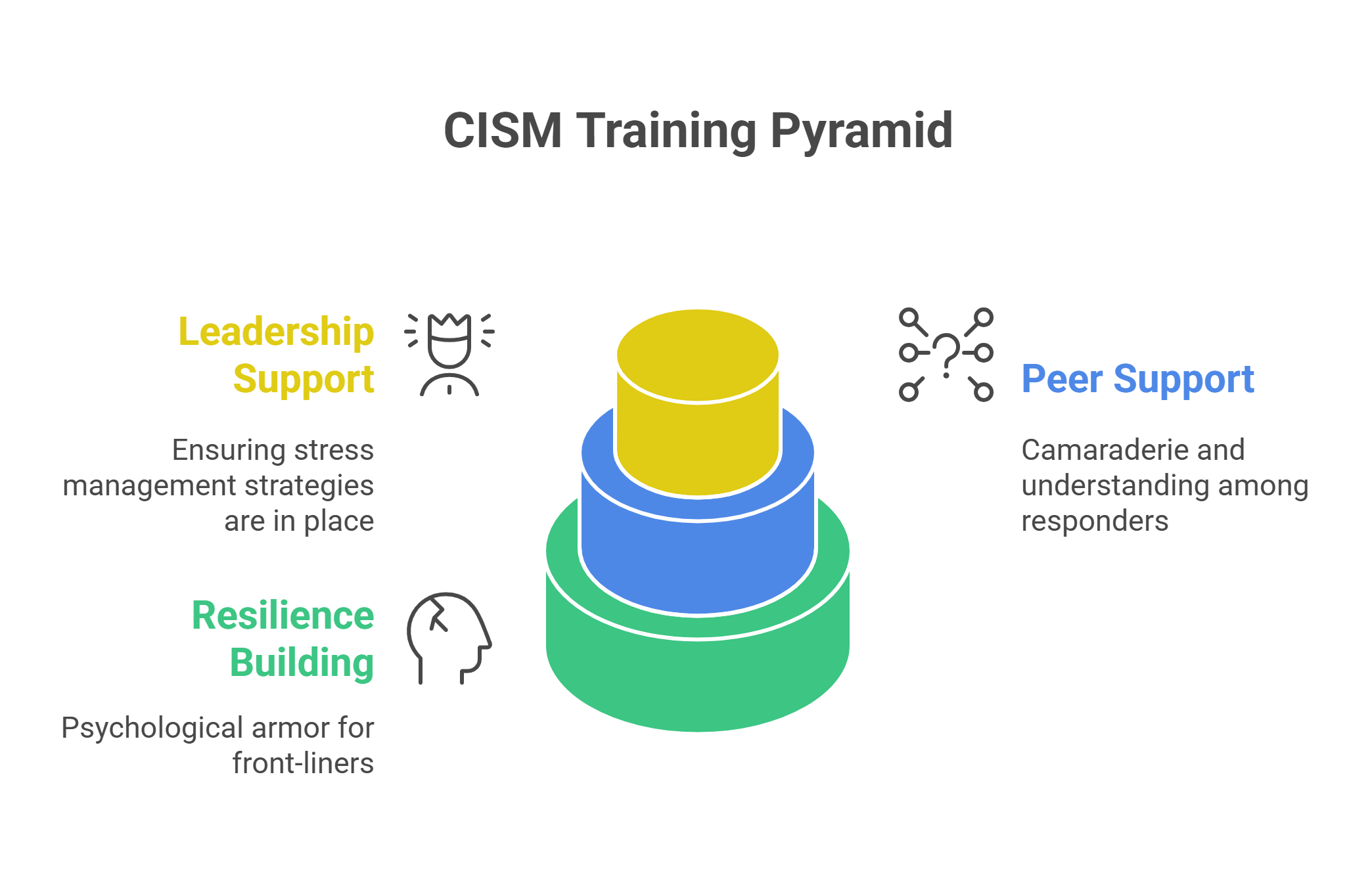
So, you’re getting into the nitty-gritty of critical incident stress management (CISM) training, eh? Let’s talk shop about what really counts when you’re helping folks through really tough times. The biggies in CISM are building a backbone of resilience, having each other’s backs with peer support, and making sure the head honchos know how to keep things sunny on the stress front.
Resilience Building
Picture this: resilience building is like putting on psychological armor for our front-liners. It’s all about giving them the mind-tools they need to tackle hairy situations without losing their cool. Resilience training isn’t just a buzzword; it’s about teaching folks how to spring back from life’s sucker punches, especially when things get dicey. Keeping it together mentally is like maintaining a first responder’s secret superpower.
Activities for toughening up the mind might include ways to chill out, strategies for when things go haywire, and talk therapy that tackles trauma head-on. These shenanigans are all about beefing up one’s mental strength so that when a crisis hits, they’re ready, steady, and not unraveling at the seams.
Peer Support and Resources
What’s better than a big ol’ pep talk from someone who’s been there and done that? Peer support is golden in the CISM lineup. Let’s face it, nobody gets it like a fellow responder. When the chips are down, a shoulder to lean on makes all the difference. Their ears are open, their hearts understand, and they offer real-deal advice when everything goes sideways.
When programs roll out the red carpet for peer support networks, it’s like building a fortress of camaraderie. These lifelines aren’t just there to listen; they’re about compassion, sharing the load, and navigating the storm together when the going gets tough.
Role of Management in CISM
When it comes to management, the suits aren’t just signing off on paychecks – they’re key players in CISM success. Leaders set the tone, and if they’re waving the flag for mental health, that’s half the battle won. Leaders who prioritize CISM efforts create safe spaces where dealing with stress isn’t taboo.
Bosses can roll out sessions on crisis counseling and trauma management to prep their teams for tough days. When managing teams put their weight behind CISM efforts, they’re laying down the groundwork for a supportive, resilient environment where everyone’s mental health is front and center.
So there you have it: weaving resilience building, buddy support, and management’s role into the CISM fabric equips both teams and organizations to face the rough stuff head-on, while still keeping an eye on the mental well-being ball.
Implementing CISM Strategies
Ever been caught in the thick of things and wished you had a game plan? That’s where Critical Incident Stress Management (CISM) strategies come in handy. Think of them as a toolkit for keeping our mental gears turning smoothly, even when life’s pitching curveballs.
Integration in Organizations
So how do we get CISM singing the right tune with a company’s day-to-day groove? It’s all about stitching these strategies into the everyday fabric. Here’s the lowdown:
- Pre-incident education and preparation: Giving folks the heads-up they need before the storm even hits. Loads of resources and training can really arm the team with the know-how to handle whatever comes their way.
- Crisis intervention strategies: Not every fire needs the same extinguisher. Custom-tailoring these strategies lets organizations meet the unique needs of their folks when they’re smack dab in the middle of chaos.
- Post-incident debriefing: Think of this like a mental health pit stop. Swing by, chat about the incident, and keep the gears from getting gunked up with lingering stress.
Rolling out these steps ensures folks don’t feel left in the lurch after dusting off from a crisis. In turn, it builds a strong culture that puts emotional well-being up front.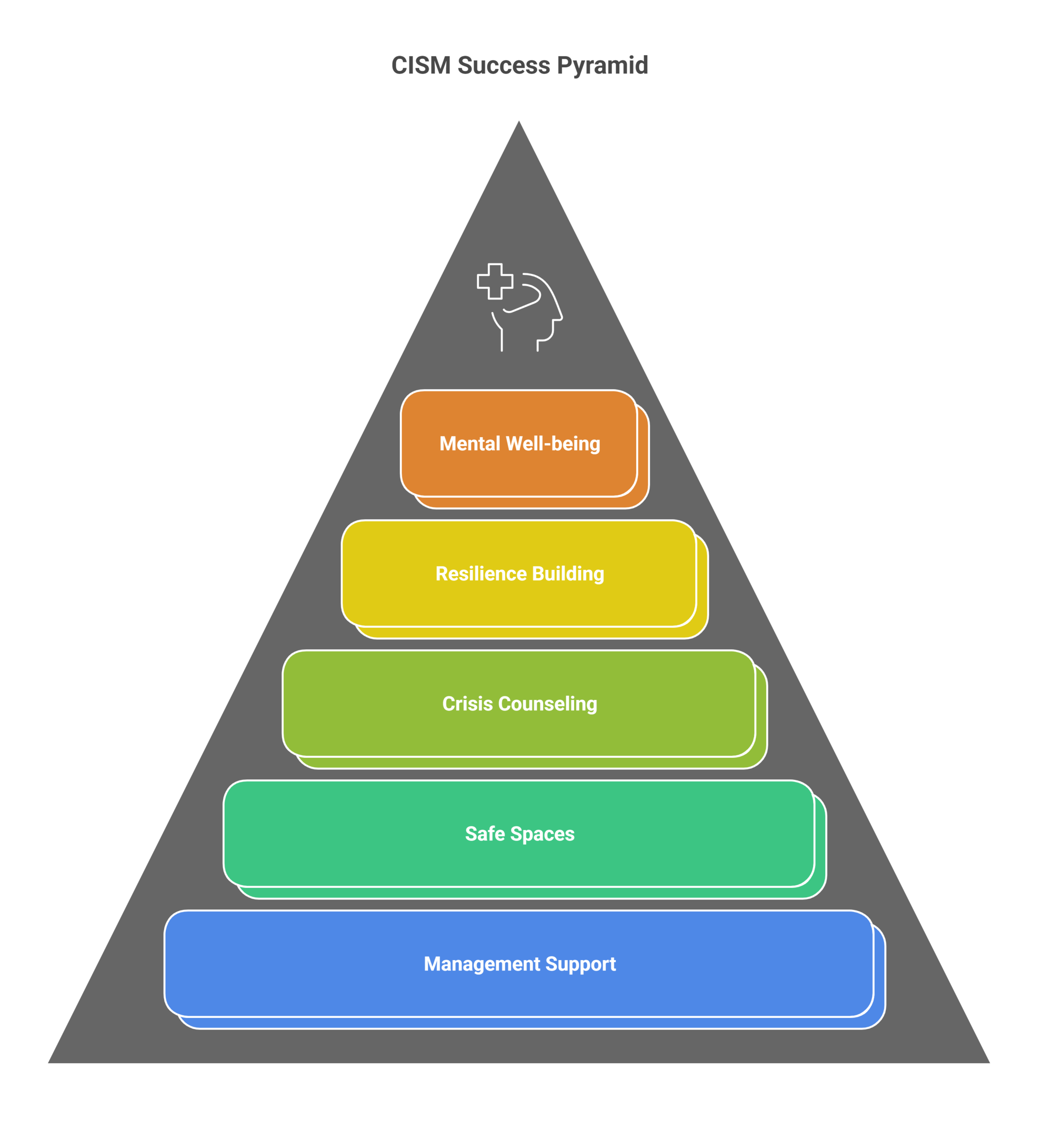
Best Practices for CISM Implementation
Incorporating CISM effectively is kind of like whipping up a perfect batch of cookies; follow some tried-and-true recipes and you’re halfway there. Here’s the scoop on best practices:
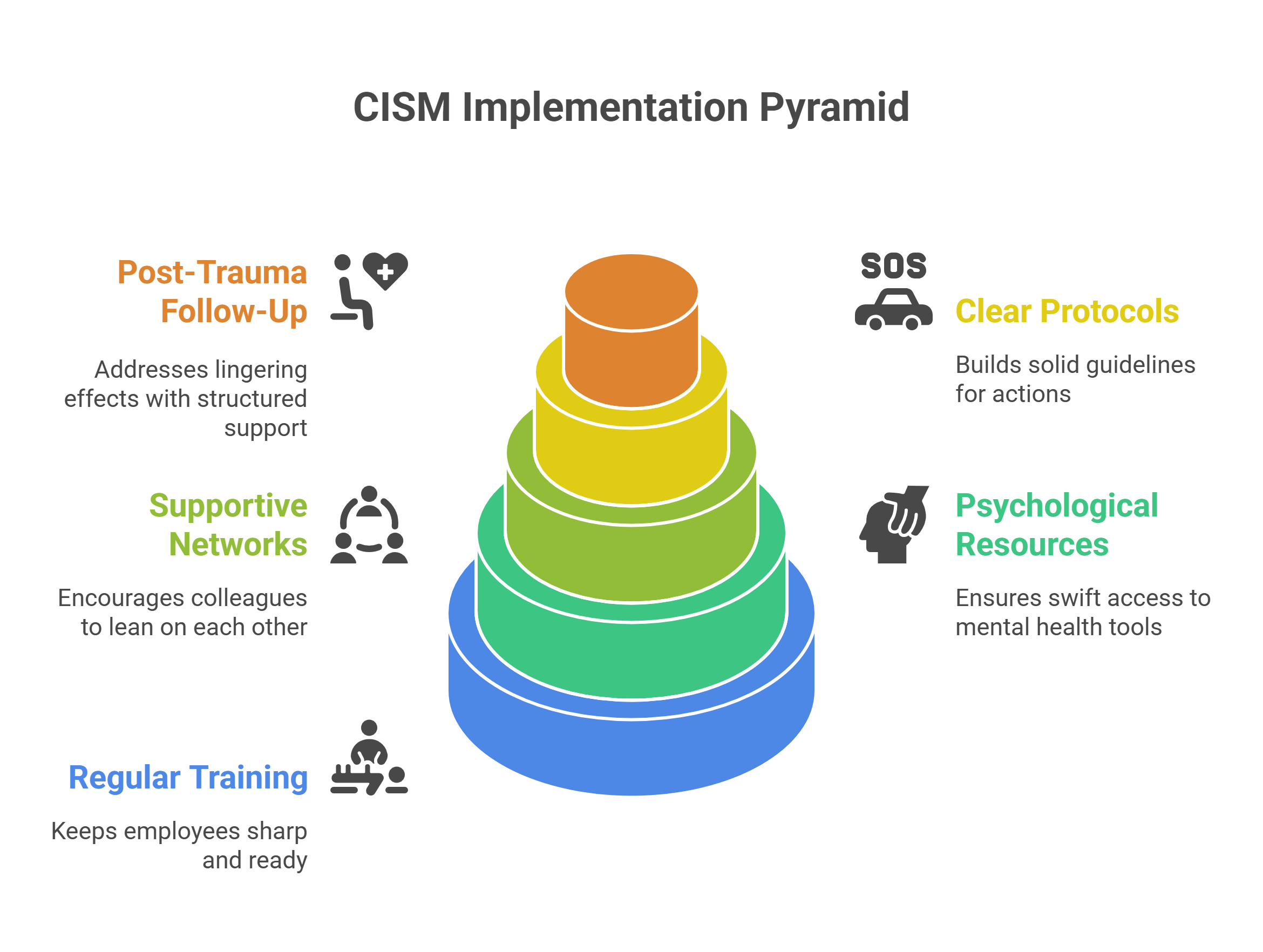
- Regular Training and Skill Development: Keep the learning machine running. Regular critical incident training keeps everyone sharp, ready to handle stress like a pro.
- Access to Psychological Resources: Got stress? Ensure swift access to mental health whizzes and tools, such as trauma-focused therapy, to help tackle those stress waves.
- Establishment of Supportive Networks: Who doesn’t need a buddy? Encourage a support system where colleagues can lean on each other and reach out to supervisors when the going gets tough.
- Clear Protocols and Procedures: Got a roadmap? Build solid guidelines for actions like psychological debriefing, so everyone knows what’s what when things get dicey.
- Post-Trauma Follow-Up: The journey doesn’t stop after the first aid is applied. Have structured strategies in place to address any lingering effects, offering continued support when necessary.
By interweaving these best practices into the company DNA, it’s like giving employees a safety net—one that catches them during tough times, while keeping mental health front and center every step of the way. Remember, keeping a finger on the pulse of CISM means checking in, tweaking, and committing to making mental health a genuine priority.