
 Coping with Panic Attacks
Living with panic attacks is no small feat—it can feel like a wild rollercoaster ride that nobody signed up for. The reality is, these episodes can make anyone feel like they’re in a real-life horror movie, with a soundtrack of booming heartbeats and gasping breaths. It’s a challenge folks from all walks of life can face, and that’s why it’s crucial to really get what panic attacks are all about and how they can mess with different people in different ways. Because when we know better, we do better, right?
Understanding Panic Attacks
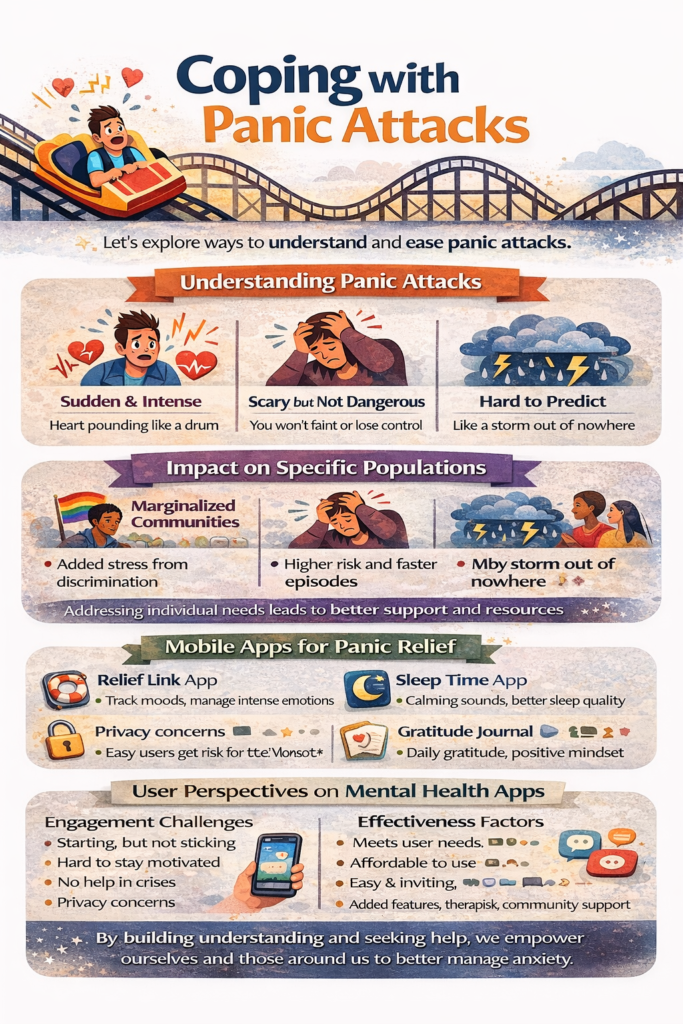
So, let’s break this down. Panic attacks are like having a surprise party thrown by your worst fears, complete with sweaty palms and a heart racing like it’s in a marathon. They’re usually thrown at the worst times too—unexpected and loud. It feels like your body is screaming at you, “Hey, something’s not right here!” Recognizing what’s happening and that you’re not about to faint or pass out is half the battle. Differentiating these attacks from something more serious can take a load off your mind and get you on the right track for help.
Trying to predict when you might have one is like forecasting the weather—good luck with that! But figuring out some tricks to manage the mayhem and having a chat with someone who knows their stuff can seriously change the game.
Impact on Specific Populations
Everybody’s brain throws a panic party differently, especially for certain groups who’ve already got a lot on their plate. Folks who’re part of marginalized communities like the LGBTQ+ crowd or racial minorities might find their panic dialed up. Why? Well, ever had to deal with stuff like discrimination or healthcare walls that feel like they’re a mile high? That can wear on your nerves and turn the panic volume right up.
People wrestling with other mental health monsters, like those heavy shadows of anxiety or PTSD, can have panic attacks that hit hard and fast. Tackling these freakouts alongside those other issues isn’t just about putting out the fire—it’s about finding what’s fueling it in the first place.
By taking a closer look at how these panic episodes land on different doorstep—and let’s be honest, it’s not always pretty—we can start building bridges. Bridges to more understanding, better support, and tools that help deflate the you’ve-got-to-be-kidding-me moments. Recognition leads to empowerment, making sure that nobody has to battle their brain in the dark.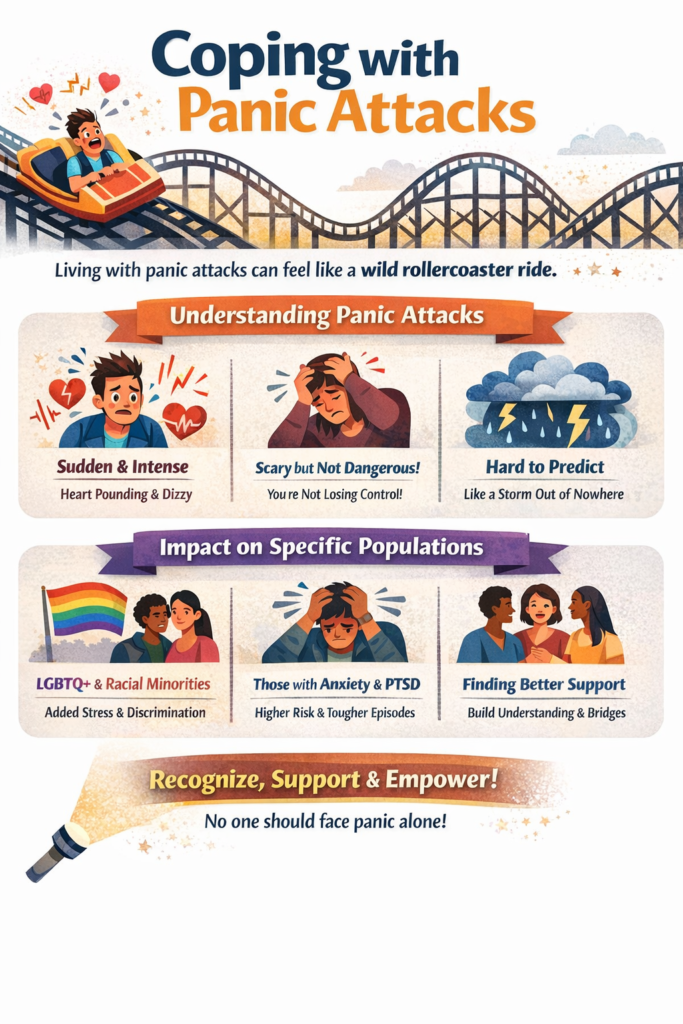
Mobile Apps for Panic Relief
When the mind starts to race and anxiety creeps in, mobile apps can be handy pockets of support, especially during those dreaded panic attacks. Let’s check out a few well-regarded apps that are designed to help when panic squeezes the breath right out of you: the Relief Link app, the Cognitive Processing Therapy Coach app, the Sleep Time app, and the Gratitude Journal app.
Relief Link App
If stress has you feeling like you’re on the edge of a cliff, the Relief Link app is like a comforting hand to grab onto. Recognized by the American Psychological Association, this app helps manage roller-coaster emotions. It’s like having a personal logger to track your moods and thoughts, so you can pinpoint what might be setting you off, and it also helps lay down plans for tricky moments (Bradley University Blog). Created by Aaron W. Smith, Ph.D., and Tyler J. Bradstreet, M.D., back in 2004 at the University of Utah, Relief Link has been a trusty guide in navigating tough mental health scenarios for a minute.
Cognitive Processing Therapy Coach App
Is PTSD barking up your tree? The Cognitive Processing Therapy (CPT) Coach app is like a handy sidekick for anxiety linked to those stubborn flashbacks. It guides you through CPT, offering tasks to shake up your thought patterns, and lets you keep an eye on how you’re feeling. But remember, this app is an add-on to professional care, not a swap for it (Bradley University Blog). It’s like a pocket therapist that helps you rethink the thoughts that bum you out.
Sleep Time App
Catching quality Z’s can be the secret sauce to handling panic attacks, and the Sleep Time app is here to coach you through snooze time. It’s packed with serene sounds like crashing waves and rain falling, gently guiding you to dreamland. Plus, it whips up detailed sleep reports and wakes you up when you’re least likely to feel like a zombie (Bradley University Blog). Sleep well, stress less – this app is a big player in keeping your brain relaxed and ready to roll.
Gratitude Journal App
For those days when it feels like life’s running a special on lemons, the Gratitude Journal app steps in to help you find a stash of good moments. Jotting down little moments of gratitude can shift your focus from stress to what’s sweet in life. This app nudges you to see the brighter side of things, making stress a bit lighter (Bradley University Blog). Squeezing out the better bits of each day can really lift your spirits, and this app is like a trusty cheerleader in your pocket.
These apps come to the rescue during those edgy panic spells and help set up solid ground for long-term stress management. By mixing tried-and-true mental health techniques with the magic of technology, they’re helping folks put mental well-being and panic relief right in their own hands.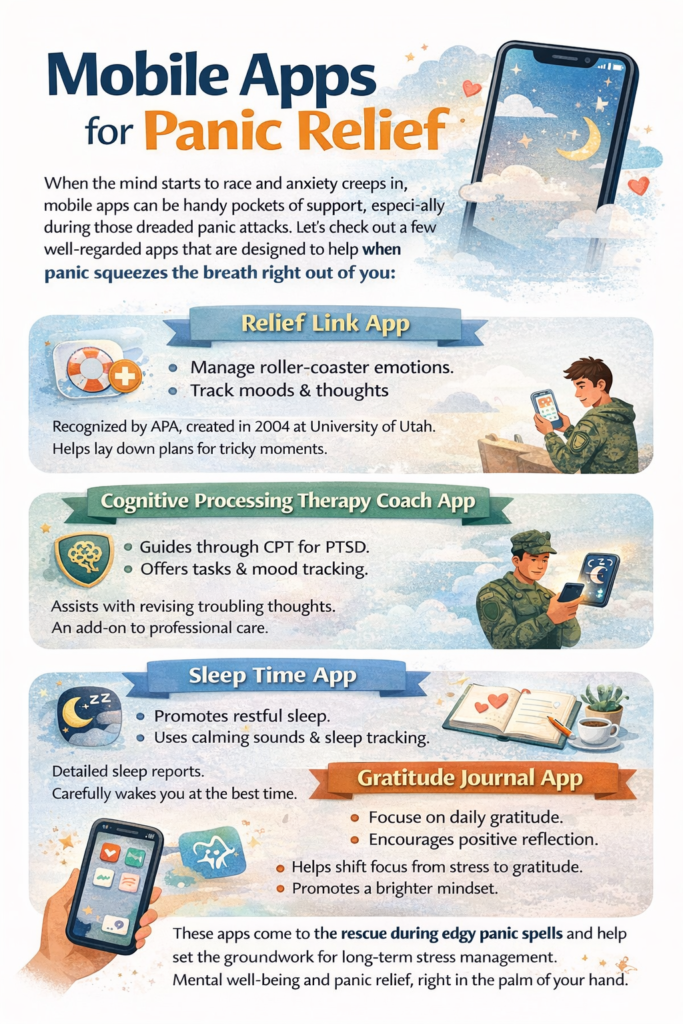
Top Mental Health Apps for Anxiety Relief
In our search for relief from anxiety and panic, mobile apps can act like a trusty sidekick, offering support and tools to tackle these hurdles. Let’s wander through some of the most popular mental health apps that can help ease anxiety and bring a bit of calm into your day.
Insight Timer App
If finding peace is on your radar, the Insight Timer app is a gem with its blend of guided meditations, soothing tunes, and nature’s lullabies. It’s like a one-stop shop for lowering stress and anxiety levels, letting you pick the perfect option for your vibe. Plus, it’s got this cool community vibe, letting you chat with folks walking a similar path.
For more on how apps like Insight Timer can boost your chill, snoop into our piece on lifestyle changes to prevent panic attacks in 2025.
Headspace App
Next up, Headspace is the popular kid in the mental health app club, making mindfulness and balance easy-peasy. It zeroes in on sleep, chill vibes, relaxation, and those moments when you stare at the ceiling pondering life. With its A to Z on mindfulness, it sets you on the road to living a life that’s simpler and clearer.
Get the lowdown on how Headspace and its pals help keep anxiety at bay by checking out our guide on how to build a daily routine for panic-free living.
Calm App
Living up to its name, the Calm app is all about releasing that tension and setting you up for sweet dreams. It offers guided meditations, bedtime tales, and mellow music to help you kick back and zen out. These bits and bobs are great for calming those anxious jitters and boosting your well-being to boot.
Peek at how apps like Calm make a splash in anxiety management in our article on how diet affects panic attack frequency.
Ten Percent Happier App
On a mission to ease anxiety using meditation, the Ten Percent Happier app is jam-packed with handpicked guided meditations by gurus. It even keeps track of your wellness journey with personalized metrics, giving you the nudge to take charge and find calm in life’s chaos.
Dig deeper into how Ten Percent Happier and its crew can assist in your anxiety relief journey by diving into our write-up on importance of sleep hygiene for panic management.
Mixing these top mental health apps into your wellness routine is like gathering a gang of mini-helpers, ready to tackle anxiety and sprinkle moments of peace into your day. These nifty tools will be your companions, offering pointers and a soft spot to land whenever you call.
User Perspectives on Mental Health Apps
Digging into what folks think about mental health apps sheds light on what trips them up and how these tools can truly help folks dealing with anxiety and panic attacks.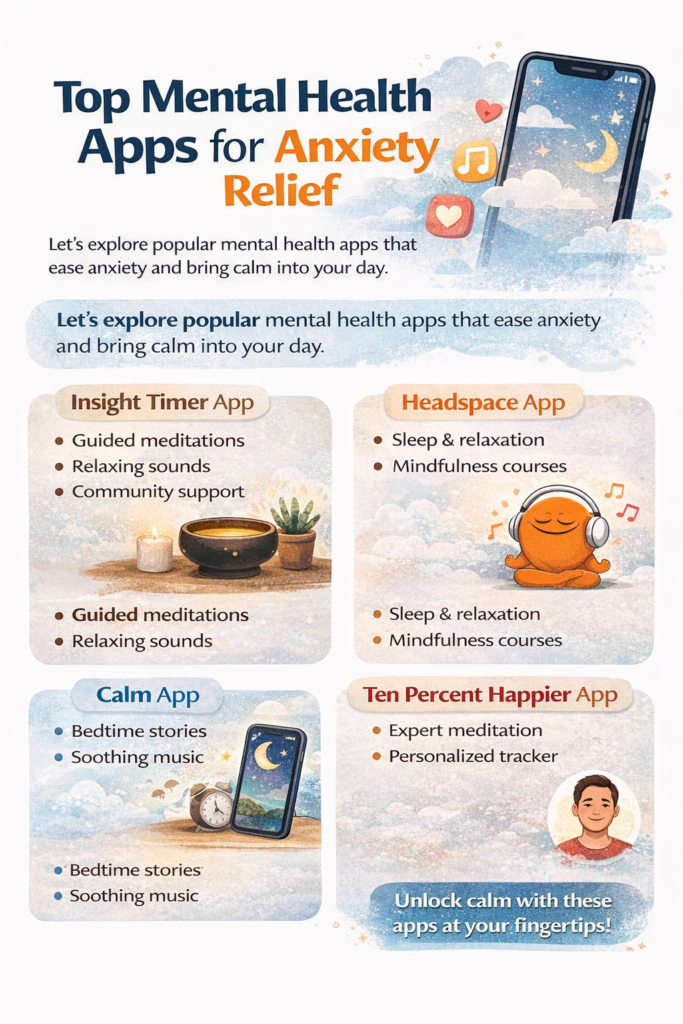
Engagement Challenges
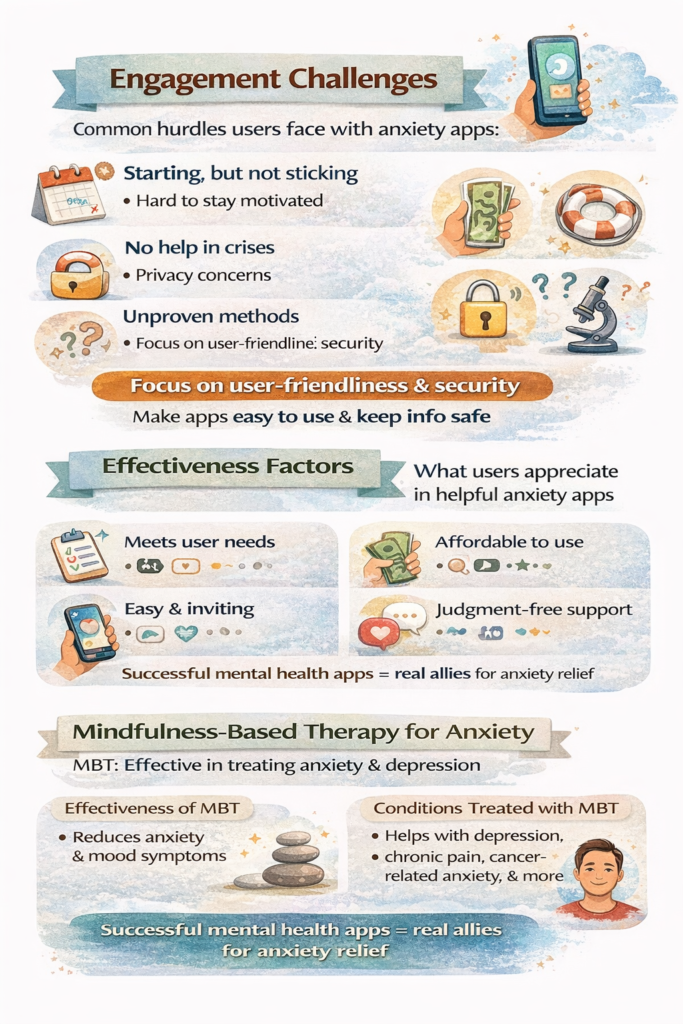
Apps can be a lifesaver for those wrestling with anxiety, giving them help at their fingertips. But let’s be real, they aren’t perfect. Some hurdles pop up that can make users throw in the towel. Based on what folks have said, here’s what seems to stand in the way:
- Loads of folks start but don’t stick around
- Keeping interest and motivation levels high over long periods isn’t easy
- Crises moments might leave app users hanging
- Concerns about personal info leaking out
- Relying on methods that haven’t been proven by science
These issues shout out for a focus on making apps easy to use and keeping people’s info safe, helping folks feel comfy using them for the long haul.
Effectiveness Factors
Now, let’s flip to the good stuff. There’s a bunch of things users rave about when they actually feel an app is doing its job well in helping them handle anxiety. Here’s what they’re loving:
- Content that hits the mark for what users actually need
- Won’t break the bank
- Looks good and is a cinch to use
- Support without any judgment thrown in
- Relates to them and their situation
- Extra features like therapist chats and community support
When apps check these boxes, they become more than just another install—they become a real ally for folks fighting anxiety. Surprising, isn’t it? With over 10,000 apps out there offering everything from exercises to expert chats, the digital world is teeming with mental health helpers (Frontiers in Digital Health).
Getting what makes users tick and tackling what doesn’t work is like crafting that perfect playlist—it’s essential for creating apps that people not only download but actually use. By fixing the rough spots, spiffing up the features, and putting users at the heart of it all, the mental health app world can really crank up how it helps those grappling with anxiety and panic attacks.
Mindfulness-Based Therapy for Anxiety
Let’s chat a bit about how mindfulness-based therapy (MBT) can be a handy tool for dealing with anxiety. Getting to know how well it works and what conditions it can help with can really change your outlook on mental health care.
Effectiveness of MBT
So, what’s the scoop on MBT? According to the folks at NCBI who’ve done the hard work of investigating it, MBT seems to pack a punch against anxiety and mood issues. Over time, its benefits stick around—it’s like getting your car serviced and finding it runs smoothly for miles. Researchers say that MBT provides a respectable cut in anxiety and depressive symptoms, meaning a longer-lasting lift to your mood.
Conditions Treated with MBT
Now, where does MBT work its magic? Turns out, it’s pretty versatile. This therapy shows its chops in tackling anxiety and depression across various situations. As highlighted by NCBI, folks dealing with depression, anxiety disorders, pain problems, even cancer-related anxiety, have shown improvement with MBT. Imagine being weighed down by cancer anxiety or a pain condition—MBT helps lighten that load. It’s like having a versatile tool handy, whether the job is big like a chronic condition or smaller like a dip in mood.
When we see how Mindfulness-Based Therapy can positively shift the landscape of mood and anxiety disorders, it gives us reason to consider it as part of a well-rounded approach to mental well-being. Whether you or a loved one are grappling with anxiety, pain, or other health issues, MBT stands out there, offering a hopeful way to ease the burden on your mental health.