

Understanding Panic Attacks in Children
When trying to understand panic attacks in children, it’s vital to notice the symptoms, how long these attacks last, and the things that might trigger them.
Symptoms of Panic Attacks
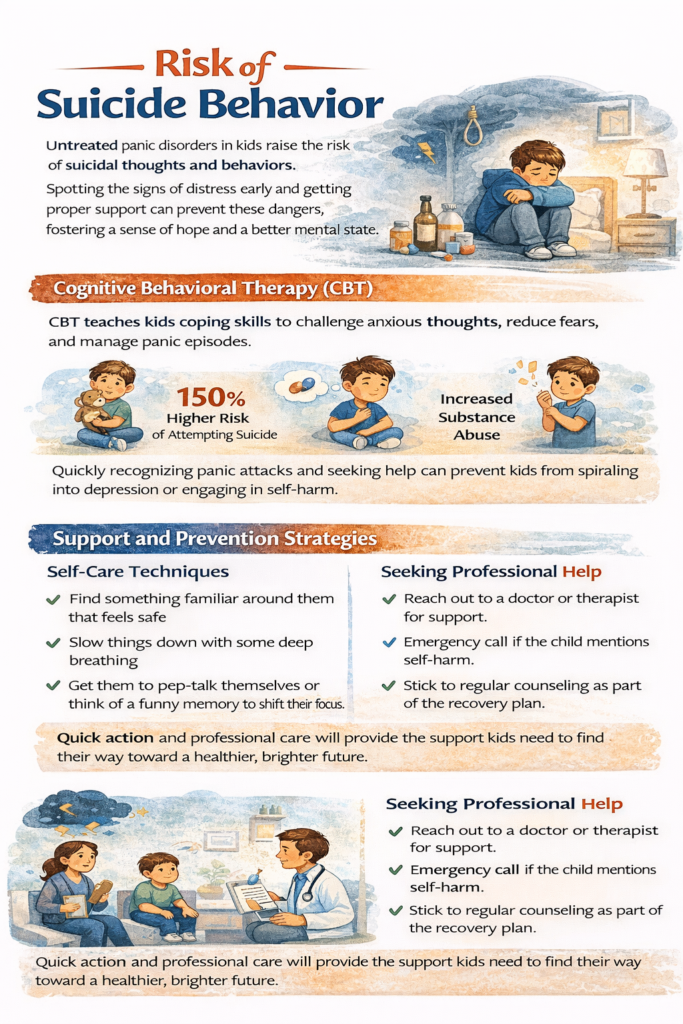
Kids having a panic attack might feel really scared, as if the world’s about to end. These intense feelings can come with physical signs like struggling to catch their breath, a chest that feels like a tight drum, a heart gone haywire, dizziness, getting sweaty all of a sudden, or their whole body shaking (Healthwise). These hit out of nowhere and can be really intense for the child.
| Symptom | Description |
|---|---|
| Fear or Terror | Overwhelming feelings of doom |
| Breathing Issues | Struggling to breathe |
| Chest Pain/Tightness | Feels like something’s squeezing the chest |
| Heartbeat Changes | Racing or thumping heart |
| Dizziness | Going woozy or off balance |
| Sweating | Sudden waterfall of sweat |
| Shaking | Just can’t stop trembling |
Keep an eye on these symptoms. Reassure the child they’re not alone, and help them through the storm.
Duration and Triggers
A panic attack in kids may burst in like a firecracker, hitting them for about 5 to 20 minutes but sometimes hanging around longer (Healthwise). These can pop up out of the blue or be linked to something stressing them out, like a tough situation or big changes.
| Duration | Description |
|---|---|
| 5-20 minutes | Most panic attacks in kids last about this long but can be longer depending on the situation |
| Triggers | Stressful events or big emotional shifts that might spark panic attacks, like school pressure or unexpected changes |
By understanding how long attacks last and what sets them off, caregivers can step in with a hug, a calming word, or a handy strategy to help out. If ignored, these attacks could cause ripples that affect a child’s mental health down the road. Spotting the signs early and providing the right support makes a big difference in helping kids face panic attacks and get on with their lives.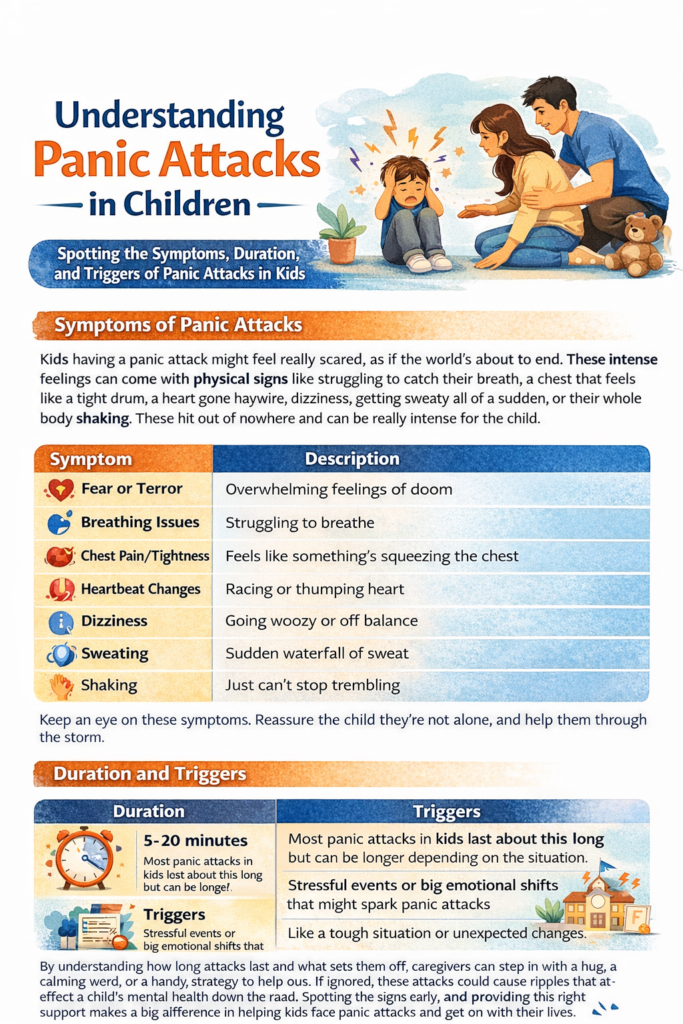
Impact of Panic Attacks on Children
Emotional and Physical Effects
Panic attacks in kids are like unwelcome guests that refuse to leave and can make them feel scared, uncomfortable and pretty overwhelmed. Imagine your heart racing, having trouble breathing, your chest feeling tight, dizziness kicking in, and sweating buckets — it’s no picnic (Seattle Children’s Hospital). These symptoms run the emotional wrecking ball, which can lead to a bunch of messy feelings that mess with a kid’s happiness the way a cat messes with a new sofa.
When children go through this turmoil, they’re not just afraid; it’s like their emotions are on a never-ending rollercoaster. Confusion and helplessness? Right there in the front seat. The chaos can mess up their day-to-day lives, making fun stuff and talking with friends feel like a daunting task.
Behavioral Changes
Panic attacks can flip a child’s world upside down, namely how they respond to people and things, turning them into people you barely recognize. If they don’t get the right help, panic attacks can open the door to even bigger issues like being terrified of going outside, sinking into deep sadness, or worse, thinking about ending it all (AACAP). These changes aren’t just for show; they’re cries for help, signs they’re wrestling with promises those panic attacks won’t go anywhere anytime soon.
These attacks don’t just mess with their heads; they can trash friendships, tank school performance, and seriously mess up a kid’s growth. You might see a child with panic attacks steer clear of friends, flip out with little provocation, or hide away more than your remote control. Some might try numbing the chaos with harmful habits, figuring it’s the only way to stop the panic (AACAP).
So, here’s the thing: kids dealing with these panic attacks need help. Recognizing what’s going on and stepping up with the right responses is key. Learn the signs, pay attention to those changes, and jump in with targeted strategies. Parents, educators, caregivers—they can all pitch in to offer real, meaningful support, setting these kids up not just to manage but to thrive beyond these tough moments.
Causes of Panic Attacks in Children
Trying to figure out why a child might have a panic attack can often feel like piecing together a tricky puzzle. Two big pieces of that puzzle are—stress from life changes and a mix of genetic and personality factors.
Stress and Major Life Changes
Stress is a sneaky character that can creep into a child’s world after big shifts in their life. Whether it’s the shock of a new school, parents splitting up, or suddenly finding themselves in unfamiliar places, these changes can make their little minds race and sometimes spin right into a panic attack.
Parents and caregivers are like the frontline detectives here. Keep an eye out for signs your kiddo might be wrestling with stress—especially when everything around them seems to be flipping upside down. Offering those kiddos a soft spot to land, plenty of heart-to-heart talks, and a place that feels like a safe haven can do wonders to ease those fears. This solid foundation can help in reducing the fireworks of anxiety.
Genetic and Temperament Factors
Then, there’s the genetic jackpot—or sometimes the not-so-jackpot. If you’ve ever wondered why some kids seem to be born with worry wired into their systems, genes could be one of the culprits. If anxiety runs in the family, a kid might have a higher chance of bumping into panic attacks.
Plus, let’s not forget those kids who feel everything a bit more intensely—kind of like life’s volume is turned up to eleven all the time. These little sensitive souls can be more prone to panic under pressure. They’re like finely tuned alert systems, ready to ring alarms at the first sign of stress.
Acknowledging these built-in factors is crucial. For parents and healthcare heroes, it’s about understanding that some things just run in the blood or are part of the child’s nature. The goal is to create support methods to match each child’s unique needs and experiences.
In short, by really getting to grips with how stress and genetics can stir up panic attacks, caregivers can be more prepared. It’s all about giving kids strong shoulders to lean on and guiding them with a sense of calmness and courage as they face their fears head-on.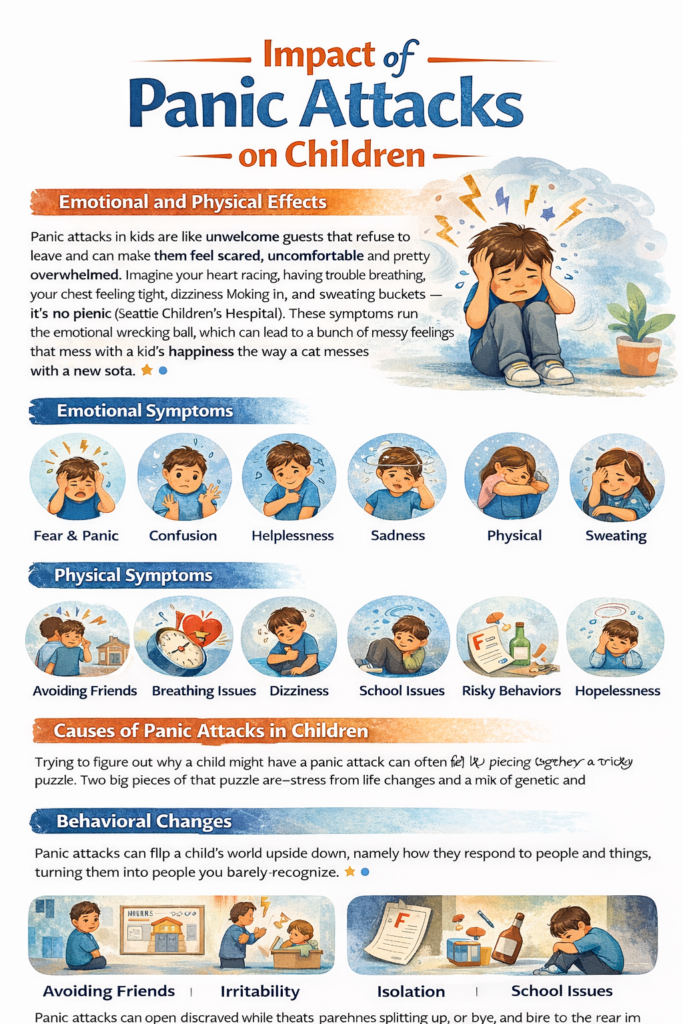
Treatment Options for Children
Alright, let’s talk about helping kids deal with panic attacks. It’s about arming them with the right tools to face those overwhelming moments. We’ve got two main strategies: Cognitive Behavioral Therapy (CBT) and a little help from medication when necessary.
Cognitive Behavioral Therapy (CBT)
Now, CBT is kind of like the MVP in the world of tackling anxiety and panic in kiddos. It’s like giving them a superhero toolkit to understand what’s going on with those pesky worries and fears (CHOC). Through CBT, kids learn all kinds of nifty tricks, like chilling out with some relaxation exercises or gently nudging themselves to face fears bit by bit.
The whole point here is to show kids how to spot and shake off those doom-and-gloom thoughts that feed panic attacks. It’s like teaching them to be superheroes in their own stories, powering through fears and getting a grip on anxiety one step at a time. CBT is all about building up that courage and taking the sting out of panic episodes.
Medication and Management
Sometimes, despite all the therapy in the world, those panic attacks stick around. That might be when bringing in some medication becomes part of the picture. Think of SSRIs and SNRIs as the backup squad to help ease anxiety’s grip on our young ones (Cleveland Clinic).
Medications aren’t a magic fix, though. They need a little patience since they take time to work, and doctors might need to tweak doses to find what suits best. Plus, it’s super important to have a pro keep an eye on things to dodge any unwanted side adventures with side effects. Jumping to meds is a call that the doc makes after really getting to know what’s going on with the child.
By blending CBT with medication, when it seems right, children dealing with panic can get a well-rounded treatment plan that’s just for them. Catch it early, tailor it to each kid, and the difference can be night and day, stopping untreated panic attacks from causing more trouble down the line (AACAP).
Meeting each child where they are and understanding their unique worries is crucial. By creating a caring support system, parents and pros can guide young ones through their panic attacks, helping them learn the tools they need for managing anxiety now and in the future.
Complications of Untreated Panic Attacks
Kids can face a whirlwind of feelings, and panic attacks are no exception. You gotta catch ’em early, folks. Letting these things fester without help is a big no-no. We’re talking serious risks like heavy-duty depression and the scary thought of suicide creeping in.
Relationship to Severe Depression
UNICEF has pointed out that leaving panic attacks unchecked in kiddos can send anxiety levels through the roof. You know what happens next? It can drag down their mood like a rain-soaked weekend. Your little ones start feeling trapped in gloom, always on edge, and it doesn’t take long before they’re fighting severe depression. The usual joy of life and making friends becomes distant memories when dread takes over. All those emotions feel like quicksand, pulling them deeper into the muck of sadness and worthlessness.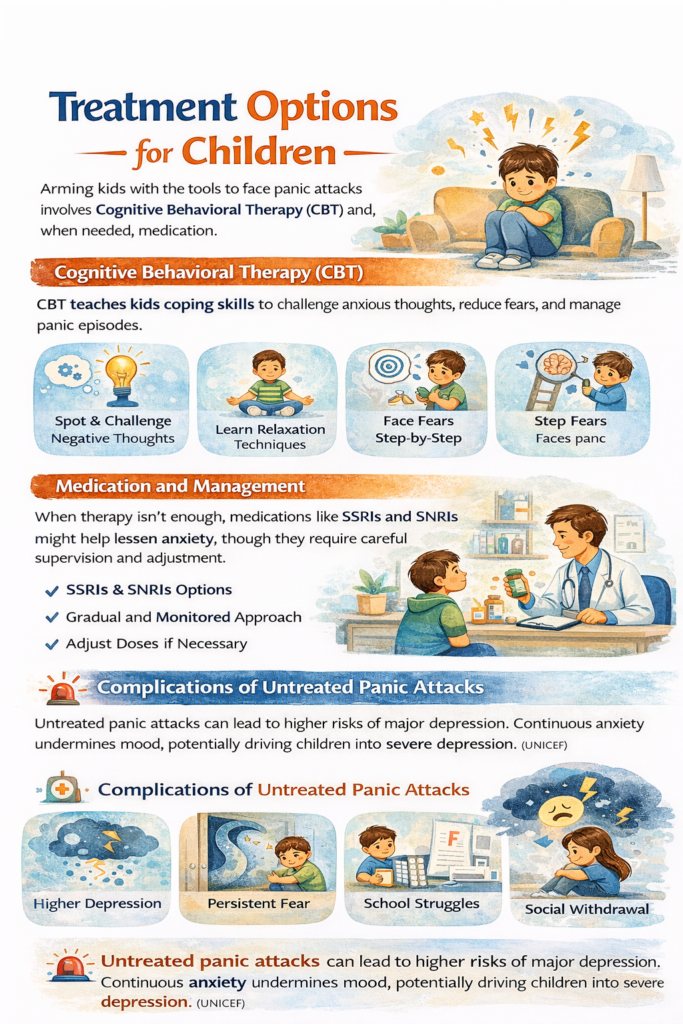
Risk of Suicide Behavior
But hang tight, it ain’t just about feeling down. According to AACAP, if these panic disorders slip under the radar, kids can hit a real rough patch, possibly even contemplating self-harm. That’s a big ouch. When anxiety spins out of control, desperation grows. Some teens might even start flirting with trouble like drugs and booze, thinking they can dull their turmoil. But spoiler alert: it just feeds the darker thoughts lurking in them.
Spotting these panic attacks fast and taking action? That’s where the magic happens. You’ve gotta be on it, getting them the right support and professional help pronto. With the right care, those heavy panic episodes don’t stand a chance turning into layers of depression or thoughts of self-harm. By tackling panic attacks head-on, caregivers and mental health pros can change the script for kids, helping them find their way back to brighter days and a better state of mind.
Support and Prevention Strategies
Let’s chat about how I can help kids tackle panic attacks. Trust me, it’s not just about the serious adult stuff. It’s about giving them simple tips for personal care and knowing when it’d be best to get some expert advice. A little understanding goes a long way toward making those intimidating episodes way less scary.
Self-Care Techniques
I’m all for teaching kids simple tricks to help them manage their anxiety. Self-care can be their superpower. Here’s the deal: kids can learn grounding techniques that help them chill and take back control during a panic episode. Check out these tricks:
- Spot something familiar around them that feels safe.
- Slow things down with some deep breathing.
- Get them to pep-talk themselves or think of a funny memory to shift their focus.
Practicing these often helps them figure out their own ways to fight off those overwhelming moments. It’s key for us grown-ups to give them space to practice without making them feel awkward or embarrassed.
Seeking Professional Help
But hey, it’s not just about breathing exercises and happy thoughts. When panic attacks are really shaking them up, it’s important to get the pros involved. Sometimes, a chat with a doctor or therapist can make all the difference.
If kiddos are talking about wanting to hurt themselves or are in some serious emotional trouble, it’s an all-hands-on-deck situation. Think of emergency calls like the heroes swooping in to help.
And let’s not skip those follow-up appointments. Making sure they see their counselor regularly is as essential as the interventions themselves. Sharing all relevant information with their healthcare provider and understanding their treatment plans are crucial steps to ensure they’re getting the best support.
Blending these personal tips with professional support helps those kiddos feel like they’re backed by an awesome team. It’s all about understanding and meeting them where they’re at with a massive hug full of kindness, patience, and inventive solutions that fit each awesome individual. We’re in it together, helping them handle their panic and discover peace of mind.