
Recognizing Panic Attacks in Young Adults
Life as a young adult can feel like a rollercoaster. One minute, you’re up, the next you’re down, and sometimes those gut-wrenching drops come without warning in the form of panic attacks. It’s crucial to know the signs so you can get the help you need. Panic attacks hit like that surprise pop quiz—sudden, unexpected, and enough to make your heart race faster than your Uber Eats delivery. They can show up during a meeting, in the middle of the night, or even at a party. And when they do, they’re quick to peak, often leaving you feeling like the aftermath of an exhausting workout session.
Impact on Quality of Life
Panic attacks can really throw a wrench in your daily groove, especially between ages 15 and 25—prime time for adulting stumbles and tumbles. They tend to lean more towards women, and those big life moments, whether it’s college graduation or a breakup, can be triggers. Stress management becomes essential, kind of like making sure your phone’s always charged (Malvern Behavioral Health).
For those caught in the grip of these attacks, everyday tasks may start to feel like trying to solve a Rubik’s Cube blindfolded—relationships, work, and well-being take a hit. The good news? You can tackle this head-on. Spotting the signs early and diving into treatments like Cognitive Behavioral Therapy (CBT) may set you on a better path, one where panic attacks aren’t calling the shots.
Understanding the sudden bursts of panic and how they can mess with daily life is the first step. Seek help, swap stories with others who get it, and learn some epic coping skills. You’re not alone on this wild ride, and there’s a whole toolkit of support waiting to give you a hand. Take heart—it’s okay to reach out and say, “Help, please!”
Symptoms of Panic Attacks
Physical Symptoms
Ever felt like your heart’s trying to break a world record for speed, or like you’re caught in a sauna and an igloo at the same time? You’re not alone. Panic attacks often come with a list of physical symptoms that can make you feel like you’re in a medical drama. Just to name a few:
- Heart racing or feeling like it’s doing somersaults
- Gasping for air or having a phantom choking sensation
- Sweating buckets or shivering like a leaf
- Tremors or feeling like a human maraca
- Feeling dizzy, like the world’s spinning faster than a merry-go-round
- That uncomfortable pressure or sickness in your chest
- Nausea or your stomach doing flips
- Tingling or numbness in your fingers and toes
These sensations often feel like they’re betraying you. And since they can be quite convincing, it’s wise to check in with a doc to make sure everything’s cool under the hood.
Emotional Symptoms
Panic attacks are like emotional rollercoasters, except you didn’t sign up for the ride. Some of the emotional curves thrown your way might include:
- Feeling terror as if an invisible monster’s hot on your trail
- The eerie feeling that gloom and doom are imminent
- An unexpected wave of panic creeping in
- Antsy or on edge, feeling like a live wire
- Emotions turned up to 11, reacting to everything like it’s life or death
- A spike in anxiety, like your brain’s constantly sounding an alarm
These emotional tsunamis can knock you off your feet. Getting some aid, whether from a pal or a pro, can help you surf the waves rather than being swept away.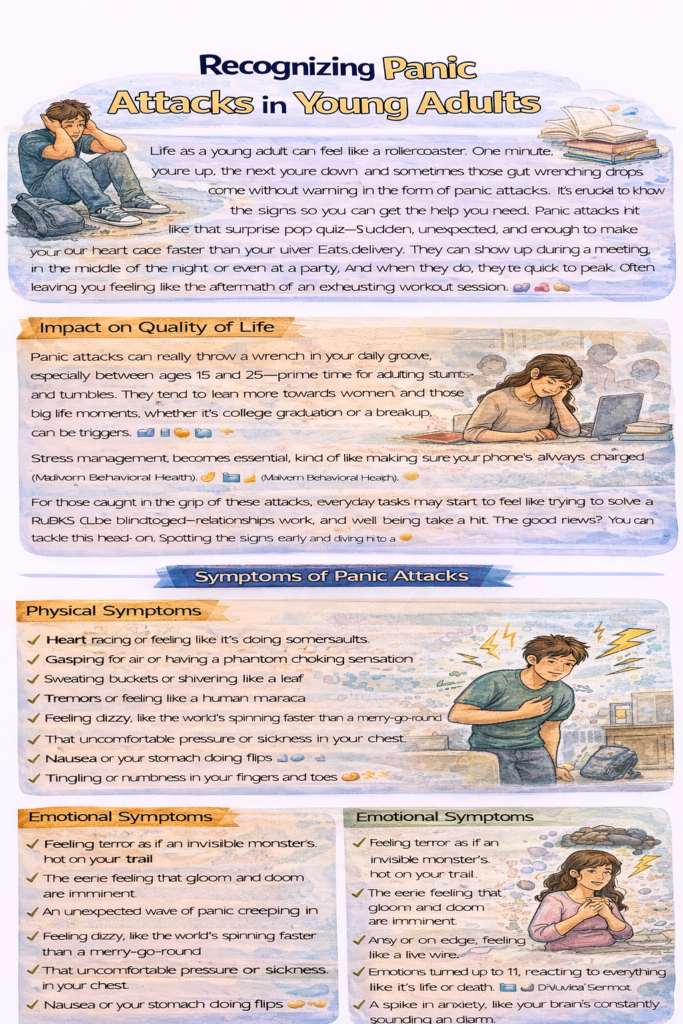
Cognitive Symptoms
Your brain during a panic attack can feel like there are squirrels holding a dance-off in there. It’s chaos, and it messes with your headspace:
- Concentrating becomes as tricky as herding cats
- Thoughts racing uncontrollably like high-speed cars
- Fearing your mind might take a vacation without you
- Confusion closes in like fog on a murky night
- Imagining the worst-case scenario by default
- Decision-making feels like solving a Rubik’s cube blindfolded
These mental hurdles might throw you for a loop, but they can be managed. A helping hand and some coping tricks up your sleeve can bring things back to a highlight reel.
Knowing what your body, heart, and mind are doing when panic attacks hit can do wonders. Having a plan in place, like practicing grounding techniques or taking care of yourself is like having a life jacket at the ready. This armory of know-how in supporting a loved one can make facing a panic attack less daunting, empowering young folks to regain their footing and thrive.
Causes and Risk Factors
So you’re trying to get a handle on panic attacks in young folks? Well, it’s no walk in the park! There are plenty of things that can push someone over the edge: family genes, the ghosts of past traumas, life’s big ol’ curveballs, or even reaching for that extra cup of coffee.
Genetics and Family History
Let’s start with the family tree. If your folks or grandparents had panic issues, you might get some of that genetic baggage, too. The National Institute of Mental Health says there’s a family link, pointing to the delicate wiring in our brains that decides when to freak out or stay calm. It’s like inheriting a really old, delicate set of Christmas lights – sometimes they work fine, other times they go haywire.
Trauma and Major Life Events
Here’s the deal with trauma: it’s like wearing a backpack full of bricks. Whether from a one-time event or something lingering from childhood, it weighs folks down. According to Malvern Behavioral Health, these experiences can flip the panic switch. Giving yourself time to heal and ditching some of that old baggage is a pretty good move to lower the freak-out meter.
Substance Use and Sensitivity to Stress
Now, about those Saturday night indulgences or morning lattes – they can poke at your anxiety antenna. Gigantic coffee helps no one when you’re already jittery. Malvern Behavioral Health notes that substances of all kinds can stir the pot a bit too much. If you’re sensitive to stress, even the smallest thing can set you off. More emotional than an onion-peeling contest? You might be more at risk for these anxiety explosions.
Recognizing these pesky pests making you anxious is like finding the culprit of who ate the last slice of pie. Once you know what’s driving you up the wall, you can seek out support—it might be therapy, tweaking what you eat or drink, or just surrounding yourself with people who get it. Whatever it takes to give panic a swift kick out of your life!
Understanding Panic Disorders in Young Adults
Alright, so here’s the deal: being a young adult isn’t always the walk in the park everyone paints it out to be. And when you throw panic disorders and depression into the mix, things can get real messy. Over half the folks with panic disorder – we’re talking 55% – also find themselves in the gloomy grips of a major depressive episode. Now that’s a number worth paying attention to. Understanding how tangled up these issues are is the name of the game when it comes to getting the right help and support sorted out.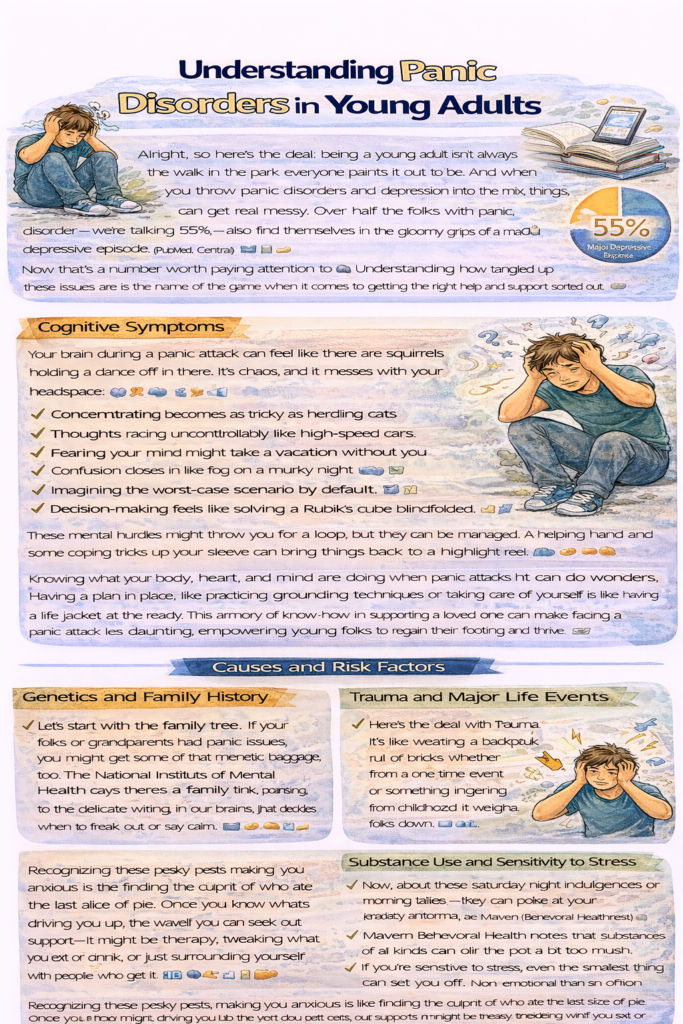
Association with Major Depressive Episode
So, what’s the story with panic disorders and depression? It’s like they’re the best of friends but in the worst kind of way. When both decide to crash the party, they make things way more complex. Figuring out what’s what can be tricky, and that’s why having a big-picture approach is key to sorting out these two’s drama.
Effective Treatments: CBT and Medication
By now you’re probably wondering, “Okay, how do we get past this?” Here’s where treatment comes into play. You’ve got Cognitive Behavioral Therapy (CBT) as one of the big hitters. It’s like a personal trainer, but for your brain. Basically, CBT helps you ditch those pesky negative thoughts and habits, giving you some real-deal strategies to handle panic attacks (NIMH).
Medicines join the fight too. You might hear about things like SSRIs and SNRIs — they help tweak those chemicals in your brain, calming the storm. Then there are beta-blockers and benzodiazepines; these guys help cut down the stress of actual panic moments. But remember, it’s not magic beans. Progress takes time, so patience is your buddy here. Stick with it, and don’t hesitate to chat with your doctor ’til you figure out what suits you best.
Realizing just how linked panic disorders and depression are in young adults is a must for getting a grip on these mental health hiccups. By tapping into treatments like CBT and the right meds, we’re giving young folks a fighting chance to tackle their mental battles and set off down the road to healing. They deserve to know they’re not alone in this, and with the right help, they’ve got a shot at feeling much better.
Coping Strategies for Panic Attacks
When panic comes knocking, having some handy tricks up your sleeve can make all the difference. Let me share my two cents on dealing with these sneaky little attacks: self-care habits and some down-to-earth grounding methods.
Self-Care Practices
Let’s talk about taking care of number one—you. Self-care is the bedrock of keeping those panic attacks in check. It’s about doing things that make your heart happy and your mind chilled. Here’s a peek into my self-care stash:
- Deep Breathing: When everything feels like it’s spiraling, deep breathing is your anchor. Breathe in like you’re smelling a fresh pie, and out like you’re cooling it off—four counts each way. It’s like telling your built-in panic button to take five.
- Aromatherapy: There’s something magical about sniffing some lavender or chamomile. It’s like giving your nose a chill pill. Try keeping a small vial of an essential oil you love in your bag for instant calm on the go.
- Regular Exercise: Don’t underestimate a good stroll. You’re not just exercising your legs; you’re also giving your anxiety a run for its money. Moving around helps you breathe better, boosts those feel-good chemicals in your brain, and gives you the oomph to tackle whatever comes your way.
Grounding Techniques and Mindfulness
While panic wants to whisk you away, grounding techniques wrap you in a big grounded hug. They bring you back to now, where everything’s alright. Let’s toss out a few tricks of the trade:
- Focus on the Environment: Sometimes, you just need to zero in on something in the room. Whether it’s the clock ticking or the feel of your sweater, focusing on the details can pull your mind away from panic’s grip.
- 5-4-3-2-1 Method: Here’s a sensory nudge back to reality. Find five things you see, four you can touch, three sounds, two smells, and one taste. It’s like dialing down the panic by maxing out reality.
Making these practices a regular part of life builds up your mental muscle against panic. Don’t be shy to try out different combos to see what vibes with you. And hey, don’t forget that reaching out for some expert help is super important, too. If you’re curious to read more, peek at our piece on helping teens with panic attacks.
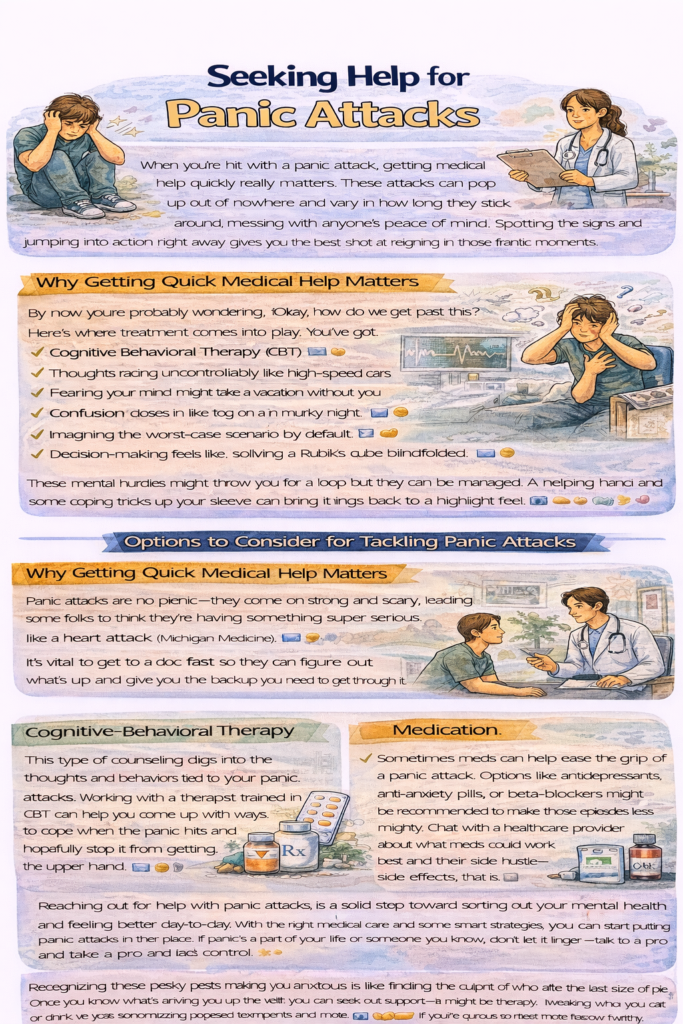
Seeking Help for Panic Attacks
When you’re hit with a panic attack, getting medical help quickly really matters. These attacks can pop up out of nowhere and vary in how long they stick around, messing with anyone’s peace of mind. Spotting the signs and jumping into action right away gives you the best shot at reigning in those frantic moments.
Why Getting Quick Medical Help Matters
Panic attacks are no picnic—they come on strong and scary, leading some folks to think they’re having something super serious like a heart attack (Michigan Medicine). It’s vital to get to a doc fast so they can figure out what’s up and give you the backup you need to get through it.
Options to Consider for Tackling Panic Attacks
If you’re dealing with panic attacks, there are more than a few ways to help tackle those feelings. A chat with healthcare pros, like therapists or psychiatrists, could get you on a treatment path that’s just right for you. Here’s a peek at some common strategies:
- Cognitive-Behavioral Therapy (CBT): This type of counseling digs into the thoughts and behaviors tied to your panic attacks. Working with a therapist trained in CBT can help you come up with ways to cope when the panic hits and hopefully stop it from getting the upper hand.
- Medication: Sometimes meds can help ease the grip of a panic attack. Options like antidepressants, anti-anxiety pills, or beta-blockers might be recommended to make those episodes less mighty. Chat with a healthcare provider about what meds could work best and their side hustle—side effects, that is.
Reaching out for help with panic attacks is a solid step toward sorting out your mental health and feeling better day-to-day. With the right medical care and some smart strategies, you can start putting panic attacks in their place. If panic’s a part of your life or someone you know, don’t let it linger—talk to a pro and take back control.