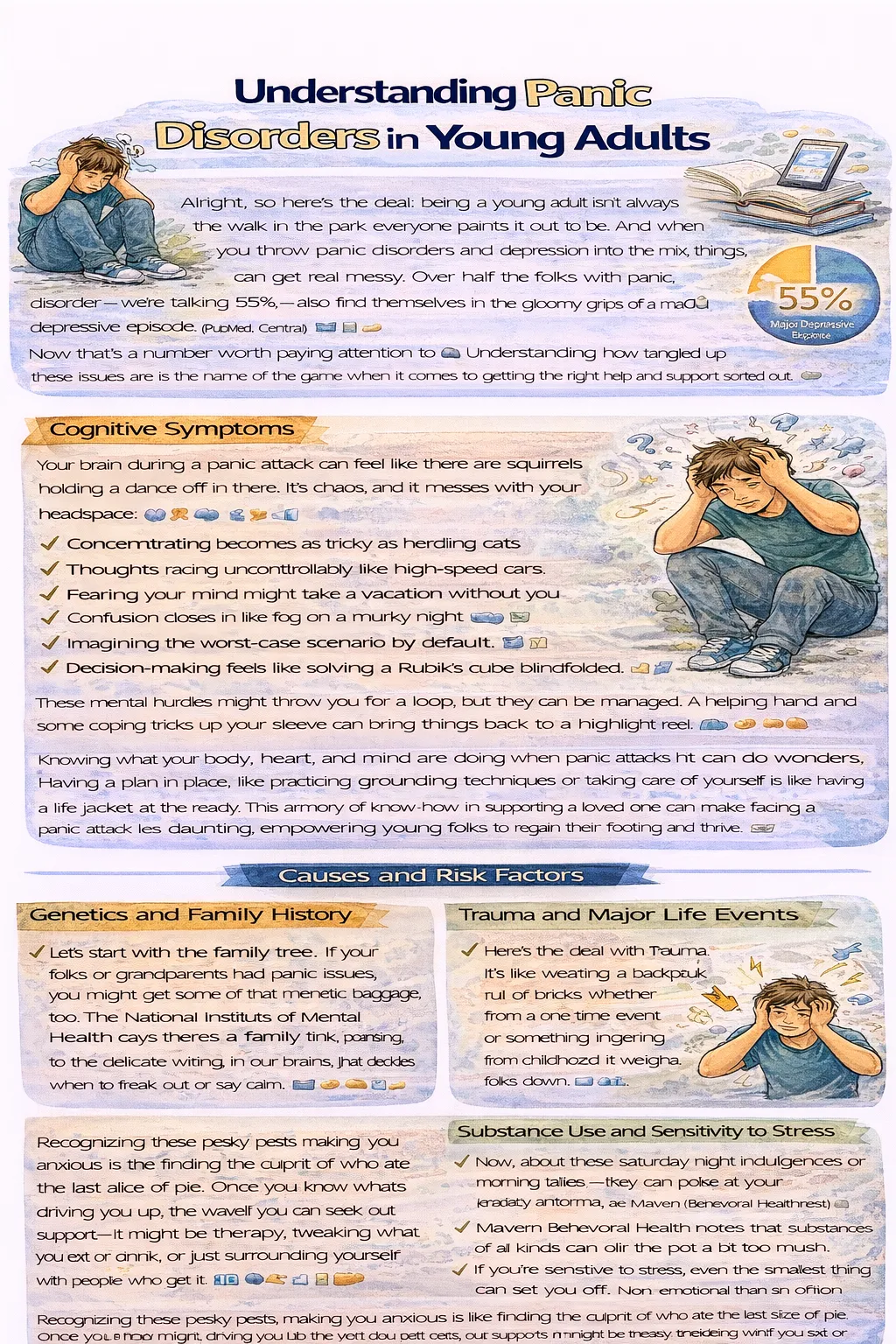
Causes and Triggers of Panic Attacks

Online Support Groups: 7 Powerful Benefits for Panic Disorder: 7 Powerful Benefits for Panic Disorder

Discover virtual sanctuaries for panic disorder support - online communities offering understanding and connection for relief.

February 2, 2026 0
Share

panic disorderFinding Support Online

Dealing with panic disorder can feel like a never-ending rollercoaster, but meeting folks online who get you can be a real game-changer. The internet has unlocked a new treasure trove of communities where you can chat about your experience and feel a little less alone.

Virtual Support Communities

Jumping into virtual support communities for panic disorder can be a balm for the soul. Websites like the Mental Health Forum, found at www.mentalhealthforum.net, offer a place where everyone speaks your language. Imagine hanging out with people who understand exactly what you’re going through. You might talk with them about your day, share tips on handling anxiety or just listen when you need an ear. These interactions can make the world feel a little less lonely.

Utilizing Online Support Groups

Online support groups are like a comfy blanket for the heart, providing a space to exchange stories and support. These groups welcome folks dealing with all sorts of challenges, from chronic health problems to feeling marginalized in society (Self). It’s important to remember that while sharing online is comforting, it’s not a replacement for a good therapist. It’s more like texting a friend who’ve been through similar storms—you’re understood because they’ve walked in similar shoes (Self).

When choosing a group, it’s smart to check its vibes. See if the group feels well-managed, respects privacy, and keeps conversations respectful (Mayo Clinic). Ideally, these groups complement the care you’re already getting, providing a blend of medical insights and personal support (Mayo Clinic).

Joining these online spaces can mean finding a little more empathy and strength when you need it most. It’s like having a supportive hug from people scattered all over the planet, all rooting for you to heal and grow stronger.

Benefits of Online Support

When life’s got you down with panic disorder, diving into online communities for panic disorder support could be your little corner of peace. Beyond just the “it’s always there” convenience, these spaces deliver all the vibes—trust, understanding, and a sense of belonging that’s really something else when dealing with panic struggles.

Anonymity and Accessibility

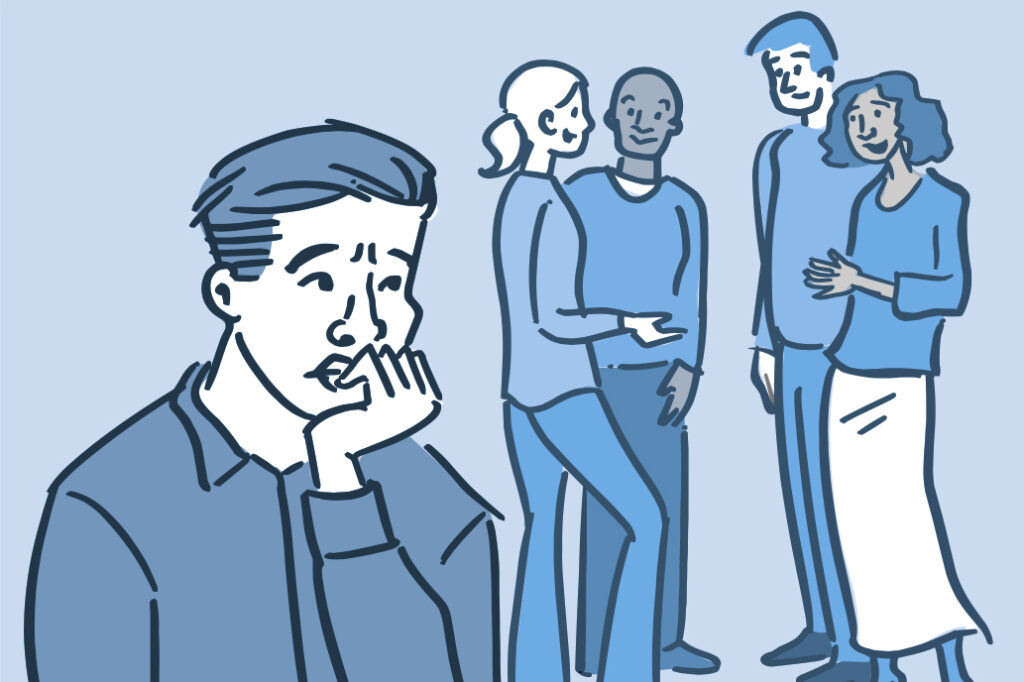
These online hideaways let you open up without the pressure of showing your face or spilling too much personal tea. It’s a judgment-free zone where sharing your mental health story isn’t met with side-eye (LinkedIn). If the thought of a therapist’s couch makes you squirm, maybe chatting online behind a screen is a baby step in the right direction.

Plus, you’re not stuck worrying about who’s nearby or what the clock says. Day or night, these support groups have got your back whenever you need it—offering comfort right from your own cozy space. It’s like having a 24/7 support system tailor-made for the ups and downs of panic disorder.

Connecting with Similar Experiences

Jumping into these online spaces means you’re tapping into a well of folks who get it—whatever “it” is for you. Knowing there’s a tribe out there who completely understand helps validate your feelings and gives you the strength to deal with it all.

Chatting with others on the same emotional rollercoaster, sharing survival tips, and offering that virtual pat on the back, gives everyone a little more hope. This shared journey makes it feel less like a battle alone and more like a team sport towards healing.

When the chips are down or you’re lost in a cloud of doubts, reaching out to people who know panic disorder up close can be a lifesaver. Together, online support communities walk through the highs and lows, cheering each other on with genuine care and solid companionship.

The real magic happens when you find those like-minded folks and can chat without a name-tag. These online havens shine a light that cuts through the dark times, building a community grounded in empathy, shared stories, and a lifeline of resilience that’s just the ticket on the path back to feeling okay.

Evaluating Online Support Groups

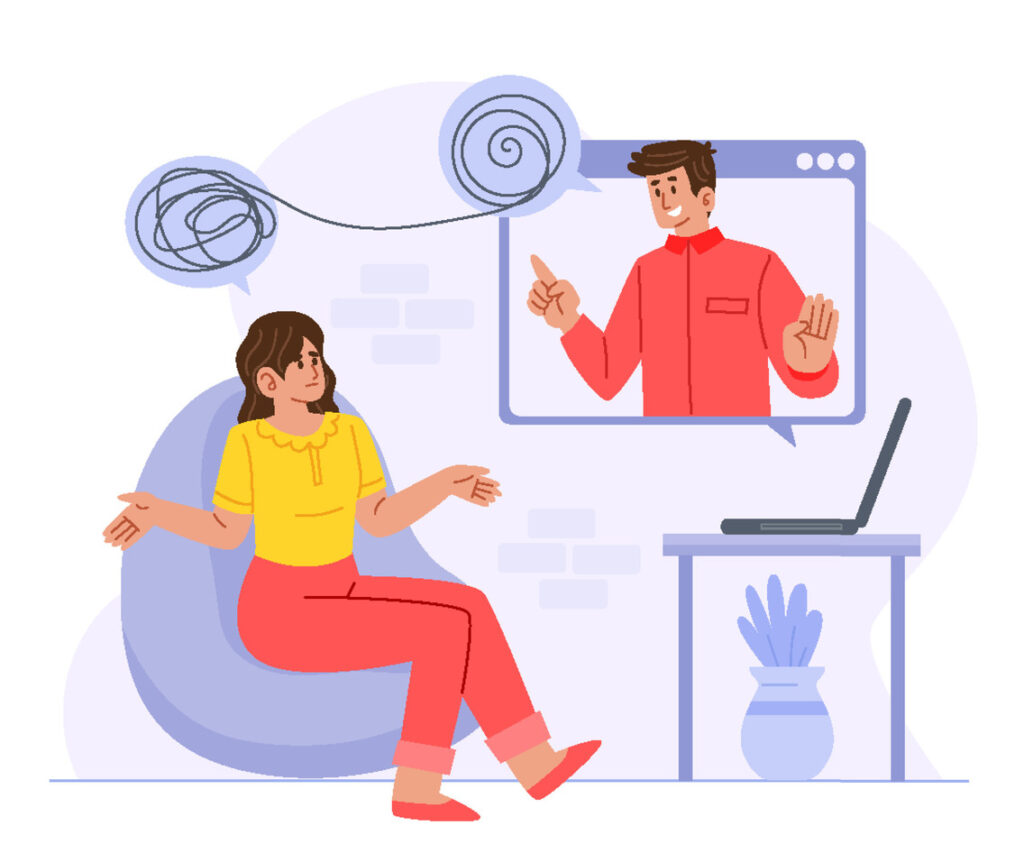
So if you’re on the lookout for online communities to help with panic disorders, you gotta make sure they’re legit and safe. Different groups cater to various needs — from structured non-profit initiatives to casual meetups of folks just wanting to chat about life’s hiccups online.Online Support Groups
Assessing Group Credibility

You wouldn’t jump into a swimming pool without checking it’s got water, right? Same goes here. Before diving into a support group, make sure there’s some mental health gurus or folks who’ve been through the mill and back at the helm. Good groups should have rules that keep things kind and comfy. Plus, do a little fact-checking on what’s being shared in there — real talk only, no quackery.

Ensuring Confidentiality and Safety

Now let’s chat about keeping things hush-hush. Sharing inside these groups shouldn’t come back to bite you. People should feel like they’ve got a secret handshake that keeps their stories safe. The group should lay out what happens with your info and promise not to play Telephone with it. Knowing it’s cool to speak out without some troll-breaking or mishandling your story is vital.

Joining an online support group can be a real game-changer if you’re working through mental health stuff. Science says these communities can help folks get through the dark times and keep them at bay. Bonus: online anonymity means you don’t have to pop your head out from under the covers — nobody snitching on your business. This helps people open up more, as they put less pressure on traditional therapy and kick mental health stigma in the teeth.

By making sure a group’s got its ducks in a row when it comes to credibility, privacy, and safety, folks living with panic disorder can tap into understanding and hands-a-helping community vibes, lifting their spirits and keeping the rough patches smoother.

Specific Online Resources

If you’re looking to find a safe place where people just like you understand what you’re going through with panic disorder, there are some solid options online. Two main go-to’s are mental health forums and peer-to-peer support platforms.

Mental Health Forums

Dive into the Mental Health Forum and you’ll find a corner of the internet that’s all about panic disorder and agoraphobia. It’s a spot where you can spill your thoughts, pick others’ brains for advice, and come across a treasure trove of useful info. It feels good to open up and talk with folks who just get it, especially when you’re trying to handle those pesky panic attacks.

Peer-to-Peer Support Platforms

The Anxiety and Depression Association of America (ADAA) hooks you up with an anonymous peer-to-peer group, bringing together a big crowd of over 60,000 folks dealing with not just anxiety but also depression, OCD, ADHD, PTSD, and more (Self). These places are like big hugs full of understanding, where you can swap tips, share a few laughs, and get a shoulder to lean on. Having other people who know what it’s like really helps when you’re battling panic disorder.

The way tech’s changing, these online communities are stepping up more than ever to lend a hand to anyone wrestling with their mental health, like panic disorder. They break down walls, lift people up, and remind us that no one has to weather the storm alone. By connecting with each other, we get to see that we’re stronger than we believed, and find buddies who’ll cheer us on every step of the way.

Importance of Moderation

Let’s chat about moderation in those online communities for panic disorder support. It’s like being the bouncer at a club but with a lot more empathy. The goal? To keep things safe and make sure everyone feels understood and supported. There are really two big things to this moderation deal: keeping conversations positive and keeping troublemakers at bay.

Promoting Positive Vibes

Getting folks to talk nicely to each other is like setting the table for a good heart-to-heart. Moderators step in like the cool friends who make sure the party vibes stay chill. They keep an eye on how people talk—no one’s getting dragged, and everyone’s encouraged to share a piece of their story. This vibe makes folks feel comfy enough to spill the beans on their stress, ask for pointers, and lend a helping hand without fear of judgment.

Thanks to this upbeat atmosphere, people from all walks of life find a haven where they can share, get advice, and talk about what works for them. It’s magical how such open chats can really help lighten some of the weight folks carry around panic disorder.

Keeping the Bad Stuff Out

Of course, there’s always the element of playing referee. Keeping a close watch for bad behavior is just as important. Moderators are like the neighborhood watch but online—ready to spot fibs, cyberbullies, or anything that might make someone feel lousy.

Just like in the movies, quick action is crucial. Nipping problems in the bud, playing by the rules, and steering those who’re struggling towards help is all in a day’s work. Trust is a big deal, so keeping secrets close to the chest and making sure everyone feels safe is top priority.

Moderation’s the balancing act between making sure everyone gets along and shutting down the nonsense. It’s all about crafting a warm corner of the internet where people reaching out for panic disorder support can feel at ease. This way, online scenes become more than just a chat room—they evolve into welcoming shelters of empathy, hope, and a shared path to getting better together.

Online Support for Panic Disorder

Dealing with panic disorder can feel like a rollercoaster ride without a seatbelt, but trust me, the vast web of online communities designed for this provide a comfy cushion for folks seeking understanding and guidance. These digital hubs are packed with handy resources and practical tools designed to help manage those nerve-wracking panic attacks.

Panic Disorder Resources

In the virtual world, folks having a rough time with panic disorder don’t just find resources, they find lifelines tailored to their needs. There are articles to ease your mind, self-help guides to turn to, and videos that break down what panic attacks are all about and how to handle them like a pro. Tapping into these resources can seriously up your game in understanding panic disorders, helping you to wrest back a bit of control over your own mental health narrative.

They’re not just educational—they’re transformative. They bring the latest info on treatments, DIY self-care, and everything you need for long-term pep. By using these resources, you’re not just learning about your condition; you’re arming yourself with personalized strategies to fend off those anxiety-ridden moments.

Managing Panic Attacks Virtually

Online support’s secret sauce for panic disorder? It’s all about tackling panic attacks without ever leaving your cozy spot. These virtual havens let you link up with others riding the same emotional rollercoaster. You can share your troubles, swap tricks, and find comfort in knowing you’re not alone. The digital world breaks down walls, offering immediate support and a place to exhale when panic hits, bringing about solidarity that’s both warm and welcoming.

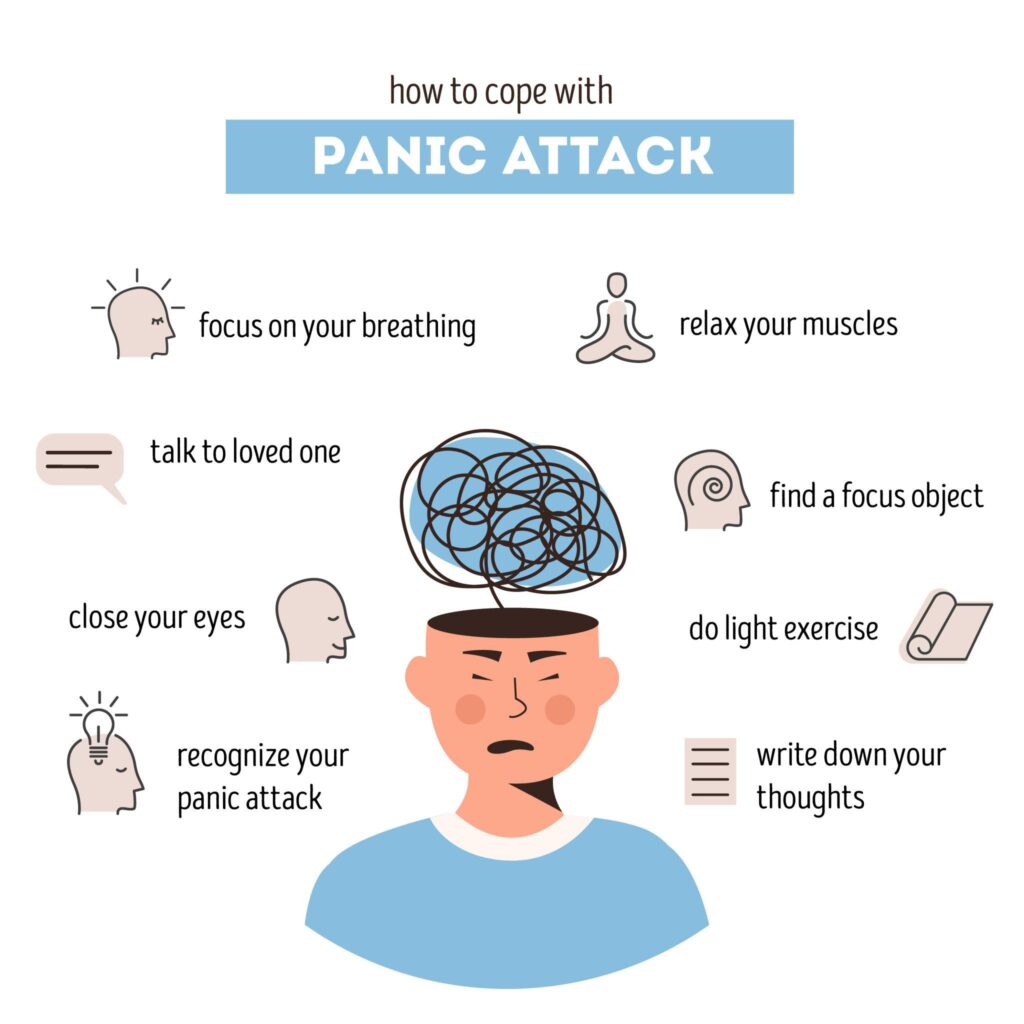
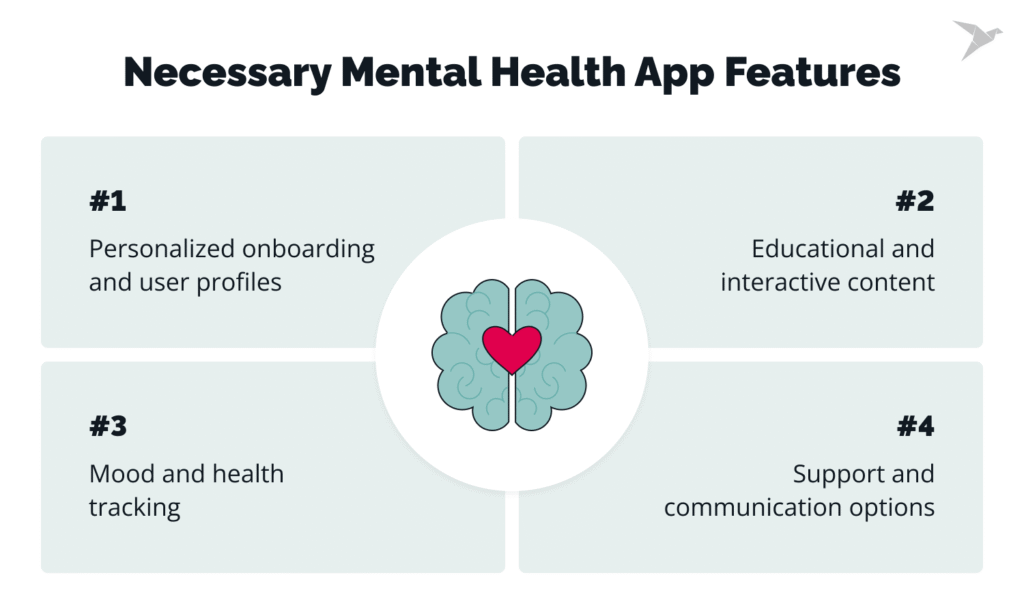
Plus, there’re nifty online tools tailored to take on panic—think trackers to note down episodes, chill-out apps, and mindfulness exercises that help your noggin calm down and breathe easy. Using these digital aids daily cultivates a personal attack management plan, making handling those dreaded panic surges feel less daunting and more familiar.

Diving into online networks and embracing this virtual toolkit, you latch onto a powerful reserve of support. Resilience grows, coping skills sharpen, and before you know it, you’re setting off on a hopeful trek toward healing. These online sanctuaries for panic disorder support aren’t just helpful, they’re the lifeline you didn’t know you needed lighting up the way to mental well-being.

Share this article:
Drarjony
About the Author

Drarjony

Drarjony is a contributor at this publication.

Leave a Reply

Your email address will not be published.Required fields are marked *

Coping Strategies and Treatment Options

panic disorder: 7 Powerful Ways Technology Is Transforming Treatment

Discover how technology is revolutionizing panic attack treatment. Unleash new ways to find peace and calm.

February 1, 2026 0
Share

panic disorderTechnology in Panic Attack Treatment
Howdy folks, let’s chat about something a few of us know all too well – panic attacks. Nowadays, there’s some serious tech coming to the rescue. We’re not talking about your grandma’s remedies; we’re diving into gizmos like apps on your phone, web-based therapy, and even some snazzy mobile tools to help out when the panic monster strikes.

Mobile-Aided Case Management

So, imagine having a little pocket coach with you at all times, kinda like a dependable friend who’s always got your back. Researchers say using mobile-aided case management can really take the edge off. I read about a study showing folks reported feeling much better after using these tools for about six months – better than just the usual ways we’ve always dealt with these things. You can read more about that here.

Internet-Delivered Cognitive Behavioral Therapy

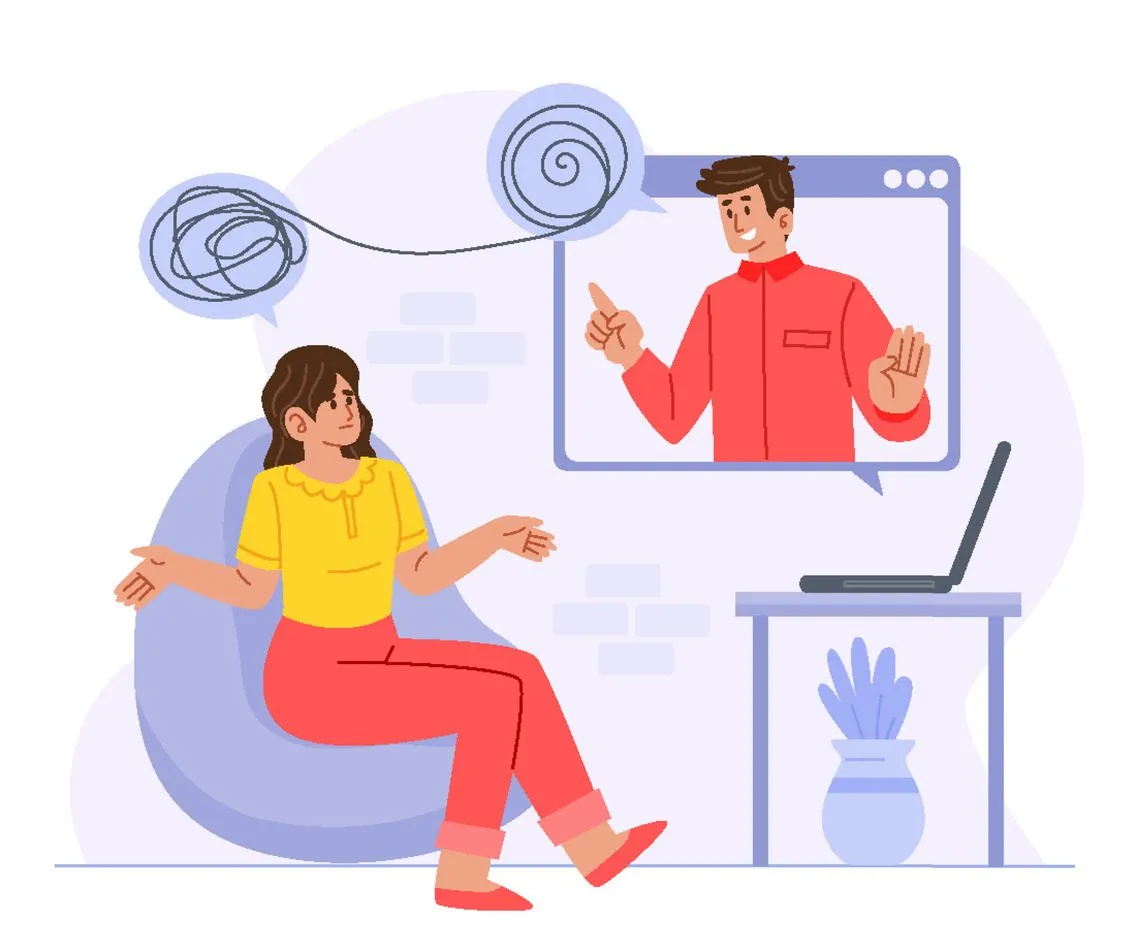
How about getting therapy right in your living room, or wherever you fancy lounging? That’s what internet-delivered CBT lets you do. It’s kinda like chatting with someone who really gets it, without the old-school couch. This online thingamajig is working wonders for folks wrestling with anxiety, including me sometimes. Easy to access and backed by science to put anxieties to rest, you can find those details here.

Smartphone Apps for Anxiety

Got a phone? Then you’ve probably got access to a therapist too, in app form. These little programs are lifesavers, literally in your hands, evaluating and supporting you on-the-go. They’re pretty handy for curbing overwhelming feelings when panic pops by for an unwanted visit, at least compared to just lounging about worrying. Want to peek into how they help? Check this out here.

Let’s not pretend these apps are a one-size-fits-all solution though. They’re not miracle workers, but they are a nice bit of additional support. They help arm you with tools, guidance, and a touch of reassurance when things get dicey, especially if you’re tooth and nail with those panic demons. Got doubts? Explore more on the topic here.

Getting techy with managing panic attacks means we can reach out for help from practically anywhere and anytime, fitting neatly into our tech-filled lives. Using nifty innovations like mobile care managers, digital therapy sessions, and smartphone aids means I’m in charge of my story and can tackle moments of meltdown with newfound confidence. Let’s keep that monster at bay together.

The Power of Tech Over Panic Attacks

Tackling panic attacks is no walk in the park, but tech has stepped up with some pretty nifty ways to find relief. Think of virtual reality sessions, gadgets that read your body’s signals, and peeks into brain waves as game-changers in calming those stormy moments.

Virtual Reality Therapy

You’re not at a theme park, but VR is a thrill for helping with anxiety issues, including panic attacks. Imagine facing your fears head-on in a stress-free, virtual bubble. It’s all about gently steering through those jittery situations. Sure, we still need some more tests to see how it stacks up for other anxiety hiccups and why it works. Still, using VR for panic feels like a fresh breath of air. It’s like your therapist, but in a pair of goggles and way cooler.

Biofeedback to the Rescue

Then there’s this awesome app, PanicMechanic, that dips into the biofeedback pool. The idea? Help you learn tricks to manage bodily freak-outs during panic attacks. The app checks your heartbeat, gives you the inside scoop in real-time, and lets you sort out those chaotic vibes. It’s like having a coach whispering advice in your ear whenever things get a bit too much.

Peeking at Brain Waves

Brain activity tracking tools are like the Sherlock Holmes of the tech world, digging deeper into panic puzzles. By keeping tabs on what your noggin’s up to during a panic fest, doctors can get the lowdown on your brain’s quirks. This helps make pinpointing problems and crafting solutions that fit like a glove a lot easier.

Jumping on these tech wagons—VR, biofeedback, and brain sleuthing gadgets—means shaking up how we tackle panic headaches. Imagine a future where you don’t just live with panic attacks but face them with a tailored plan in hand. Want to learn more about how tech is changing the panic game? Take a peek at our latest thoughts on how technology can help manage panic episodes.

Impact on Panic Disorder

Let’s chat about how tech’s shaking things up for panic disorder. From easing symptoms to jazzing up brain function, it’s all about finding that sweet spot between nasty panic symptoms and how our noggins tick.

Symptom Reduction

Imagine finding a buddy in tech for helping ease panic disorder symptoms. Participants who used apps meant for panic intervention noticed some serious improvement. Picture this: a gang of app users saw an 80% bump in feeling better about their panic troubles. Contrast that with only 29% of the folks in the old-school control crowd singing similar tunes.

These app users also reported a jaw-dropping 42.5% drop in their panic symptoms. Their Panic Disorder Severity Scale (PDSS) score dipped from a mean of 14.3 down to 7.2 after they started using the app. Meanwhile, the control squad saw a more modest 14.6% dip in their numbers, dropping from 12.4 to 9.8.

Improved Brain Activity

What’s cooking in the brain? Thanks to tech, there’s some serious improvement in brain activity in folks battling panic disorder. How’s that look exactly? It’s all about reduced oxygenated hemoglobin (accHbO2) pooling in certain brain territories, like the right ventrolateral prefrontal cortex and the orbitofrontal cortex. The folks with apps showed even sharper dips than the control group (Journal of Medical Internet Research).

Correlation Between Symptoms and Brain Activity

You wanna see something cool? Tech makes it possible to link panic symptoms with brain functioning. Changes in PDSS scores are positively vibing with changes in accumulated oxygenated hemoglobin levels in the VLPFC and OFC. It’s like a dance between feeling better and your brain saying, “I got you” (Journal of Medical Internet Research).

There’s quite the connection between alleviating symptoms and brain calm, where decreased panic symptoms tag along with reduced brain activity in these areas. It shows how easing panic isn’t just about tackling rough moods—it’s about untangling those knotted-up brain wires too (Journal of Medical Internet Research).

Tech ain’t just a fancy toolbox anymore – it’s rolling up its sleeves and reshaping how we view and beat panic disorder, smoothing the path to a better understanding of the brain and its vibes.

Success Stories

Let’s chat about how tech is shaking things up for folks dealing with panic attacks. Picture a lifeline that’s a tap-away, helping people find their footing when panic strikes. Some real-life tales and groundbreaking app features offer a peek into how this digital buddy outshines the old-school methods.

Positive Participant Outcomes

Tech’s magic touch has shown some serious promise in tackling panic disorder. Think about it: people using a smartphone buddy saw their fears ease up, anxiety levels dial down, and a lot of progress by the halfway point of the year. It’s like comparing a gentle tap on the shoulder to a big bear hug.

Folks mentioned feeling more in control, learning to tune into their emotions, and enjoying stronger connections with others around them. It’s as if the app handed them a flashlight in the dark, making it clearer where they stand and where they could step next (NCBI). These changes spell hope for anyone feeling trapped by their panic, giving them tools to manage their edge.

App Components and Benefits

Now, the brains behind these apps deserve a high five because their sleek design and clever features have been game-changers. Imagine a toolkit rolled into one app: a diary to jot down feels, a library of wisdom nuggets, quests to keep users on their toes, and cool games with a purpose. Sounds fun, right? This groovy mix worked wonders on taming those panic symptoms (Journal of Medical Internet Research).

Jotting down thoughts, diving into learning bits, tackling quests, and playing seriously fun games help users grab the steering wheel of their treatment. It’s not just about keeping calm; it’s about owning the experience.

App Advantages Over Traditional Treatments

Apps? They’re the cool kids on the block compared to old-fashioned methods. Folks using them noticed hefty drops in their Panic Disorder Severity Scale scores—you know, the report card for panic. With tech, you can tweak things to fit like a glove, hitting the sweet spot with treatments that get the job done.

And it doesn’t stop there. For tech fans, the added bonus includes seeing the brain go quieter in some regions, lining up with relief from symptoms. That’s tech playing detective, getting to the root of what fuels panic (Journal of Medical Internet Research).

With tech in their corner, those wrestling with panic attacks gain access to a buddy that’s always ready, interactive goodies, and help that feels like it was tailor-made. Long story short: it’s not just about surviving panic—it’s about stepping into a more empowered, brighter day managing it.

Share this article:
Drarjony
About the Author

Drarjony

Drarjony is a contributor at this publication.

Leave a Reply

Your email address will not be published.Required fields are marked *

Coping Strategies

panic disorder: 7 Key Symptoms, Causes, and Treatments

Unveil how chronic illnesses impact panic disorders. Discover coping strategies for a brighter path ahead.

January 20, 2026 0
Share

Understanding Panic Attacks

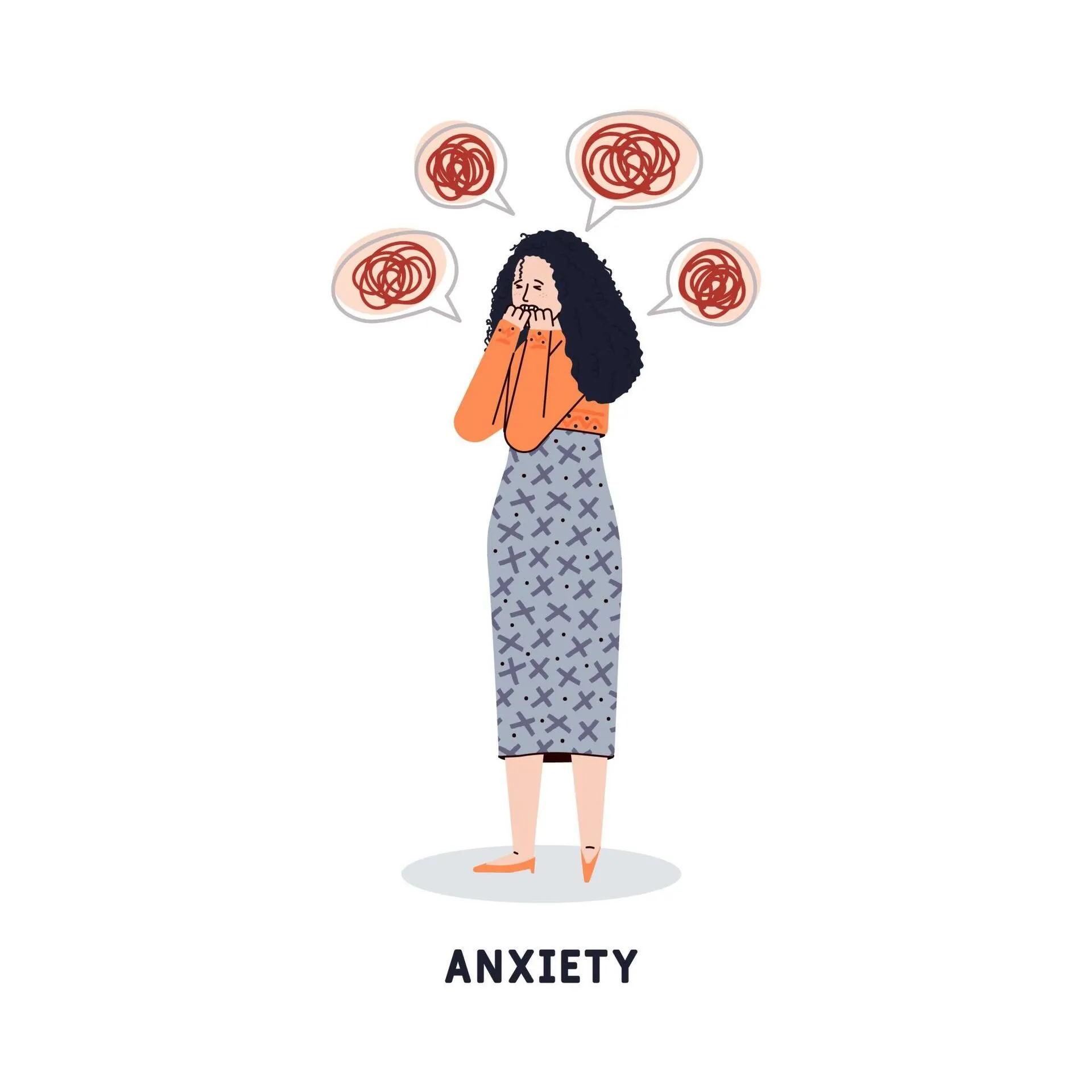
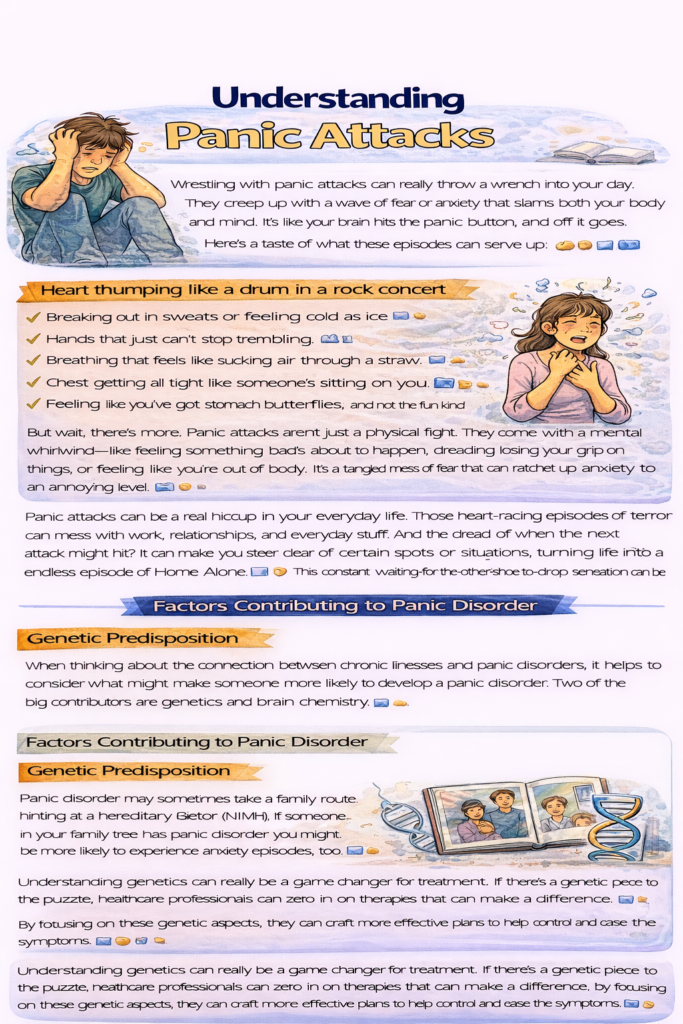
Wrestling with panic attacks can really throw a wrench into your day. They creep up with a wave of fear or anxiety that slams both your body and mind. It’s like your brain hits the panic button, and off it goes. Here’s a taste of what these episodes can serve up:

  • Heart thumping like a drum in a rock concert
  • Breaking out in sweats or feeling cold as ice
  • Hands that just can’t stop trembling
  • Breathing that feels like sucking air through a straw
  • Chest getting all tight like someone’s sitting on you
  • Feeling like you’ve got stomach butterflies, and not the fun kind

But wait, there’s more. Panic attacks aren’t just a physical fight. They come with a mental whirlwind—like feeling something bad’s about to happen, dreading losing your grip on things, or feeling like you’re out of body. It’s a tangled mess of fear that can ratchet up anxiety to an annoying level.

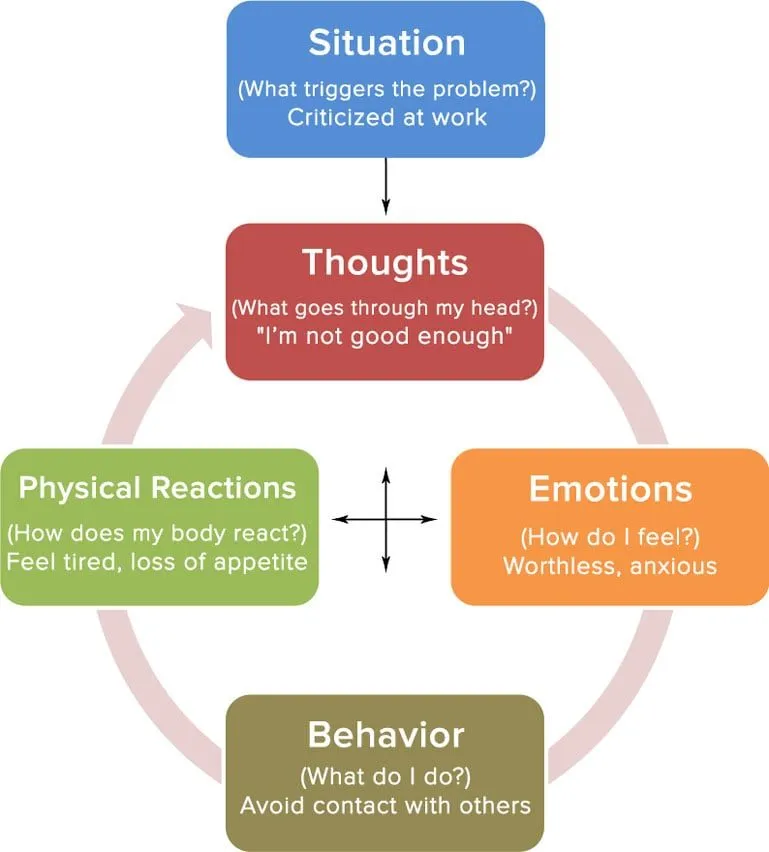
Panic attacks can be a real hiccup in your everyday life. Those heart-racing episodes of terror can mess with work, relationships, and everyday stuff. And the dread of when the next attack might hit? It can make you steer clear of certain spots or situations, turning life into an endless episode of Home Alone. This constant waiting-for-the-other-shoe-to-drop sensation can spiral into even more anxiety, making it one vicious cycle.

Realizing how panic attacks gnaw away at peace of mind and seeking a lifeline is key. Recognizing what panic attacks toss your way and how they can unhinge your daily routine is the springboard to wrestling them into submission.

If panic attacks are taking you on a wild ride, it’s good to know that a helping hand is there. Whether it’s about popping a pill or talking it out on a therapist’s couch, there’s a whole bunch of ways to clamp down on those symptoms and grab life’s reigns again. Getting on top of this problem with the help of pros or trusty support groups can let you face down panic attacks without flinching.

Factors Contributing to Panic Disorder

When thinking about the connection between chronic illnesses and panic disorders, it helps to consider what might make someone more likely to develop a panic disorder. Two of the big contributors are genetics and brain chemistry.

Genetic Predisposition

Panic disorder may sometimes take a family route, hinting at a hereditary factor (NIMH). If someone in your family tree has panic disorder, you might be more likely to experience anxiety episodes, too. This genetic link could affect how your brain handles stress and anxiety, making you more prone to these experiences.

Understanding genetics can really be a game changer for treatment. If there’s a genetic piece to the puzzle, healthcare professionals can zero in on therapies that can make a difference. By focusing on these genetic aspects, they can craft more effective plans to help control and ease the symptoms.Panic Disorder

Neurochemical Imbalance

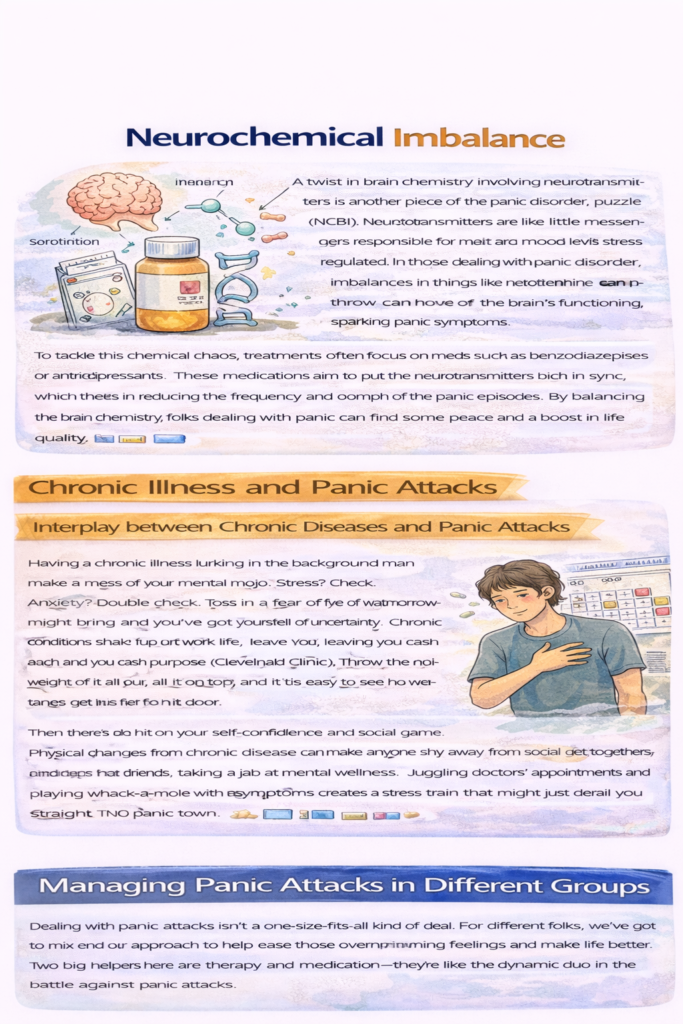
A twist in brain chemistry involving neurotransmitters is another piece of the panic disorder puzzle (NCBI). Neurotransmitters are like little messengers responsible for how our mood and stress levels are regulated. In those dealing with panic disorder, imbalances in things like serotonin and norepinephrine can throw off the brain’s functioning, sparking panic symptoms.

To tackle this chemical chaos, treatments often focus on meds such as benzodiazepines or antidepressants. These medications aim to put the neurotransmitters back in sync, which helps in reducing the frequency and oomph of the panic episodes. By balancing the brain chemistry, folks dealing with panic can find some peace and a boost in life quality.

With a handle on the genetic and chemical aspects fueling panic disorder, people and their support systems get a clearer picture of what’s at play. By tuning into these core factors, tailored treatment plans can be created to suit the individual needs of those impacted by panic disorder.

Chronic Illness and Panic Attacks

I’ve found myself knee deep in the mess where chronic illness meets panic attacks. It’s quite a ride, feeling like your body is tossing out some pretty convincing panic attack impersonations. It doesn’t take a medic to mess up the diagnosis when heart or thyroid issues start acting up (Mayo Clinic). This uncertainty can feed the anxiety beast within and leave you scratching your head, wondering what’s real and what’s just your health throwing its usual curveballs.

Interplay between Chronic Diseases and Panic Attacks

Having a chronic illness lurking in the background can make a mess of your mental mojo. Stress? Check. Anxiety? Double check. Toss in a fear of what tomorrow might bring and you’ve got yourself a cocktail of uncertainty. Chronic conditions can shake up your work life, leaving you low on cash and purpose (Cleveland Clinic). Throw the emotional weight of it all on top, and it’s easy to see how panic attacks get their foot in the door.

Then there’s the hit on your self-confidence and social game. Physical changes from chronic disease can make anyone shy away from social get-togethers and drift from friends, taking a jab at mental wellness. Juggling doctors’ appointments and playing whack-a-mole with symptoms creates a stress train that might just derail you straight into panic town.

Invisible Symptoms and Emotional Impact

Living with chronic illness is a bit like being a magician’s assistant—copping invisible blows that no one else can see. These hidden nuisances can leave you feeling cut off, misunderstood, and downright irritated. The struggle seeps beyond just physical aches, it tugs at your heart and head in ways folks without these challenges might not grasp.

The weight chronic illness dumps on you shows up in different threads—stress, shaky control, anxiety, and sometimes gloom looming like a backdrop you can’t shake. Pointing out these emotional hits is key, because when dismissed, they can blow symptoms out of proportion and make coping feel like climbing Everest in flip-flops.

Spotting the tightrope walk between chronic illness and panic attacks can open avenues for cover-both-bases type support for body and mind. Bringing together strategies for chronic woes with anxiety-busting tricks can craft a more balanced approach to health. If chronic illness is messing with your mental groove, reaching out for a few professional pointers can be a bold, brave step in steering through this tricky terrain.

Managing Panic Attacks in Different Groups

Dealing with panic attacks isn’t a one-size-fits-all kind of deal. For different folks, we’ve got to mix up our approach to help ease those overwhelming feelings and make life better. Two big helpers here are therapy and medication—they’re like the dynamic duo in the battle against panic attacks.

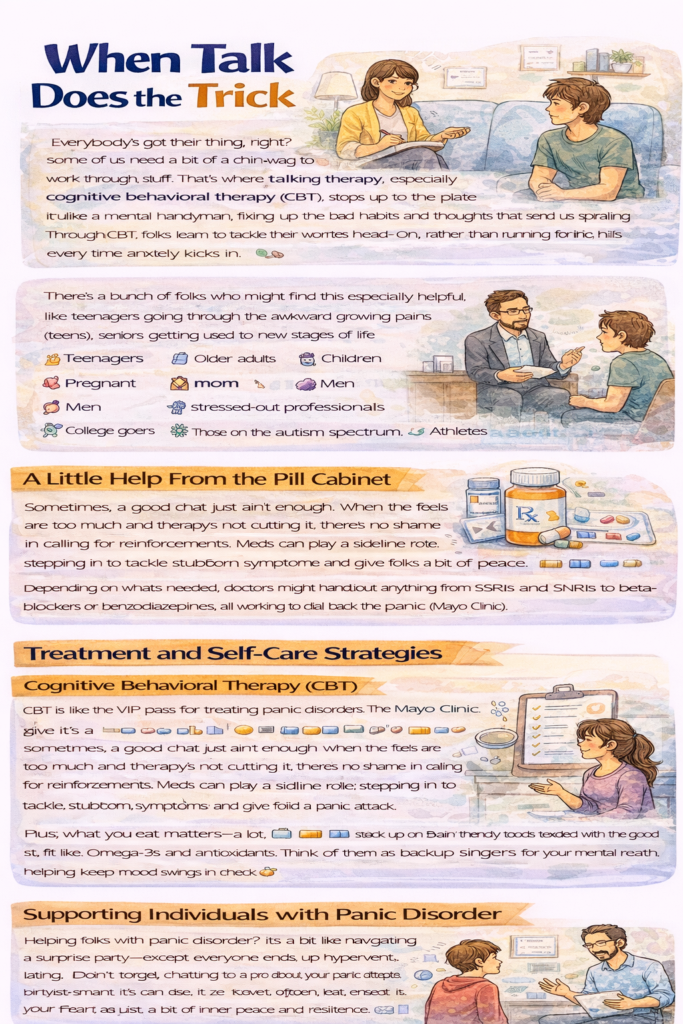
When Talk Does the Trick

Everybody’s got their thing, right? Some of us need a bit of a chin-wag to work through stuff. That’s where talking therapy, especially cognitive behavioral therapy (CBT), steps up to the plate. It’s like a mental handyman, fixing up the bad habits and thoughts that send us spiraling. Through CBT, folks learn to tackle their worries head-on, rather than running for the hills every time anxiety kicks in.

There’s a bunch of folks who might find this especially helpful, like teenagers going through the awkward growing pains (teens), seniors getting used to new stages of life (older adults), kids figuring out the world (children), expectant moms with all their extra feels (pregnant women), men, stressed-out professionals, college goers, those on the autism spectrum, and athletes dealing with the pressure pot of performance. Therapy offers these folks a safe space to figure stuff out without judgment.

A Little Help From the Pill Cabinet

Sometimes, a good chat just ain’t enough. When the feels are too much and therapy’s not cutting it, there’s no shame in calling for reinforcements. Meds can play a sideline role, stepping in to tackle stubborn symptoms and give folks a bit of peace.

Depending on what’s needed, doctors might hand out anything from SSRIs and SNRIs to beta-blockers or benzodiazepines, all working to dial back the panic (Mayo Clinic). It’s super important folks talk through their options with a healthcare whiz to make sure everyone’s on the same page and the meds are doing their job without causing problems.

Handling panic attacks across different groups means looking at the big picture, mixing in therapy, meds, and whatever personal touch folks need to tackle their unique hurdles. By putting together a game plan that mixes psychotherapeutic techniques and medicinal help, people can slowly regain control and stride towards a healthier mindset. Don’t forget, chatting to a pro about your panic attacks isn’t just smart, it can turn everything around and foster a bit of inner peace and resilience.

Treatment and Self-Care Strategies

When dealing with chronic illnesses that mess with your peace of mind, it’s about finding treatment and self-care tricks that actually make a difference. Cognitive behavioral therapy (CBT) and a few changes in how you live your life can be game-changers when it comes to handling those unwelcome panic attack invites.

Cognitive Behavioral Therapy (CBT)

CBT is like the VIP pass for treating panic disorders. The pros at Mayo Clinic give it a thumbs-up for helping folks tackle their panic head-on. It’s a bit like having a mental toolbox. You get to unpack all those thoughts and behaviors that stir the pot and learn some nifty ways to deal with them. The idea? Turn the monster under the bed into a cute puppy.

You get a coach in the form of a therapist who helps you spot what’s setting you off. By tinkering with how you think and act, you end up taking the reigns back, stopping panic attacks from crashing your party. With guided lessons, you’ll learn to spot your triggers, tweak your responses, and build better coping skills. And, bit by bit, you regain control.

Lifestyle Adjustments

Besides having therapy on your side, tweaking your daily habits can be a solid way to keep panic at bay. Think of it like giving your body and mind a fresh playlist. A few changes like a better diet, shaking a leg more often, managing stress, and sleeping well can turn things around if panic hits when you’re already dealing with health issues.

Getting off the couch for a bit of exercise, as National Institute of Mental Health suggests, does more than just burn calories—it’s a bit of peace for your mind. Sweating it out releases happy hormones, giving you an instant mood lift and a stress-buster in one go.

Plus, what you eat matters—a lot. Stock up on brain-friendly foods loaded with the good stuff like Omega-3s and antioxidants. Think of them as backup singers for your mental health, helping keep mood swings in check and stress from hogging the spotlight.

Turning these changes into part of your routine gives you a solid strategy against panic attacks caused by chronic illnesses. Take some time for yourself and don’t hesitate to get healthcare pros on your team. By pulling it all together, you can carve out a path towards feeling better and battling those panic attacks with confidence.

Supporting Individuals with Panic Disorder

Helping folks with panic disorder? It’s a bit like navigating a surprise party—except everyone ends up hyperventilating. But seriously, family vibes and genetic ties are big players in getting the right kind of help sorted out. And then there’s the power team approach—multiple minds working together to tackle panic disorder head-on can make all the difference.

Family Dynamics and Genetic Factors

Panic disorder sometimes feels like an uninvited, slightly annoying family member—it tends to run in families, hinting at some genetic link (yep, you can thank your relatives for that one) (NIMH). Studies say you might inherit a tendency to be more panic-prone (NCBI). Even if the exact family recipe for developing panic disorder is still cooking, understanding how genes and environment mix can shed some light on why someone might be more inclined to freak out at the drop of a hat.

Collaborative Care Approach

Now, let’s talk teamwork. Imagine a bunch of experts joining forces to help someone with panic disorder. This means doctors, therapists, and family members all pulling in the same direction—like a super squad for your mental health.

This superstar care team customizes a game plan just for the individual, tackling everything from shaky hands to that buzzing brain. This method ensures both mind and body get the memo: we’re handling this.

Families stepping up and getting educated about panic disorder can really boost morale. When the folks around you understand what’s happening, it cuts down the confusion and isolation. Being able to openly gab about symptoms and treatments with family can make the whole healing process a notch less lonely and a lot more comforting.

Being clued into how family quirks and genetics can influence panic disorder—and rallying support from all angles—gives people what they need to face the big, bad anxiety monster. Creating a tight-knit support circle and having healthcare pros on speed dial empowers individuals to tackle panic attacks and snag a better quality of life.

Share this article:
Drarjony
About the Author

Drarjony

Drarjony is a contributor at this publication.

Leave a Reply

Your email address will not be published.Required fields are marked *