

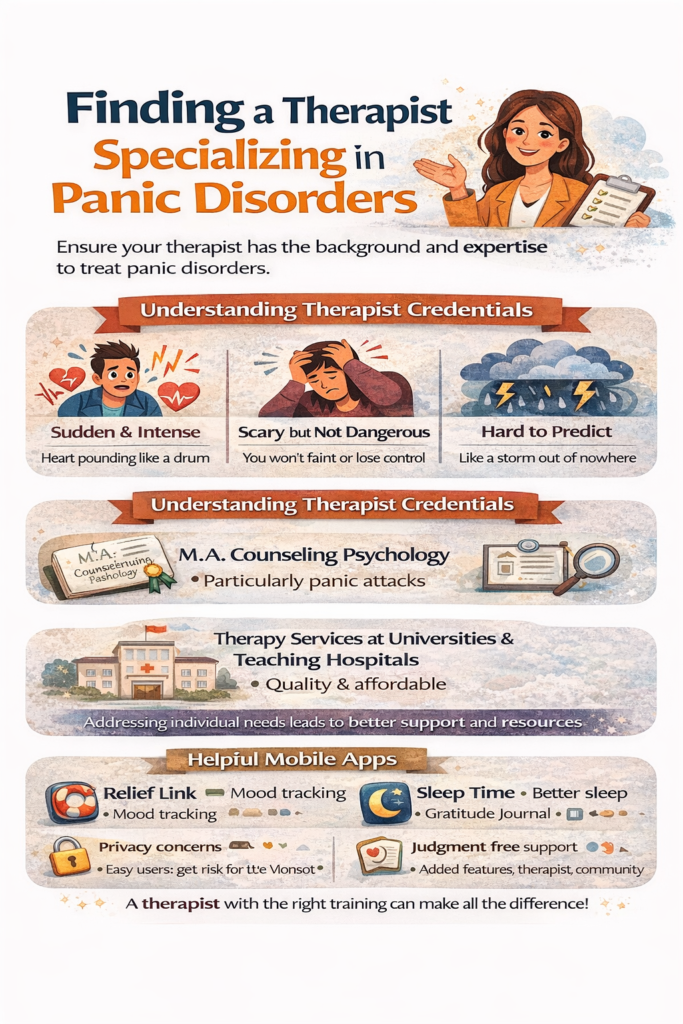
 Finding a Therapist Specializing in Panic Disorders
When you’re on the hunt for a therapist who really gets panic disorders, it’s all about checking out their background and making sure they’ve got the chops to handle anxiety.
Understanding Therapist Credentials
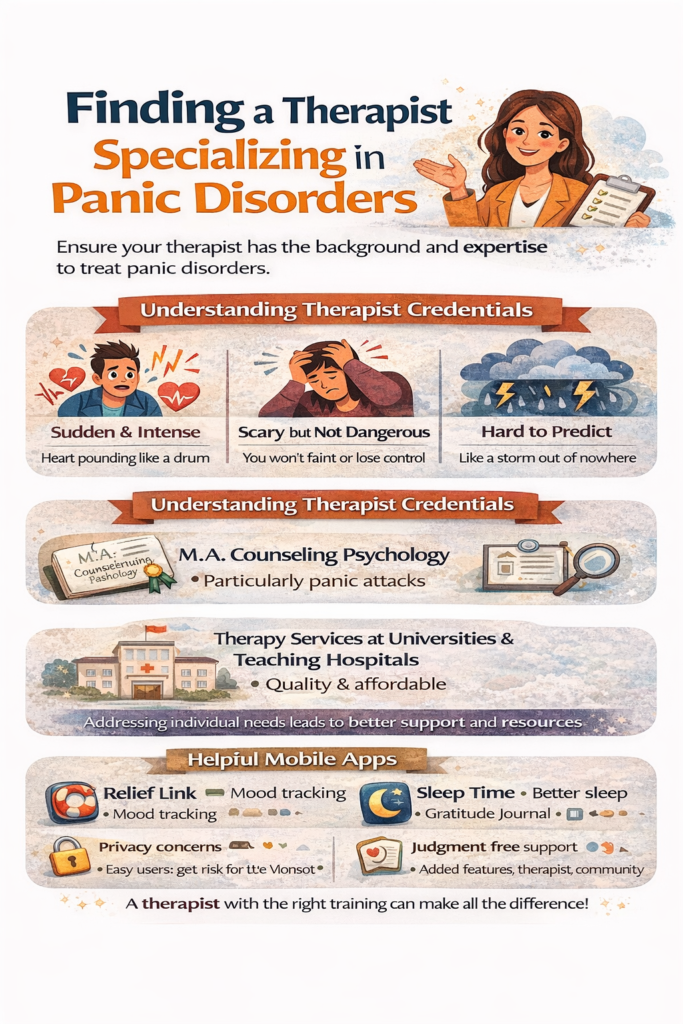
You want to make sure the therapist you choose has the right know-how to help you through your panic struggles. Look for folks who hold a Master of Arts in Counseling Psychology. This kind of qualification signals they’ve got a solid base in mental health care. It’s also wise to go for therapists who’ve spent some serious time learning about anxiety disorders, particularly panic attacks.
Consider checking out universities or teaching hospitals in your area. They often offer therapy services that won’t break the bank. It’s important to seek out therapists who not only have the right licenses but also a good track record with panic disorder patients.
 Certification in Anxiety Treatment
Finding certification in anxiety treatment is like winning the jackpot when it comes to choosing the right therapist. Those with extra qualifications have likely honed their skills in handling anxiety issues with precision.
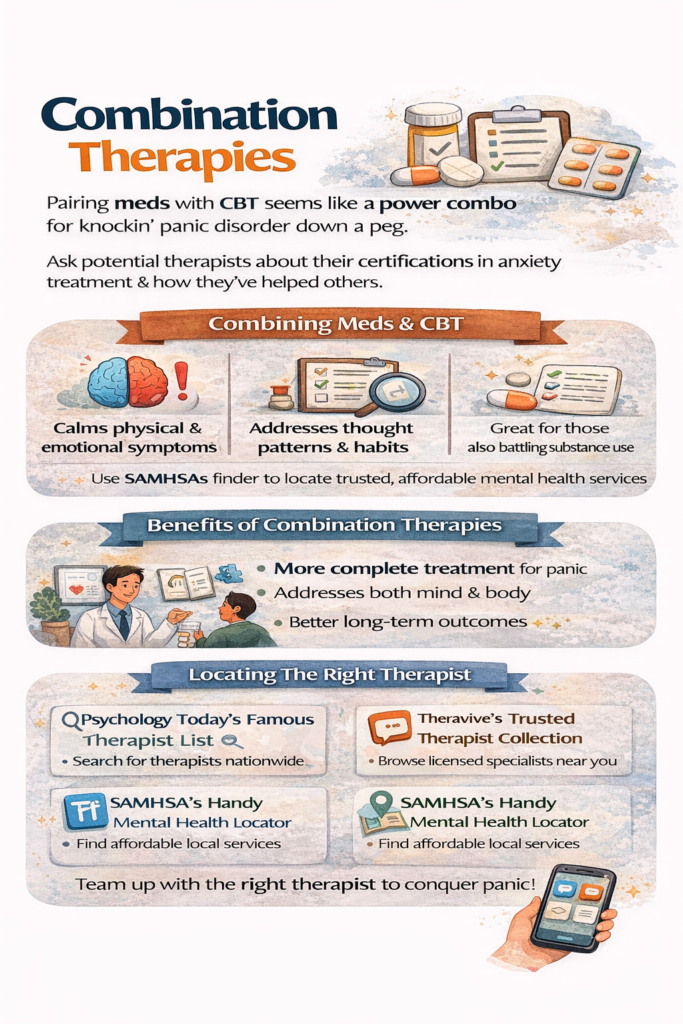
SAMHSA, short for Substance Abuse and Mental Health Services Administration, has this neat tool called the Mental Health Facilities Locator. It’s a lifesaver for finding nearby mental health services that won’t leave your wallet empty (SAMHSA). So, when you’re chatting with potential therapists, don’t be shy. Ask them about their certifications related to anxiety treatment and how they’ve successfully helped others tackle panic attacks.
Knowing a therapist’s credentials and their expertise in anxiety can be reassuring. By doing a little homework, you’ll be in good shape to find someone who can really guide you in managing and overcoming panic attacks. Prioritize finding someone who’s genuinely equipped to support you on this journey.
Therapy Options for Panic Disorder
Checking out all the different therapy roads you can travel with panic disorder is key to finding your way to feeling better. Getting the hang of how well various treatments work and what they involve could help you pick what’s right for you.
Cognitive Behavioral Therapy (CBT)
Cognitive Behavioral Therapy (yep, CBT for short) is like the superstar of panic disorder treatments. It’s got the thumbs-up from experts for being effective. With CBT, people dig deep into those thought and behavior loops that kick off panic attacks. You learn to spot and challenge those pesky thoughts, arming yourself with ways to handle the panic when it sneaks up. If you’re thinking of giving it a whirl, finding a therapist who’s savvy with CBT and exposure techniques might be your best bet.
Medication Considerations
Pills might also play a part in putting the brakes on panic disorder. Antidepressants, like SSRIs and SNRIs, have a track record of cooling down those panic fires. They sort of balance your brain’s chemistry, making the anxiety less fierce. Still, those little chill pills called benzodiazepines, while great for short moments, might not be your long-term pals due to risks like getting hooked up.
 Combination Therapies
Pairing meds with CBT seems like a power combo for knockin’ panic disorder down a peg (American Academy of Family Physicians). This team effort tackles both the brainy and emotional parts of what’s going on, giving you the best of both worlds. If someone’s used to turning to a drink or two alongside battling panic, this combo can also team up with treatments to help kick those habits for good results (American Academy of Family Physicians).
By poking around the corners of CBT, medication, and combo therapies, you can piece together a tailor-made plan that suits you just right. Finding a therapist who really gets folks with panic issues is a big step toward snagging that peaceful space back in your life, conquering panic one moment at a time.
Locating The Right Therapist for Panic Disorders
If you’re on the hunt for the right person to talk to about panic disorders, finding someone who really gets it is a big deal. Here’s a cheat sheet with three solid picks to track down those who know how to handle panic stuff.
Psychology Today’s Famous Therapist List
Need a search buddy? Psychology Today’s got you covered. Punch in your zip code, city, or even a therapist’s last name, and you’re off! They’ve got the lowdown on what therapists are into, their prices, what insurance they take, and their credentials. This nifty tool gives you the power to find someone who’s just the right fit for what you’re dealing with.
Theravive’s Trusted Therapist Collection
Another go-to? Theravive. They’ve got a directory ready for exploring, full of licensed pros aiming to make therapy feel safe and simple. This list is handy for finding folks who specifically help with panic disorders and similar issues. Think of it like a friend that matches you with someone who can offer the support vibe you’ve been seeking.
SAMHSA’s Handy Mental Health Locator
Ever heard of SAMHSA? They’re the champs, offering a way to scout out mental health services through their locator. This tool’s a gem for finding nearby clinics, whether you’re looking for something outpatient, inpatient, or residential without breaking the bank. SAMHSA guides you to places that suit what you need right where you live, making it less of a slog.
So there you have it, three useful links that could make all the difference in snagging a therapist for panic disorders. Dive in and see which one speaks to you—you’re just a few clicks away from the help you’re hoping for, with experts who measure up and get what you’re going through. Don’t wait, get the wheels turning on managing this thing like a pro.
Screening Tools for Panic Disorders
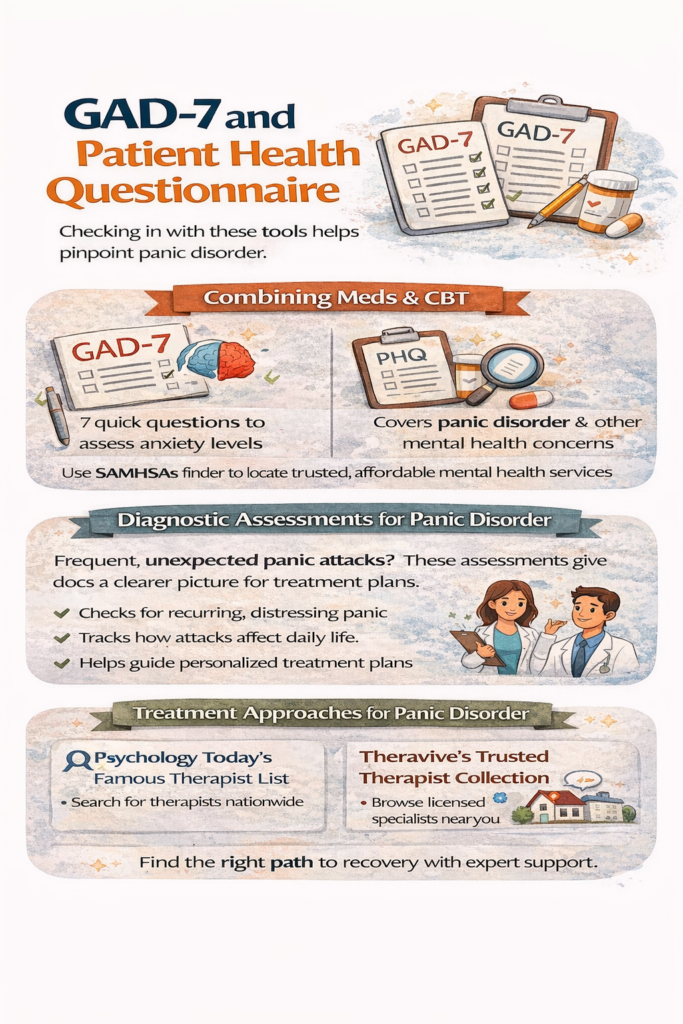
Alright, if you’ve ever found yourself wondering how to figure out if you or someone you care about might be tangled up with generalized anxiety disorder (GAD) or panic disorder (PD), you’re in the right place. There are these nifty little screening tools, like the GAD-7 and Patient Health Questionnaire, that can help doctors in putting a name to those pesky symptoms and getting you on the path to feeling better. Seriously, these things are like cheat sheets for mental health pros. (American Academy of Family Physicians).
 GAD-7 and Patient Health Questionnaire
- So, the GAD-7 is like a breeze to fill out. It’s self-explanatory, with just seven quick questions that dive into the anxiety territory. It’s all about what’s been bugging you in the past couple of weeks. Think of it as a little personal quiz on anxiety, checking in on how intense things have been.
- Then there’s the Patient Health Questionnaire. This bad boy jumps into a bigger pool of mental health stuff, PD included. It tunes in to the nasty ways panic might be messing with your day-to-day groove.
These tools are gold for healthcare experts. They give those docs a snapshot of what’s up with you, so they can scribble down a game plan that makes life a bit less stressful.
Diagnostic Assessments for Panic Disorder
Panic disorder, now that’s a party crasher. It sneaks up with those sudden panic attacks, leaving you with all kinds of unsettling symptoms. Figuring out if PD is on the scene isn’t just about ticking boxes—it’s about seeing if those attacks have you stressing about the next one and if you’re changing your behavior in a way that’s not exactly helping (American Academy of Family Physicians).
Pinning down PD involves piecing together a few clues—recurring, unexpected bouts of panic topping the list. The assessment digs into the patterns and sees if your mind’s gearing up for a ‘here we go again’ moment. A solid look into your mental puzzle lets healthcare pros get a bead on what’s cooking and whip up a treatment plan that vibes with you.
If you’re thinking panic disorder might be joining your circus, talking to a pro is the way to go. With a bit of guidance, managing panic attacks and grabbing life by the horns becomes more than possible. Curious about future tidbits and tricks for tackling panic attacks? Check out this collection: top resources for managing panic attacks in 2025.
Treatment Approaches for Panic Disorder
Living with panic disorder feels like battling an unpredictable storm. Seeking the right help, though, can be a game-changer, improving your life in ways you might not have dreamed possible. Let’s chat about a couple of solid options: Cognitive Behavioral Therapy (CBT) and figuring out whether outpatient or inpatient therapy suits you best.
Cognitive Behavioral Therapy (CBT) Effectiveness
Cognitive Behavioral Therapy (CBT) often steals the spotlight for treating panic disorder. You sit down with a therapist for about 10-15 sessions over weeks—you can even squeeze it into 6-7 sessions if you’re in a bit of a rush. It’s got the magic of helping you rethink how you handle panic attacks. The therapist acts as a guide on this wild ride through your thoughts and feelings, working to dial down the intensity of those panic episodes. Guess what? At times, it’s neck-and-neck with meds like antidepressants in calming the storm.
CBT dives into your thoughts and physical reactions, turning chaos into calm. If you’re fighting both panic and low moods, stretching these sessions out can be gold. Quick relief might zip by in 10-15 weeks, and those touch-up sessions afterward keep everything on point. It’s like having a safety net while you step down off meds.
Outpatient vs. Inpatient Therapy
When deciding the best route for therapy, the choice between outpatient or inpatient is important. With outpatient therapy, you can keep chilling at home and drop by the therapist’s office between your regular gigs. It fits like a glove for those juggling life while tackling panic.
Inpatient therapy, though, means hunkering down at a facility where you get intense care 24/7. It’s like hitting the pause button on life to focus on getting better, especially when panic’s got you in its grip and won’t let go.
Deciding between outpatient and inpatient care should consider your symptoms, lifestyle, and what the pros advise. Both can help you tame the panic beast, each in a way that wraps care around you like a custom-fit sweater.
Understanding how CBT fits into your treatment puzzle and exploring therapy options lays the foundation for a smoother ride to recovery. Teaming up with mental health experts helps stitch together a plan that’s all about you. Make the choice that feels like the best vibe for your healing journey.
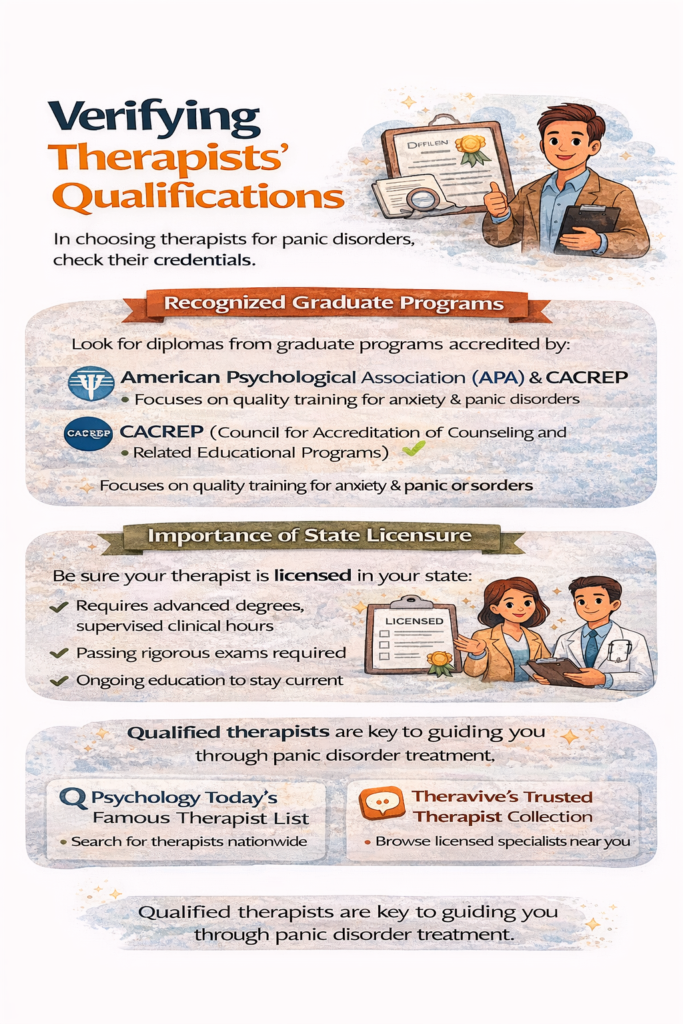 Verifying Therapists’ Qualifications
When tackling panic disorders, you need to make sure the person helping you is truly qualified. You don’t want to be stuck with someone who just hung up a sign and called themselves an expert. It’s like trusting a clip-on tie isn’t going to come off during a scuffle at a wedding. So let’s make sure our therapists have the proper chops, shall we?
Recognized Graduate Programs
First off, we’re talking schools. If your therapist’s diploma is hanging on the wall, it should be more than just another piece of wallpaper. They’ve got to have studied in programs that don’t let just anyone pass, ones given the nod by big names like the American Psychological Association (APA) or the Council for Accreditation of Counseling and Related Educational Programs (CACREP). These schools are like the rock stars of mental health education—programs that make sure therapists know their stuff inside and out, including the wild world of panic disorders.
In these programs, future therapists learn how to handle panic attacks—not just with fancy book talk but real-life tactics. Picking someone who graduated from these recognized programs is a safe bet. It’s like choosing a five-star Uber driver with a snack box over a rusty bicycle with a flat tire.
Importance of State Licensure
Here’s another biggie: State licensure. Fancy word, I know, but stick with me. This is like the ultimate seal of approval. Licensed therapists have jumped through a bunch of hoops—think of them as the obstacle course master—completing education, clinical practice hours, and passing hefty exams. Plus, they have to keep learning throughout their careers, ensuring they’re not relying on outdated Freudian doodles (Authentic Growth Wellness).
A license isn’t just about hanging a certificate on the wall. It’s about someone with the right smarts and know-how working ethically, not just winging it. So, anyone dealing with panic attacks can be reassured they’re in dependable hands.
In short, make sure your chosen therapist comes from the right kind of school and has their license sorted. With the right education and that golden license, therapists can help guide you through the storm of panic disorders, making the process that much smoother. Double-checking these credentials can give you peace of mind that you’re working with someone who really gets it and is ready to help you tackle those panic gremlins head-on.