
Introduction to Trauma-Focused Therapy
Dealing with trauma can feel like trying to untangle a pair of headphones after they’ve been stuffed in your pocket. But that’s where trauma-focused cognitive-behavioral therapy (TF-CBT) steps in. It’s the trusty guide helping folks make sense of their tough experiences. This method blends different techniques aiming to boost healing and toughness, and I’m here to break down what makes this therapy tick.
Understanding Trauma-Focused Cognitive Therapies
So, what’s the story with trauma-focused cognitive therapies like TF-CBT? At their core, they dig into how trauma messes with your thoughts, feelings, and actions. Imagine your brain as a DJ scratching a record; TF-CBT helps stop the loop of negative thoughts playing over and over. We’re talking about reshaping those thoughts into something healthier based on research. When we tackle these mental loops, folks can handle life’s bumps better and ease the grip trauma has on their minds.
TF-CBT is like a toolbox filled with brainy gadgets. It pairs thinking and doing techniques to tackle the trauma blues. You learn to see the links between your thoughts, feelings, and actions, and you’re handed the tools to handle the emotional whirlwind left behind by trauma (NCBI).
Importance of Trauma-Focused Interventions
Why is focusing on trauma therapy such a big deal, especially for kids and teens? Including parents in this kind of therapy makes a world of difference (NCBI). In TF-CBT, parents aren’t just on the sidelines; they’re right there with their child, tackling trauma together and boosting family chatter (NCBI).
TF-CBT is tailor-made to handle all sorts of tough situations—from abuse to neglect and even tough home stuff. By mixing in caregiver support and cognitive-behavioral tricks, TF-CBT helps cut down symptoms of posttraumatic stress and teaches folks how to cope.
Research gives TF-CBT a big thumbs-up for slashing the bad stuff like PTSD symptoms, sadness, acting out, and even parental stress (NCBI). Starting this kind of therapy early can stop trauma from becoming a lifelong shadow.
Recognizing the power of these therapies and jumping into action, individuals see real change. It’s all about finding strength and resilience to move past trauma and reclaim that inner power.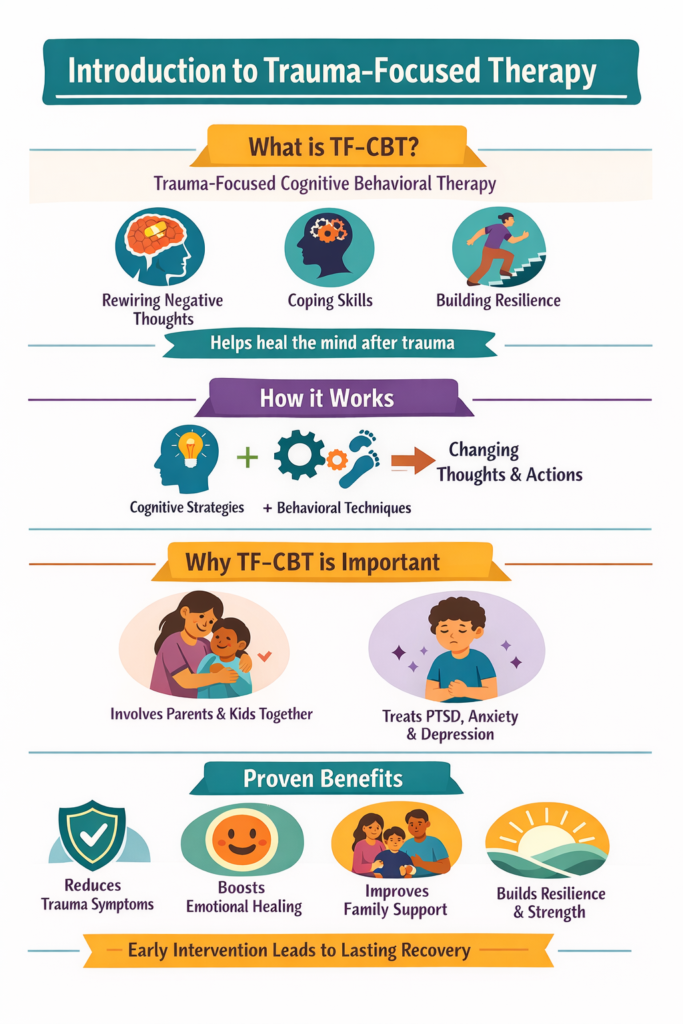
Trauma-Focused Cognitive Behavioral Therapy (TF-CBT)
When diving into trauma-focused cognitive behavioral therapy (TF-CBT), let’s take a closer look at what makes it tick and how it helps folks put past trauma in the rearview mirror.
Core Components of TF-CBT
TF-CBT might appear like just a jumble of letters, but for many youngsters and their families, it’s a lifeline—like a superhero in a therapist’s office. This therapy is designed to help kids, teens, and their families who have had a rough go early in life. We’re talkin’ about a short, focused type of counseling that kicks off anywhere from eight to 25 sessions. It gives the boot to damaging thoughts and behaviors, trading them for healthier and sunnier ways of thinking. Think of it as clearing out the mental clutter of guilt and fear so they can kick back with a brighter mindset.
The main gig of TF-CBT is to build a shield of safety and trust, polish up social skills, and give caregivers the tools to back their kids like pros. This therapy works a bit like a team game, gearing up the young ones to tackle stress post-trauma and helping them get their groove back.
Application and Effectiveness of TF-CBT
TF-CBT is crafted with kids in mind, from tykes as young as three to teens up to 18 who’ve faced life’s toughest battles, along with their non-guilty caregivers. It’s like a no-fly zone for those with serious self-harm risks or a storm of substance issues, and a warm-up chat checks if little ones are up for the therapy and remember the rough patches clearly.
This whole shebang is based on the PRACTICE model, a nifty acronym that’s all about education, chill-out skills, handling big feelings, thinking tricks, sharing trauma tales, facing trauma cues head-on, caregiver-hero talks, and leveling-up safety. Everything’s pieced together to suit the kid’s and family’s needs—like having a custom-fit suit for the emotional journey.
Grasping the heart of TF-CBT, mental health pros can step up and lend a hand to those working through their stormy pasts, laying down a safe zone for mending and moving forward.
Benefits of TF-CBT for Children
Helping kids navigate the rocky terrain of trauma is no easy task. That’s where Trauma-Focused Cognitive-Behavioral Therapy (TF-CBT) steps in, offering a lifeline to young ones caught in the storm of their past experiences. It’s a time-tested approach that zeros in on the struggles kids face post-trauma.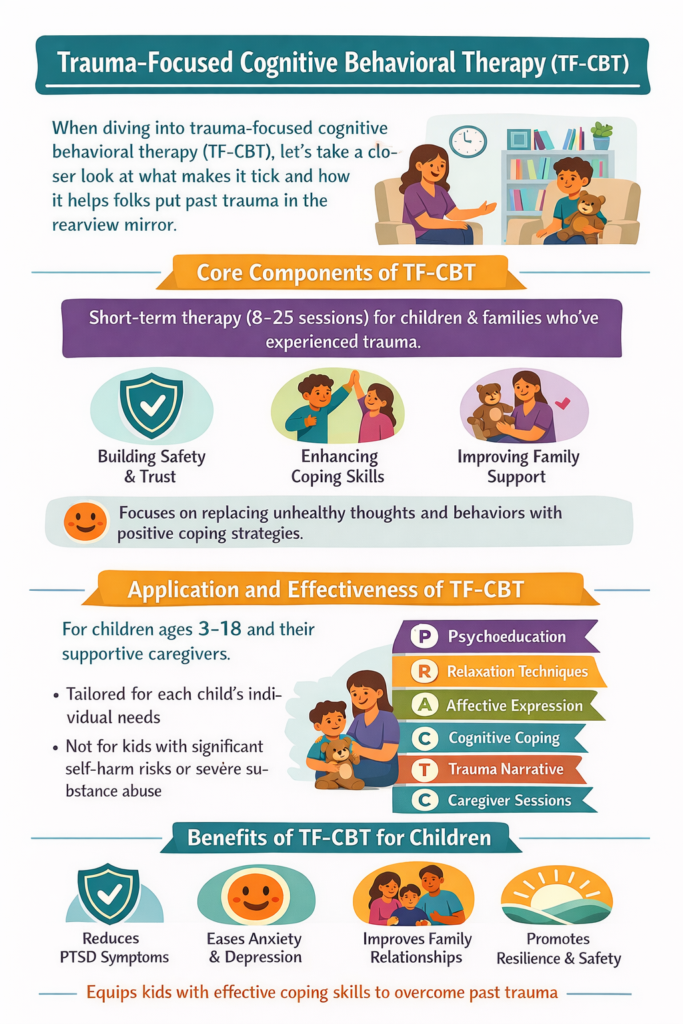
Easing PTSD Woes
Let’s talk turkey: TF-CBT’s not just a fancy acronym—it’s a powerhouse in dialing down post-traumatic stress disorder (PTSD) symptoms in kiddos who’ve been through the wringer. Picture this: a child reliving their trauma through flashbacks, battling nightmares, or riding waves of anxiety. TF-CBT gives them a game plan, offering structured support and coping tools that make these symptoms less overwhelming.
Scientific studies back this up, showing how TF-CBT works its magic over time to ease the burden of trauma. Kids find a sanctuary to unpack their emotions—and in doing so, they chip away at their fears and trod the path toward healing and hope.
Stopping Depression and Behavioral Hiccups
But wait, there’s more! TF-CBT isn’t just about PTSD. It’s a frontline soldier in warding off depression and behavioral slip-ups in children who’ve weathered rough patches. We know trauma often ups the stakes for emotional and behavioral struggles down the line.
TF-CBT steps up by helping kids process their feelings constructively. This isn’t just a fluffy promise—it’s a preventive strike against the blues and the stress-fueled behaviors that can follow in trauma’s wake.
Research sings high praise for TF-CBT’s role in lightening depression and straightening out behavior kinks—both the general kind and issues like sexual behavior problems. Early TF-CBT intervention is like steering the ship away from the jagged rocks of trauma toward a brighter horizon.
So, in a nutshell, TF-CBT brings heavy-hitting benefits to the table. It tackles PTSD, keeps depression at bay, and tackles tricky behavior bits post-trauma. Picking up on trauma signs early and stepping in with therapies like TF-CBT is like tossing out a safety net to protect our young ones’ mental health and future wellbeing.
Involving Caregivers in TF-CBT
In trauma-focused cognitive behavioral therapy (TF-CBT), inviting caregivers to the healing party is a game-changer for kids dealing with tough times. It’s like building a team where parents and guardians become superheroes, helping kids bounce back stronger. Let’s chat about how uplifting folks at home and boosting good vibes in the fam work wonders in TF-CBT.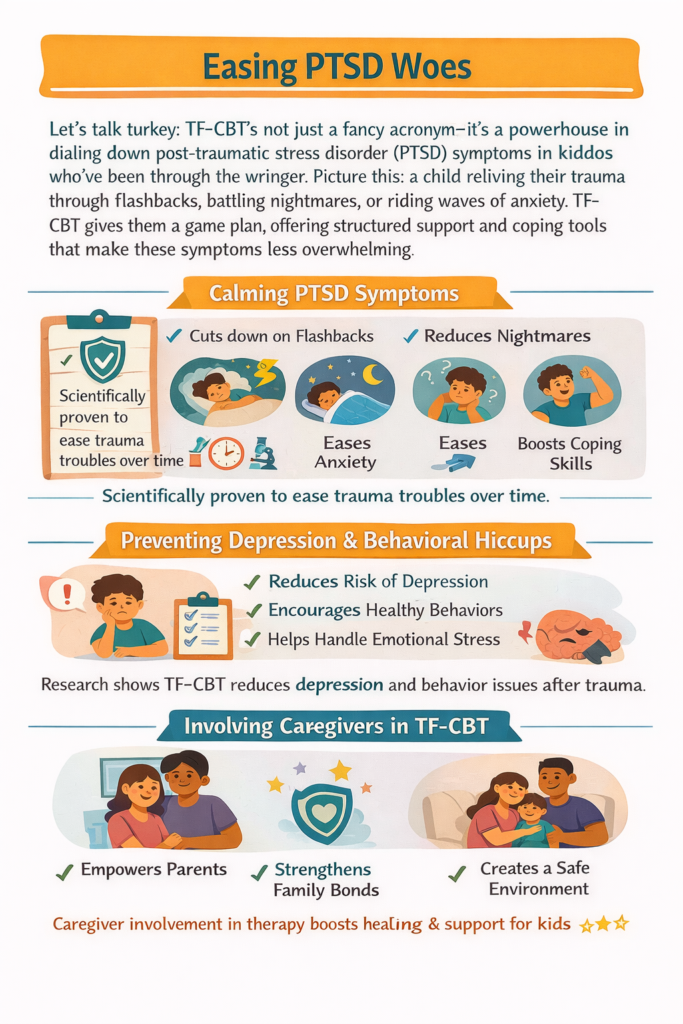
Empowering Parents in the Treatment Process
Bringing parents and caregivers into the mix in TF-CBT is key to creating a cozy, safe space for the child to heal. Parents get decked out with skills to tackle challenges—like positive chats, having a heart-to-heart, and keeping calm when the going gets rough. This not only makes the child feel protected and secure but also grows trust and teamwork between the child, their folks, and the therapist.
Studies have shown that when parents are in the loop, kids make better progress. It’s like magic—less stressed-out parents lead to more supportive homes, which paves the way for kiddos to thrive. But, when parents struggle too, it can throw a wrench in the healing machine (NCBI). With resources, guidance, and know-how, TF-CBT helps parents back up their child’s journey, like trusted sidekicks ready for action.
Enhancing Family Communication and Support
For TF-CBT to really shine, it’s all about getting families to chat it up and be there for each other. Trauma tends to shake up everyone, but having a safe haven at home can work wonders. In therapy, parents and kids team up to tackle the tough stuff together, like a dynamic duo.
Once parents are looped in, they help create a space where kids feel free to spill their feelings, talk about stuff that’s on their minds, and tackle those tricky trauma hurdles. It’s this whole vibe of trust and connection that makes TF-CBT a winner, stitching families closer together. Research backs it up—having parents and the whole gang involved really boosts the therapy’s impact.
With the power boost that comes from getting caregivers into action and the family all chatting and supporting, TF-CBT digs deep not just to mend the child’s hurts but also to build a cozy nest where healing, happiness, and togetherness beam bright. It’s this joint effort from parents, helpers, and the therapist that sets up a strong support crew essential for a child’s emotional bounce-back and toughness in the face of life’s hurdles.
Research and Evidence on TF-CBT
When it comes to dealing with the messy aftermath of trauma, Trauma-Focused Cognitive-Behavioral Therapy (TF-CBT) stands out. It’s like a trusty old friend for folks grappling with posttraumatic stress, especially when trauma rears its ugly head through abuse in its many nasty forms. Here’s me talking about what makes TF-CBT tick, and yes, some folks have a few bones to pick with it too.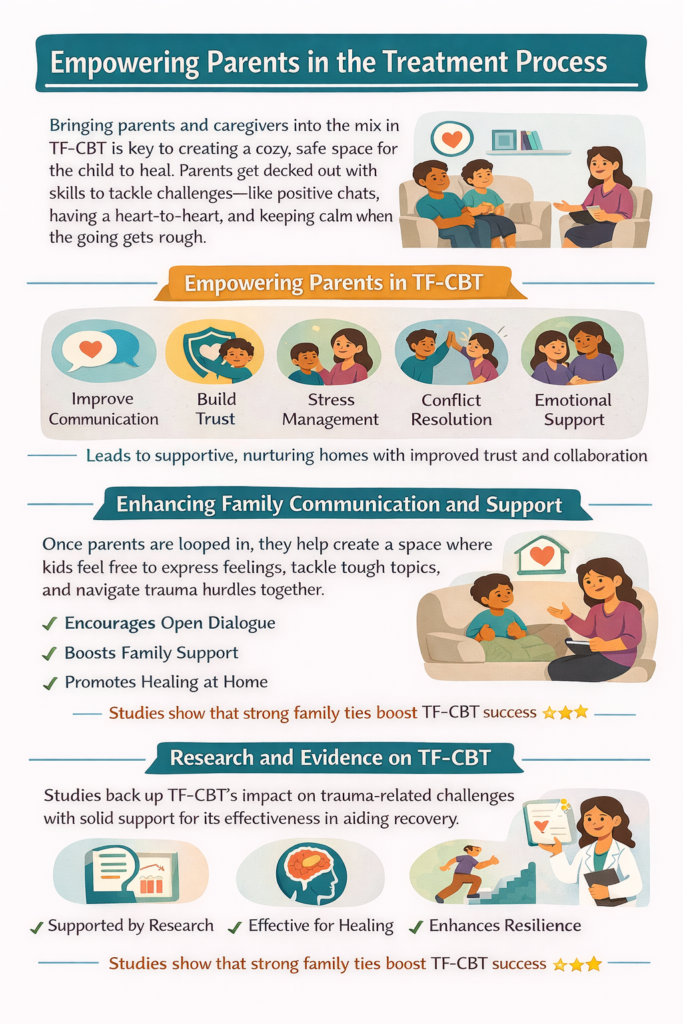
Effectiveness and Outcomes of TF-CBT
TF-CBT packs a punch in tackling trauma, particularly for the young ones among us—children and teens. It’s custom-tailored to address the storm of emotions tied to trauma experiences, like a human shield against PTSD caused by things like abuse or violence (NCBI). The secret sauce here? It’s got a load of smarts under its hood with cognitive-behavioral principles mingling with getting caregivers in on the action, helping kids get a grip on their feelings.
With more than 50 research projects and 20-plus clinical trials on the books, TF-CBT consistently shows a one-two punch in lessening the heavy load of trauma, depression, behavior hiccups, and even giving parents some much-needed relief. What makes it even juicier is seeing these effects stick around a full year or two after the therapy’s curtains fall.
Critique of TF-CBT Studies
Though TF-CBT might sound like a superhero, it’s not without its kryptonite. Some folks think it’s worth peeping into its limitations to see if there’s room for improvement.
The chatter around town is often about how TF-CBT holds up against other therapy contenders. It’s like comparing apples to oranges or a deep dive into a sea of therapy options like the theory of mind approach. These head-to-head contests are all about checking if TF-CBT can become even better, especially when helping people from different walks of life or facing different types of trauma. These critiques aren’t just nitpicky; they push us to make trauma therapies like TF-CBT even sharper and more effective.
So, whether you’re working on the front lines as a mental health superhero or going through the healing process yourself, understanding the ins and outs of TF-CBT makes all the difference. The goal is always to enhance trauma therapies to ensure that those dealing with the tough stuff get the best support on their road to recovery.
Implementation and Considerations
If you’re diving into trauma-focused cognitive behavioral therapy (TF-CBT), it’s all about shaping the therapy around different types of trauma and weaving it into places where folks need it most. TF-CBT shines when it comes to handling posttraumatic stress disorder symptoms from all sorts of tough experiences like abuse and neglect.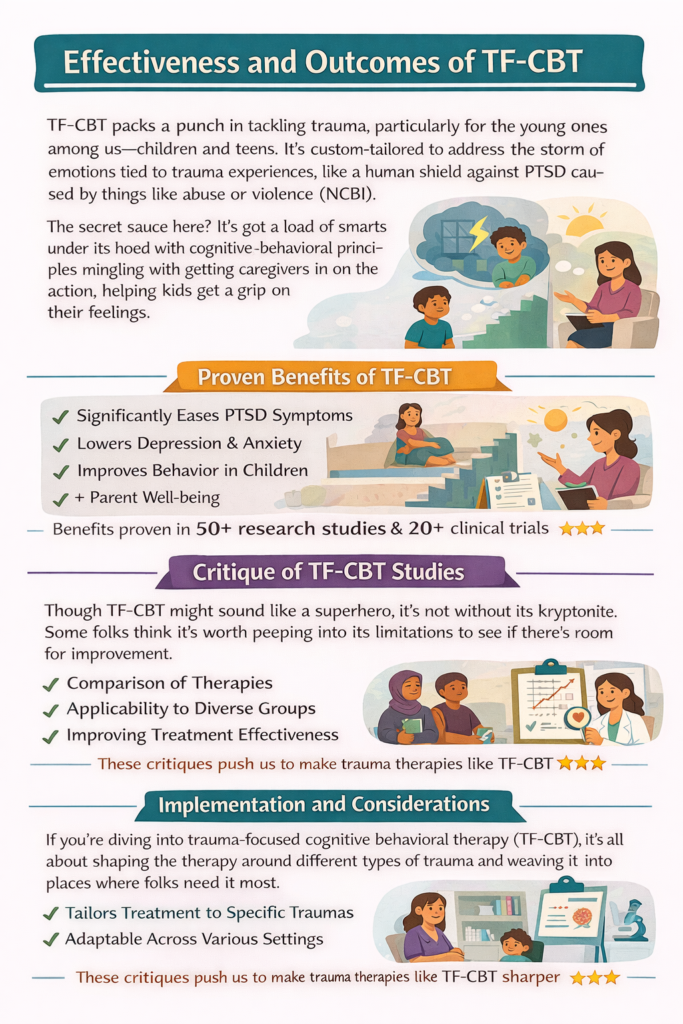
Tweakin’ TF-CBT for Different Trauma Types
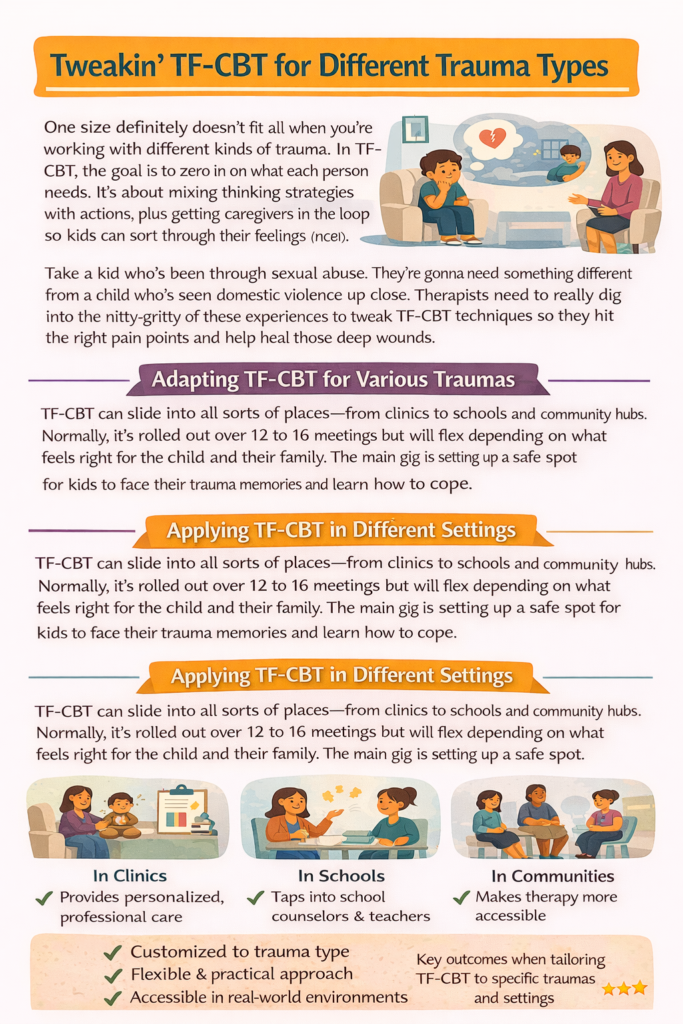
One size definitely doesn’t fit all when you’re working with different kinds of trauma. In TF-CBT, the goal is to zero in on what each person needs. It’s about mixing thinking strategies with actions, plus getting caregivers in the loop so kids can sort through their feelings (NCBI).
Take a kid who’s been through sexual abuse. They’re gonna need something different from a child who’s seen domestic violence up close. Therapists need to really dig into the nitty-gritty of these experiences to tweak TF-CBT techniques so they hit the right pain points and help heal those deep wounds.
Bringing TF-CBT to Different Spots
TF-CBT can slide into all sorts of places—from clinics to schools and community hubs. Normally, it’s rolled out over 12 to 16 meetings but will flex depending on what feels right for the child and their family. The main gig is setting up a safe spot for kids to face their trauma memories and learn how to cope.
Schools can be golden places for TF-CBT because kids spend so much time there. By tapping into school resources like counselors and teachers, TF-CBT can help with stuff that might trip up students in class or on the playground.
Getting TF-CBT into community centers and support groups is another win. It makes the therapy more reachable and involves local experts in mental health who can guide folks through the process. This way, TF-CBT isn’t just stuck in an office—it’s out there in the real world making a difference.
By customizing TF-CBT for various types of trauma and plugging it into different environments, those involved in mental health services, education, and beyond can offer solid support where and when it’s needed. TF-CBT’s adaptability and its strong track record make it a winner for helping people bounce back from the hard stuff life throws their way.