
Understanding Trauma Responses
Trauma-Informed Care and Trauma Response Training play a vital role in helping individuals, workplaces, and healthcare systems address the long-term effects of trauma. Understanding these approaches ensures better recovery and resilience.
- Understanding Trauma Responses
- Trauma-Informed Workplace Practices
- Trauma Responses in the Workplace
- Challenges Faced by Employees
- Implementing Trauma-Informed Care
- Why Trauma-Informed Care Matters
- How to Make It Work
- Trauma-Informed Training Programs
- Role of Trauma Response Training
- Training Content and Delivery
- Trauma-Informed Care in Healthcare
- TIC in Healthcare Settings
- Benefits of Trauma-Informed Approach
- Specialized Trauma Response Training: FAST Program
- FAST Program for Severe Trauma
- Implementing FAST in Schools and Workplaces

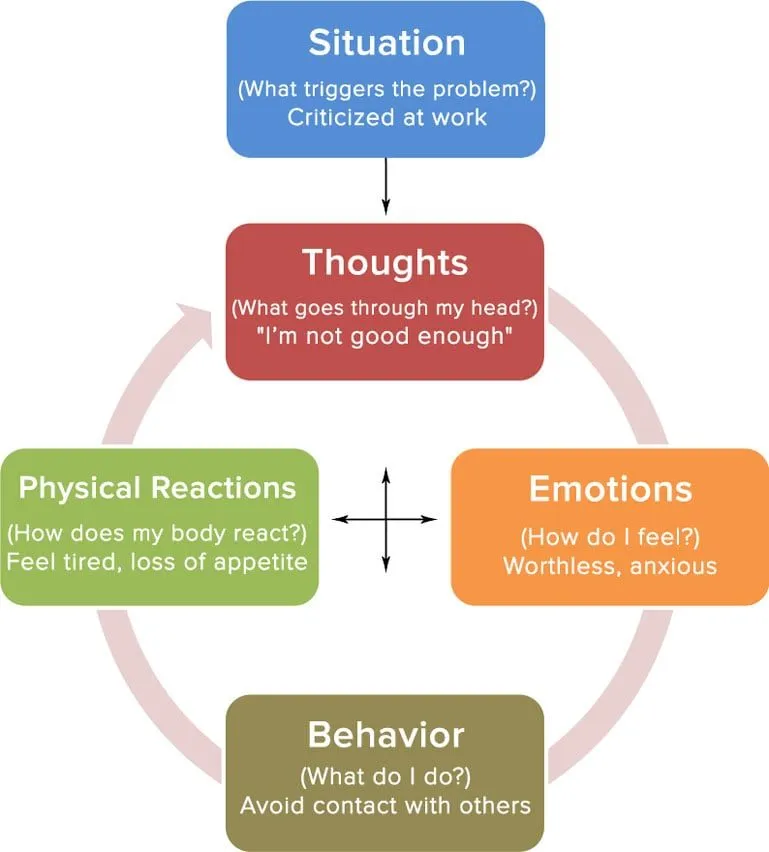
Diving into the impact of traumatic events is key to figuring out how trauma affects us. It can pop up in all sorts of ways—messing with our bodies, emotions, and minds. When we leave trauma unchecked, it can stick around and make life tough. Picking up on the signs and symptoms of trauma is super important if we want to truly help those dealing with challenging experiences.
It’s really important to get how big a deal childhood trauma and adverse experiences are—often referred to as adverse childhood experiences (ACEs). By the time they turn 16, more than two-thirds of kids have been through some form of ACEs. These early bumps in the road can create hurdles like learning difficulties, behavior problems, and even mess with their health as they grow older.
Studies show that what happens during childhood can have a big say in how healthy someone is as an adult. Grown-ups with several ACEs are at a higher risk of chronic health issues like heart disease, cancer, and lung problems. This link between childhood trauma and health later in life highlights why it’s so crucial to tackle trauma early—you want to avoid those long-lasting troubles!
Grasping how deeply trauma can affect individuals, especially when it rears its head in childhood, is crucial for setting up trauma response training programs and embracing trauma-informed care methods. When we figure out trauma from the start and tackle it properly, both people and groups can find strength and start healing, even when life throws some curveballs.
Trauma-Informed Workplace Practices
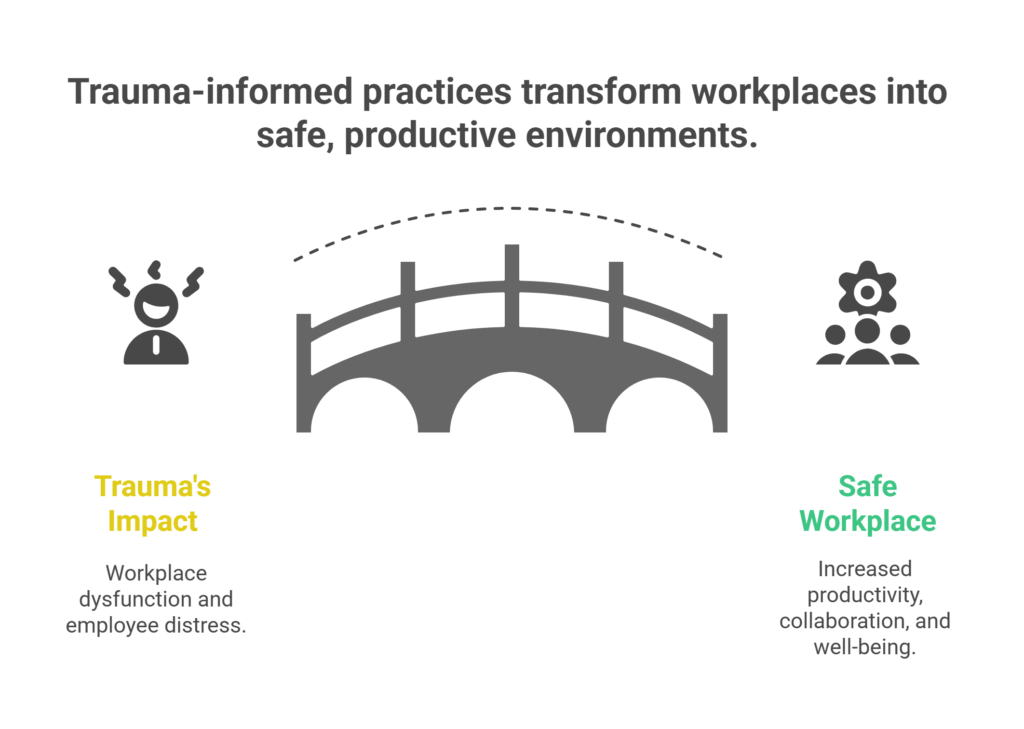
Dealing with the impact of trauma in the workplace? It’s tough for everyone involved. Trauma can shake up the flow, making it hard to get anything done and leaving everyone feeling a bit off-kilter. Grasping what trauma looks like at work and the hurdles it throws at employees can make all the difference in creating a place where folks feel safe and supported.
Trauma Responses in the Workplace
Stressful work vibes can stir up all sorts of trauma responses. You might see someone flying off the handle or acting in ways that seem off for a work setting. This sorta thing can throw a wrench in the works and make it hard for teams to play nice together. Spotting these signs and figuring out how to deal with them is key to keeping the office a friendly and productive place. You can dig into more details over at DC Policy Center.
Challenges Faced by Employees
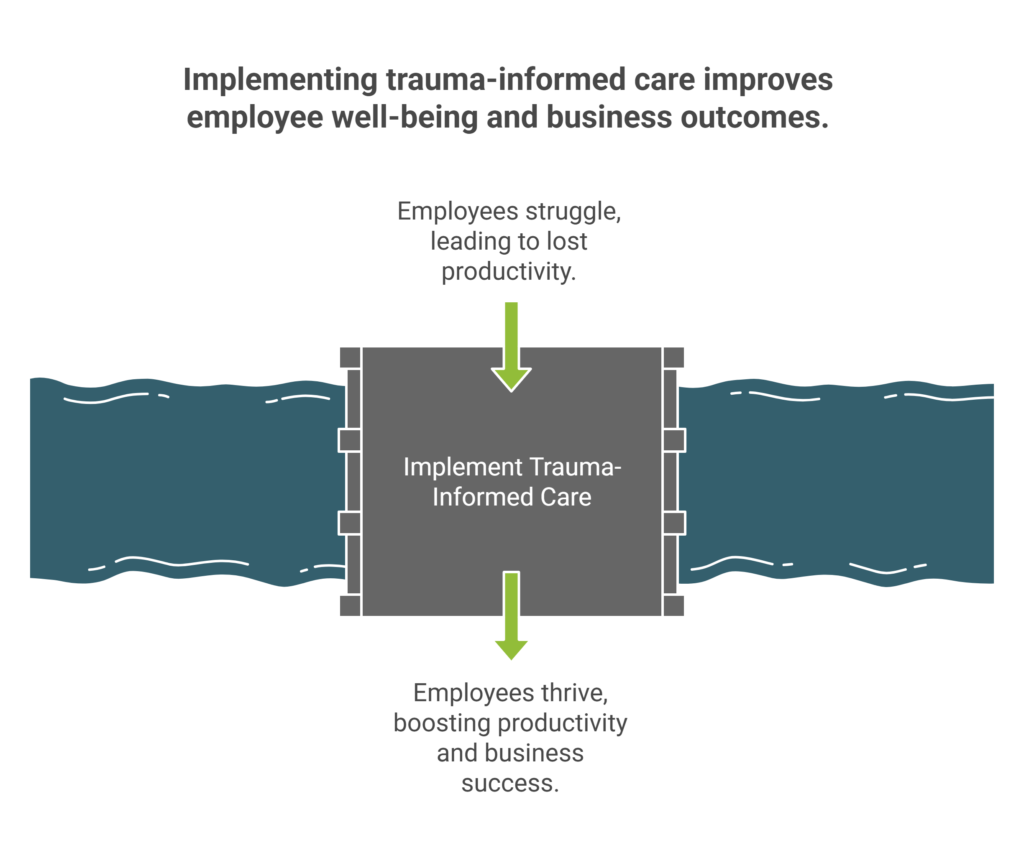
Folks trying to keep up with jobs while handling trauma responses can feel like they’re running uphill. Some folks end up quitting, which throws a curveball at businesses trying to keep things steady and not losing money left and right. In fact, it’s a pricey deal for U.S. employers, with trauma-related mental health issues costing nearly $193.2 billion due to folks not showing up or being less productive, according to the CTIPP.
Let’s not forget just plain old workplace stress, which can rack up to $500 billion in lost productivity every year (CTIPP).
Tackling these challenges head-on by weaving in trauma-informed management can really shift the work culture for the better. Focusing on this can help keep employees happy and build a strong foundation for the business. By taking these steps, employers not only boost the team vibe but also ramp up satisfaction and success over the long haul.
Implementing Trauma-Informed Care
Handling trauma with heart and head can make a world of difference for people grappling with the aftermath of life’s toughest challenges. Here’s why trauma-informed care matters and how to make it happen.
Why Trauma-Informed Care Matters
Trauma-informed care isn’t just a buzzword—it’s a fresh take on helping folks who’ve been through tough times. It means knowing the weight of trauma’s impact and striving to build trustful, safe settings where healing can happen. When healthcare workers, first responders, and organizations bring trauma-informed methods on board, they’re paving the way for stronger recovery and lasting resilience for those affected by traumatic events (PubMed Central).
The brilliance in this approach is its knack for addressing the complicated mess trauma leaves behind. It’s about truly seeing how trauma twists and turns lives and communities and offering a meaningful response that doesn’t add salt to the wound (PubMed Central). Embracing trauma-informed practices lights up a path of kindness, dignity, and grit when faced with adversity.
How to Make It Work
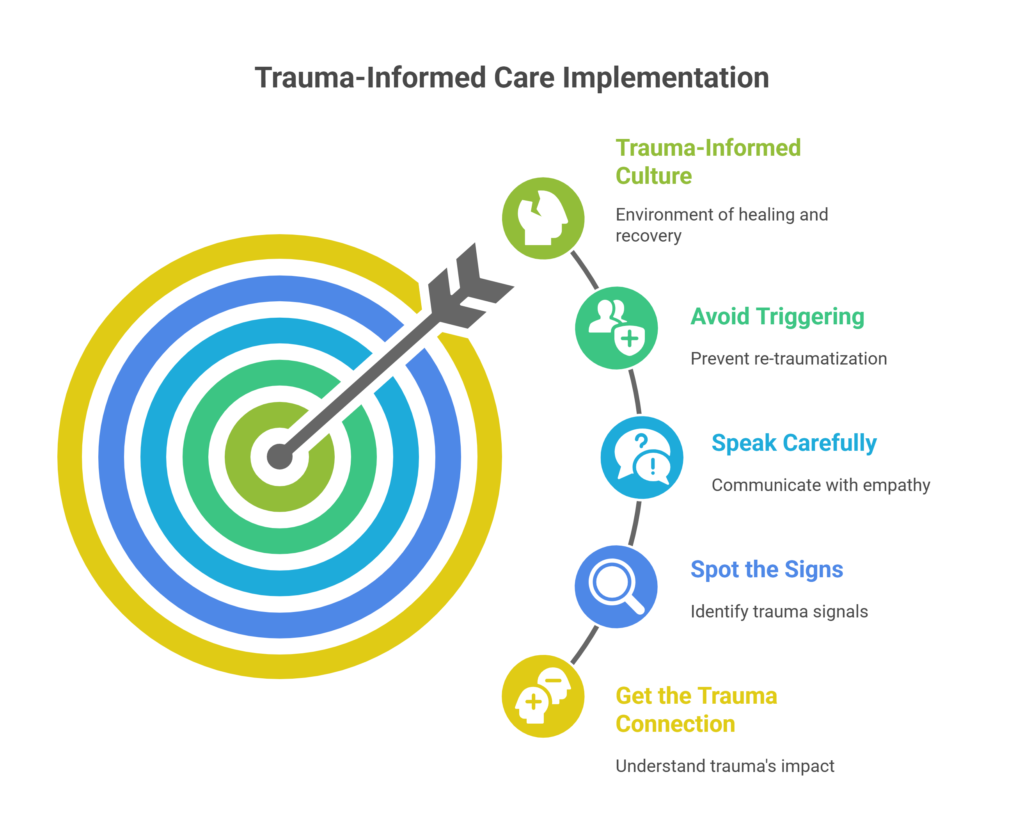
Getting trauma-informed care right means stepping up with a game plan that sees the whole picture. Here’s how to roll it out effectively:
- Get the Trauma Connection: Know that trauma affects whole families and neighborhoods. Grasping how widespread and serious it can be is step one in building a place of healing.
- Spot the Signs: Arm your crew with the know-how to identify trauma signals. Recognizing what trauma looks like helps caregivers give the right support when it counts.
- Speak Carefully: Meet people where they are—with understanding and patience. Create environments where they can speak and share, knowing they’ll be met with kindness and respect.
- Avoid Triggering: Keep re-traumatization at bay. Be mindful of potential triggers and actions that can stir up old wounds. Focus instead on boosting resilience through thoughtful care.
By using these strategies regularly, teams, health workers, and emergency personnel can foster trauma-informed cultures that nurture healing and boost recovery for everyone involved. For more insights into trauma-focused tactics, check out resources on trauma-focused cognitive-behavioral therapy and critical incident stress management training courses.
Trauma-Informed Training Programs
Learning how to handle stress-inducing scenarios is a game changer for anyone facing them regularly. Grasping why training is the backbone of trauma-informed care (TIC) is a must for both companies and individual pros. Let’s break down some key pieces of trauma response training like its purpose, and how it’s taught and packaged.
Role of Trauma Response Training
Think of trauma response training like the nuts and bolts of TIC. It makes sure everyone on the team gets a handle on what trauma is and how it leaves its mark. It gears up folks with a clear idea of trauma principles, highlighting why trauma-informed ways are important in their work. Once you dive into this training, you’re better set up to spot, get, and tackle trauma-related stuff like a pro.
The GAINS Center has crafted special training for those in the justice system, helping them build trauma-aware responses and stop re-traumatization. This boost gets crime-fighting forces safer, cuts down on repeated bad behavior, and helps folks in the justice system facing real mental health struggles get back on their feet. The training is hands-on, helping to really get how deep trauma runs and offering solid tools to weave trauma-informed steps into the justice system.
Training Content and Delivery
To expand trauma-informed care far and wide, the training content has gotta be all-inclusive, culture-aware, and easy to get, language-wise. Everyone in an organization should have access to basic Trauma Informed Care (TIC) training, showing how everyone plays a part in sticking to TIC principles. Such training programs are crafted to arm folks with the know-how to approach trauma with grace and smarts.
The GAINS Center offers a straight-to-the-point, half-day session called “How Being Trauma-Informed Improves Criminal Justice System Responses.” This quick dive boosts criminal justice pros’ awareness about trauma’s reach and the good stuff that comes from trauma-aware approaches. By nurturing a culture where understanding and help are at the forefront, this training gives pros the know-how to handle trauma-burdened settings skillfully.
Bringing trauma response training into everyday practices means pros can start talking the same language when handling trauma-related issues. By keeping up with ongoing learning and growing skills in trauma-informed care, pros can level up their knack for providing caring and effective support to those going through tough times.
Trauma-Informed Care in Healthcare
When it comes to taking care of people, especially those who’ve seen some tough times, Trauma-Informed Care (TIC) is like a warm blanket on a cold day. By understanding how deep the effects of trauma run, healthcare peeps create a cozy and safe space where patients can heal without fear of digging up old wounds.
TIC in Healthcare Settings
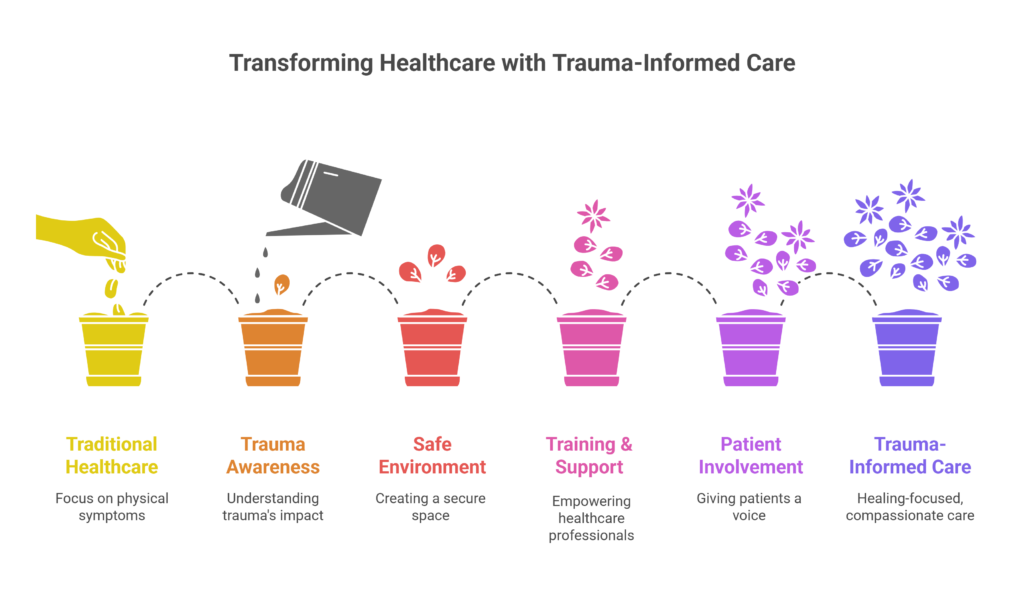
So, what’s this TIC thing all about in hospitals and clinics? Picture turning the place into a care zone that wraps around the principles of trauma care. You get everyone involved—from docs to nurses—buying into the game plan through training and support. It’s like a big group hug, where patients and their families also get a say in how care goes down. Taking trauma into account, these healthcare heroes can tailor treatments that actually get folks back on their feet (The Permanente Journal).
Knowing about trauma isn’t just an option; it’s a must. Every doc and nurse should be clued up on the what, why, and how of trauma’s impact. When they can pick up on those red flags and weave this knowledge into their daily grind, care becomes more than just medicine—it’s genuinely heartfelt (Trauma Informed Oregon).
Benefits of Trauma-Informed Approach
What’s in it for anyone, you ask? Loads! Patients and docs alike enjoy some pretty sweet perks. It’s like peeling an onion (without the tears). You address the past, present, and even the whole shebang of community pain (PubMed Central).
Here’s how it pays off:
- Brighter Patient Days: Cut out the nasties that remind folks of past trauma, and patients start to feel secure. That peace speeds up the healing mojo and kicks up health results a notch.
- Happy Docs, Happy Place: When the docs feel seen and supported, it rubs off. They deal better with stress and stay upbeat. Healthy staff mean better help.
- Power to the Patients: Hand over the reins a bit, let patients steer some choices. They feel acknowledged and involved, which boosts their trust and keeps them showing up.
Taking on trauma-informed care means transforming healthcare spaces into havens of support and kindness. Patients find a soft-landing place to start rebuilding, and the whole medical crew partakes in a culture that’s not just about work but caring like they mean it.
Specialized Trauma Response Training: FAST Program
When it comes to handling really tough situations, specific training programs are like superheroes for those in action. One major player in this field is the FAST Program.
FAST Program for Severe Trauma
Meet FAST, short for First Aid for Severe Trauma. This program is crafted for folks who might find themselves face-to-face with high-pressure trauma scenarios. We’re talking about first responders, emergency folks, and healthcare workers—the daily heroes who need to know how to keep it together when everything else is falling apart.
This training spotlights the urgency of jumping in when severe trauma strikes. It’s about getting in there fast, giving support, and knowing exactly what to do when someone is going through a really rough patch. Lessons cover things like building psychological toughness and offering solid support during crazy times and offering guidance to emergency responders on handling the emotional weight that comes with the job.
Implementing FAST in Schools and Workplaces
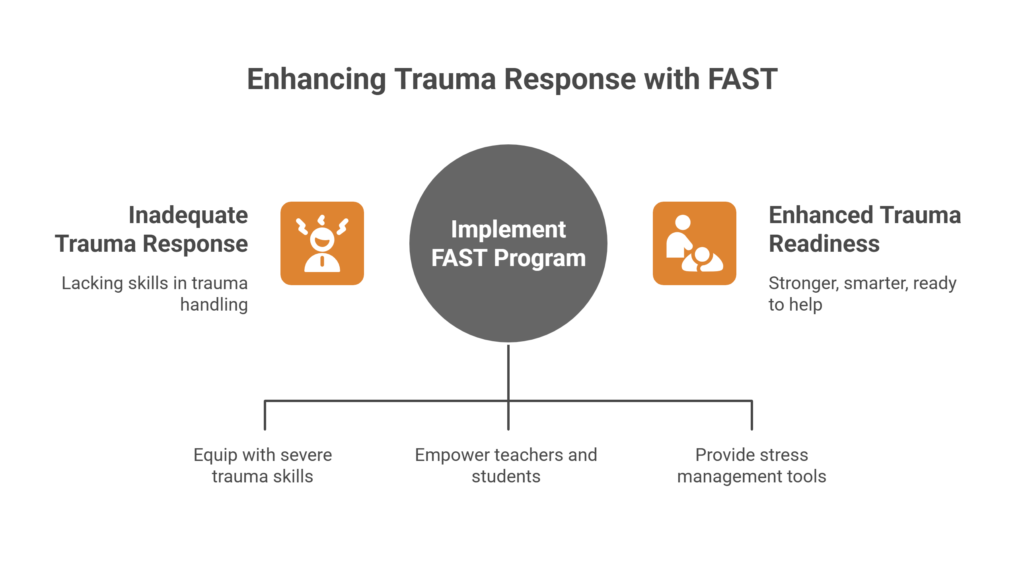
Now, why should first responders have all the fun? Schools and offices benefit, too, when the FAST Program steps in. By giving teachers, students, and employees the tools they need, we’re making mental health a priority and building a culture where everyone feels safe and heard.
Getting FAST into schools means teachers and kids can see when someone’s stressed out and know how to help. In workplaces, it’s about giving the power to both staff and bosses to use stress management tricks, so everyone can perform their best even when the going gets tough.
Rolling out the FAST Program in places ranging from fire stations to classrooms and offices means boosting everyone’s readiness to handle trauma. Special training like this is key to making sure we’re all in this together—stronger, smarter, and ready to lend a hand to those in need.