

Understanding Critical Incident Stress
Workplace Critical Incident Debriefing is not only a recovery method but a long-term investment in organizational wellbeing. Through proper workplace critical incident debriefing, companies can prevent emotional burnout and productivity loss.
Workplace Critical Incident Debriefing is a structured psychological support process designed to help employees cope with traumatic events that occur within the workplace. Navigating trauma effectively after a crisis is essential for protecting employee mental health, restoring organizational stability, and preventing long-term stress-related disorders.
When it comes to dealing with chaos at work, you kinda have to get a handle on what a critical incident does to people and whether those chat sessions after-the-fact are doing anyone any good.
Impact of Critical Incidents
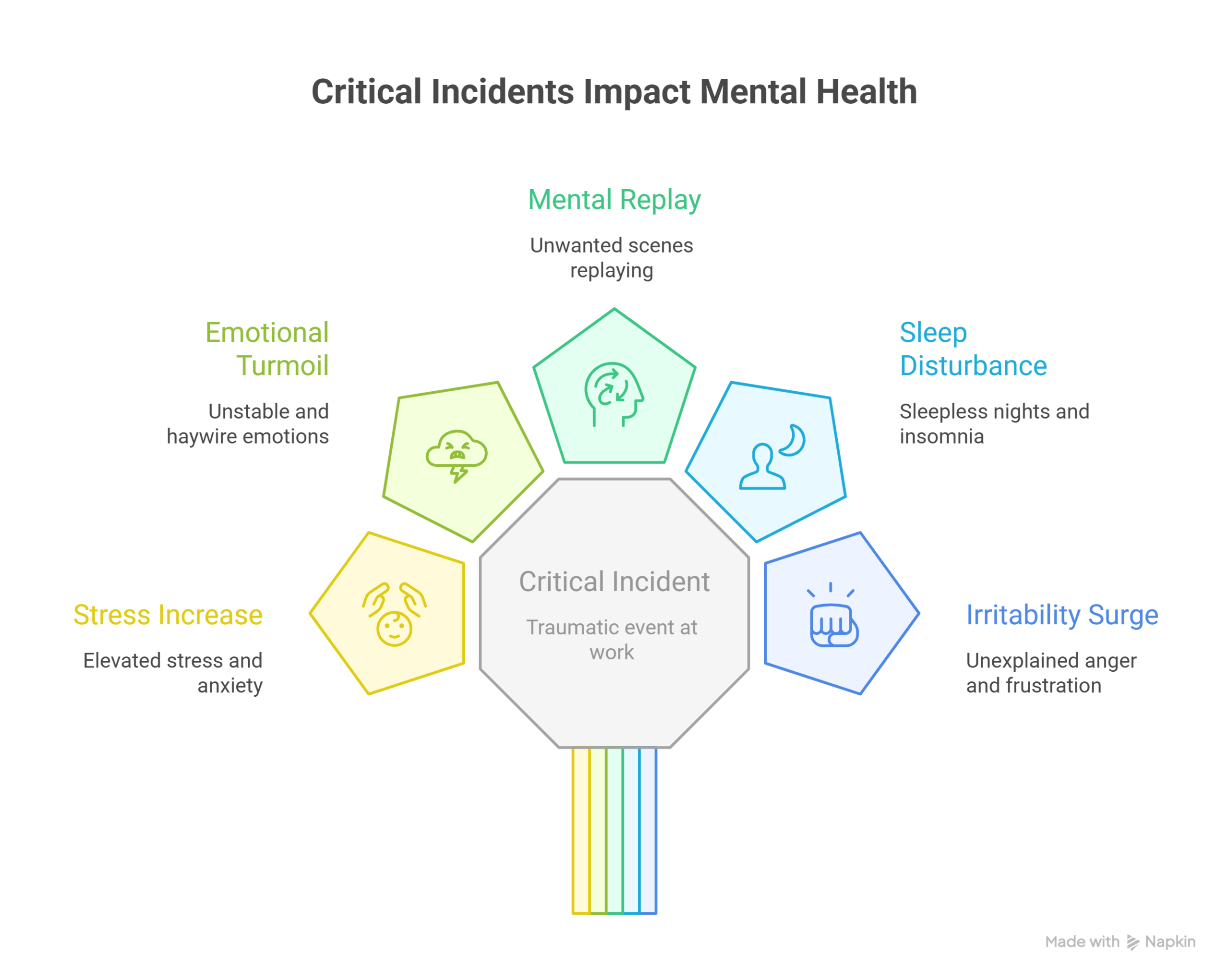
Imagine you’re at work, minding your own business, and all of a sudden, something traumatic happens. These types of moments can mess you up mentally and emotionally. Folks caught up in such incidents might find stress levels skyrocketing, anxiety creeping in, and emotions going haywire. It’s like a bad playlist on repeat, affecting how they perform on the job and in life generally.
You gotta be on the ball when it comes to spotting what we experts call “critical incident stress.” Look out for stuff like your brain replaying unwanted scenes, sleepless nights, or just wanting to punch a wall for no good reason. Knowing what you’re up against is step one to making sure folks get the help they need to prevent these melt-downs from wrecking mental health.
Psychological Debriefing Effectiveness
So, let’s talk about those post-incident heart-to-hearts, aka psychological debriefing. They’re meant to help folks work through what they’ve just been through, but not all of them are up to snuff.
The jury’s still out on whether these debriefs actually stop mental health issues like PTSD, depression, or anxiety from settling in. Some research out there, like from the VA, says these sessions might not cut the mustard and could even backfire on folks already knee-deep in trauma. While some people find them helpful if the stress wasn’t through the roof, whether they truly prevent the stuff of nightmares is still up for debate.
One of the primary goals of workplace critical incident debriefing is to stabilize employees emotionally after traumatic exposure. Effective workplace critical incident debriefing reduces absenteeism, anxiety, and workplace conflict.
What’s clear is these debriefs need to be as unique as the people they’re for. A tailored approach is necessary, considering what they went through and how bad it shook them. Businesses should hit rewind and ensure their trauma response training programs teach employees how to deal with chaos like pros.
By getting sharper on the effects of critical incidents and really figuring out if those heart-to-heart sessions work, companies can focus on what truly helps. Strengthening psychological resilience and supporting employee well-being are must-haves for a solid plan to handle stress from these incidents.

Debriefing Techniques
When it comes to helping folks out after a rough day at the office, especially when it’s been a really tough one, knowing how to debrief is a big deal. One of the ways folks do it is by using something called Critical Incident Stress Debriefing (CISD). It’s one of those steps that help people deal with the bad stuff they’ve gone through without letting it get the best of them.
A successful workplace critical incident debriefing program follows a structured psychological framework. Every workplace critical incident debriefing session should provide a safe environment for emotional expression.
Critical Incident Stress Debriefing (CISD)
So, CISD is pretty much this sit-down where folks talk about what went down and how they’re feeling about it. It’s like giving your feelings a voice while sitting in a safe zone. Quickly doing this after something intense happens keeps the long-term emotional baggage at bay.
According to the brainy folks at BetterHelp, Dr. J. T. Mitchell figured out seven steps back in the ‘80s to help guide these talks and make sure folks leave feeling heard and ready to heal.
Seven Steps of CISD
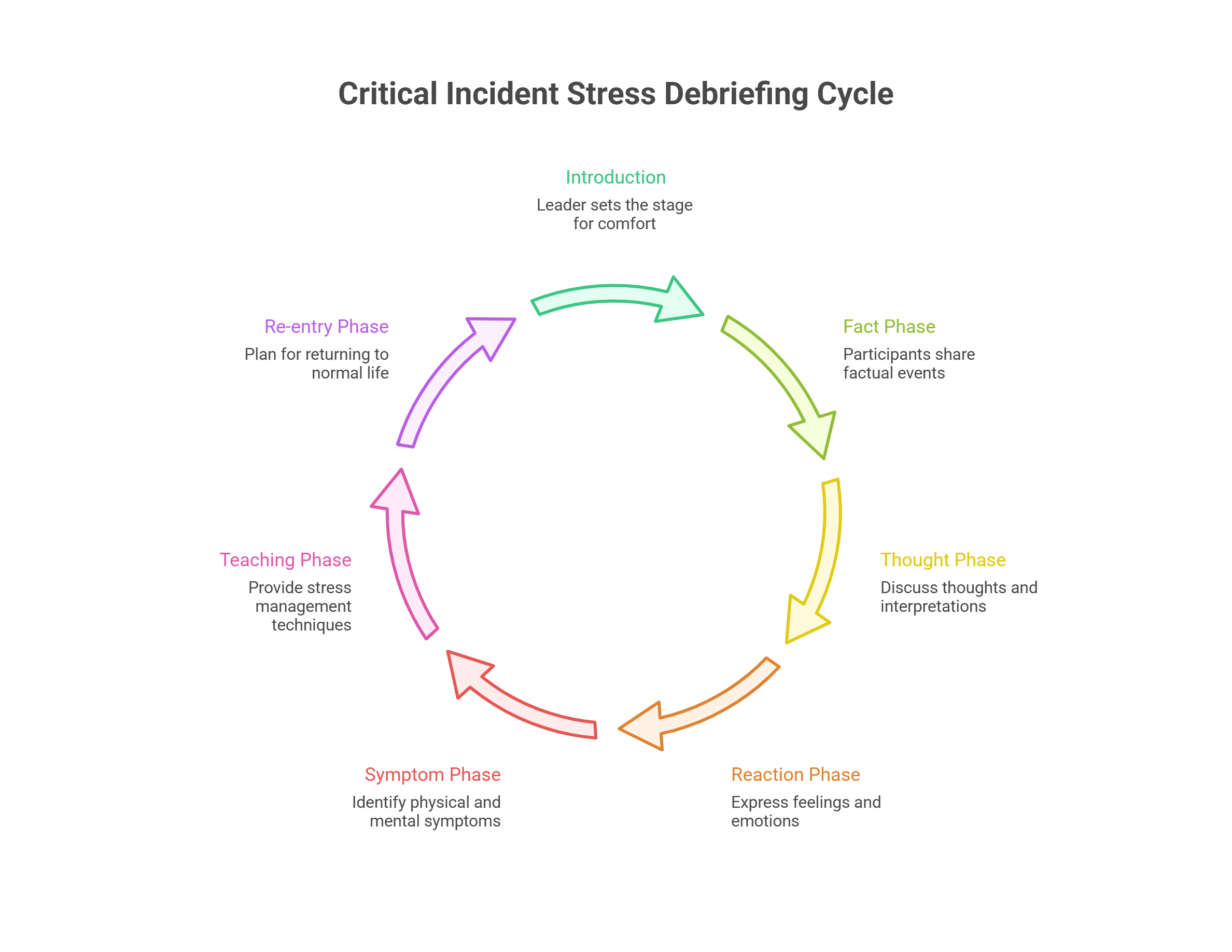
- Introduction: The leader of the chat kicks things off, explaining why they’re all here and setting the scene so folks feel comfy sharing.
- Fact Phase: Now, everyone gets to spill the beans on what happened. Getting it out there helps clear the mind and get past first impressions.
- Thought Phase: Here’s the spot to talk about what’s going through everyone’s mind. Thinking it through can help make it make sense.
- Reaction Phase: Feelings time! This is where folks can unload what’s been weighing them down and finally hear, “Yeah, that’s normal.”
- Symptom Phase: Time for everyone to check in with their bodies and minds to see if anything’s off-kilter.
- Teaching Phase: Handy tips on kicking stress to the curb and walking the road to recovery are dished out here.
- Re-entry Phase: Wrapping things up, this part talks about jumping back into life and where to turn if you need a little more help.
CISD isn’t just nonsense talk; it’s a lifeline for those who’ve been in chaos. It pulls people back from the brink and kicks off healing at work, one person at a time.
For more on how to give your crew a helping hand with workplace critical incident debriefing, plenty of places offer snazzy guides on nailing crisis intervention and making the road to recovery a little less bumpy.
Application of Debriefing
Workplace Benefits of CISD
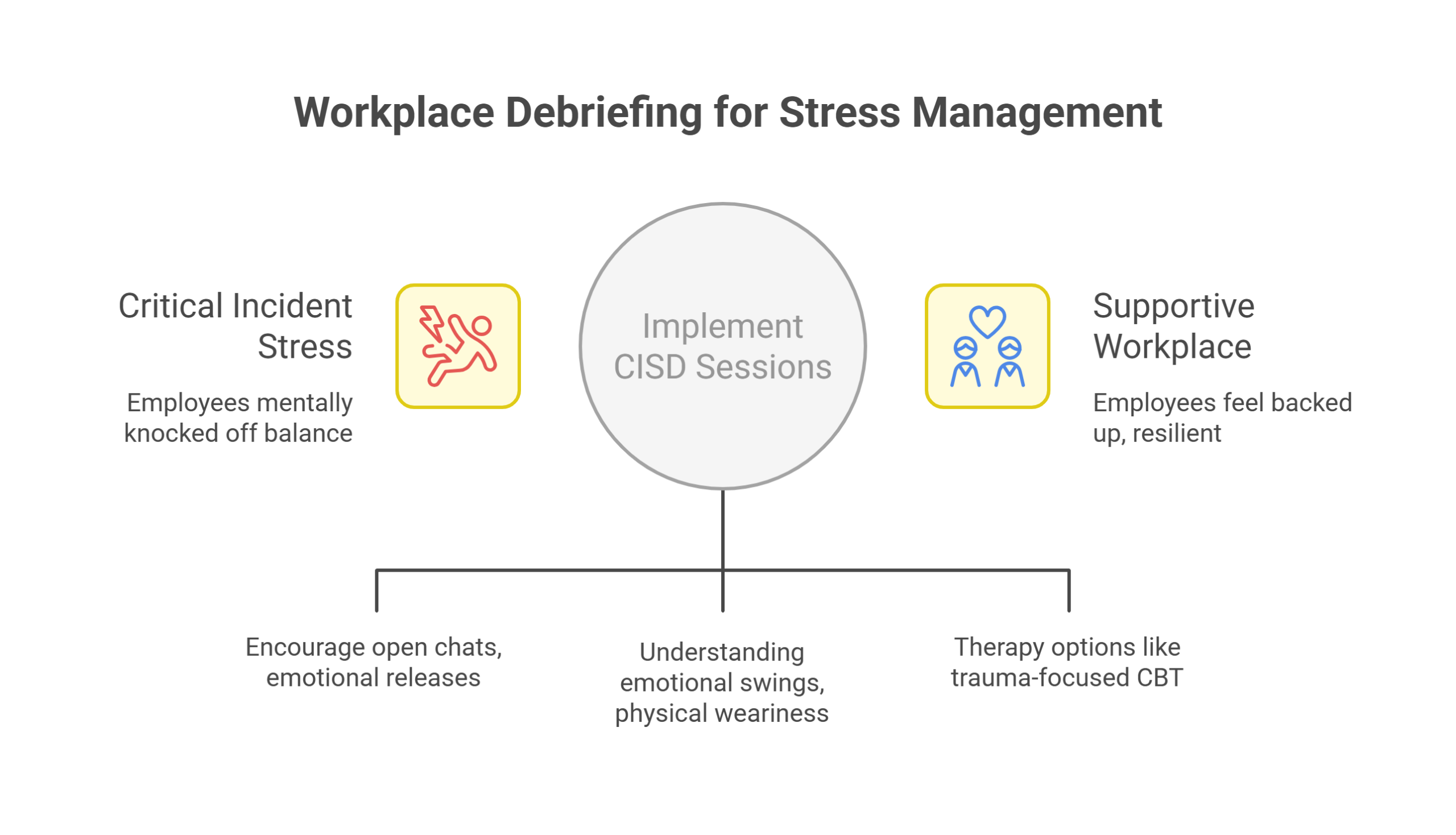
In critical incident stress management, having a workplace debriefing chat can be a game-changer for both you and your company. Imagine dealing with wild scenarios—like a violent crime or the sudden loss of a coworker—these can mentally knock you off balance (This Trading Life).
Leadership plays a crucial role in ensuring workplace critical incident debriefing is implemented consistently. Without executive support, workplace critical incident debriefing efforts lose their effectiveness.
Enter critical incident stress debriefing (CISD) sessions. They’re like a pressure valve, letting you get things off your chest, hear from others, and figure out what help you might need going forward. It’s like making lemonade out of the lemons life just handed to the whole team, encouraging open chats, emotional releases, and pulling the team closer (This Trading Life).
When you dive into these sessions, it’s not just about the here and now. You get the 411 on how you might react down the line. Understanding emotional swings, physical weariness, or mind shifts gives you a leg up on bouncing back from the chaos. This foresight turns on the lightbulb in recognizing personal needs and when to grab some support (BetterHelp).
Occupational Hazards and CISD
Hold up, though. It’s also crucial to know that engaging with these intense happenings at work isn’t all sunshine and rainbows. Post-event, the road can be a bit rocky with things like PTSD, anxiety, or depression lurking around.
That’s why just holding debrief sessions isn’t enough. To really safeguard staff, companies need to roll out the big guns with more extensive support. Think therapy options like trauma-focused cognitive-behavioral therapy, EMDR, and even virtual heart-to-hearts (PMC). These therapies aim to soften the impact of such traumatic moments, boost your daily interactions, and help everyone regain their footing at work.
By getting the lowdown on both the perks of CISD and the potential hang-ups of handling high-intensity incidents, the workplace can truly become a stronger, more supportive environment. Tuning into each other’s needs and building resilience isn’t just nice to have—it’s how we foster trust and create an atmosphere where everyone feels backed up and ready to tackle whatever comes next.
Busting Debriefing Myths
In the heart of post-traumatic care, particularly at work, there’s a lot of buzz and confusion around critical incident debriefing. Time to clear the air and chit-chat about two common misconceptions.
Mixing Up Debriefing & Therapy
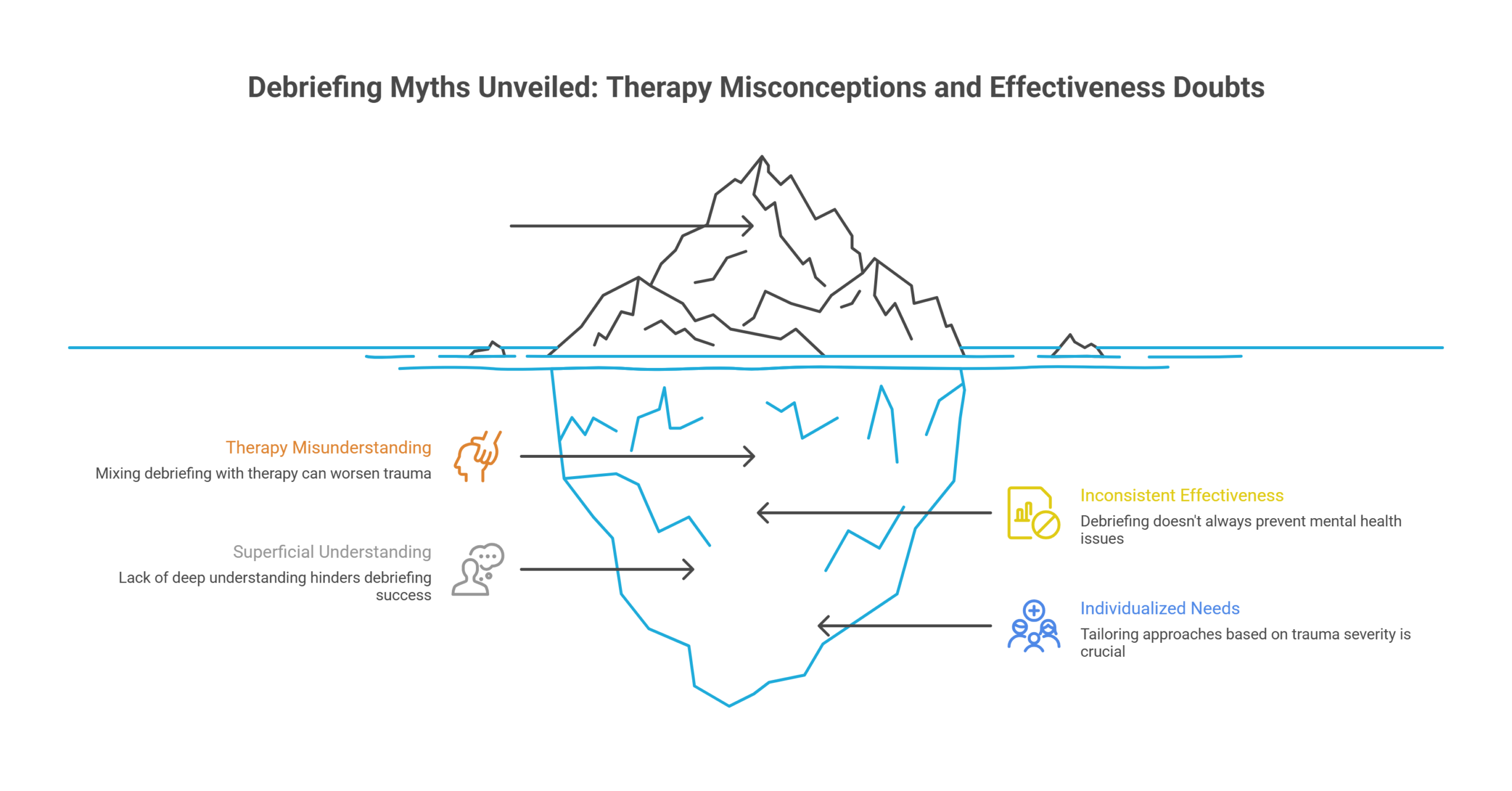
First up, there’s a big misunderstanding about mixing debriefing with therapy. A bunch of research shared by VA.gov points out this mix-up can make people feel even worse after a trauma. When folks are trying to talk it out in debriefing, it might not scratch the surface of their deeper emotional strains, potentially making them feel worse instead of better.
It’s vital for those leading debriefing sessions to keep an eye out for when lines between debriefing and full-on therapy start to blur. Some people might need more than just a quick chat and could benefit from real therapeutic help to gently untangle their complex emotions after a traumatic event.
Debriefing Success or Not?
Another big myth floating around is that debriefing always works like a charm in stopping bad mental stuff like PTSD, anxiety, and depression. But hold up—taking a peek at some analysis from eight debriefing studies shared by VA.gov—turns out debriefing doesn’t always do the trick and might even stir up more trouble for PTSD and trauma-related feels.
There’s a thought that maybe these not-so-great outcomes from debriefing come from not digging deep enough to really understand each person’s experience or because just talking it out is not enough to tackle tough trauma. Debriefing might be kinda helpful for handling less intense stress or for those who respond to emergencies, but when it comes to heavy-duty trauma and dodging things like PTSD, its superpower status is up for debate.
Organizations and mental health pros need to recognize the trillion shades of gray in debriefing scenarios. It’s key to tweak approaches based on what really suits the person and the weight of the trauma involved. While debriefing can be a good first step for spotting who might be at risk and can boost team spirit, it’s essential to mix it up with more focused care strategies for those in serious need of mental health support after major incidents.
Implementing CISD in Workplaces
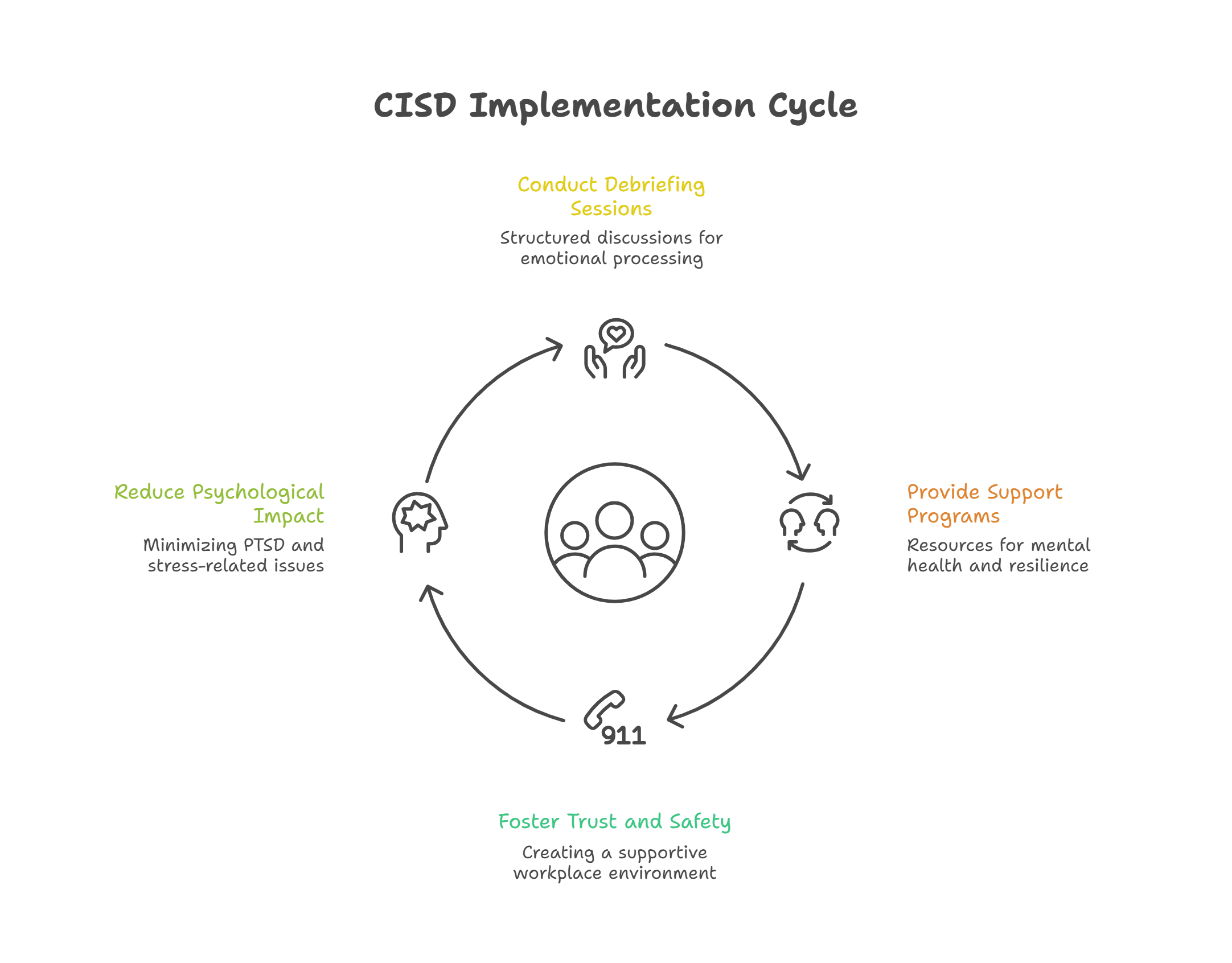
When it comes to dealing with the chaos of workplace critical incident debriefing, using Critical Incident Stress Debriefing (CISD) effectively helps support folks who’ve gone through tough times on the job. These post-incident chats and support programs really boost how employees feel and bounce back after these events.
Post-Incident Debriefing Sessions
So, these debriefing sessions aren’t just gab fests; they give folks a structured chance to chew over and talk about critical incidents they’ve been a part of. It’s kinda like a circle of trust where employees can spill their feelings, tell their stories, soak in the support, and not feel like they’re on a deserted island (This Trading Life). Jumping into these sessions within 24 to 72 hours after the incident is ideal for max support (BetterHelp).
These debriefings show that bosses care about their crew’s mental and emotional wellbeing. Employees find comfort in spilling their guts to people who get it, which is a big help when dealing with the aftermath of something major going down.
Comprehensive Support Programs
Now, onto these support programs—they’re like a toolbox packed with strategies and interventions for those knocked off balance by critical incidents. Think ongoing chats with counselors, mental health resources at your fingertips, and learning to roll with the punches through resilience training (This Trading Life).
By offering these programs, companies build a vibe of trust, open talk, and emotional safety. Giving employees the gear they need to handle the mental mess of critical incidents can cut down on those gnarly PTSD symptoms and other psychological hurdles later on, keeping chronic stress and trauma-induced messes at bay (This Trading Life).
Pulling together these debriefing sessions and full-fledged support plans into critical incident stress management at work helps ease the blow of these incidents, sparks recovery in employees, and cultivates an atmosphere of trust and resilience when things get tough.
Supporting Trauma Survivors
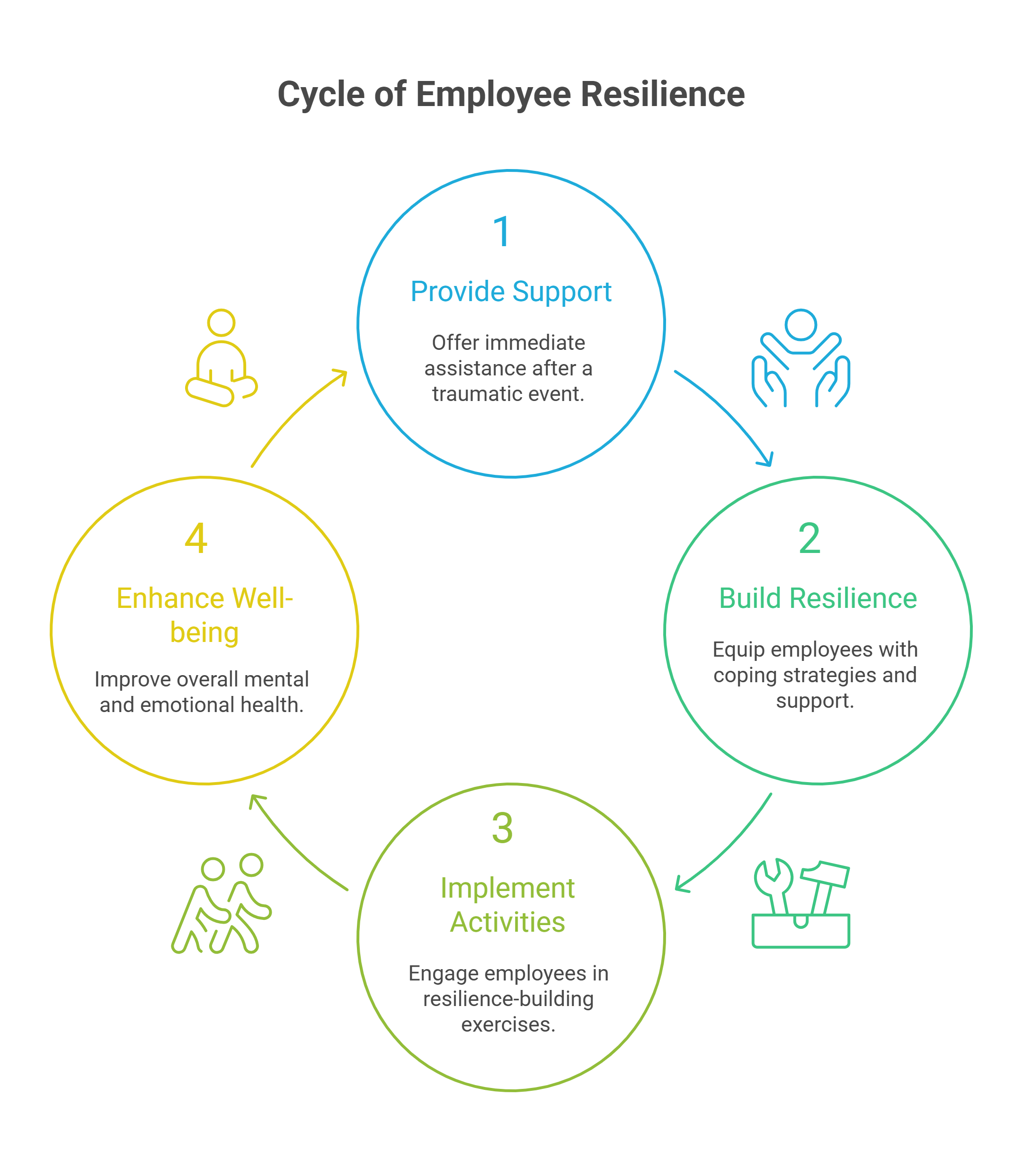
Jumping back on the horse after a tough event involves way more than just brushing off the dust. As boss folks, it’s our gig to make sure our work crew isn’t left floundering if life goes sideways. Don’t stop at handing them a namby-pamby pamphlet after workplace critical incident debriefing. put together real-life magic solutions to help them skate through what’s happened and fall back in rhythm with life.
Employee Resilience & Well-being
Bouncing back from a hair-raising experience isn’t just about guts. Employees could be wrestling with stress gremlins or hosting unwanted anxiety parties in their minds. Building them up demands stuffing their toolbox with handy hacks like solid coping tactics, drumming up that squad vibe for support, and flagging self-care as a do-not-skip activity.
When you roll out activities that beef up resilience, you’re handing them the power to shake off stress and dodge those rough patches down the line. Get creative: think trauma-focused cognitive-behavioral therapy, keep them busy with stress-busting workshops, or get them into resilience-building exercises that’ll turbocharge their emotional might.
Workplace Intervention Strategies
Time to turn the workspace from stress central into a sanctuary. Crafting a cozy workplace for those who’ve weathered the storm is a team effort. Deploy a grab bag of tactics that speak to the heart of what these folks need after a shake-up.
Best practices in workplace critical incident debriefing include confidentiality, voluntary participation, and professional facilitation. These principles allow workplace critical incident debriefing to achieve lasting impact.
Rock these ideas:
- Pump up the volume on resilience through training blitzes that harden them for rumbles.
- Crank out leadership workshops so the team knows the drill when it hits the fan.
- Draw up battle plans (aka business continuity protocols) to keep the wheels turning and morale up.
- Got an Employee Assistance Program? Load it up with top-tier counseling and mental health warriors.
- Call in the pros for clinical debriefing—let them mop up trauma reactions and ease folks into recovery.
- Serve up psychological aid courses so colleagues can offer a soothing word or shoulder when it’s needed most.
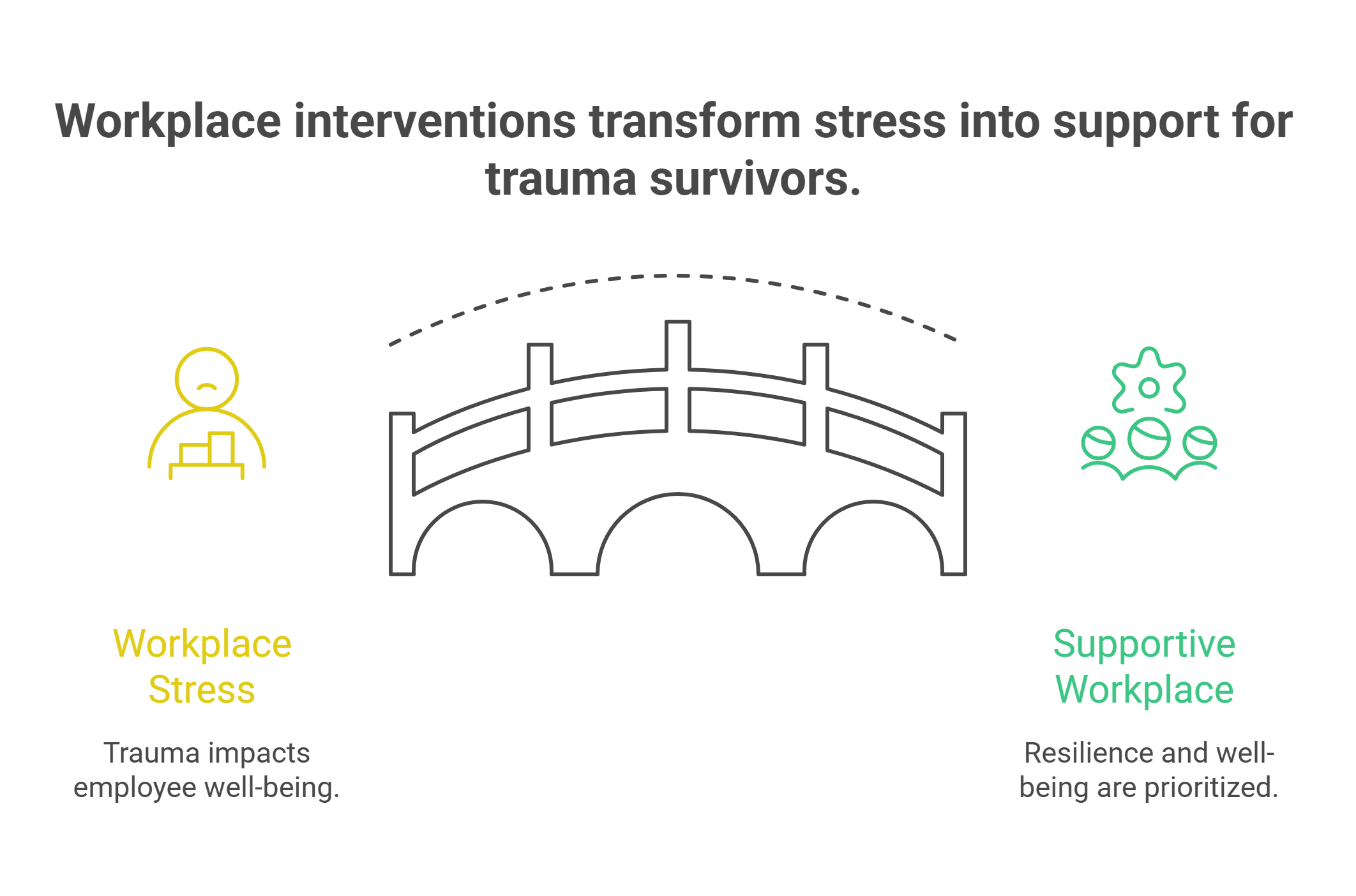
These moves are more than just keeping the lights on—they’re about turning vulnerability into a powerhouse of support. When businesses bundle learning, mental well-being boosters, and all-round care into their routine, the workplace becomes a haven. Here, survivors can dust themselves off, with a team that’s got their back at every twist and turn.
In conclusion, workplace critical incident debriefing is a foundational component of any trauma-informed workplace strategy. Organizations that prioritize workplace critical incident debriefing build healthier, more resilient teams.
Doing all this jazz sends a big, loud message: “Your mental well-being matters to us.” That’s some serious trailblazing toward building a workplace where kindness, grit, and healing aren’t side gigs but the main event. Organizations championing these efforts show they’re all in when it comes to backing trauma survivors and crafting a workspace that’s as sturdy as it is understanding.