
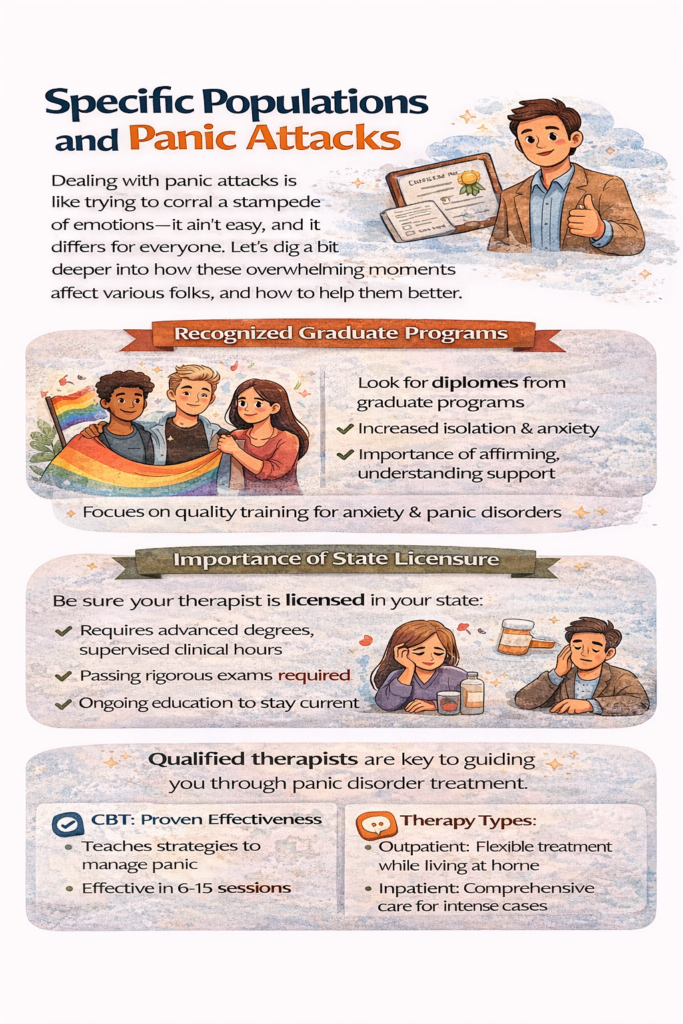
 Specific Populations and Panic Attacks
Dealing with panic attacks is like trying to corral a stampede of emotions—it ain’t easy, and it differs for everyone. Let’s dig a bit deeper into how these overwhelming moments affect various folks, and how to help them better.
Understanding Panic Attacks
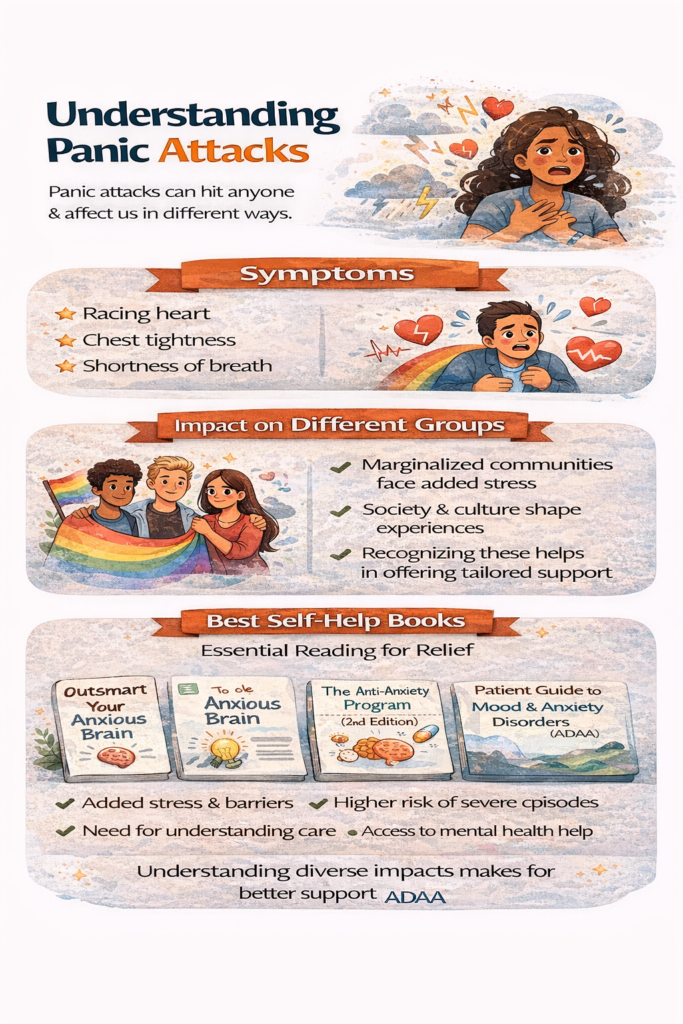
A panic attack doesn’t care who you are or where you come from—it just barges in uninvited. It’s that gut-wrenching wave of ‘something really bad is happening’ piling on the physical sensations like racing heart, chest tightness, and shortness of breath, almost like you’re stuck in an elevator that just suddenly stopped.
You gotta keep in mind, panic attacks shape-shift depending on where you come from, your experiences, and other factors. It’s like having a universal remote in the hands of society and culture, altering perceptions and reactions. Take a peek at “Soothe Your Nerves: The Black Woman’s Guide to Understanding and Overcoming Anxiety, Panic, and Fear” (yup, that hyperlink works) which zeroes in on the specific struggles experienced by Black women, showing how society’s undertows can influence anxiety and panic.
Impact on Different Groups
Panic attacks have zero chill—they’ll pop up for anyone, no matter their age, gender, or skin color. This isn’t a one-size-fits-all thing. Each group nudges us to find unique ways to help them cope. It’s about knowing who needs what kind of lifeline.
Take individuals in historically marginalized groups who often juggle extra stress balls like discrimination and fewer mental health resources. For them, we need to whip up tailored support, helping them not just survive but thrive against panic.
With so many faces to panic attacks, recognizing their various impacts on different groups lets us create a much warmer and understanding mental health zone. If you want to dig further into managing these attacks within certain circles, the Patient Guide to Mood and Anxiety Disorders by the Anxiety and Depression Association of America has some good stuff. It’s like a friendly roadmap for folks and their support teams, helping them along the road to feeling better.
Best Self-Help Books
Essential Reading for Relief
When hunting for ways to tackle those pesky panic attacks, a trusty book might just be your best mate. Here’s my list of top picks in self-help books to help you find some calm in your life:
- Outsmart Your Anxious Brain: Ten Simple Ways to Beat the Worry Trick
- Scribed by: ADAA.org
- What’s Inside: This gem gives you straightforward fixes to manage that mind of yours, without a pharmacy run. It’s loaded with handy ideas to help you keep your cool and reclaim a bit of sanity.
- The Anti-Anxiety Program: A Workbook of Proven Strategies to Overcome Worry, Panic, and Phobias 2nd Edition
- Penned by: ADAA
- The Gist: Achieve ninja-level anxiety control with this workbook. Packed with strategies that have been tried and tested, it’ll help you tackle worry, panic, and phobias head-on.
Recommendations for Specific Needs
Sometimes, a one-size-fits-all approach just doesn’t cut it, right? Whether you’re seeking a different method or specific advice, here’s some reads that’ll hit the mark:
- Be Calm — Jill P. Weber, PhD
- Brought to you by: Medical News Today
- Overview: It’s like CBT therapy, but you can do it in your pajamas. With all sorts of exercises and quizzes, it’s pretty much the user’s manual for becoming zen. Plus, it’s a hit on Amazon, so you’re in good company.
- Feeling Better: CBT Workbook for Teens — Rachel L. Hutt, PhD
- Found via: Medical News Today
- Target Audience: For the teens tackling anxiety, this workbook is the sidekick you didn’t know you needed. It’s chock-full of engaging activities to help you boss around your worries.
- The Anxiety and Phobia Workbook — Edmund J. Bourne, PhD
- Spotlighted by: Medical News Today
- Lowdown: Endorsed by the pros and showered with kudos on Amazon, this workbook is a real heavyweight packed with strategies and practices to show anxiety who’s boss.
Grab one of these titles that resonates with you—it just might be the start of feeling more at ease. Whether you’re an old hand at managing anxiety or just getting started, these books provide guidance, tips, and maybe even a bit of relief. Here’s to a calmer mind and lighter heart!
Coping Strategies Without Professional Help
Finding ways to handle anxiety on your own can feel empowering and help you breathe a little easier. Trust me, you can actually make a big difference in how you handle those nerve-wracking moments without a therapist by your side.
Techniques for Managing Anxiety
When anxiety hits like a freight train, keeping busy can really help. Activities like tidying up your room, giving yourself a pep talk, or chatting with a friend can shift your focus from those scary feelings. Tried and true, these tricks work great in moments like being stuck on a super long plane ride, where you might need to steady your nerves and break free from anxious thoughts.
Sometimes, bringing medicine into the mix can help keep anxiety in check. It won’t magically make it vanish, but it can take the edge off, giving you a chance to retrain your brain to tackle those pesky anxious thoughts. Combining meds with those self-pep talks and figuring out what sets off your panic might just be your game plan.
Supportive Resources
Books can be your best buddies when you’re up against anxiety and panic attacks. Writing like “Who Dies?” by Stephen Levine and stuff by Jack Kornfield are like gold mines for insights into tackling mental health challenges. No joke, these reads can really open up a world of understanding and ways to grapple with emotional hurdles.
If spiritual vibes are more your thing, the Bible’s got you covered, providing a comforting shoulder to lean on. Especially, the book of Psalms can be as calming as a soft blanket on a cold night. Digital spots like Biblehub and Biblegateway make checking out Psalms a breeze. Along with turning to these spiritual words, reaching out for wise words and maybe a little bit of prayer can help you find your peace and boost your inner strength.
By rolling with these coping methods and drawing on supportive resources, you can take anxiety and panic in stride, building up a sense of control and feeling just a bit more at ease when life gets bumpy. Self-care and reflecting on what works best for you are the real MVPs in the quest for emotional balance and resilience.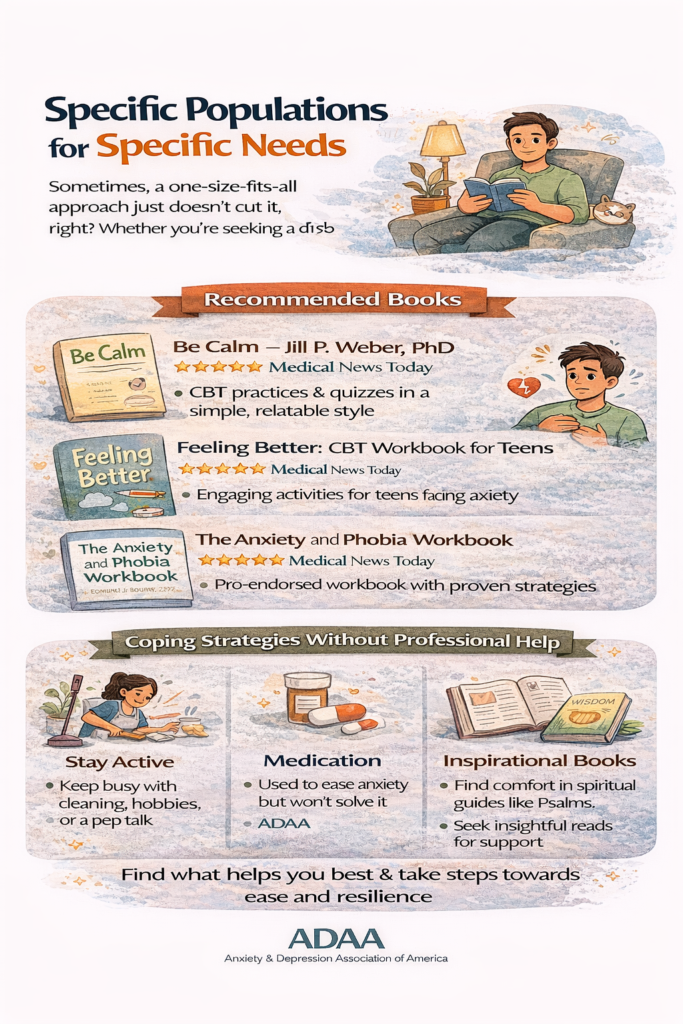
Insights from Personal Experiences
When it comes to tackling panic attacks, diving into personal stories can really switch up how we understand and manage them. It’s like finding a buddy who’s been down the same rocky road. But remember, you’re not fighting this battle alone.
Sharing Valuable Perspectives
Ever felt like a panic attack was holding you hostage? You’re not solo on that. Real-life tales from folks who’ve walked through similar fires can be a real balm. These shared stories aren’t just words—they’re hugs and high-fives from people who get it. By swapping these life stories, we build a place where empathy and understanding really shine.
This swap of experiences isn’t just comforting. It becomes a treasure chest of coping hacks, trigger tips, and lightbulb moments. When people open up, they kick down those mental health stigmas and start real-talk conversations about anxiety and panic.
Lessons Learned and Recommendations
Every person’s battle with panic attacks teaches important lessons, adding to what we understand about anxiety. Many stumble upon ways to cope just by trial and error, setting the stage for others to chart their own courses through the storm.
By reflecting on their own paths, individuals can dish out practical advice and cool insights to folks looking for help with panic attacks. Think of it like handing out pro tips on mindfulness or making small lifestyle tweaks. These gems of wisdom can act like lighthouses for others paddling through similar waters, nudging them to try new self-care strategies.
The real magic of sharing personal experiences? They inspire, teach, and bring a spark of hope to those wrestling with fears. Listening to these stories can give you a sense of adventure in healing and self-growth, reassured by the knowledge that you’re not fighting alone in finding calm.
Beyond swapping stories, reaching out to those who’ve been there, done that—like top-notch online therapists—can add a solid layer of backup. Professionals play a key role in this, but don’t overlook the power of supportive buddies and a strong spiritual grounding to lend an extra boost in the journey toward conquering panic attacks.
Biblical and Spiritual Guidance
When dealing with panic attacks, some folks dig deep into their faith for that extra boost of comfort and strength. It’s like having a safety net when the world feels topsy-turvy. Let’s chat about how diving into faith can act like a strong anchor when panic waves start brewing.
Using Faith for Support
The book of Psalms—a classic go-to for folks feeling down or out of sorts. These ancient verses have been soothing souls for ages, offering nuggets of hope and encouragement. You can find these online on sites like Biblehub or Biblegateway, and in modern English versions like the CSB or ESV. Simple, right?
Many find calm in saying prayers, meditating, or reflecting on these spiritual texts when panic hits. Faith can work like a guiding light, offering a sense of direction, purpose, and inner strength amid anxiety storms.
Seeking Spiritual Resilience
When life throws curveballs, spiritual resilience can be your secret weapon. Getting involved with spiritual practices, like hitting up religious services or joining community rituals, connects you with a support squad rooting for you.
Got friends who are spiritually in-tune and genuinely caring? They might be just who you need when panic attacks come knocking. Chatting with folks who share your faith can give you fresh insights and that warm feeling of fitting in.
Why choose sides when you can have the best of both worlds? Mixing professional advice with spiritual wisdom can be a winning recipe for healing and bouncing back. Leaning on faith can help you find the strength and peace you need to tackle panic attacks head-on.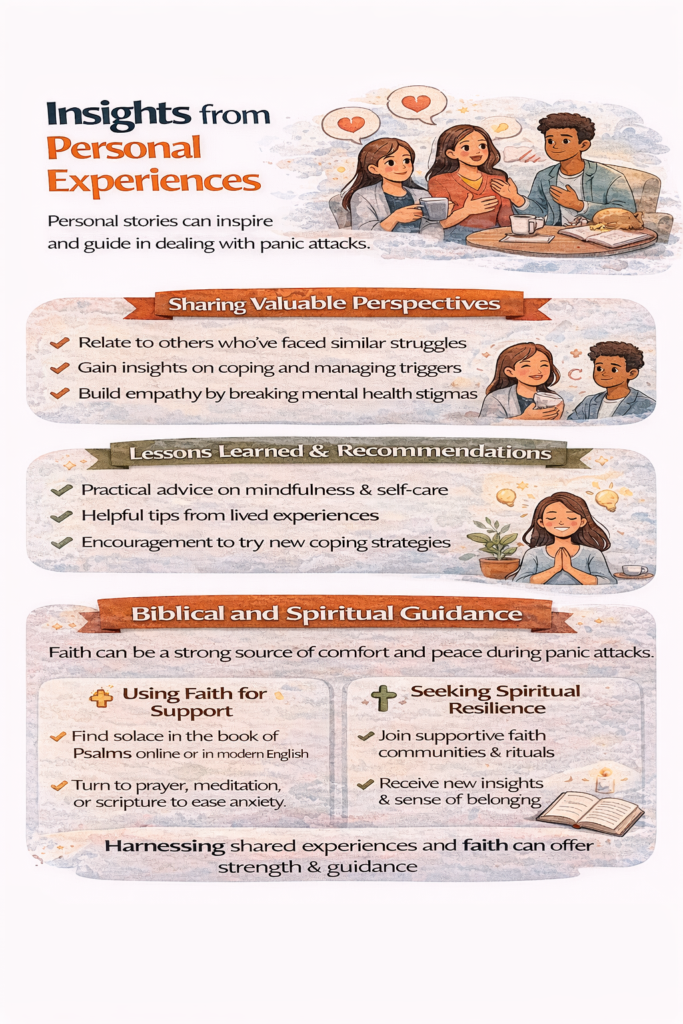
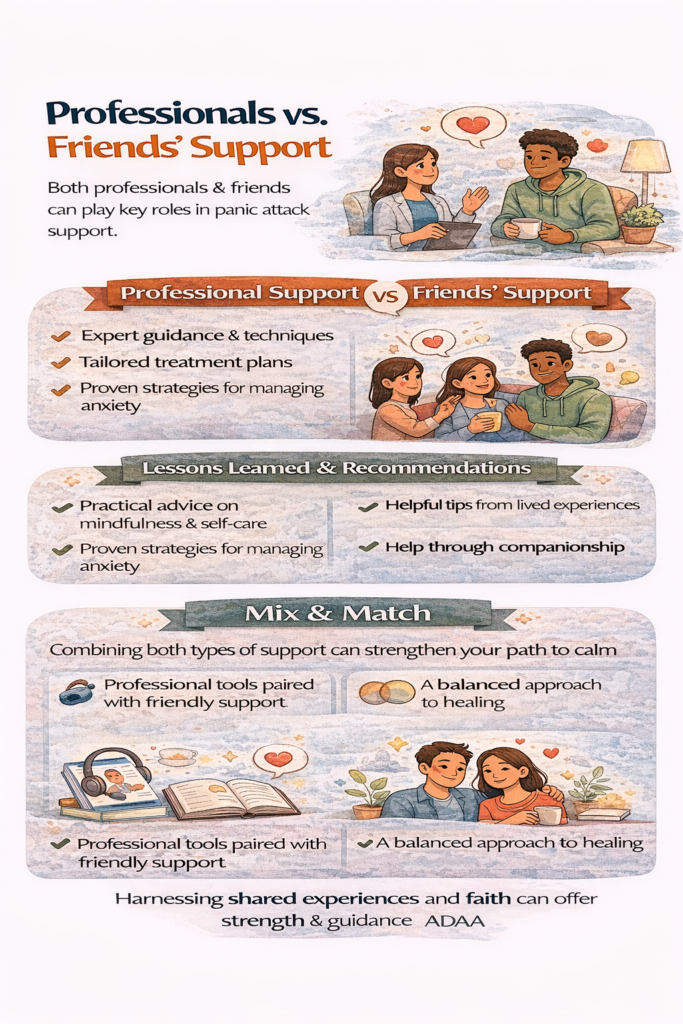
Professionals vs. Friends’ Support
When it comes to wrangling those pesky panic attacks, who you’re leaning on can make a big difference. Whether you’re turning to the pros or leaning on your pals, both types of support can really help you get back to feeling like yourself.
How Different Support Systems Can Help
From what I’ve seen and heard, some folks do better just chatting it out with friends rather than sitting on a couch across from a counselor. Friends have that knack for knowing when to offer a shoulder or a joke – just what’s needed in those knuckle-biting moments of anxiety. It’s like getting that comforting hug when you’re feeling the weight of the world.
Having a friend who truly gets you can be an emotional lifesaver. When you spill your guts and share those secrets you wouldn’t tell just anyone, it’s like getting an instant ticket out of Isolationville. Plus, buddies can dish out practical advice or simply lend an ear when you’re in a pinch. Remember that one time your friend totally saved the day with just a phone call?
But let’s not forget about the pros. They’re the ones with the training and know-how to take you from zero to anxiety-hero. With their techniques and tailored advice, they’re like the GPS for your brain – showing you the way through the emotional traffic jam. They offer a plan, clinically tested methods, and when you’re ready to throw in the towel, they throw in one more reason to keep going.
Personal Experiences and Preferences
Sure, hugging it out with friends works for a lot of people, but there’s also something to be said for the professionals who wear those credibility badges with pride. It’s all about what you need – some folks find comfort in the no-judgment zone of their friend group, basking in the warmth of familiar faces. Others? They need that analytical eye—that trained professional who can break down their brain’s wiring.
In picking pals or pros, you’re making a choice as personal as your favorite coffee order. It’s okay to mix things up – a dash of friend hugs with a side of professional wisdom. You’re the captain of this ship, and steering toward what makes you feel empowered is the goal.
Eyeing those best self-help books for panic attack relief? They could add another layer—instead of just reading, see it as teaming up with both bookish wisdom and human support. At the end of the day, it’s about crafting a crew of support that helps you power through those chaotic waves of panic attacks with a safety net of strength, resilience, and the warmth of human connection by your side.