
Understanding Critical Incident Stress
So, let’s chat about this thing called Critical Incident Stress and its management. A big part of getting a handle on it involves something known as Critical Incident Stress Debriefing (CISD). Back in 1974, Dr. Jeffrey Mitchell came up with CISD. Why? Well, his time as a paramedic and firefighter taught him that after dealing with really tough situations, folks often need a structured way to cope afterward. That’s where CISD steps in.
Origins of Critical Incident Stress Debriefing
The story of Critical Incident Stress Debriefing starts with Dr. Jeffrey Mitchell. He noticed that when first responders or folks witnessing trauma go through harrowing events, it impacts their mental health. His work in this area brought about the CISD model, which is geared toward immediate emotional and mental support following such tough times. Over time, this method has gained momentum, finding its place across different fields to help people bounce back after distressing events.
Purpose of CISD
Fast forward to now, the purpose of CISD stands pretty firm. It’s all about stepping in with support for those who’ve been through the wringer. The process breaks down into seven phases, each having a shot at keeping trauma from digging its roots too deep. Here’s what CISD is all about:
- Jumping in ASAP post-trauma to keep long-haul psychological impacts at bay.
- Giving folks a space where they can process what just happened, collect their thoughts, and shed some light on their emotional responses.
- Dishing out knowledge on how stress affects us, offering those nifty coping tricks, and pointing toward any helpful resources available after debriefing.
- Building a sense of “we got this” and hope for what lies ahead among those who’ve just been through a storm.
Getting the full picture of how Critical Incident Stress Debriefing works can really help in making smart choices about weaving CISD into critical incident response team training for first responders, healthcare workers, and emergency personnel.
Implementation of CISD
When diving into the nitty-gritty of Critical Incident Stress Debriefing (CISD), timing and its overall impact are where the magic happens.
Ideal Timing for CISD
Think of CISD like a lifeline tossed right after the storm—it should happen pronto, ideally a day or two after the traumatic event. This approach is like offering a cozy blanket to folks who’ve just been through the wringer, helping them process what went down and how to get back on their feet (Verywell Mind).
We’re talking a seven-step journey here. It starts with checking out how the incident shook up everyone involved and then tackling any pressing safety concerns. It also lets emotions run their course, forecasts how people might react later, goes through the incident from top to bottom, wraps things up, and helps folks rejoin their communities or head back to work (BetterHelp).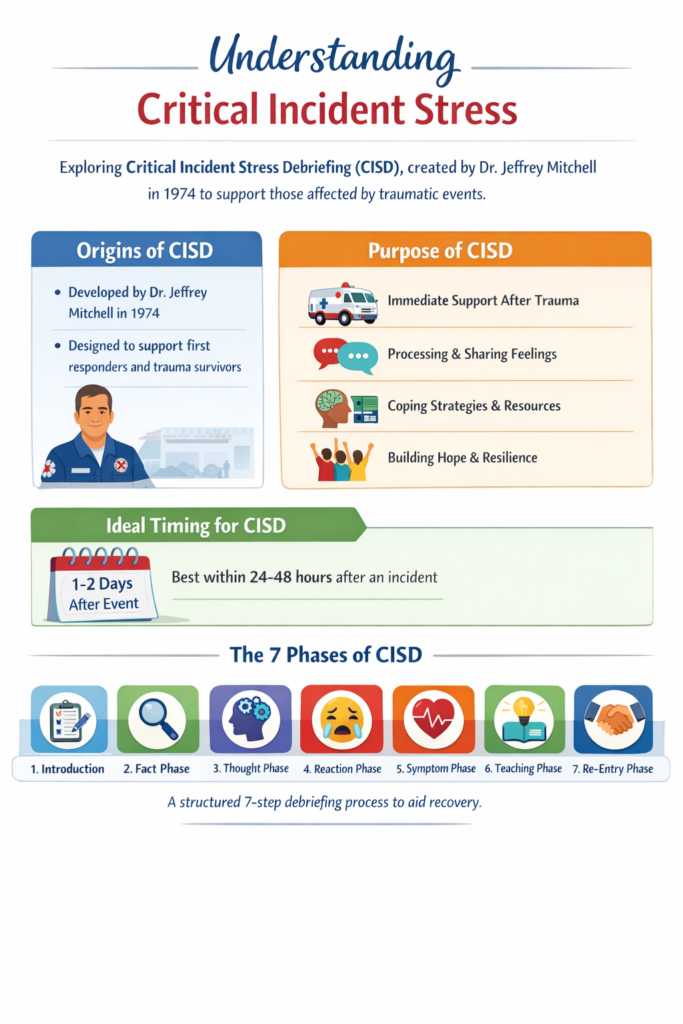
Effectiveness of CISD
Plenty of research backs up CISD’s superpowers across different scenes. In emergency settings, it cools down burnout and trauma symptoms among healthcare pros. By the way, it’s a handy tool to keep employees from jumping ship in healthcare roles and boosts both physical and mental vibes for military folks (Verywell Mind).
Originally, it was all about those facing risky workplace situations or industrial mishaps, but CISD’s perks now touch anyone in the hot seat of high-stress jobs. Whether you’re a firefighter, cop, emergency responder, or in the military, it gives you a sturdy shield against trauma in your line of duty (BetterHelp).
Getting how crucial timing is and the wins that CISD brings along highlights why this strategy should be deeply woven into support plans for those dealing with critical incidents. By offering quick and structured support, CISD is like a guardian angel nudging folks toward bouncing back after life throws a curveball.
Seven Steps of CISD
When life takes a nasty turn and throws a whopper of a traumatic event, the seven steps of Critical Incident Stress Debriefing (CISD) are like that trusty Swiss Army Knife of emotional first-aid. Outlined by Dr. J. T. Mitchell and Joseph A. Davis back in 1983 for the Journal of Emergency Medical Services, these steps have been around the block, helping folks sort through the aftermath of such events.
Assessment of Impact
Step number one is all about taking stock. We look at what’s hit the fan and how the people involved are holding up. We check in on everyone—those directly affected, the ones around the edge, even the support crew. How’s everyone doing emotionally and psychologically? We need to know this to tackle their particular bag of worries and stressors head-on during the debriefing.
Identification of Safety Issues
Next up, we’re on the lookout for anything dicey because, let’s face it, some incidents throw up hazards you wouldn’t see coming. Both physical and emotional safety need to be secured tight. It’s the thing that makes sure everyone feels comfy enough to be real and raw about what’s going on in their hearts and heads.
Emotional Ventilation
This part is where participants get to blow off steam. They share what’s been festering upstairs since the incident. It’s all about letting the emotions flow—whether they’re letting off steam, venting, or getting it all off their chests. This phase is where the healing takes its first baby steps, allowing people to express their views and purge the emotional pressure cooker.
The whole shebang of the seven steps in CISD offers up a playbook for holding debriefing sessions that matter—ones that help folks bounce back from trauma. Sticking to these steps, professionals can grab people by the hand and lead them from the thick of the chaos to a place where healing begins, and life seems a little brighter.
If you’re itching to get smarter about handling stress and trauma, take a gander at resources like trauma-focused cognitive-behavioral therapy and critical incident response team training. They’re your go-tos for beefing up your skills and wisdom in the field of critical incident stress management.
Benefits of CISD
When we dig into what Critical Incident Stress Debriefing (CISD) offers, it’s clear it plays a big part in helping folks bounce back from life’s nasty surprises. There are two big perks: it tones down those pesky trauma symptoms and beefs up your handling skills, which is a blessing for anyone trying to sort out and move on from rough situations.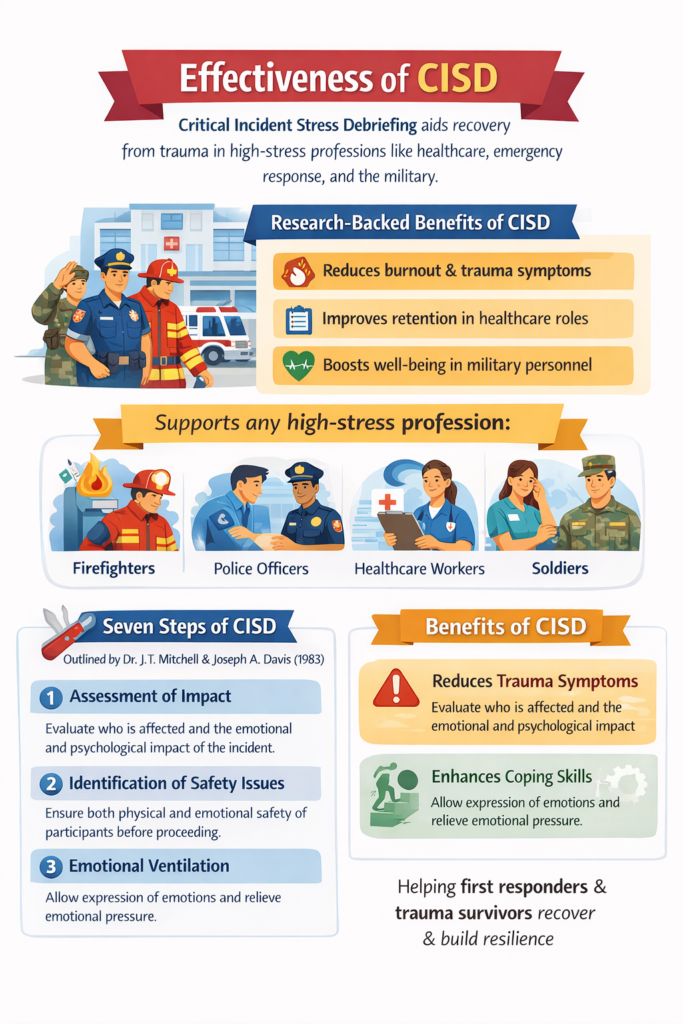
Reduction of Trauma Symptoms
CISD has shown it can dial down burnout and trauma symptoms for medical heroes like nurses and doctors in fast-paced, high-stress environments. This, in turn, gives their bodies and minds a much-needed health boost after they’ve dealt with those nerve-wracking incidents (Verywell Mind). By setting up a game plan to handle the emotional chaos post-trauma, CISD gives folks a chance to wade through their emotional swamp and shrug off the long shadow of trauma.
Taking part in these CISD chats means they get to pour out what’s been bottled up inside, around the event that shook them. This heart-to-heart can seriously nip symptoms of PTSD, anxiety, and depression in the bud, helping individuals regain their footing and sense of self.
Enhancing Coping Skills
CISD doesn’t just put out the fires of immediate trauma; it also prepares people to deal with future challenges like a pro. These organized debriefing meet-ups work on strengthening the backbone of resilience and sharpening those handy coping tools through group chats and the expertise of seasoned pros.
When diving into the CISD debriefing process, participants get wise to spotting and employing ways to keep stress at bay, handle emotional waves, and tackle tough spots cleverly. These skills better arm participants for whatever stormy skies they may encounter down the road, slashing the odds of long-lasting mental scars.
CISD sessions are like gearing up with survival tools in a supportive team environment, letting people handle traumatic episodes with newfound strength and grit. The blend of trimming down trauma reactions and boosting coping strategies reveals the goldmine of support CISD offers for the mental health and recovery of those impacted by critical events.
Consideration for CISD Effectiveness
When it comes to Critical Incident Stress Debriefing (CISD), folks can get pretty chatty about whether it really does the trick. You’ve got some who swear it’s the best thing since sliced bread post-crisis, while others wag their fingers, suggesting it might not hit the mark for everyone.
Mixed Results and Debates
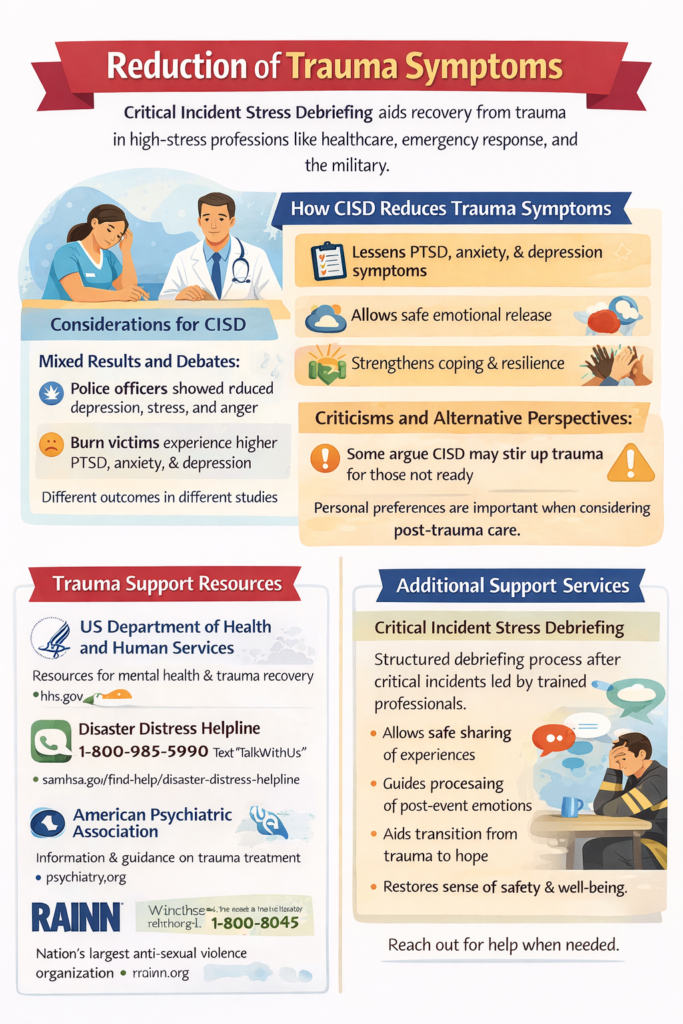
Research can be a real head-scratcher sometimes. Take this, for instance: one study rounded up a bunch of police officers who’d been in hairy situations. Turns out, giving them the ol’ CISD treatment within 24 hours seemed to help them keep their cool with fewer bouts of depression, stress, and anger afterward. Sounds promising, right? (Choosing Therapy)
But hang on, not all sunshine and rainbows there. Another study with burn victims tells a different tale. Those who tried out CISD were actually more frazzled a year later, showing higher PTSD, anxiety, and depression levels. Who knew the results could twist like that? It shows just how tricky it can be to nail down CISD’s effectiveness across the board.
Criticisms and Alternative Perspectives
The naysayers have a few talking points. They believe CISD might sometimes do more harm than good, especially if it stirs the trauma pot for folks who just aren’t ready for that kind of deep dive. This has led organizations, like the American Red Cross, to side-eye its use and even nix it for emergency responders, worried about unintended harm. (Choosing Therapy)
Some argue that while CISD has its perks for certain people, it’s not a one-size-fits-all deal for dealing with trauma. Everyone dances to their own beat when it comes to handling trauma, so it’s crucial to take personal preferences into account when picking the best way forward.
Debates around CISD aren’t fading away any time soon. It’s crucial to weigh the pluses and minuses carefully. As long as we’re aware of the mixed bag of research findings and keep open to different views, we can make smarter choices on how best to support people hit by critical incidents.
Support Resources Post-Trauma
Going through something heavy, like a big life-altering event, can leave anyone feeling lost. Turning to trauma support organizations can truly be a game-changer on the road to recovery. These groups are like lifelines, loaded with tools and services to help folks bounce back. Here’s a list of some places that are making a huge difference:
Trauma Support Organizations
- US Department of Health and Human Services: This big-name government group is a hub of resources and info for folks dealing with trauma. They cover everything from mental health check-ins to help after disasters. When it comes to having someone’s back in tough times, they step up in a big way.
- Disaster Distress Helpline: Ever feel like you need to talk to someone, like, right now? This hotline is there for those “I can’t even” moments triggered by natural disasters or other traumatic stuff. It’s a no-judgment zone open 24/7, offering a listening ear and some sensible advice.
- American Psychiatric Association: These mental health pros are all about spreading the word on trauma and getting people the help they need. They dish out crucial info and even guide individuals in charting their recovery path.
- Rape, Abuse, and Incest National Network (RAINN): Known as the largest group working against sexual violence in the United States, RAINN is a beacon of support. They provide a lifeline through their helpline and a treasure trove of online resources for those picking up the pieces after trauma.
Hooking up with one of these centers offers more than just help. You become part of a space filled with understanding and shared experiences, providing a solid ground as you navigate the stormy waters of trauma recovery.
Additional Support Services
Beyond the support groups, other services can keep that healing train moving. Take Critical Incident Stress Debriefing (CISD), for instance. It’s a structured chat, “debriefing” if you will, geared to bridge the emotional gap after critical incidents. Pros lead these talks to help folks:
- Speak freely about their experiences without worry.
- Work through the emotional rollercoaster post-event.
- Shift from trauma towards a brighter, hopeful, future.
- Reclaim a sense of safety and well-being.
CISD is a real lifesaver for pros in risky jobs—think firefighters, police, rescue workers, and military personnel. By jumping into these debriefing sessions, participants can face their emotions straight on, hone their coping skills, and lay down the groundwork for lasting mental stability and happiness.
When the going gets tough, leaning on trauma support centers and services like CISD can tip the scales toward healing and long-term peace of mind. They’re not just support—they’re a guide, a friend in the corner for anyone striving towards recovery and resilience.